

Sugar Rush
By pressing play, you agree that you are above legal age in your jurisdiction and that your jurisdiction allows online gambling.
Pragmatic Play

Sugar Rush
Title:
Sugar Rush
Payout:
96.5
Volatility:
high
Max multiplier:
5000x
Lines:
20
Release:
June 30, 2022
Game Provider:
Pragmatic Play
Bitcoin Slots
Live game stats
Real RTP · 30d65.77%vs 96.5
Spins · 30d265
Biggest win · 30d$24.53
- Provably Fair
- Instant Crypto Payouts
- Thousands of Games

Written byMarcusUpdated
Sugar Rush slot Guide: Real Test, Free Spins, RTP and Volatility
I tested the Sugar Rush slot at a $2.00 stake to see whether Pragmatic Play’s candy-cluster game plays as sweetly as it looks.
Sugar Rush is a high volatility slot from Pragmatic Play with a bright 7×7 candy-grid theme, 96.5% RTP, and 5000x max win potential. Wins come from clusters of 5+ matching symbols, while free spins keep multiplier spots locked across the round. Volatile feature hunters get the cleanest value here, not flat balance-grinders.
Key takeaways
- Best play: Cluster wins need 5+ matching symbols connected vertically or horizontally on the 7×7 grid.
- RTP / volatility: Sugar Rush has 96.5% RTP, high volatility, and no payline system.
- Max win: The maximum win is 5000x, which feels modest beside the high-risk pacing.
- Risk note: Base-game multiplier spots reset after each tumble sequence, so cold stretches can bite.
- Bankroll note: At $2.00 per spin, our 1,000-spin simulator showed a median result around $144 down, while my 500-spin demo test finished $311 up.

Table of Contents
- Sugar Rush slot theme and candy-shop design
- How Sugar Rush works
- Cluster pays
- Symbol values
- Tumbles and multiplier spots
- Tumble chain
- Multiplier cells
- Free spins feature
- Trigger amounts
- Sticky multipliers
- Buy Free Spins option
- Buy cost
- Test result
- Betting range and bankroll fit
- Stake sizing
- Bankroll pressure
- RTP, volatility and our test
- Simulator projection
- Our 500-spin session
- How it played in practice
- Base-game rhythm
- Feature swings
- Frequently Asked Questions About Sugar Rush
- Final Thoughts
Sugar Rush slot theme and candy-shop design
Sugar Rush looks playful first, but the high volatility gives the candy-shop style a harder edge. You get a bright 7×7 board, a clean blue backdrop, and candy symbols that pop quickly during tumbles. I think the theme won’t win originality awards, yet the execution keeps you focused.
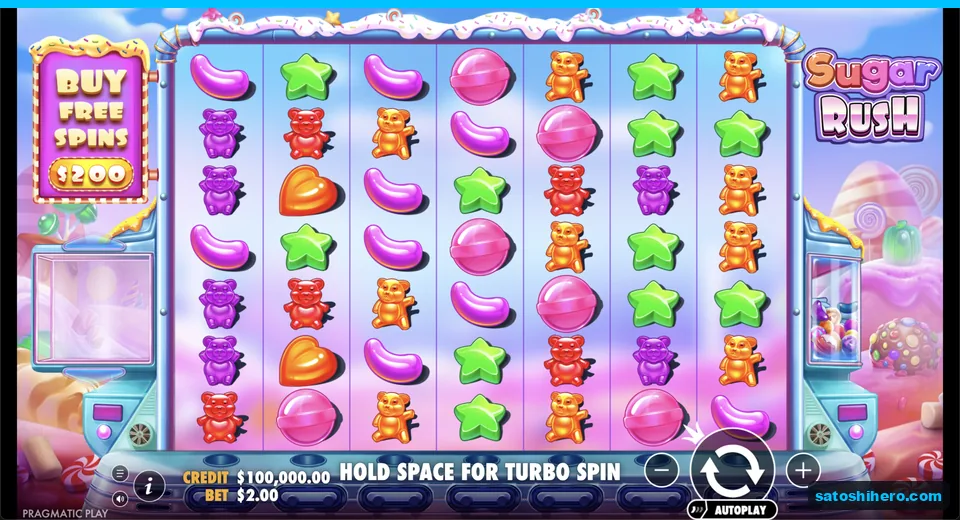
Lollipops, jelly beans, gummy bears, and candy stars make the screen easy to read. You can track clusters without squinting, even when turbo mode speeds things up. If you like the same candy tone with a seasonal skin, Sugar Rush Xmas offers a familiar Pragmatic Play flavor.

Did You Know? The candy-shop styling makes the game look soft, but the volatility rating tells you the session can swing hard.
I like how the board stays clear when several wins fire together. You see the candies burst, the empty spaces refill, and the next cluster form without visual clutter. That matters because you need to follow both the win and the cell positions underneath it.
The sugar rush game theme sells fun, but the math keeps it from feeling too cozy. You should treat the visuals as decoration, not a signal that the session runs gently. The board stays easy to follow even when tumbles speed up.
How Sugar Rush works
Sugar Rush pays through connected candy clusters on a 7×7 grid, not paylines or fixed ways. You need at least five matching symbols touching vertically or horizontally, so diagonal groups alone don’t count. I like this system because it feels simple without hiding the risk.
Cluster pays
Clusters pay when matching candies connect up, down, left, or right. You don’t need to count paylines, and you shouldn’t call this a 20-payline game. The Sugar Rush slot uses pure cluster pays, which makes each spin feel more like watching a board puzzle settle.
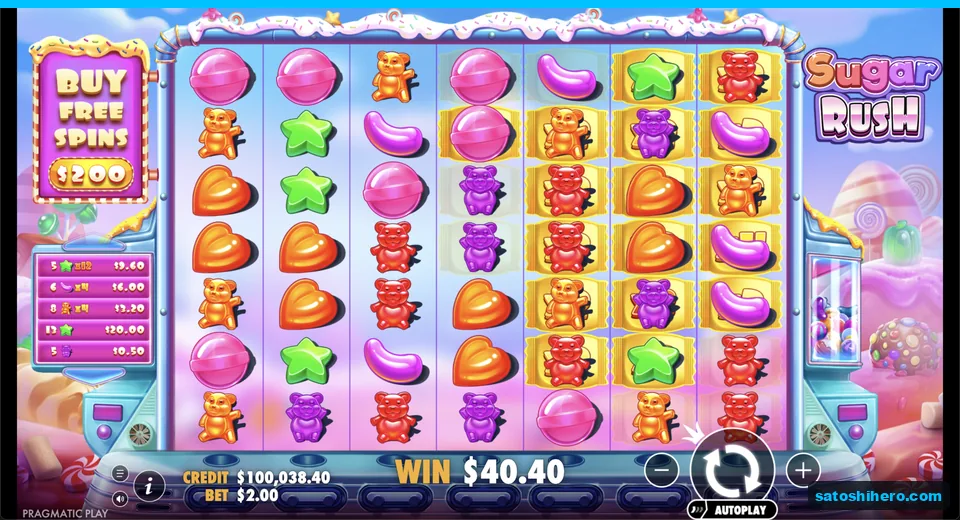
That setup also helps on smaller screens. Desktop and mobile play use the same grid and feature flow, so you don’t lose the core view when you switch device. You can spot near-misses quickly, though near-misses still pay nothing.

Quick Fact: Sugar Rush is a cluster-pays slot, so the real win condition is 5+ connected symbols on the 7×7 grid.
Symbol values
At the $2 stake, the pink round lollipop pays $300 for a 15+ cluster. The orange heart pays $200, while the pink jelly bean pays $120. Those top symbols made the paytable feel clear during my test.
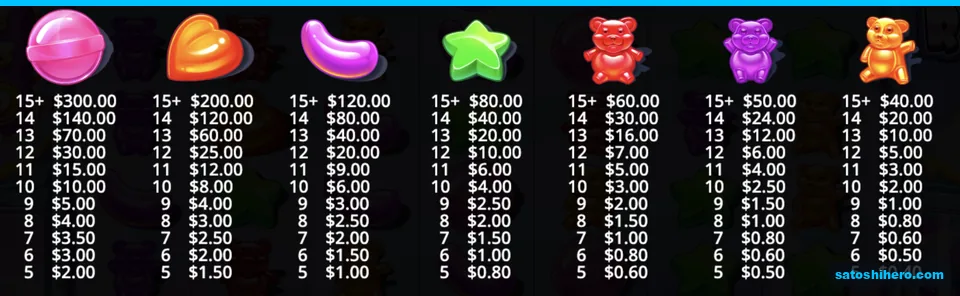
Lower candies still matter because they can build tumble chains. The green star pays $80 for a 15+ cluster, then the red, purple, and orange gummy bears pay $60, $50, and $40. You want higher symbols, but several small clusters can still open multiplier cells.
The candy machine scatter opens the free spins feature. It appears across the grid and creates the bonus path you care about most. Candy-cluster fans wanting a wilder family option may compare Sugar Rush 1000, but this original keeps the rules cleaner.

I think the mechanic lands well for new players. You read the board fast, learn the scatter quickly, and then wait for the multiplier system to do the heavy lifting. That simplicity helps the Sugar Rush slot avoid rules clutter.
Tumbles and multiplier spots
Tumbles create repeat wins, while multiplier spots add the real swing potential. Every winning cluster bursts, candies drop into the gaps, and fresh symbols fall from above. You can get several hits from one paid spin when the board keeps connecting.
Tumble chain
A tumble sequence continues until no new cluster lands. I noticed this rhythm right away in turbo mode because the board can pay, burst, refill, and pay again within seconds. It feels snappy, but the dry stretches feel just as sharp.
You shouldn’t overvalue a single base-game tumble. One good chain can look exciting, yet the next dead spin may erase the mood fast. The Sugar Rush slot shows its high volatility through that stop-start pacing.

Pro Tip: In the base game, don’t overread one good multiplier spot. It disappears when the tumble sequence ends, so the biggest upside comes when spots stick in free spins.
Multiplier cells
A first winning burst marks that cell. A second burst on the same cell adds x2, and further bursts double the value up to x128. Several multipliers in one winning combo add together, which creates the kind of screen you want to see.
The catch sits in the base game reset. Once the tumble sequence ends, those spots clear, so the sugar rush demo can feel streaky even after a promising hit. I found that part slightly frustrating, but it also sets up why free spins matter so much.
You need repeat activity on the same cells before the spot becomes valuable. That doesn’t happen often enough in the base game to feel stable. The mechanic has bite, but the bonus round gives it room to grow.
Free spins feature
The free spins feature matters because multiplier spots stay locked and can climb across the full round. That change turns the same mechanic into the game’s main event. I think this is where the candy theme finally gains real bite.
Trigger amounts
Land 3, 4, 5, 6, or 7 candy machine scatters to trigger 10, 12, 15, 20, or 30 free spins. More scatters can retrigger the feature during the round. You want volume here because extra spins give the sticky spots more time to build.
My natural features came from the base game during the 500-spin test. The first paid only $13.40, which felt flat after the wait. That small result was a useful reminder that the bonus can open and still do very little.
Sticky multipliers
During free spins, multiplier spots no longer reset after one tumble sequence. They stay locked for the whole round and keep climbing across spins. Special reels also run during the feature, which gives the board a stronger bonus feel.
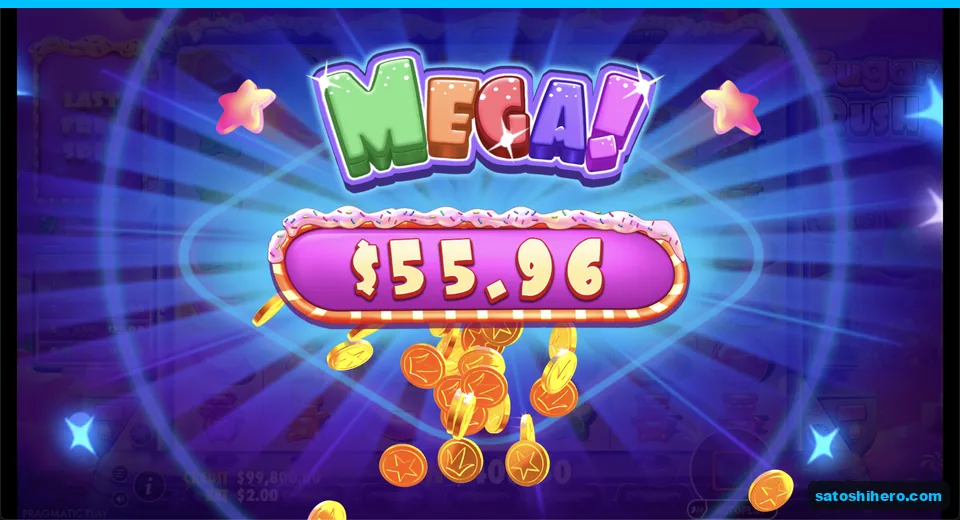
The bigger natural round in my test lifted the balance by roughly $630 in one stretch. I had skip screens on, so I tracked that feature by the balance jump rather than every single candy burst. Still, the impact was obvious, and you can feel why this is the feature hunt.
The maximum win is 5000x, and a round that reaches the cap ends immediately and pays. I don’t love that cap beside high volatility, but the sticky multiplier setup gives the game its best moments. Sugar Rush Super Scatter may appeal if you want a scatter-led variant with faster feature access.
Buy Free Spins option
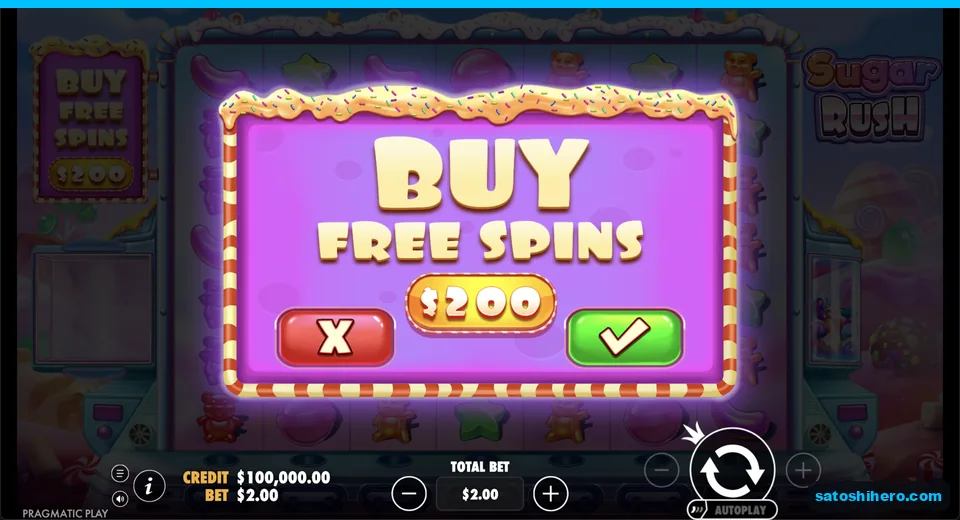
The Buy Free Spins option costs 100x your bet and gives faster access, not better mathematical value. The button sits on the left rail and sends you straight into the feature. You get a random 3 to 7 scatters, so the starting spin count can vary.
Buy cost
At my $2 stake, the buy cost $200. That price makes the feature feel exciting, but it can turn a small session expensive fast. You should know the cost before clicking because the balance drop happens immediately.
The buy matters most when you don’t want to wait through base-game droughts. In a sugar rush demo, testing the button first makes sense because you can see how harsh a poor feature feels. I wouldn’t treat the buy as a shortcut around variance.

Caution: Because Sugar Rush is high volatility, buying the feature can drain a bankroll quickly. A 100x buy at $2.00 costs $200.00, and the round can still return less than the price.
Test result
The published buy return is 96.5%, and the base game return is also 96.5%. That makes the buy a speed option rather than a better-value route. I like the honesty of that math, even if the price still bites.
In my bought round, the feature collected $403.50 across 10 free spins. That result came in a little over twice the cost, which felt good in the moment. It was one round, not a promise, and the next buy could easily land below the price.

The Sugar Rush slot buy works when you accept the trade. You skip waiting, but you pay heavily for the jump. If your bankroll can’t absorb several failed buys, the base game gives you a slower and safer test of the same feature.
Betting range and bankroll fit
Sugar Rush needs cautious stake sizing because high volatility and a 100x buy can pressure your bankroll quickly. The bet range runs from $0.20 to $100.00, which gives you plenty of room to scale. I think most players should learn the grid at lower stakes first.
Stake sizing
Lower stakes help you watch cluster patterns without turning every dead spin into stress. At $0.20, the feature buy still costs 100x your total bet, but the cash hit feels smaller. At $2.00, the same buy already costs $200.00.
Higher stakes make both base-game variance and buy decisions sharper. You can win more, but the cold gaps feel harsher when each spin carries more weight. The main numbers stay easy to check because the guide focuses on fixed specs and test notes.
If you like the brand but want a different pace or format, Sugar Rush Dice gives a separate way to approach the same family feel. I would still start with the sugar rush demo on SatoshiHero before setting a real-money stake. You learn more from ten minutes of play than from guessing your comfort level.
Bankroll pressure
The game runs at 96.5% RTP with high volatility and a 5000x maximum win. There are no fixed jackpots, so you chase clusters, sticky multipliers, and feature outcomes instead. That setup rewards patience, not impulse clicking.
Bankroll planning matters more than chasing every buy. You can’t beat the math by switching stake sizes, and you can’t force a retrigger by raising the bet. Choose the stake before you chase the feature, then stick with that limit.
RTP, volatility and our test
Sugar Rush has 96.5% theoretical RTP, high volatility, and a 5000x max win, while our tests showed both risk and upside. The numbers look fair for this style, but the play still swings hard. You need to expect uneven results.
Simulator projection
I ran our simulator at the $2 bet for 1,000 spins. It used 96.5% RTP, high volatility, and the 5000x cap. The median run finished about $144 down, which matched the game’s tough base rhythm.
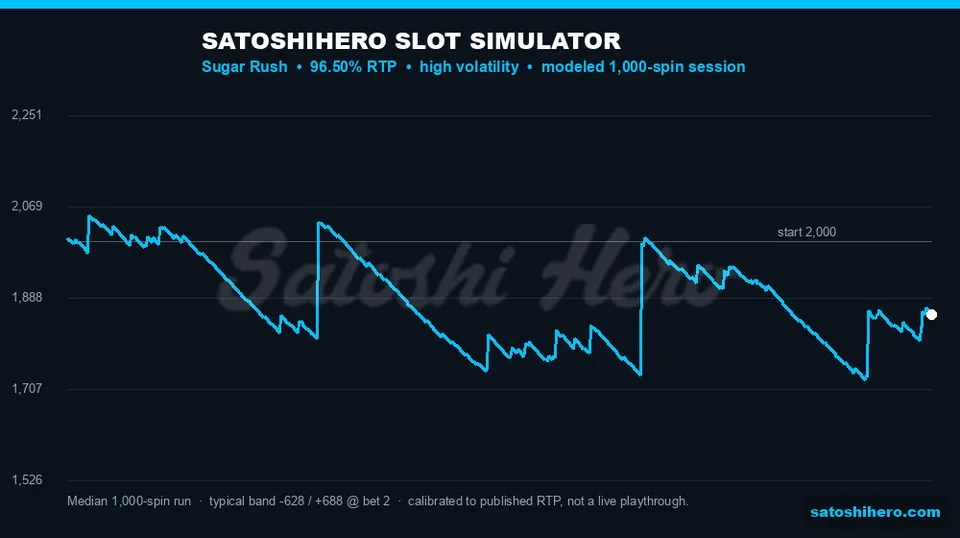
The typical spread ran from about $628 down at the 5th percentile to about $688 up at the 95th. A feature-tier win appeared around once in 46 spins, while a 100x+ win appeared around once in 1,603 spins. Mining Rush has a different theme, but hard-swinging slot fans may recognize the same bankroll pressure.
That model isn’t a prediction of your next session. It shows the distribution shape behind the Sugar Rush slot, not a promise of where your balance may land. I like the simulator because it makes the risk feel concrete.
Our 500-spin session
I played 500 demo spins at the $2 bet from a fresh $100,000 balance with turbo on. The session finished at $100,311, which gave me a $311 gain. That result felt nice, but it sat well inside the simulator’s wider range.
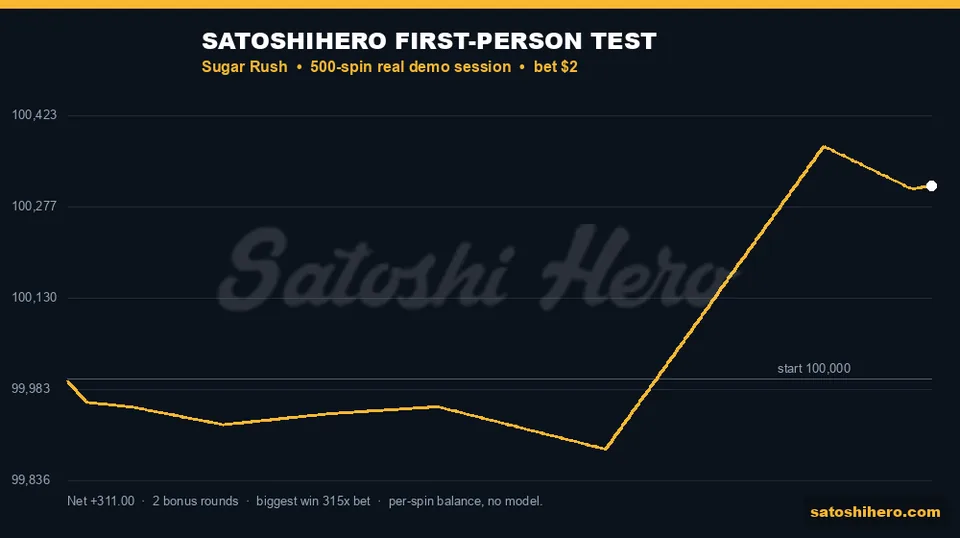
Two natural free spins rounds triggered during the run. The first paid $13.40, and the bigger later feature lifted the balance by roughly $630. Skip screens were on, so I tracked those feature wins through balance jumps.
The base game felt every bit as streaky as the high volatility tag suggests. Quiet runs dragged, then one sharp cluster or feature changed the mood fast. A positive 500-spin result doesn’t make the game low-risk.
Caution: A positive 500-spin result doesn’t make the game low-risk. The simulator still showed a median loss over 1,000 spins at the same stake.
The 96.5% RTP is the operator-published theoretical return. One live or demo session doesn’t change or prove that figure. The simulator models the published numbers and distribution shape, not any individual player’s outcome, and the tested buy return is also 96.5%.
How it played in practice
The session felt fast, streaky, and feature-led, even though my final result finished ahead. Turbo mode made spins move quickly, so dead boards passed fast. You still feel the quiet stretches because clusters don’t always connect.
Base-game rhythm
Base-game multiplier spots reset after each tumble sequence. That one rule shaped most of the session because promising cells vanished as soon as the chain ended. I liked the speed, but I didn’t find the base game relaxing.
The visuals feel friendly, yet the game turns unforgiving when candy groups miss by one cell. You can see why the volatility rating lands at high. The sugar rush game rewards patience more than casual tapping.
Feature swings
Strong clusters and free spins moved the balance sharply. Two natural features landed during my 500-spin test, and the larger one created the real profit. Without that round, the session would have looked much less friendly.
The $311 gain was enjoyable, but the route felt swingy from start to finish. I wouldn’t treat this as a casual balance-grinder. Treat it as a volatile feature hunt, and you can judge the Sugar Rush slot more fairly.
Frequently Asked Questions About Sugar Rush
How do you trigger the free spins in Sugar Rush slot?
Land 3, 4, 5, 6, or 7 candy machine scatters anywhere on the grid to win 10, 12, 15, 20, or 30 free spins. The same scatter can retrigger more spins during the feature. You can also buy the round for 100x your bet.
What are Sugar Rush slot multiplier spots and how high do they go?
A winning burst marks its cell, and a second burst on that cell adds x2. Further bursts double the multiplier up to x128. Base-game spots reset after each tumble sequence, but free spins spots stay locked for the full round.
Is buying the Sugar Rush slot free spins worth it?
The buy costs 100x total bet, which is $200 at the $2 stake. It uses the same 96.5% return as the base game, so it gives speed rather than better value. In my test, the buy returned $403.50, but the round can pay less than the cost.
What did the Sugar Rush slot simulator show over 1,000 spins?
At the $2 bet, the median 1,000-spin run finished about $144 down. The typical band ran from roughly $628 down to about $688 up. A feature-level win appeared around once in 46 spins, while a 100x+ win appeared around once in 1,603 spins.
What happened in my 500-spin Sugar Rush test?
The 500-spin demo test used a $2 bet and started from $100,000. It finished at $100,311 for a $311 gain. Two natural free spins rounds triggered, and the bigger round lifted the balance by roughly $630.
What is the RTP and max win of Sugar Rush slot?
Sugar Rush has 96.5% RTP, high volatility, and a maximum win of 5000x. The bought feature also uses a 96.5% return. If a round reaches the win cap, the game ends the round immediately and pays.
Is Sugar Rush slot a real game?
Yes, Sugar Rush is a real Pragmatic Play online slot. It uses a 7×7 candy grid, cluster pays, free spins, and sticky multiplier spots. You can play demo or real mode on SatoshiHero.
Final Thoughts
Sugar Rush stands out because the cluster grid stays clear while the multiplier spots create real feature tension. Its main drawback is the high volatility, especially when the base game goes quiet. Sugar Rush gives you sweet visuals, but it doesn’t play softly.

My Verdict
I think patient bonus hunters get the most honest entertainment here. Expect quick dead runs, sudden balance jumps, and feature rounds that can either fizzle or save the session. Keep the stake sensible because the 100x buy can bite fast.
I like the clean board and the way sticky multipliers change the free spins round. I don’t like how disposable base-game multiplier spots feel after one tumble sequence. My $311 gain was fun, but the first $13.40 feature showed how flat the bonus can be.
The Sugar Rush slot deserves a test if you enjoy cluster pays and can handle high variance. My practical notes are checked regularly against the game flow and published figures.

Pros:
 Clear Cluster Grid: You can read wins quickly, even during fast tumbles.
- Sticky Bonus Multipliers: Free spins give multiplier cells time to build real pressure.
- Solid RTP: The 96.5% figure feels fair for this volatile setup.
- Useful Demo Testing: SatoshiHero demo play lets you feel the variance first.

Cons:
 High Volatility: Cold stretches can drain balance before features arrive.
- Costly Buy Button: A 100x feature buy can shrink bankrolls quickly.
- Modest Cap: The 5000x ceiling feels restrained beside the risk level.

Best For: Candy-theme fans, cluster-pay players, and patient feature hunters get the most from this slot. You need comfort with high volatility, because the base game can run cold before one bonus changes everything. Low-risk balance grinders may find the pacing too sharp.



























































Bets
All Bets
Game
Player
Date
Wager
Mult.Multiplier
Prize
 San Chong Baozha Blue: Bonus Combo
 josh1998
- 18:15:42
- 0.09×
- San Chong Baozha Blue: Bonus Combo
- josh1998
- 18:15:39
- 0×
- Rich Piggies: Bonus Combo
- Hidden
- 18:15:37
- 1.25×
- Royal Fruits 9: Hold 'n' Link
 nina87
- 18:15:36
- 0×
- San Chong Baozha Blue: Bonus Combo
- josh1998
- 18:15:36
- 0.49×
- 888 Dragons
 tonex25
- 18:15:34
- 0×
- Galaxy Glitter
 mdp0fxo
- 18:15:33
- 0×
- San Chong Baozha Blue: Bonus Combo
- josh1998
- 18:15:33
- 0×
- 888 Dragons
- tonex25
- 18:15:31
- 0×
- Wild Clusters
- Hidden
- 18:15:31
- 0.4×