


Candy Dice, Sticky Spots, and a Brutal Bonus Chase
I tested Sugar Rush Dice at the $2.00 stake, and the clearest takeaway is that this is a sticky-multiplier chase wrapped in a candy-and-dice skin.
Sugar Rush Dice is a very-high volatility slot from Pragmatic Play with 96.5% RTP and 5,000x max win potential. The game features a 7-reel, 7-row cluster-pays grid with tumbling wins and sticky multiplier spots. It targets patient bonus hunters drawn to bonus rounds carrying most of the upside.
Key takeaways
- Best play: Free spins carry the clearest upside because multiplier spots stay active across the whole feature.
- Bonus buy: The buy costs 100x the bet; at $2.00, that meant $200.00, and my bought round returned $146.50.
- RTP / volatility: Official RTP is 96.5% with very-high volatility, so cold base-game stretches fit the game profile.
- Max win: Maximum win is 5,000x, and any capped round ends immediately.
- Bankroll note: My 500-spin base-game test lost $381.30 with zero free spins, so you need room for dry runs.

Caution: Very-high volatility means even 500 spins can miss the feature completely. Keep your stake low enough that a cold run doesn’t wreck your whole session.

Table of Contents
- Theme & First Impressions
- How Sugar Rush Dice Works
- Cluster wins
- Symbol values
- Tumble Wins and Cascades
- How tumbles pay
- Base-game impact
- Multiplier Spots
- Spot progression
- Base versus feature
- Free Spins
- Scatter awards
- Sticky multipliers
- Buy Free Spins
- Buy cost
- What changes
- Bonus Buy Test Result
- Tested buy
- Round outcome
- RTP, Volatility & Our Test
- Simulator projection
- Our 500-spin session
- Frequently Asked Questions About Sugar Rush Dice
- Final Thoughts
Theme & First Impressions
Sugar Rush Dice looks like Pragmatic Play’s candy-grid formula with dice symbols layered over the sweets. The dice don’t roll, score, or change the math, so you should read them as visual dressing only.
The 7×7 board sits under a bright CANDY DISPENSER MACHINE sign, with pastel candy land art behind it. Glossy white dice carry gummy bears, pink star candy, teal heart candy, and other sweet-shop symbols. I think the board works because you can follow clusters without fighting the background.
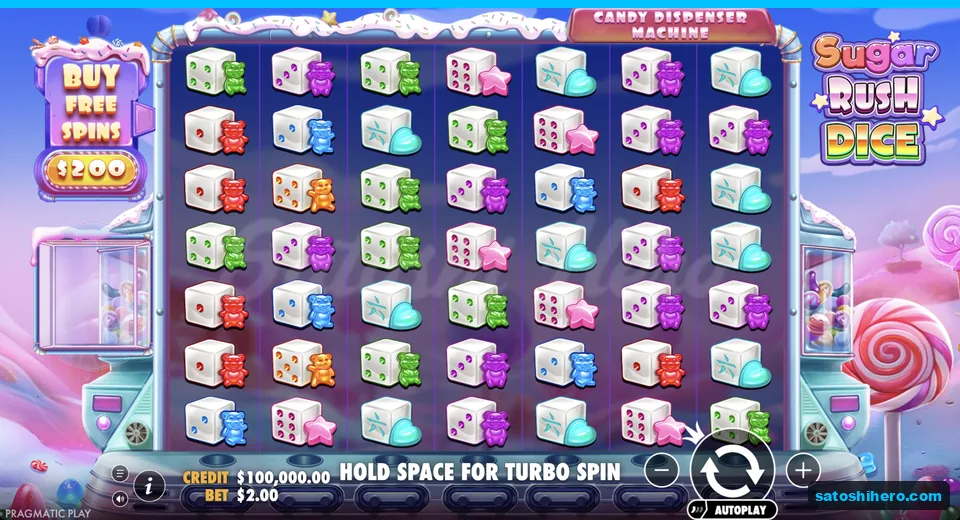
Sugar Rush shares the same sweet-grid DNA, while this version changes the wrapper with dice-styled symbols and keeps the multiplier chase. If you know that candy-cluster style, you’ll feel at home fast. The theme won’t surprise you, but it keeps the action clear.

Did You Know? The dice don’t create random dice rolls; they’re just the symbol skin for a cluster-pays slot. That matters because you’re reading clusters, not chasing dice outcomes.
In my base-game screenshot notes, the $2.00 stake, $200.00 buy rail, candy dice, and large demo balance all stood out clearly. The layout also held up well during turbo play, which matters when you’re tracking repeated tumbles. The look feels familiar, but it makes the board easy to follow.
How Sugar Rush Dice Works
Sugar Rush Dice uses a 7×7 cluster-pays grid, not fixed paylines. You need at least five matching symbols connected horizontally or vertically to make a win.
Cluster wins
Each spin drops symbols across seven reels and seven rows. Matching symbols can connect up, down, left, or right, and bigger connected groups pay more. You shouldn’t treat any hidden game-data line count as paylines here, because the slot doesn’t pay that way.
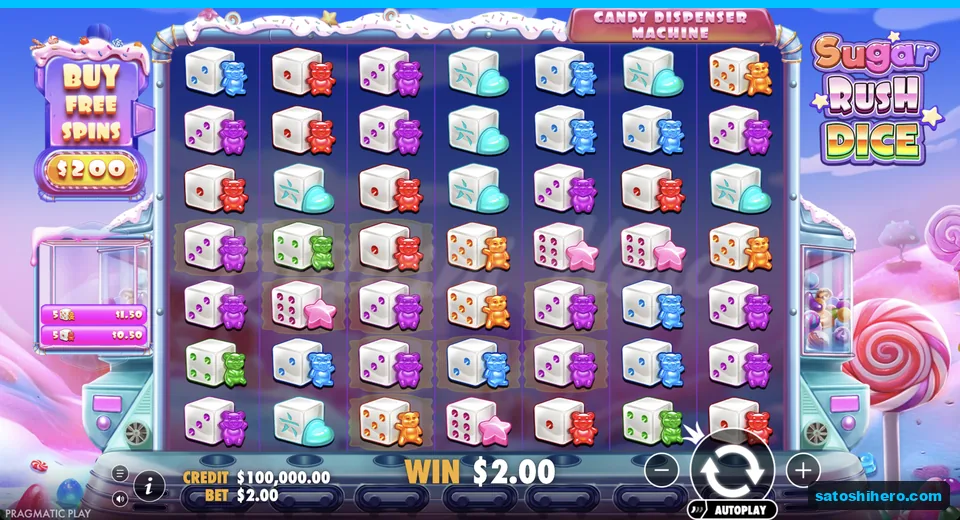
I like this setup because you can read it quickly after a few spins. You watch for connected blocks, then look for tumbles that refill into the same area. On desktop and mobile, the grid remains readable because the symbols are large and the pay information stays simple.
Sugar Rush 1000 may appeal more if you want a louder, more amplified candy-grid multiplier chase. This game feels tighter and simpler by comparison. You still get the same basic joy of watching a cluster collapse and hoping the next drop hits marked spaces.
Symbol values
At the $2.00 total bet, the 15-plus cluster values show a clear top tier:
- Pink star candy: $300.00
- Orange gummy bear: $200.00
- Green bear: $120.00
- Purple bear: $80.00
- Blue bear: $60.00
- Red bear: $50.00
- Teal heart candy: $40.00
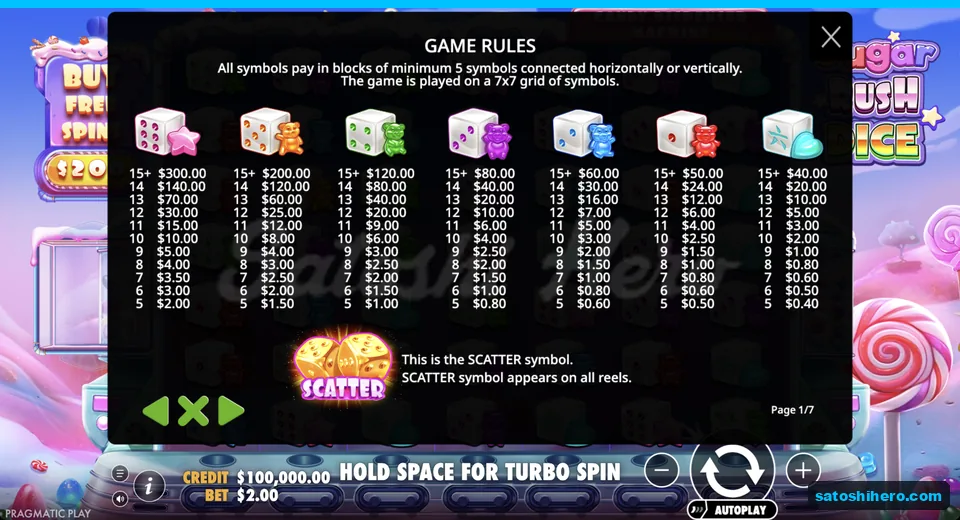

Quick Fact: At the $2.00 stake, the top regular-symbol cluster pays $300.00 before any multiplier spots apply. That’s a strong base value, but you still need the grid to connect it.
There is no wild in the tested rules, which keeps the system blunt. The candy-machine scatter lands on all reels and opens free spins when enough of them land. I prefer that clean symbol set here because the real puzzle is the multiplier map.
Tumble Wins and Cascades
Tumbling wins make paid clusters burst, vanish, and refill from above. A spin keeps tumbling until the next drop creates no new winning cluster.
How tumbles pay
The flow stays simple. A cluster pays, those symbols burst, fresh symbols fall into the empty cells, and the game checks again. All wins from one tumble chain get added before the spin settles.
You want a chain that returns to valuable cells, not a random set of isolated clears. That difference matters more than it first appears. A small cluster can grow into a better total when several drops keep feeding the same area.
I found the tumble pace easy to follow, even in turbo. The animations move fast, but the grid doesn’t turn into visual noise. That helps when you’re watching whether marked cells come back into play.
Base-game impact
My 500-spin session showed the rough side of base-game tumbles. Most hits landed around $0.40 to $4.90 at the $2.00 stake, so many wins felt more like damage control than progress.
The tumbles sometimes gave small clusters a chance to grow, but they rarely built enough during my cold leg. I kept wanting chains to revisit marked cells, yet the base game often cleared the map before anything meaningful stacked. That made the grind feel honest, but harsh.
This is where the game shows its teeth. Tumbles create the movement, but multiplier spots create the actual upside. Without repeated hits on the same cells, the feature engine never really wakes up.
Multiplier Spots
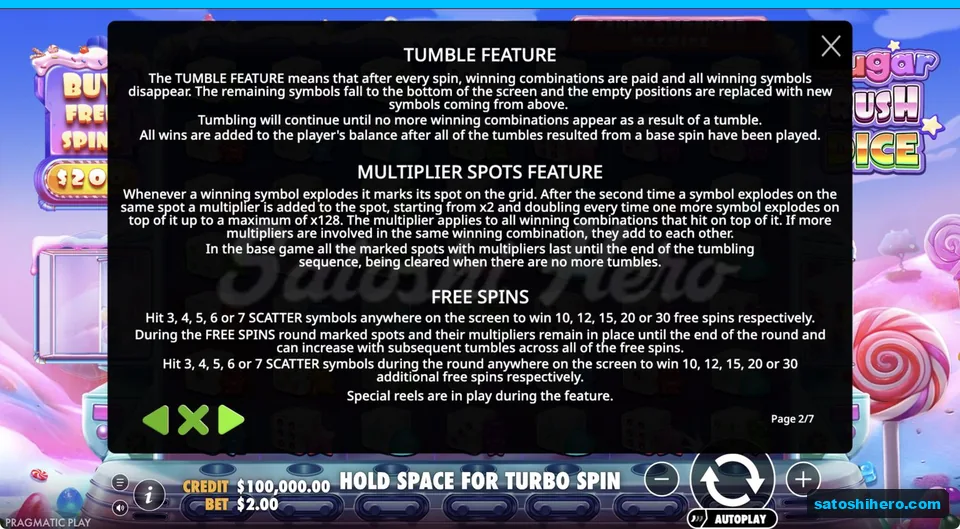
Multiplier spots drive the whole game because repeat wins on the same cell can double up to x128. The base game clears those spots, while free spins keep them alive.
Spot progression
When a winning symbol bursts, it marks that grid spot. The second burst on the same spot adds x2, and later hits double the value again. The cap on a single spot is x128.
A multiplier applies when a winning cluster includes that cell. If one cluster covers several multiplier spots, the game adds those values together. You can see why repeated tumbles matter more than one-off clusters.

Pro Tip: Don’t overrate base-game x2 spots. The real upside comes when the map stays alive in free spins and repeated hits keep feeding the same cells.
Base versus feature
Base-game multiplier spots can look exciting, but they often vanish too quickly. I saw promising cells appear during my session, only for the tumble chain to end before they mattered. That creates a teasing rhythm you’ll either enjoy or find annoying.
Free spins change that feel because marked cells stay active across the whole round. Once that happens, a modest cluster can become much stronger if it crosses stacked cells. I think this rule gives the slot its only serious shot at big momentum.
The base game gives you a preview of the engine. The feature gives the engine enough time to matter, which is why scatter hits feel so important.
Free Spins
Free spins turn the multiplier map sticky, making this the main feature in the slot. You trigger the round with three or more candy-machine scatters.
Scatter awards
The scatter awards are easy to remember:
- 3 scatters: 10 free spins
- 4 scatters: 12 free spins
- 5 scatters: 15 free spins
- 6 scatters: 20 free spins
- 7 scatters: 30 free spins
Three or more scatters during the round can retrigger the same spin awards. That gives the feature a second way to stretch beyond its starting count. Still, you need clusters to revisit hot cells, or the added spins may not change much.
If you try Sugar Rush Dice free in demo mode first, this is the round you want to see before using real balance. Demo and real play sit on SatoshiHero, so you can test the flow without treating my result as your destiny. I’d do that before touching the buy button.
Sticky multipliers
In free spins, marked cells stay marked across the feature. A cell can climb from x2 toward much higher values if wins keep landing there. Hot spots can turn average clusters into the kind of hits the base game rarely produces.
Sugar Rush Xmas makes sense as a seasonal alternative if you like sweet-shop cluster slots with a festive skin. This dice version feels less festive and more mechanical. I think that makes the feature easier to read, but less charming.
The 5,000x max win potential lives in this accumulating multiplier map. That doesn’t mean the round pays well by default. The best upside appears when sticky cells build early, stay active, and keep getting crossed by real clusters.
Buy Free Spins
The bonus buy costs 100x the bet and sends you straight into sticky-multiplier free spins. At my $2.00 stake, the Sugar Rush Dice bonus buy cost $200.00.
Buy cost
The buy drops a random 3 to 7 scatters on the triggering spin. That means you skip the base-game wait and enter the free spins round immediately. It feels tempting because the base game can grind hard.
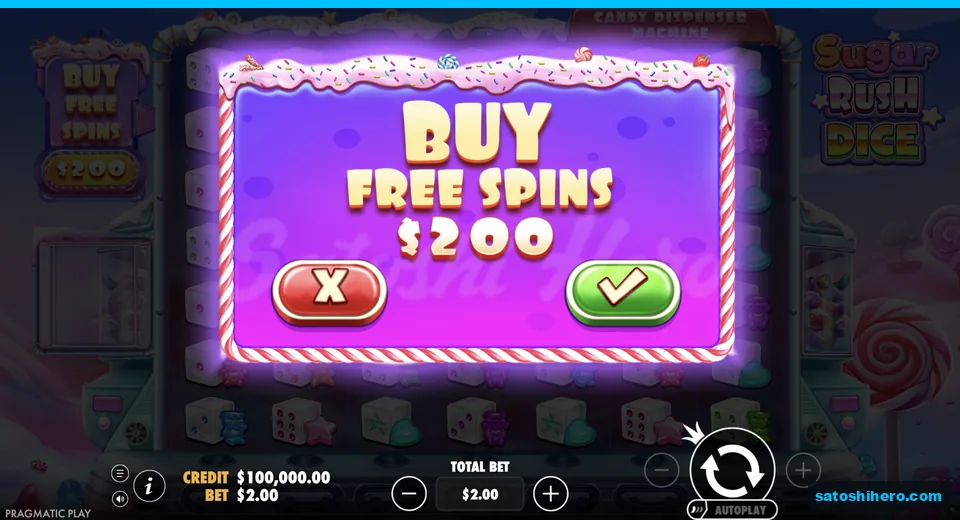
The rules list the same 96.5% RTP for natural and bought free spins. I like that clarity because you don’t need to guess whether the button changes the headline return. The buy changes access, not the risk profile.
A $200.00 click still feels heavy at a $2.00 stake. You need to be comfortable with one feature round failing to cover its cost. If that price makes you tense, the buy button probably isn’t your friend.
What changes
The buy doesn’t remove very-high volatility. It doesn’t promise profit, and it doesn’t make sticky multipliers climb faster. It simply drops you into the part of the game where the best upside can happen.
That distinction matters. You’re buying a seat at the feature table, not buying a payout. I think bonus-buy fans will understand the appeal, but casual players may expect too much from one round.
The cleanest use is testing the feature directly in demo mode. Once real balance is involved, the price demands discipline. The buy can save time, but it can also turn one bad choice into a fast $200.00 swing.
Bonus Buy Test Result
My tested buy returned $146.50 from a $200.00 cost, so it lost $53.50 despite reaching the feature. The round showed the sticky-multiplier engine, but it didn’t stack high enough.
Tested buy
I bought the free spins once for $200.00 from a clean $100,000 demo balance. The stake was $2.00, so the price matched the 100x buy cost exactly. The buy opened 10 free spins with the sticky multiplier map active.
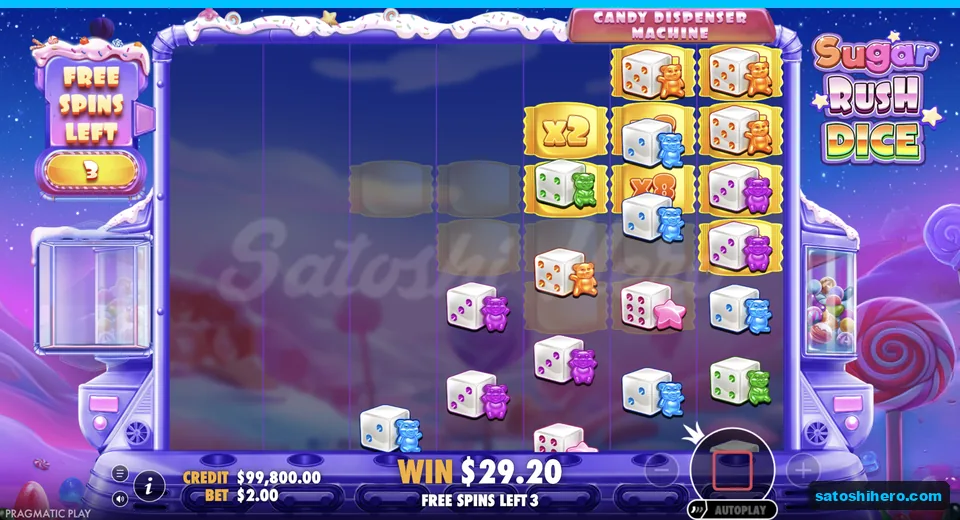
A few x2 and x4 spots built across the grid. That looked promising, yet the round never found the kind of repeat traffic it needed. You could see the engine working, but not at a strong enough pace.
For me, this buy felt entertaining but not convincing. The sticky spots need to stack much higher before the price feels justified. That’s a useful lesson if you expect every bought feature to produce a dramatic swing.
Round outcome
The round paid in steady tumbles rather than one large hit. My biggest single cluster landed at $29.20 mid-round, which helped but didn’t change the shape of the result. The final total reached $146.50, or 73.25x the bet.
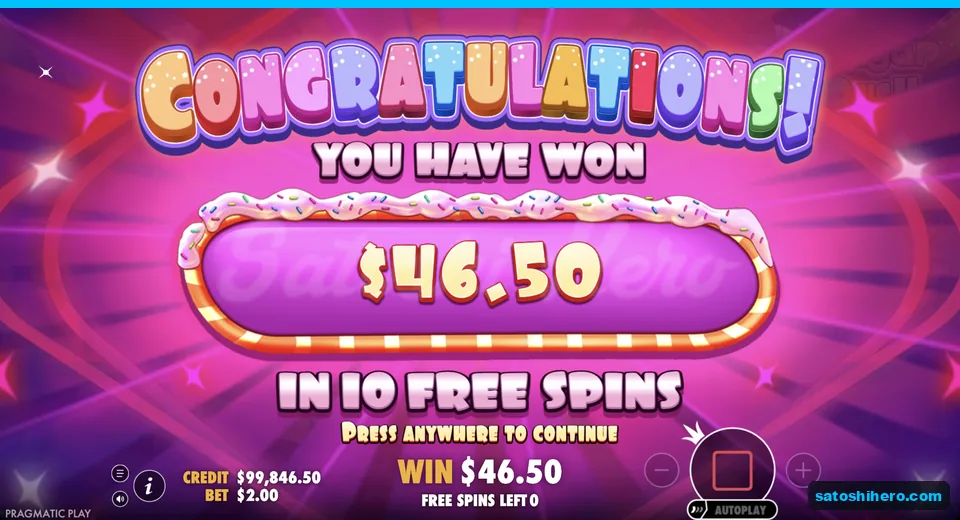
Against the $200.00 buy cost, that left a $53.50 loss. That doesn’t prove the buy lacks value, but it shows the danger clearly. One bought feature can run fine mechanically and still finish below price.
I came away respecting the risk more than the excitement. The feature has real bite when cells build, but my round stayed too flat. If you buy, treat the cost like a serious wager, not a shortcut to profit.
RTP, Volatility & Our Test
The slot has 96.5% RTP, very-high volatility, and 5,000x max win potential. My 500-spin test showed the rough side of that profile: $381.30 down with zero free spins.
Simulator projection
The SatoshiHero Slot Simulator modelled 1,000 spins at the $2.00 stake using the published 96.5% RTP, very-high volatility, and 5,000x cap. The median run finished about $133 down. That already tells you the base game can bleed before the feature lands.
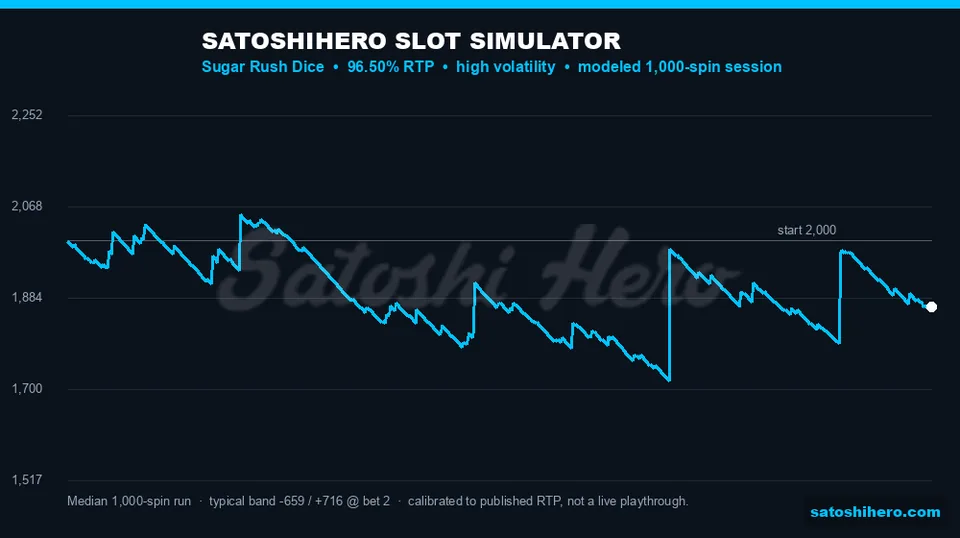
The spread mattered more than the average. The 5th percentile sat roughly $659 down, while the 95th percentile reached about $716 up. I like that range because it shows the slot’s real personality better than one headline number.
A feature-level event appeared around once every 46 spins in the model. A 100x-plus single result appeared around once in 1,524 spins, and hits landed on about 18% of spins. Those numbers don’t predict your next session, but they show why thin bankrolls can struggle.
Our 500-spin session
I ran 500 spins at $2.00 in turbo from a fresh $100,000 demo balance. The session finished at $99,618.70, leaving a net loss of $381.30. I didn’t trigger free spins once.
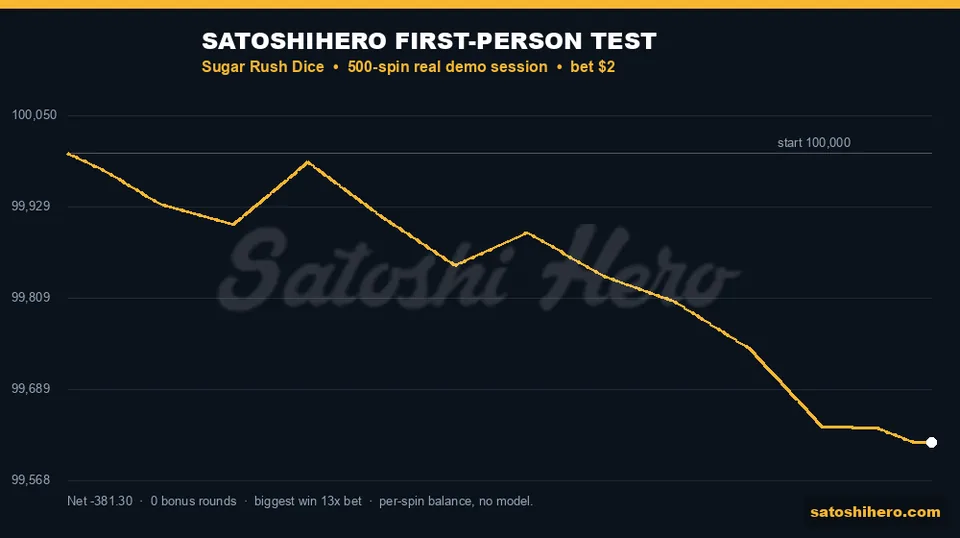
Base-game wins mostly paid $0.40 to $4.90. My biggest single win was $26.50, about 13x the bet, and it never shifted the balance trend for long. The graph felt like a slow slide with only small bumps.
The multiplier spots kept clearing at the end of each base-game tumble sequence. That meant nothing compounded, even when a cell briefly looked useful. Three scatters never lined up, so the sticky map never switched on.
That result sits on the ugly side of Sugar Rush Dice volatility, but it doesn’t feel strange for this math style. You’re playing for a feature that can arrive late or not at all. I’d size my stake around 200-plus spins, then accept that even that may not be enough.
The theoretical RTP is the operator-published return figure, and one live or demo session doesn’t prove or disprove it. Bonus-buy and base or feature configurations can differ slightly by design, but this game’s rules list 96.5% for natural and bought free spins.
Frequently Asked Questions About Sugar Rush Dice
Does Sugar Rush Dice use clusters or fixed lines?
Sugar Rush Dice uses a 7×7 cluster-pays grid, not fixed lines. Wins form from five or more matching symbols connected horizontally or vertically. The dice are styling, not a paylines mechanic.
How do the multiplier spots work in Sugar Rush Dice?
Winning symbols mark grid spots after they burst. The second win on the same spot adds x2, and later hits double up to x128. Multiple spots in one win add together, while base-game spots clear and free-spins spots persist.
How are Sugar Rush Dice free spins triggered?
Three, four, five, six, or seven scatters award 10, 12, 15, 20, or 30 free spins. Three or more scatters can retrigger the round. Sticky multipliers stay active for the whole feature.
Can you buy Sugar Rush Dice free spins, and is it worth it?
Yes, the buy costs 100x the bet. At $2.00, that was $200.00, and my test returned $146.50, or 73.25x the bet. It skips the wait, not the volatility.
What is the RTP, volatility and maximum win in Sugar Rush Dice?
RTP is 96.5%, volatility is very-high, and maximum win is 5,000x. Long quiet stretches can happen, especially when free spins don’t land. My 500-spin test showed that risk clearly.
How did the simulator compare with the real Sugar Rush Dice session?
The simulator showed wide spread and base-game bleed. My 500-spin session finished $381.30 down with zero free spins. That result sat on the unlucky side but still matched the very-high volatility profile.
What is Sugar Rush Dice based on?
It follows Pragmatic Play’s candy-grid Sugar Rush style. This version changes the visual wrapper with glossy dice symbols. The core chase still revolves around tumbling clusters and sticky multiplier spots.
Are there Sugar Rush Dice codes?
No Sugar Rush Dice codes mechanic appears in the tested game rules. The value comes from scatters, tumbling clusters, multiplier spots, and the optional free spins buy.
Final Thoughts
Sugar Rush Dice stands out through its sticky multiplier map, not through its candy theme. The main drawback is simple: you can spend hundreds of spins waiting for the part of the game that matters.

My Verdict
High-volatility hunters and bonus-buy fans get the most out of this slot. Expect long base-game droughts, small cluster wins, and occasional feature rounds that need early sticky spots to shine. I’d play it carefully, not casually.
I like the clean cluster system and the way the free spins map gives every hot cell a purpose. I don’t like how flat the base game felt during my 500-spin run, especially with zero free spins triggered. My bought round was fun to watch, but the $53.50 loss kept it grounded.
Sugar Rush Dice is checked regularly as part of SatoshiHero’s game coverage, including screenshots and test notes. If the rules stay the same, my practical advice stays simple: test the feature in demo first, then stake for a long grind.

Pros:
 Clear cluster wins: The 7×7 grid makes every connected win easy to read.
- Strong feature engine: Sticky multipliers can turn modest clusters into serious hits.
- Transparent buy cost: The 100x price makes risk easy to size.
- Readable theme: Large candy dice keep the busy board under control.

Cons:
 Harsh dry spells: My 500-spin test missed free spins entirely.
- Base spots clear: Multipliers often vanish before they build real value.
- Buy can miss: My $200.00 feature returned only $146.50.

Best For: Patient bankroll managers, cluster-slot fans, and feature chasers get the best fit here. You need to enjoy tumbling grids, accept very-high volatility, and stay calm when the base game drips small wins. Casual low-risk play feels less natural unless you stick to demo mode first.
Similar Games
































































Bets
All Bets
Game
Player
Date
Wager
Mult.Multiplier
Prize
 Luck of Panda: Bonus Combo
 Hidden
- 15:14:01
- 0×
- Galaxy Glitter
 blazecraft
- 15:14:00
- 0×
- Wild Buffalo Megaways: Hold N Link
 nina87
- 15:14:00
- 0×
- Mr. Crystalman: Hold 'N' Link
- Hidden
- 15:13:59
- 0.09×
- Luck of Panda: Bonus Combo
- Hidden
- 15:13:59
- 0×
- Luck of Panda: Bonus Combo
- Hidden
- 15:13:58
- 0×
- Cai Shen's Palace: Hold'n'Link
- Hidden
- 15:13:57
- 1.55×
- Royal Fruits 9: Hold 'n' Link
- Hidden
- 15:13:56
- 0×
- Luck of Panda: Bonus Combo
- Hidden
- 15:13:56
- 0×
- Elephant's Gold: Bonus Combo
- josh1998
- 15:13:54
- 0.38×