

The Cage
By pressing play, you agree that you are above legal age in your jurisdiction and that your jurisdiction allows online gambling.


The Cage slot Guide: 500 Spins, Bonus Buys and Title Fight Testing
I tested The Cage slot through 500 organic spins and two bonus buys to see whether the Title Fight ladder can carry its brutal base game. The Cage slot is a high volatility slot from Nolimit City with 96.05% RTP and 25,000x max win potential. It uses seven reels in a 3-4-3-4-3 setup with 5,184 win ways paying both ways. Patient bankroll managers face slow base-game stretches while waiting for Title Fight swings.
Key takeaways
- Best organic result: The second Title Fight paid $515.95 from a $1.00 stake after a $513.20 NAP TIME hit.
- Best bonus: Little Dragon played better than Big Fatty, but returned $202.95 from a $498 buy.
- RTP / volatility: Official base-game RTP is 96.05%, with high volatility.
- Max win: The cap is 25,000x, and capped rounds end immediately.
- Risk note: Base spins leaked slowly, so strong Title Fight positions carried my test.
- Bankroll note: Buys cost $68, $198, $498 or $279 for Lucky Draw at a $1.00 stake.

Table of Contents
- How The Cage slot Works
- Board and ways
- Avalanche chains
- Theme and First Impressions
- Comic-book grime
- Cage-side layout
- Symbols and Pay Values
- Fighter pays
- Royal pays
- Wild Knockout xBombs and Roundhouse Kick
- Knockout explosions
- Dead-spin rescue
- Title Fight Freespins
- Opponent ladder
- Organic triggers
- Title Belt Boosters
- Booster ladder
- Deep-run value
- Biggest Organic Win
- Nap Time hit
- Session swing
- Bonus Buy Options
- Buy menu
- Entry prices
- Bonus Buy Test Results
- Cheap entry
- Top entry
- RTP, Volatility & Our Test
- Simulator projection
- Our 500-spin session
- Frequently Asked Questions About The Cage
- Final Verdict
How The Cage slot Works
The Cage slot works as a 5,184-ways game where wins can connect from either side across adjacent reels. You’re not chasing fixed paylines here, which matters because the board shape changes how every drop feels.
Board and ways
The base board uses seven reels in a 3-4-3-4-3 diamond lattice. Wins pay both ways, so matching symbols can start from either edge and run across adjacent reels. That gives you more connection routes than a line slot, but it doesn’t make the base game generous by itself.
The demo I played on SatoshiHero opened at $1.00 per spin on a fresh $10,000.00 balance. The star rail opened an empty Nolimit Promotions panel, and I found no ante bet or booster. You should check the in-game rules because Nolimit menus can show separate buy RTPs.
Avalanche chains
Winning symbols explode, then the remaining symbols tumble down and left. New symbols fill the gaps, and the same paid spin can keep going if fresh wins connect. A running multiplier sits on a scrap of paper in the top-right corner, then climbs during Wild Knockout xBomb chains.
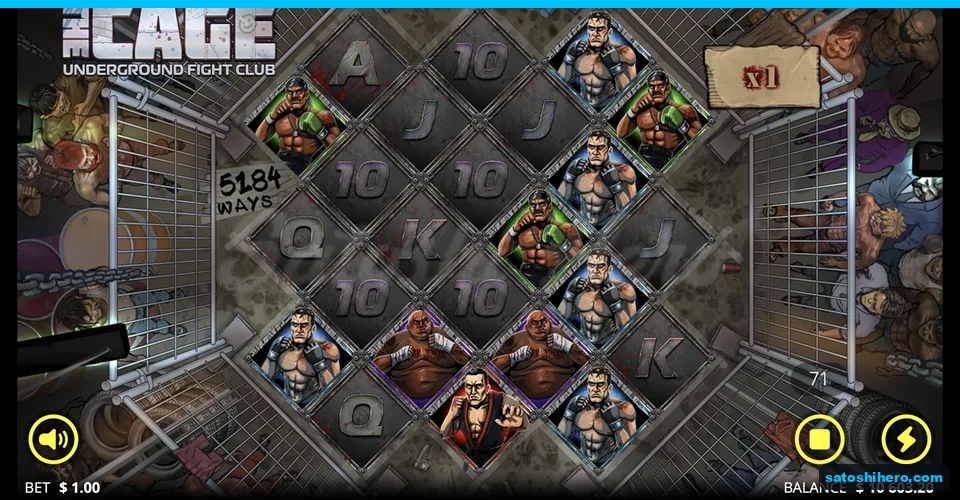
My best ordinary base-game result was only $3.95 from a $1.00 spin after the multiplier climbed to x2. I also saw x3 on base spins, but those moments still lacked the punch of Title Fight. The layout stays readable on desktop and mobile because the key meter, balance and buy controls sit outside the main diamond board.

Key Stat: 5,184 ways means matching symbols can connect from either side across adjacent reels. You’re not chasing fixed paylines.
Theme and First Impressions
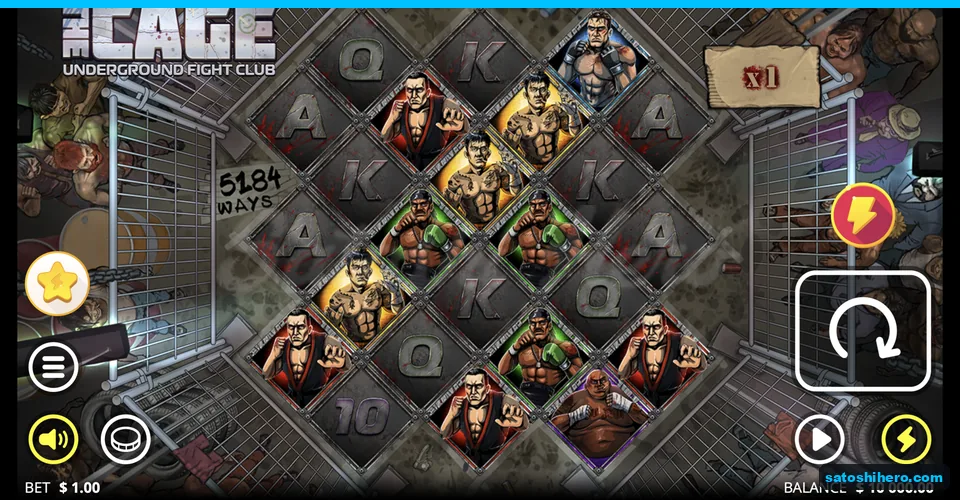
The theme lands as an underground bare-knuckle fight club, and the board feels like one cage-side comic panel. Nolimit builds the fight-club slot around grime, sweat and cramped pressure rather than clean prize-ring polish.
Comic-book grime
The diamond lattice floats over a chain-link cage, with painted crowds screaming through wire on both sides. Every symbol sits inside a riveted metal tile, and the tiles carry blood flecks. The theme won’t win subtlety points, but the board feels coherent.
If you like darker Nolimit moods, The Crypt gives you a colder horror angle instead of cage-fight noise. I prefer this slot’s comic framing because you always know where the action sits. You get violence, but the art still keeps the reels readable.
Cage-side layout
The Cage uses its cage setting well because the board never feels detached from the scene. You’re looking at a fight through the wire, not a generic reel set with boxer pictures pasted on top. That helps when the xBombs start clearing tiles quickly.
The painted crowd adds energy without hiding symbol shapes. I wouldn’t call the look elegant, but elegance isn’t the point here. The useful takeaway is simple: the theme adds mood while leaving the win paths clear.
Symbols and Pay Values
The fighter symbols carry the best regular pays, while royals fill the lower tier. The taped red fist acts as the Wild Knockout xBomb, and the gold belt medallion opens Title Fight.
Fighter pays
At my $1.00 stake, Little Dragon pays $4.00 for nine down to $1.25 for three. The Constrictor pays $3.75 down to $1.00, and One Glove Man pays $3.50 down to $0.75. Ironjaw pays $3.25 down to $0.60, while Big Fatty pays $3.25 down to $0.50.
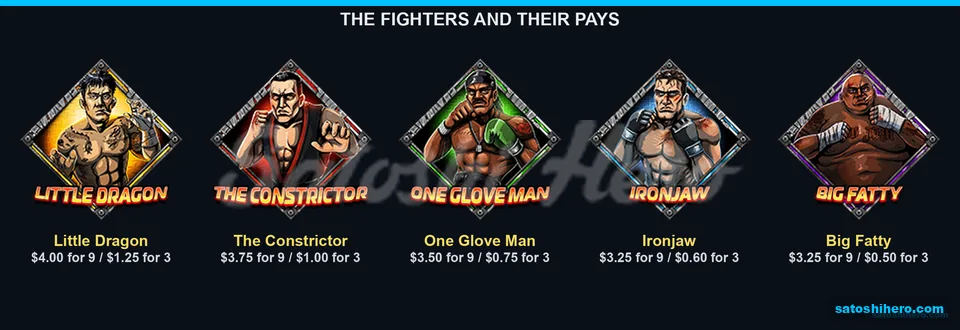
Those values look modest at first glance, but the both-ways setup and avalanche system matter. You want repeated collapses, not one flat hit. Still, the base game doesn’t hand out enough larger fighter wins to feel comfortable.
Royal pays
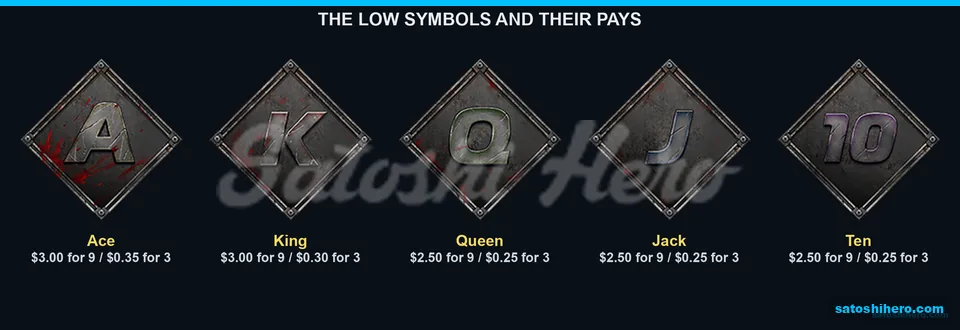
Ace pays $3.00 for nine down to $0.35 for three. King pays $3.00 down to $0.30, and Queen, Jack and Ten each pay $2.50 down to $0.25. Those royals seem weak, but they become more useful inside Title Fight.
The Wild Knockout xBomb substitutes for every paying symbol except the scatter. The Title Fight scatter lands anywhere, so you don’t need a neat line or a fixed pattern. Fighters also become opponents in the bonus, while low symbols matter because boosters can multiply or transform them.
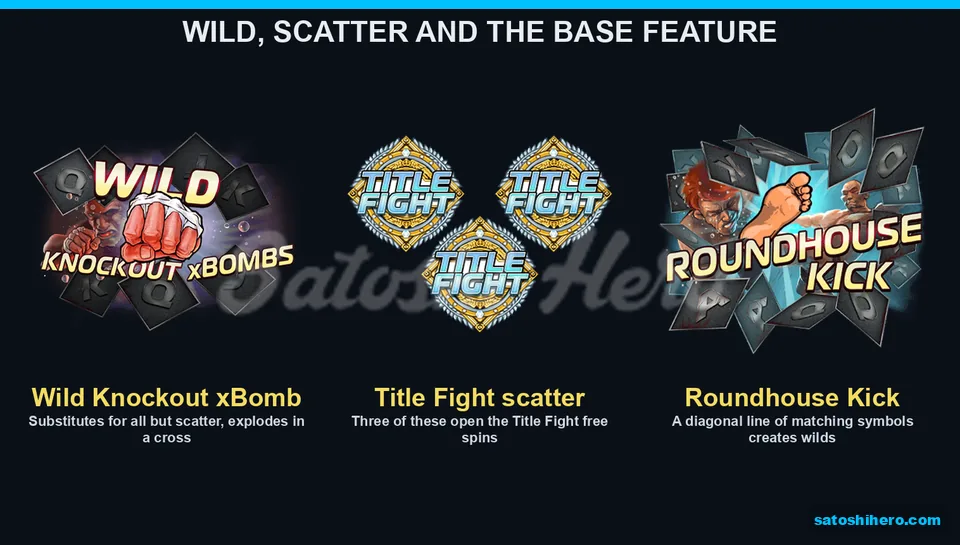
Wild Knockout xBombs and Roundhouse Kick
Wild Knockout xBombs drive the avalanche engine, while Roundhouse Kick rescues some dead spins. I like the mechanic, but I wouldn’t treat it as the real value source.
Knockout explosions
A Knockout symbol doesn’t just substitute. It explodes adjacent symbols in a cross pattern, spares scatters and other Knockouts, then raises the win multiplier by one for the next collapse. Every Knockout on the board detonates before the next collapse resolves.
Two or three Knockouts can clear a large part of the grid. That looks exciting because the refill lands with a bigger multiplier waiting. You should still temper expectations, since most base-game chains in my test stayed small.
Dead-spin rescue
Roundhouse Kick fires on losing spins. It needs three, four, five or six matching paying symbols diagonally with no win, then drops one, two, three or four Wild Knockout xBombs into the middle of that alignment. The rest of the grid explodes, except Knockouts and scatters.
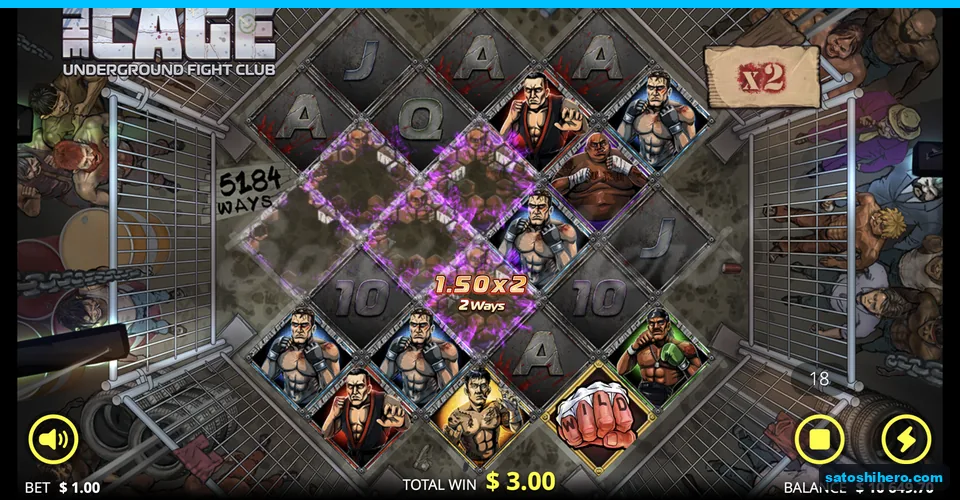
I saw it trigger often enough to feel real rather than decorative. The problem is value. It mostly recovered cents, not dollars, and The Cage slot still needed Title Fight progress for meaningful session movement.

Strategy Insight: Don’t overrate every Roundhouse Kick. It keeps base spins alive, but the real money in testing still came from Title Fight progress.
Title Fight Freespins
Title Fight free spins are the main bonus, and they matter because each knockout moves you up a fighter ladder. Deeper progress adds stronger booster support, which changed my test more than any base feature.
Opponent ladder
Three scatters open Title Fight free spins. The board switches to nine reels in a 3-3-3-2-2-2-3-3-3 layout, and it still pays both ways. Four title belt booster positions sit in the middle of the board.
You fight Jim “Big Fatty” Johnson first, with 3 hit points and +3 spins. Kenny “Ironjaw” Shambles also has 3 hit points and +3 spins. Artie “One Glove Man” Jefferson has 4 hit points and +3 spins, while Grayson “The Constrictor” Royce has 5 hit points and +5 spins.
Wai “Little Dragon” Le is the final opponent with unlimited hit points. No more Uppercut symbols land in that fight, so you stop climbing and ride out the remaining spins. Each Uppercut removes one hit point from the current opponent.
Organic triggers
Four organic Title Fights landed during my 500 spins. Three arrived inside my first 110 spins, which pushed the session well above the simulator median. That cluster was lucky, and you shouldn’t treat it as the default rhythm.
The first bonus paid $50.30 after I knocked out Big Fatty and Ironjaw. The third paid $181.15, and the fourth paid $78.45 after I reached The Constrictor with three belts live. Those rounds explain why The Cage slot won despite base-game leakage.
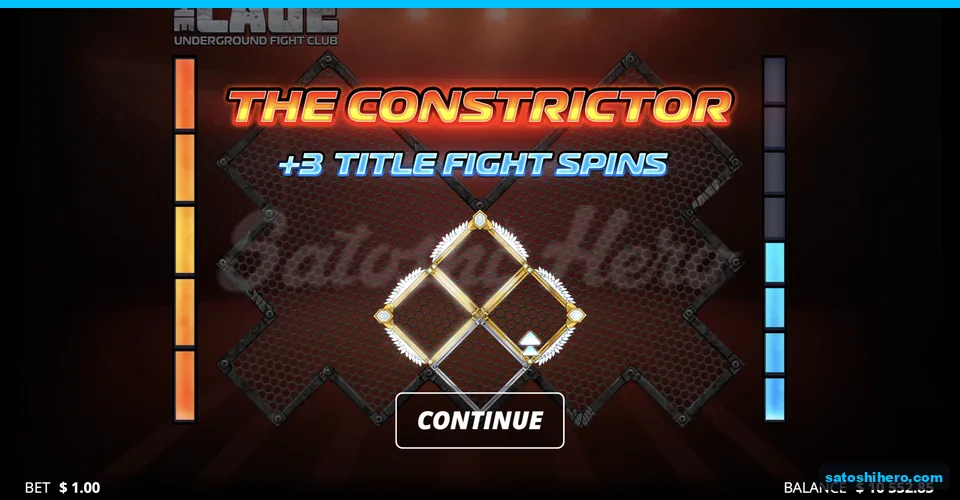
Title Belt Boosters
Title Belt boosters make deeper Title Fight runs more valuable because each knocked-out opponent arms another middle-board advantage. Early exits feel thin, while later fights can reshape the whole board.
Booster ladder
Four belt positions start inactive. Beating Big Fatty arms Belt 1, which doubles every copy of any Ace through Ten that lands there. Beating Ironjaw arms Belt 2, which transforms a low symbol into your current opponent’s symbol.
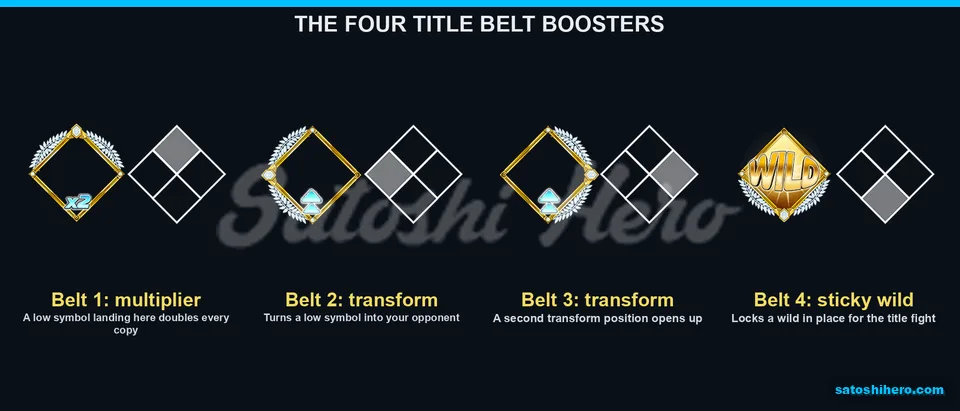
Beating One Glove Man arms Belt 3, a second transform position. Reaching Little Dragon arms Belt 4, a sticky Wild that holds for the rest of the championship fight. A belt activates once per spin, but it can still trigger after a tumble if it misses on the first drop.
Deep-run value
My deepest organic run reached The Constrictor with three belts live. That felt much stronger than a short bonus because the board changed, not just the spin count. You can see why the ladder matters once two transforms start converting weak tiles.

Insight: Reaching Little Dragon means all belts are live, but that doesn’t make the round automatically best. There’s no further ladder to climb, so avalanches and belts still need to connect.
The booster system is the sharpest part of the game. I’d rather watch belt activations than another plain scatter bonus, because they give you clear reasons to care about every opponent.
Biggest Organic Win
The standout organic result was a $515.95 Title Fight, driven by one $513.20 NAP TIME spin. That single hit changed the whole session.
Nap Time hit
The second organic Title Fight landed around spin 70. One spin inside it chained avalanches into a $513.20 hit, and the game showed the NAP TIME banner. The full round collected $515.95, which equalled 516x my $1.00 stake.
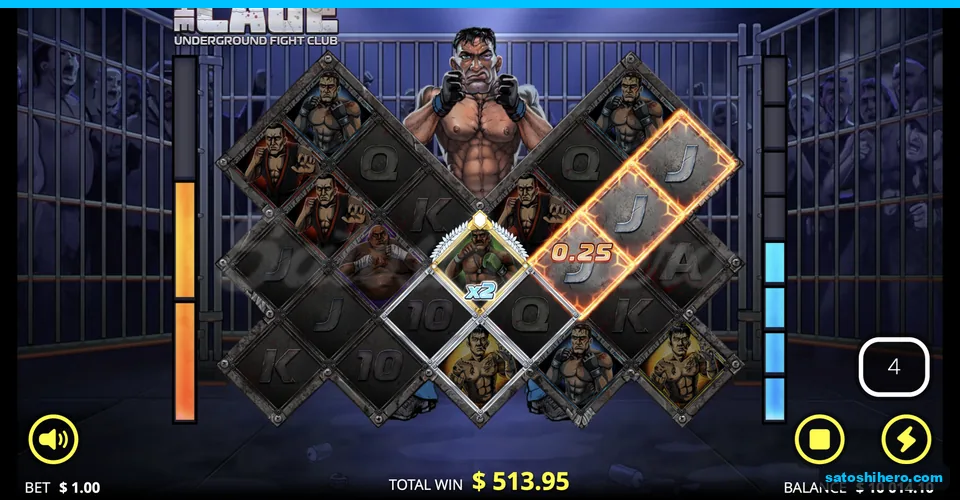
Nothing else came close in my test. The balance moved from $10,014.10 to $10,530.05 after that payout. You can call that exciting, but you also need to see how dependent the session became on one round.

Session swing
The high volatility showed up in a clean way. Long leaks came first, then one Title Fight flipped the score. I don’t mind that shape, but it punishes anyone expecting steady base-game returns.
The Cage slot feels honest about its brutality. It drains slowly during quiet stretches, then asks the bonus to rescue everything. That’s fun when it hits, and rough when it doesn’t.
Bonus Buy Options
The bonus-buy menu lets you pay for different Title Fight entry points, but the prices rise fast. The top route still carries serious risk, even with every belt active.
Buy menu
The red lightning button on the right rail opens the Nolimit Bonus panel. Buying takes a few steps: click the button, select a card, confirm on the pink ACTIVATE panel, close the menu, then press SPIN. The cost charges when the feature launches.
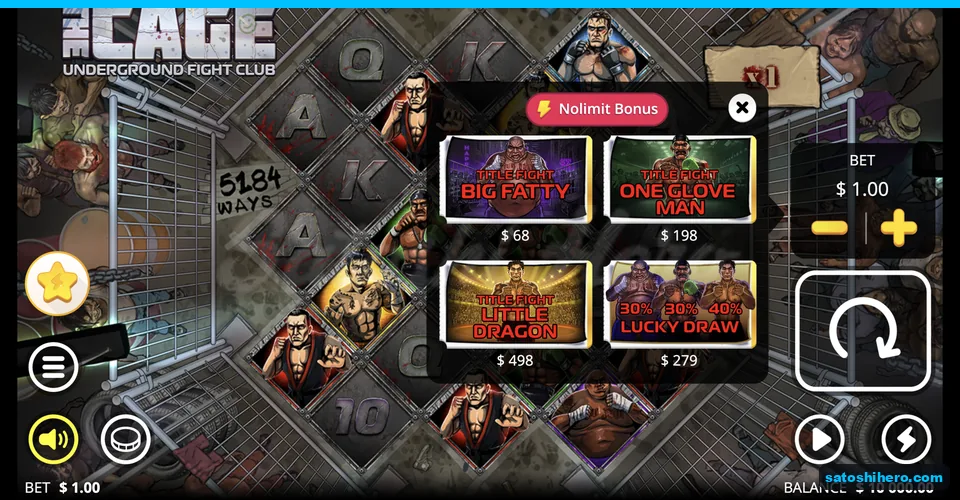
At a $1.00 stake, Title Fight Big Fatty costs $68 and starts at the first opponent with no belts armed. Title Fight One Glove Man costs $198 and starts at the third fight with the first two belts active. Title Fight Little Dragon costs $498 and starts at the championship with all four belts live.
Entry prices
Lucky Draw costs $279 and uses 30% / 30% / 40% weighting across the three entries. I didn’t buy Lucky Draw because it adds selection risk on top of feature risk. That doesn’t appeal to me when the direct prices already feel sharp.
The in-game rules list buy RTPs of 96.15% for One Glove Man, 96.33% for Little Dragon and 96.27% for Lucky Draw. I won’t invent a Big Fatty buy RTP, because the supplied rules didn’t give one. That kind of precision matters in a slot this volatile.

Warning: High volatility plus $68 to $498 buys can burn a bankroll quickly. In testing, the $498 Little Dragon buy returned $202.95, which felt better than the cheap buy but still lost against purchase cost.
Bonus Buy Test Results
Buying deeper improved the board in testing, but neither purchase returned its cost. That’s the cleanest lesson from my two paid entries.
Cheap entry
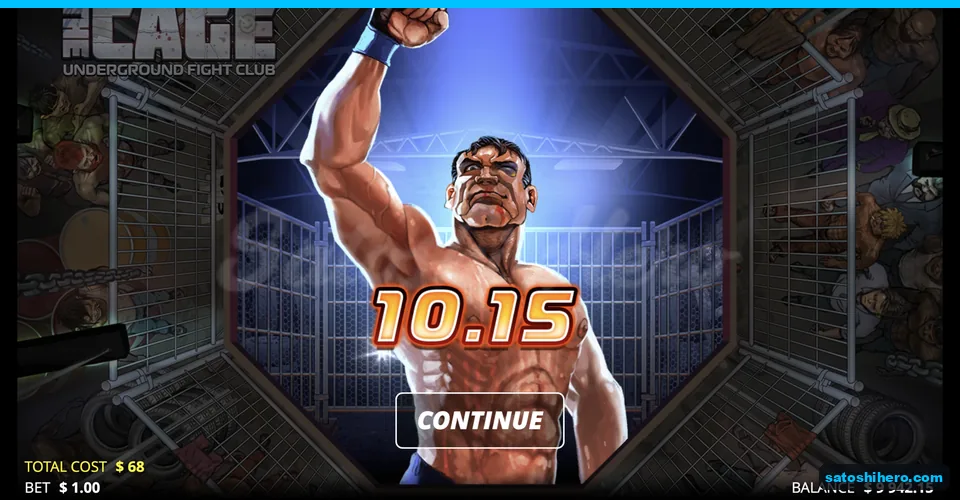
The $68 Big Fatty buy started at the bottom with no belts armed. I knocked out Big Fatty and moved up to Ironjaw with the x2 belt active, but the round ran out of spins during that second fight. It paid $10.15, which was about 15% of the cost and 10.15x stake.
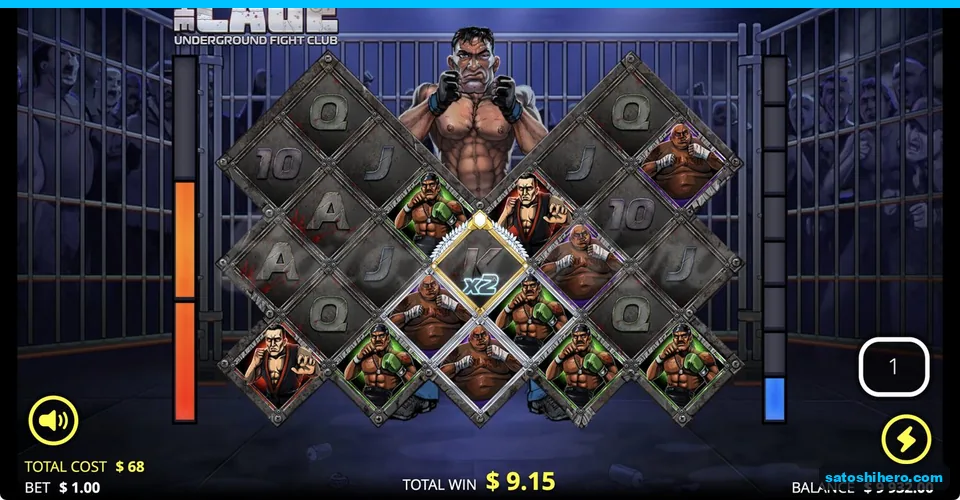
That result felt underpowered because one belt didn’t create enough conversion pressure. Low symbols filled the middle, and the multiplier never got moving. If you’re comparing risk-forward bonus value, The Border gives a different kind of volatile pressure, while this game ties value tightly to ladder progress.
Top entry
The $498 Little Dragon buy started at the championship with all four boosters active, including the sticky Wild. It played much better. Two multiplier positions and two transforms kept turning Ace and Ten tiles into fighters, and the round crossed $146 with three spins left.
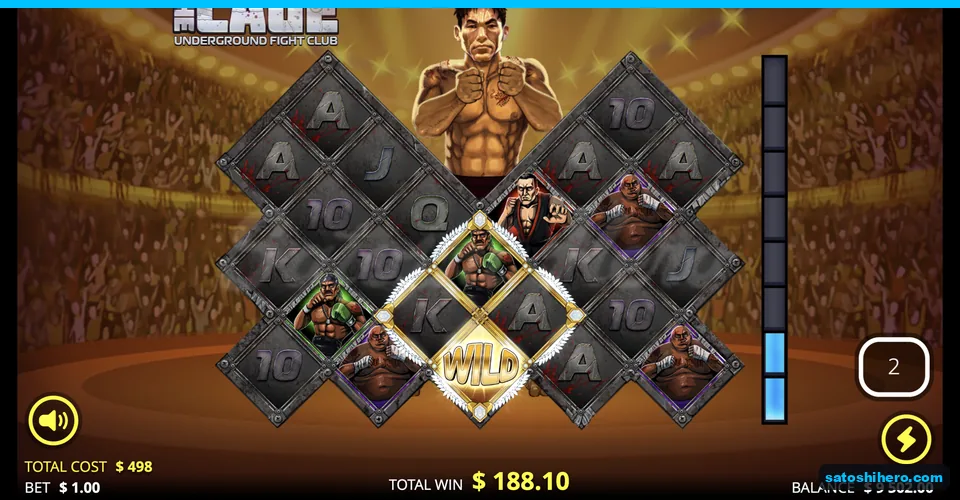
The final payout was $202.95, or 202.95x my stake. That sounds strong until you compare it with the purchase price, where it returned about 41%. The Little Dragon buy played better, but the price made a decent round feel disappointing.

Buying deeper bought a better board, not a guaranteed profit. I’d only touch these buys with a separate budget, because a normal bankroll can disappear quickly.
RTP, Volatility & Our Test
The official RTP is 96.05%, volatility is high, and my 500-spin result beat the simulator because four organic Title Fights landed. The maximum win is 25,000x, shown to players as a 25,000x cap, and capped rounds end immediately.
Simulator projection
Our simulator modelled 1,000 spins at $1.00 using 96.05% return, high volatility and a 25,000x ceiling. The median landed at $68.30 down. The 5th percentile sat $320.50 down, while the 95th percentile reached $362.60 up.
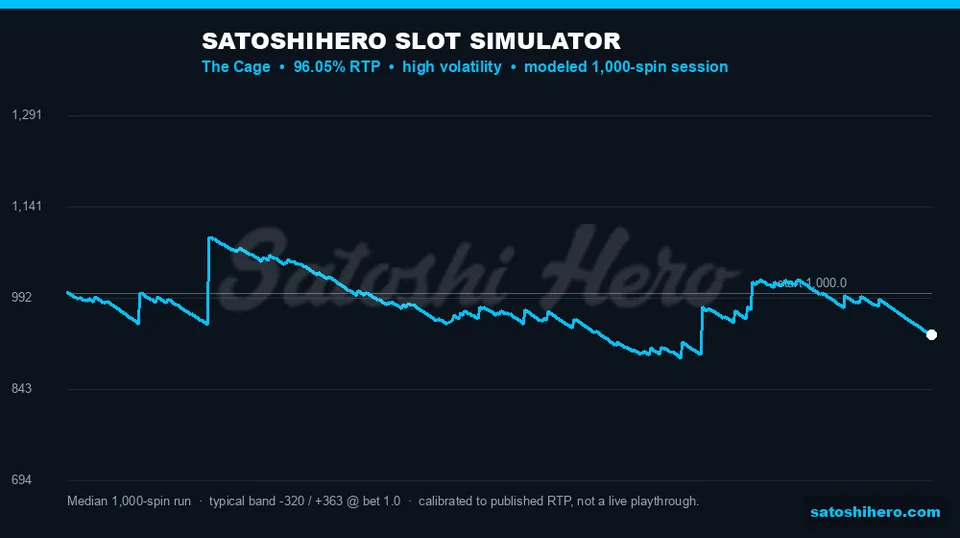
The model put a feature-tier result around 1 in 45 spins, and a 100x or better round around 1 in 1,757. Those numbers explain why The Cage slot can feel cold, even when the headline RTP looks fair.
The model can’t predict how far up the fighter ladder any given Title Fight may climb. That’s the decisive variable. If you enjoy aggressive pacing and swingy sessions, The Rave makes a useful comparison, but this fight-club game feels more ladder-dependent.
Our 500-spin session
I played 500 spins at $1.00 from a fresh $10,000.00 balance. I finished at $10,566.15, so the session closed $566.15 up. That landed near the simulator’s upper band, mainly because four organic Title Fights paid $50.30, $515.95, $181.15 and $78.45.
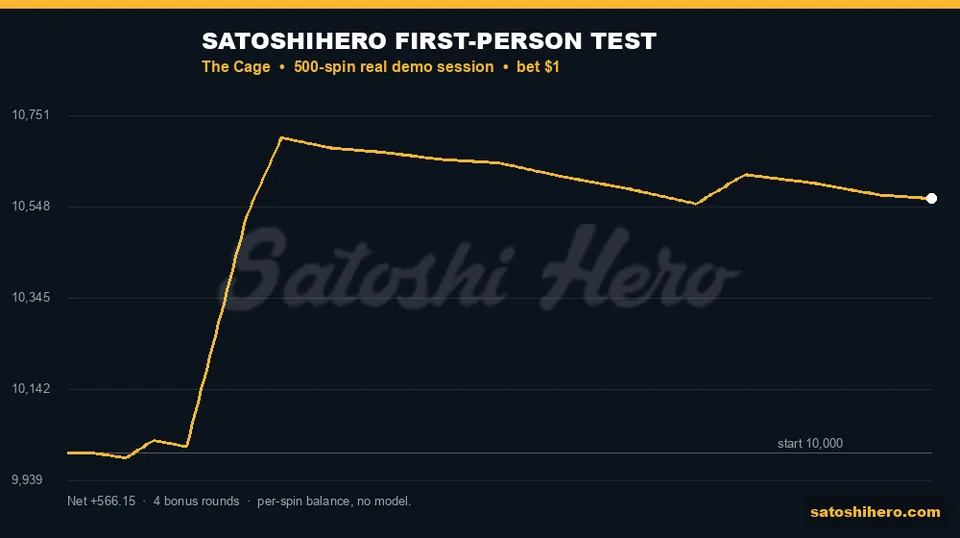
Base-game stretches leaked roughly $0.50 to $1.00 per spin when no feature landed. My best base result was $3.95 from an avalanche to x2. Without Title Fights, my session would have lost a few hundred dollars, and that tells you more than any hype line.
The max win is quoted at 1 in 35,000,000 rounds. Numbers indicate a brutal profile: small base returns, rare heavy spikes and massive dependence on bonus quality. The 25,000x ceiling is huge, but the game makes you pay for it with quiet stretches.
Theoretical RTP is the operator’s published return figure, and a single live session doesn’t change that. Feature-buy RTPs can sit slightly different from the base game by design. My 500-spin test helps explain feel and variance, not future results.
Frequently Asked Questions About The Cage
How many ways does The Cage slot pay?
The Cage slot pays through 5,184 win ways in the base game. It uses seven reels in a 3-4-3-4-3-4-3 layout, and wins pay both ways across adjacent reels. Title Fight free spins switch to a 9-reel 3-3-3-2-2-2-3-3-3 board that also pays both ways.
What is the Roundhouse Kick in The Cage slot?
Roundhouse Kick fires on losing spins when three, four, five or six matching paying symbols line up diagonally with no win. It drops one, two, three or four Wild Knockout xBombs into the alignment, explodes every other symbol except Knockouts and scatters, then raises the multiplier by one for each Knockout.
How do the Title Belt boosters work in The Cage slot?
Four booster positions switch on as you knock out opponents. The first doubles low symbols, the second and third transform low symbols into opponent symbols, and the fourth locks a sticky Wild for the championship fight.
What do The Cage slot bonus buys cost?
At a $1.00 stake, Big Fatty costs $68, One Glove Man costs $198, and Little Dragon costs $498. Lucky Draw costs $279 and uses 30% / 30% / 40% weighting across those three entries.
How did your 500-spin session in The Cage slot go?
I started at $10,000.00 and ended at $10,566.15, so I finished $566.15 up. Four organic Title Fights paid $50.30, $515.95, $181.15 and $78.45. Without those bonuses, my run would have lost.
What was the biggest win in The Cage slot?
My biggest win was a $513.20 single spin under the NAP TIME banner. The full Title Fight round paid $515.95, which was 516x my $1.00 stake.
Is the expensive The Cage slot buy worth it?
The Little Dragon buy played better than Big Fatty in my test, but it still lost against cost. Big Fatty cost $68 and returned $10.15, while Little Dragon cost $498 and returned $202.95. The top entry gives all belts, but there’s no further ladder left to climb.
What are The Cage slot RTP, volatility and maximum win?
The base-game RTP is 96.05%, volatility is high, and the maximum win is 25,000x. The in-game rules list feature-buy RTPs of 96.15% for One Glove Man, 96.33% for Little Dragon and 96.27% for Lucky Draw. The cap is quoted at 1 in 35,000,000 rounds.
Final Verdict
The Cage stands out because its Title Fight ladder gives every bonus a clear sense of progress. The main drawback is just as clear: the base game can drain you while you wait for three scatters.

My Take
I’d play this as a measured high-volatility test, not a casual balance builder. The bonus ladder gives the game real bite, but you need patience and strict stake control. If you buy features, treat each buy as its own risk.
I like the way belts make deeper runs feel genuinely different. I don’t like how a $202.95 Little Dragon payout can still feel flat after a $498 purchase. My 500-spin profit came from bonus timing, not steady base-game strength.
The Cage slot guide is checked regularly so rules, RTP details and feature notes stay aligned with the game screen. For me, the draw is the ladder system, while the warning is the cost of reaching it.

Pros:
 Clear ladder: Each knockout adds value through new belt support.
- Strong theme: The cage-side comic style keeps the action focused.
- Both-ways wins: The 5,184-way setup creates frequent connection paths.
- Memorable spikes: Title Fight can swing a session fast.

Cons:
 Cold base: Featureless stretches can drain $0.50 to $1.00 per spin.
- Costly buys: $498 can still return far below purchase price.
- Bonus dependence: Most meaningful value came from Title Fight rounds.

Best For: High-volatility hunters, bonus-buy testers and patient bankroll managers get the most from this game. The theme is harsh, the math is swingy, and the bonus ladder rewards steady bankroll control through quiet stretches without chasing losses.

































































Bets
All Bets
Game
Player
Date
Wager
Mult.Multiplier
Prize
 3 Witches: Bonus Combo
 bjgrandy149
- 00:20:34
- 24.05×
- Royal Fruits 9: Hold 'n' Link
 mdp0fxo
- 00:20:32
- 0×
- Luck of Panda: Bonus Combo
- Hidden
- 00:20:31
- 0×
- Halloween Harvest: Rapid Link
 Hidden
- 00:20:31
- 0.69×
- 4 Lucky Nuggets
 whodey39311
- 00:20:29
- 0×
- Halloween Harvest: Rapid Link
- Hidden
- 00:20:29
- 3.09×
- Aztec Magic Deluxe
 RicoSoul
- 00:20:28
- 0×
- Aztec Magic Deluxe
- RicoSoul
- 00:20:27
- 0×
- Halloween Harvest: Rapid Link
- Hidden
- 00:20:27
- 0×
- 4 Lucky Nuggets
- whodey39311
- 00:20:26
- 1.83×