

The Border
By pressing play, you agree that you are above legal age in your jurisdiction and that your jurisdiction allows online gambling.
Nolimit City

The Border
Title:
The Border
Payout:
96.17
Volatility:
very-high
Max multiplier:
44288x
Release:
September 16, 2022
Game Provider:
Nolimit City
Bitcoin Slots
- Provably Fair
- Instant Crypto Payouts
- Thousands of Games

Written byElenaUpdated
Crossing the Grid With Nolimit Teeth
The Border slot throws you straight into a provocative Nolimit City 6×6 cluster game where special symbols do the heavy lifting and patience gets tested hard.
The Border is a very-high volatility slot from Nolimit City with 96.17% RTP and 44,288x max win potential. It uses a 6×6 cluster grid where five or more matching symbols must touch horizontally or vertically, with avalanches refilling the board after wins. It suits patient bonus hunters who like volatile Nolimit engines, not steady base-game chasers.
Key takeaways
- Best bonus: Coyote Spins looked stronger in testing because the multiplier doesn’t reset and xWays infects every cluster symbol, but the $914 cost at $1 stake is steep.
- Best play: The base game stays playable but thin between bonuses; Boosted xRip is a higher-cost spin mode, not a full feature buy.
- RTP / volatility: The official RTP is 96.17%, and volatility is very-high.
- Max win: The official maximum win is 44,288x, and any round above that cap ends immediately at the ceiling.
- Risk note: My 500-spin test lost $336.95 with zero bonus triggers, so small bankrolls can vanish before Mule or Coyote Spins arrive.

Table of Contents
- How The Border slot Works
- Cluster payouts
- Special symbols
- Theme & First Impressions
- Visual setup
- Table feel
- Boosted xRip
- Extra scatter
- Trade-off
- Mule Spins
- Trigger rules
- Buy result
- Coyote Spins
- Persistent multiplier
- Buy result
- Bonus Buy Options
- Buy menu
- Test flow
- How It Played Between Bonuses
- Base wins
- Scatter drought
- RTP, Volatility & Our Test
- Simulator projection
- Our 500-spin session
- Paytable and Max-Win Ceiling
- Symbol ladder
- Win cap
- Frequently Asked Questions About The Border
- Final Verdict
How The Border slot Works
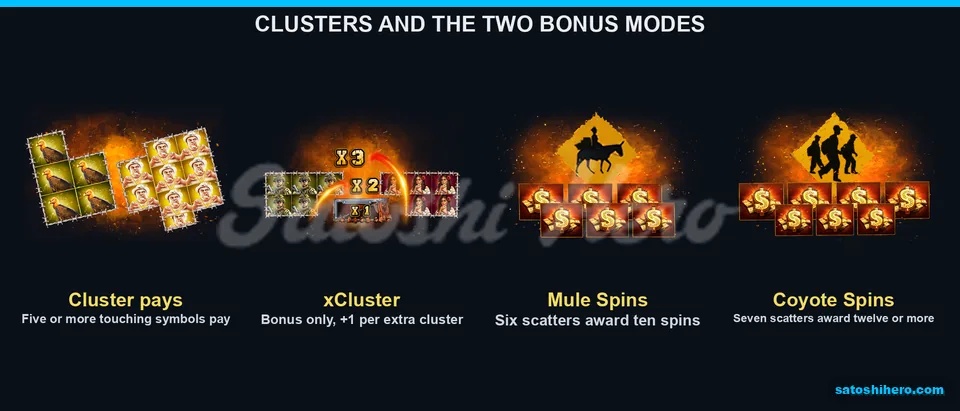
The Border slot works as a 6×6 cluster-pays game, not a payline slot. You need five or more matching symbols touching horizontally or vertically, then the winning symbols disappear and avalanches refill the grid. That structure matters because you don’t count fixed lines or ways; you watch shape, symbol spread, and timing.

The Border slot game paytable Nolimit uses cluster bands from 5 symbols up to 160 or more. At my $1.00 stake, the cartel boss paid $1.00 for 5 and climbed to $2,214.40 at 160 or more. The sheriff paid $0.70 for 5 and rose to $1,107.20, while the soldier, runner, and woman with rose topped out at the same $1,107.20 level.

Cluster payouts
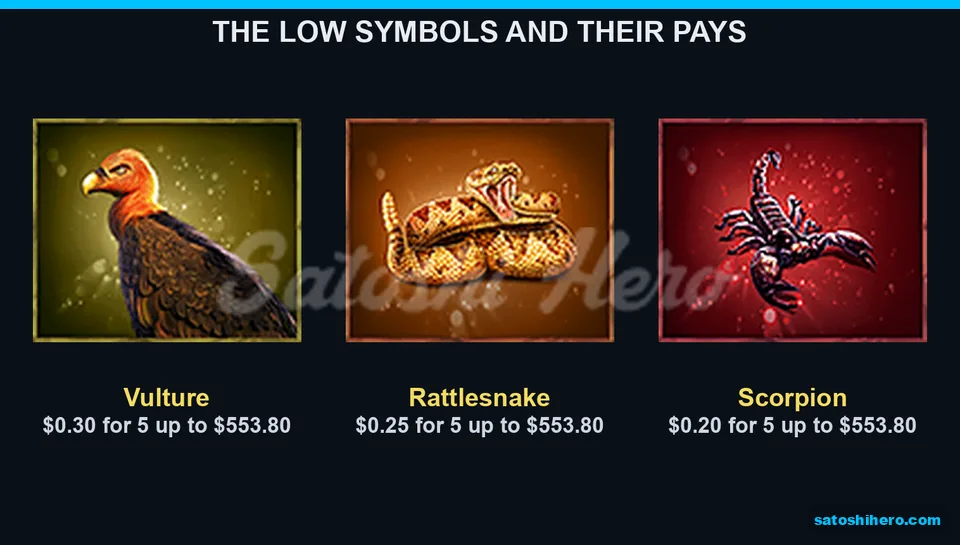
Lower symbols looked small but still mattered when avalanches connected. The vulture paid $0.30 for 5, the rattlesnake paid $0.25, and the scorpion paid $0.20. Each one reached $553.80 at the largest band, so you can’t ignore them when xWays or xSplit reshapes the board.
Scatters appear as cash bundles and can land anywhere. I like that clarity because you instantly know what you’re chasing. Six scatters starts Mule Spins, while seven or more pushes you toward the better Coyote setup.
Special symbols
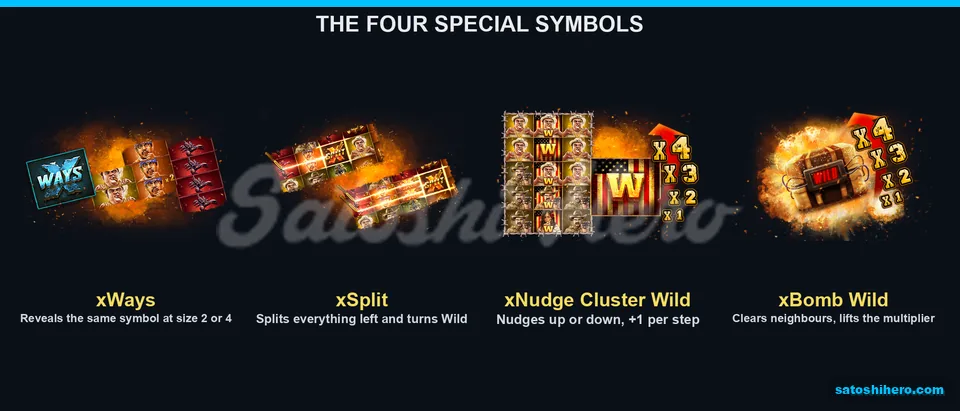
xWays reveals the same regular paying symbol at size 2 or size 4. Multiple xWays on one spin reveal that same symbol, which can offset the grid and turn awkward boards into connected clusters. You feel this most when one big symbol bridges positions that didn’t touch before.
xSplit lands only on reels 2 to 6, splits every symbol to its left, and turns Wild. It can split scatters too, which gives it real drama. Several xSplits can push symbol-count indicators as high as x64, and that can make the board feel loaded.

xNudge Cluster Wild moves up or down inside a winning cluster and adds to the multiplier for every symbol it crosses. xBomb Wild substitutes for everything except scatters, clears neighbours, and adds +1 to the next-collapse multiplier. In ordinary base play, I watched the multiplier plate hit x3, but the payouts still stayed modest.

Key Stat: The Border slot is a cluster game, not a payline slot. You need five or more matching symbols touching on the 6×6 grid.
Desktop and mobile play keep the same 6×6 layout, lever, and multiplier plate. That helps because this game has enough moving parts already. The special symbols matter far more than ordinary low-value base hits, and you’ll spot that within a few spins.
Theme & First Impressions
The theme is dark, loud, and deliberately provocative, with a night-time frontier wall wrapped around the 6×6 board. Nolimit’s comic style keeps the setup readable, but the tone won’t fit every table mood. You get bite first, comfort second.
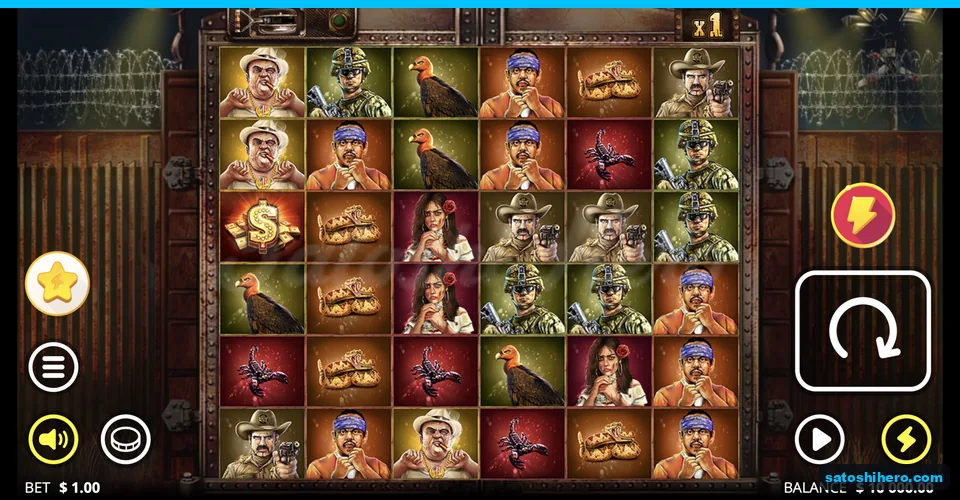
Rusted steel frames the grid, razor wire runs across the top, and floodlights cut into the background. A watchtower drone sits in the corner, while the BOOSTED xRIP lever stays bolted at the top left. The running multiplier sits on a metal plate at the top right, which keeps your eyes in the right place.
Visual setup
The board sits inside the gate itself, so the slot always feels fenced in. Caricatured faces appear on both sides of the barrier, and Nolimit leans into the friction. I don’t think the concept is subtle, but the art direction commits fully.
Table feel
The interface does good work under busy art. The grid, lever, and multiplier plate guide your eye without fighting the symbols. You can track clusters, special symbols, and scatter counts fast, which matters when avalanches start stacking.
I respect the table craft more than the shock angle. You may dislike the theme and still understand the mechanics quickly. The presentation has bite, but gameplay readability carries more weight than the provocation.
Boosted xRip
Boosted xRip is a paid spin modifier, not a bonus buy. It costs 50% extra per spin, guarantees a scatter on reel 1, and blocks wins below the base bet while active. That trade-off sounds simple, but the test made it feel expensive.
At the tested $1.00 stake, the Booster card showed $1.50 per spin. The lever sits at the top left, so you can’t miss it. Symbol payouts don’t change, and the payout restriction doesn’t apply inside bonus modes.
Extra scatter
The guaranteed scatter adds pressure toward Mule or Coyote Spins. You still need enough additional scatters to complete the job, so it doesn’t solve the biggest problem by itself. I didn’t buy it as a separate feature because it works as a spin mode, not a fixed trigger.
You should read that carefully before using it. A first-reel scatter helps, but the game still asks a lot from the remaining grid. That makes Boosted xRip more of a pressure tool than a value shortcut.
Trade-off
The harsh part is the payout filter. While active, any win below the base bet pays nothing, and my base-game hits often sat between $0.30 and $1.50. That means the modifier can erase the exact wins that slow your balance drop.

Warning: Boosted xRip raises the spin cost and removes payouts below your base bet while active. In my base-game test, many wins landed between $0.30 and $1.50, so that condition bites.
I can see the appeal if you’re chasing scatter pressure and accept the cost. Still, I wouldn’t treat it as safe or efficient. It pushes the game harder, and harder doesn’t always mean smarter.
Mule Spins
Mule Spins is the cheaper bonus mode, triggered by six scatters for 10 spins. In testing, the $98 buy returned only $26.10, so it showed the engine without delivering a strong result. You see the idea quickly, then you need better spread.
The mode activates xCluster, which raises the multiplier when two or more different-symbol clusters resolve in one avalanche. xWays also infects revealed symbols, but only on its own reel. Extra scatters can upgrade the round to Coyote Spins and add 2 more spins per scatter.
Trigger rules
Six scatters award 10 Mule Spins. That sounds reachable on a 6×6 grid, but my 500-spin base run never found it. When a game makes six scatters feel distant, you start respecting the cheaper buy more, even if the payout disappoints.
The same-reel xWays infection defines this tier. It can grow clusters, but it doesn’t spread across the board like Coyote Spins. You get a taste of the engine rather than the full version.
Buy result
My fixed buy cost $98 at a $1.00 stake. The round gave me 10 spins, xCluster active, and a multiplier that reached x3. It collected $26.10, which came to about 27% of the purchase price.
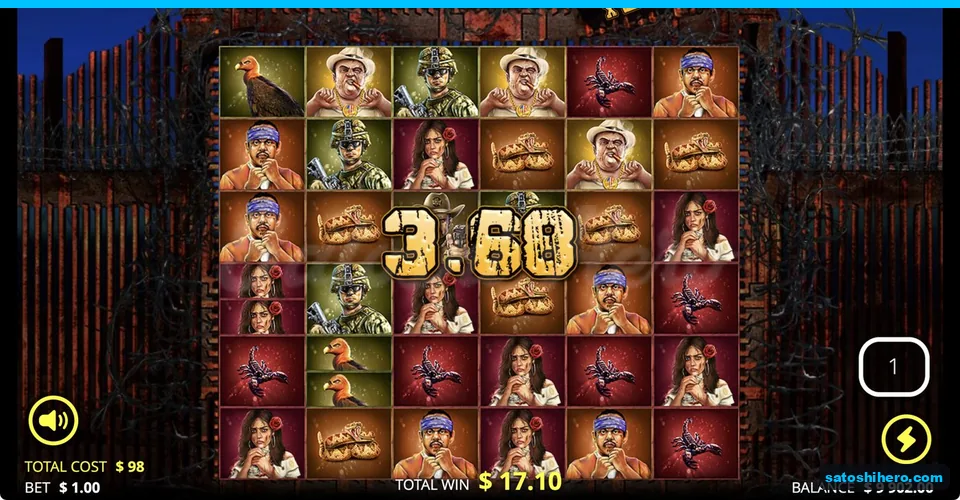
That result felt flat, not broken. Mule Spins showed how the pieces connect, but the symbols didn’t spread enough to justify the entry. The Rave can create a similar feeling when bonus-round energy looks explosive but the actual return underwhelms.

You may prefer Mule Spins if you want the lower-cost door into the bonus system. I don’t mind that role. Mule Spins feels like the entry-level bonus, but it needs much better symbol spread to justify even the lower buy cost.
Coyote Spins
Coyote Spins is the premium bonus mode and the strongest tested feature. It gives better mechanics than Mule Spins, but the $914 tested buy price means even a big-looking round can still lose money. That’s the sharpest lesson in this game.
Seven or more scatters trigger Coyote Spins outright. Seven scatters award 12 spins, and each extra scatter adds 2 more. xWays infects all cluster symbols rather than symbols on its own reel, which changes the whole board.
Persistent multiplier
The win multiplier doesn’t reset between spins, so a good round can compound. xBomb also adds its multiplier value to surviving xX symbols, which gives split symbols extra upside. The in-game rules note a maximum simulated award of 58 Coyote Spins.
That mechanic feels much stronger than Mule Spins. You aren’t just hoping one reel connects. You want every infected cluster to create new pressure while the multiplier keeps climbing.
Buy result
My Coyote Spins buy cost $914 at the same $1.00 stake. The round started with 12 spins and reached x3 early. Then it hit x20 with 11 spins left and $508.45 already banked, which genuinely got my attention.
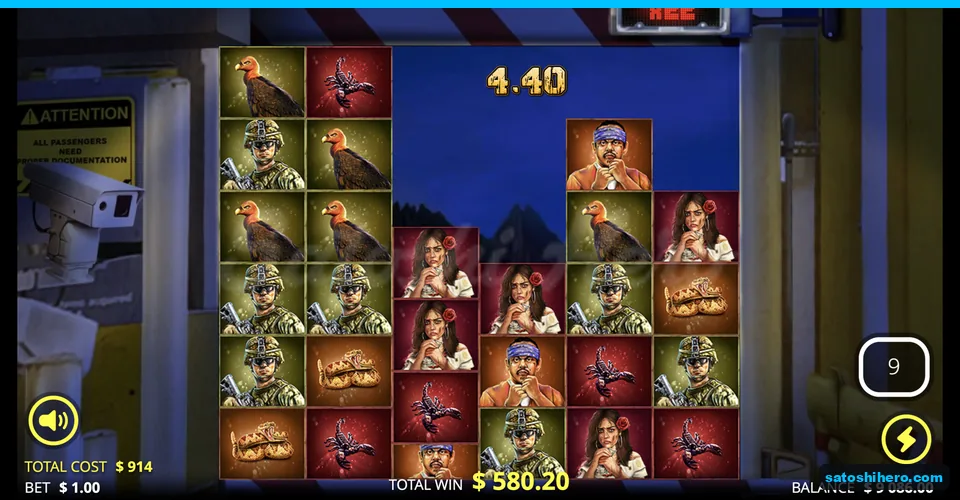
The bonus finished on x25 and collected $646.15. That’s 646.15 times the stake, yet it still returned only about 71% of the $914 price. The design is exciting; the price is the problem.
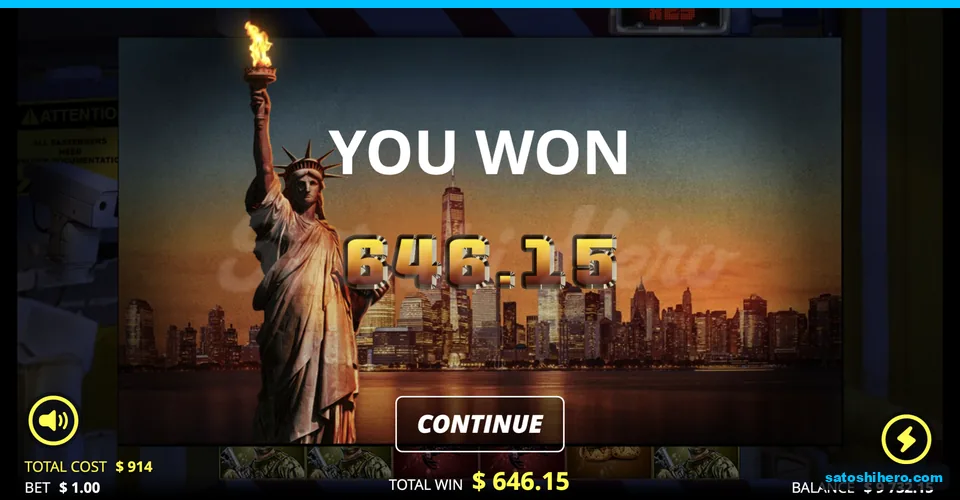

Strategy Insight: If you’re comparing the two fixed buys, Coyote Spins has the stronger mechanics. The multiplier doesn’t reset, but the $914 tested price can make even $646.15 feel short.
I liked watching Coyote Spins far more than Mule Spins. You can see where the huge hits might come from. The trouble is simple: Coyote Spins has the real upside, but it demands a bankroll that can absorb failed buys.
Bonus Buy Options
The bonus menu gives two fixed buys, one Lucky Draw ticket, and one Boosted xRip booster. The prices at $1 stake jump sharply from $98 to $914, so bankroll planning matters before you click. Clear menus don’t make expensive choices gentle.
The red lightning button on the right rail opens the panel. Under Nolimit Bonus, Mule Spins costs $98, Coyote Spins costs $914, and Lucky Draw costs $506. Lucky Draw is a straight 50% / 50% ticket between those two bonus modes.

Test flow
The buy process stayed clear. I clicked the red lightning button, selected a card, confirmed on the pink ACTIVATE panel, closed the menu, then pressed SPIN. That final spin click charged the cost and fired the trigger.
A CONGRATULATIONS board then listed the spins awarded and the active rules. You have to click it before the feature starts. That extra step is fine, and I like seeing the mode rules before the spin sequence begins.

Insight: Lucky Draw isn’t a separate bonus round. It’s a 50/50 ticket between Mule Spins and Coyote Spins.
The menu doesn’t hide the cost gap, which I appreciate. It shows the brutal jump from $98 to $914 plainly. You still need discipline because clean design can make a very expensive click feel casual.
How It Played Between Bonuses
The base game was active but small during my 500-spin test. Specials appeared often enough to keep the board interesting, but no Mule Spins or Coyote Spins triggered. You get motion, not comfort.
Across 500 spins, I saw xWays, xSplit, xBomb, and the xNudge Wild in ordinary play. The multiplier plate touched x3 more than once, which made several boards look promising. The wins didn’t follow through at meaningful size.
Base wins
Typical base results landed at $0.30, $0.65, $0.85, $1.00, and $1.50. My best base result was only $3.95 from a cascade that climbed to x2. That’s a poor ceiling for a 500-spin base stretch, even if the board kept doing things.
The balance never climbed back above $10,000.00 after the start. It slid to $9,830.95 after the first 250 spins, then to $9,663.05 after the second 250. Land of the Free can scratch a similar itch if you accept patient high-volatility play where the base game feels like waiting for the feature.
Scatter drought
Six scatters on a 6×6 grid felt like a hard ask. No scatter-collection mechanic softened the wait, so near-misses didn’t build toward anything. That made the session feel colder than the symbol activity suggested.
This is where first-hand play changes the tone. A rules page can make xWays, xSplit, xBomb, and xNudge sound busy, and they are. But without the bonus trigger, the base game can tease you with mechanics while the real session depends on Mule or Coyote Spins.
RTP, Volatility & Our Test
The official RTP is 96.17%, volatility is very-high, and the max win is 44,288x. My 500-spin test showed why that risk profile matters: no bonus arrived, and the session ended $336.95 down. You need to respect the gap between headline potential and live results.
Numbers indicate a slot with serious upside and rough dry patches. The 44,288x cap is huge, but it doesn’t make the base game forgiving. You can see that clearly when the features don’t show.
Simulator projection
The SatoshiHero Slot Simulator modelled 1,000 spins at $1.00 using the published inputs: 96.17% return, very-high volatility, and the 44,288x ceiling. The median result came out $105.00 down. The 5th percentile landed $436.50 down, while the 95th percentile reached $673.50 up.
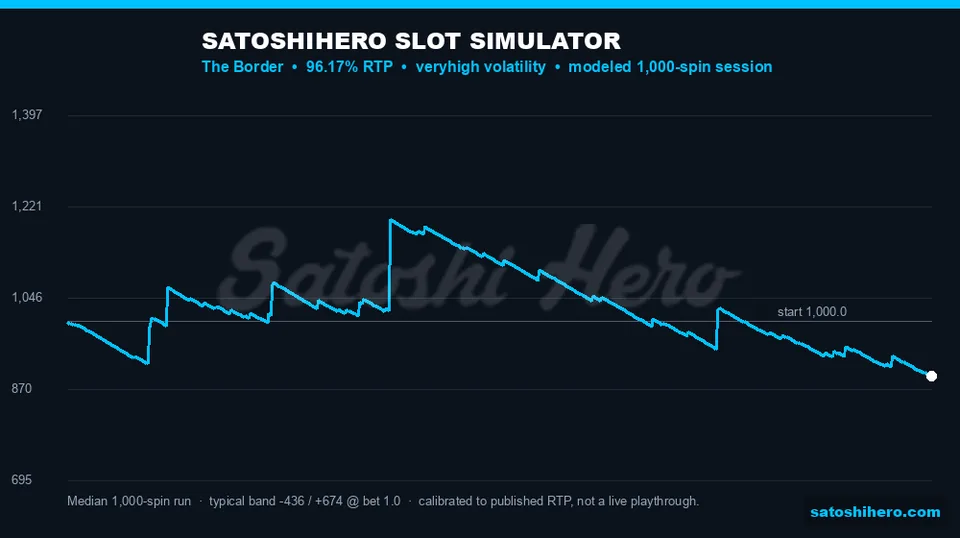
The model placed a feature-tier result around 1 in 54 spins, with a 100x or better result around 1 in 811. That’s a wide band, and it tells you why one session can feel fine while another feels brutal.
Our 500-spin session
I started at $10,000.00 and finished at $9,663.05 after 500 spins at $1.00 each. That left me $336.95 down, well worse than the simulator median. The reason wasn’t mysterious: I didn’t trigger Mule Spins or Coyote Spins once.
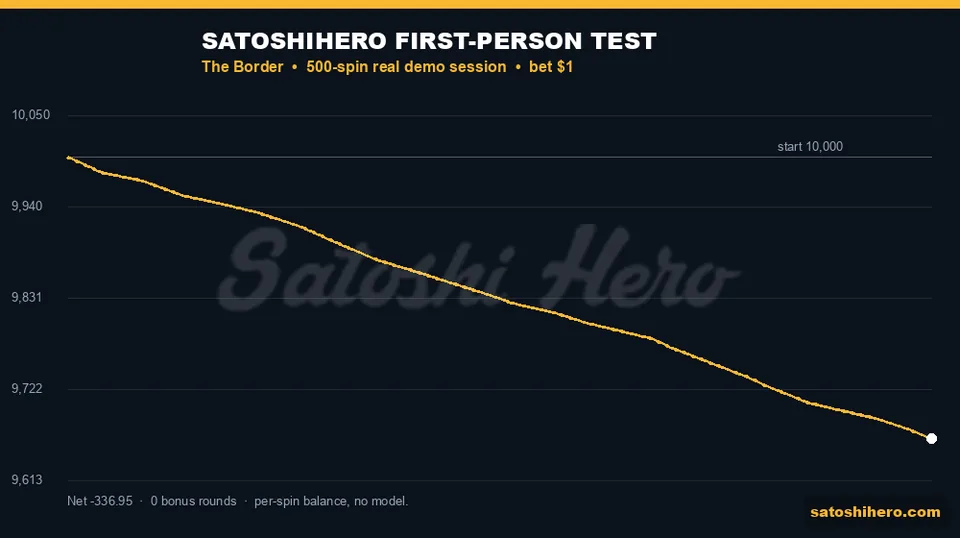
The balance trace looked almost straight downward. It moved from $10,000.00 to $9,830.95 over the first 250 spins, then to $9,663.05 after the second 250. At no point did the balance climb back above the starting figure.
Warning: Very-high volatility means the 44,288x cap doesn’t make the base game gentle. My 500-spin run missed every bonus and ended $336.95 down.
The 96.17% RTP is the operator-published theoretical return. A single 500-spin session doesn’t change that figure; it only shows how one real session behaved. Bonus-buy returns can sit slightly differently from the base game by design, which is why the in-game rules list them separately.
The math offers upside, but the live test showed how cold the path can feel. You need enough bankroll depth to wait, and you need enough restraint to stop when the wait gets ugly.
Paytable and Max-Win Ceiling
The paytable rewards cluster size more than single-symbol value. The cartel boss tops the regular symbols, but the jump comes when symbols spread into the largest cluster bands. You aren’t chasing five-symbol hits for glory here.
Five-symbol clusters can pay tiny amounts, especially with low symbols. The real pressure comes when xWays, xSplit, xBomb, and Wild nudges stretch clusters into higher bands. That timing matters more than the face value of any single low symbol.
Symbol ladder
The cartel boss sits above the sheriff, soldier, runner, and woman with rose. Vulture, rattlesnake, and scorpion fill the low end, but they still gain value through large cluster bands. You need to read the board as a shape puzzle, not a simple symbol ladder.
The Border slot game paytable Nolimit makes that clear once you compare 5-symbol and 160+ payouts. I like that the structure rewards board growth. I don’t like how often the base game stops at tiny returns before the feature appears.
Win cap
The official maximum win is 44,288x. A round that exceeds that cap ends immediately and awards the cap. Don’t round it up, and don’t treat it as a promise of frequent huge payouts.
My base results stayed tiny without bonus access, and that matters more than the ceiling during normal play. The Creepy Carnival is a useful comparison if you like volatile Nolimit-style engines built around upside mechanics rather than steady base returns. The paytable looks simple at first, but cluster size and special-symbol timing drive the real money.
Frequently Asked Questions About The Border
How do wins form in The Border slot?
The Border slot uses a 6×6 cluster grid. A win needs five or more matching symbols touching horizontally or vertically, and payouts scale from clusters of 5 up to 160 or more. Winning symbols disappear and avalanches replace them, so one paid spin can chain several payouts.
What do the x symbols do in The Border slot?
xWays reveals size 2 or size 4 paying symbols and can offset the grid. xSplit splits symbols to the left and turns Wild. xNudge Wild moves through winning clusters and adds to the multiplier, while xBomb clears neighbouring symbols and raises the next-collapse multiplier.
What is the difference between Mule Spins and Coyote Spins in The Border slot?
Mule Spins needs six scatters and starts with 10 spins, with xWays infecting symbols only on its own reel. Coyote Spins needs seven or more scatters, starts from 12 spins, infects every cluster symbol, and keeps the multiplier between spins.
How does Boosted xRip work?
Boosted xRip is a spin mode, not a bonus buy. It costs 50% extra per spin, guarantees a scatter on reel 1, and makes wins below the base bet pay nothing while active. That restriction doesn’t apply inside bonus modes.
How did your 500-spin session on The Border slot go?
My test started at $10,000.00 and finished at $9,663.05 after 500 spins at $1.00 each. The session lost $336.95, triggered no bonus round, and never climbed back above the starting balance.
What do the bonus buys cost in The Border slot?
At a $1.00 stake, Mule Spins costs $98, Coyote Spins costs $914, and Lucky Draw costs $506. Lucky Draw is a 50% / 50% ticket between the two bonus modes. Boosted xRip costs $1.50 per spin at that same stake.
Were the bonus buys worth it in The Border slot?
Neither fixed buy returned its purchase price in testing. Mule Spins returned $26.10 from $98, while Coyote Spins returned $646.15 from $914. Coyote played much better, but it still finished below cost.
What is the RTP and maximum win in The Border slot?
The official RTP is 96.17%, volatility is very-high, and the official maximum win is 44,288x. Any round that exceeds the cap ends immediately with the capped amount awarded.
Final Verdict
The Border stands out because Nolimit puts a sharp cluster engine behind a theme that refuses to play nice. Its biggest drawback is simple: the base game can stay small for hundreds of spins if the scatters don’t arrive. You get clever mechanics, but you don’t get much mercy.

My Take
I like the Coyote Spins design because the persistent multiplier gives the bonus real bite. I don’t like the gap between strong-looking results and buy cost, especially when $646.15 still lost money against a $914 entry. Patient players can enjoy the tension, but casual balance-chasers may hate the pace.
My 500-spin session made the risk impossible to ignore. I saw the special symbols often, and the board rarely felt dead, but the best base result was only $3.95. The bonus buys proved the same point from another angle: the engine can excite you while still finishing under water.
The Border slot is playable at SatoshiHero in demo and real modes, and this guide is checked regularly against live testing notes. If you want a clean, gentle cluster game, this isn’t it. If you want Nolimit volatility with visible mechanical teeth, the case is stronger.

Pros:
 Strong Coyote engine: Persistent multipliers create real bonus pressure and better board growth.
- Clear cluster rules: The 6×6 grid makes wins easy to read.
- Sharp visual identity: The wall theme feels harsh but highly readable.
- Useful buy menu: Prices and mode choices appear clearly before activation.

Cons:
 Brutal base stretch: My 500-spin run missed every bonus trigger.
- Expensive premium buy: Coyote Spins cost $914 at a $1.00 stake.
- Small base wins: Typical hits sat between $0.30 and $1.50.

Best For: High-volatility hunters and Nolimit fans get the most from this game if they can handle long dry spells. Bonus-buy players may prefer Coyote Spins over Mule Spins, but the price demands discipline. Theme-sensitive players should try demo mode first because the presentation lands hard.













































Bets
All Bets
Game
Player
Date
Wager
Mult.Multiplier
Prize
 Elephant's Gold: Bonus Combo
 nina87
- 18:18:21
- 4.79×
- Galaxy Glitter
 josh1998
- 18:18:20
- 0×
- Elephant's Gold: Bonus Combo
- Hidden
- 18:18:17
- 0×
- Royal Fruits 9: Hold 'n' Link
- mike_721
- 18:18:16
- 0×
- Galaxy Glitter
- josh1998
- 18:18:13
- 0×
- Royal Fruits 9: Hold 'n' Link
- mike_721
- 18:18:11
- 0×
- Space XY
 Hidden
- 18:18:02
- 14.14×
- Elephant's Gold: Bonus Combo
- nina87
- 18:18:02
- 0×
- Fortune Skulls: Bonus Buy
- Hidden
- 18:18:00
- 0×
- Viva Brasil Roulette
- borraborra14
- 18:17:56
- 3.33×