

Zeus the Invincible
By pressing play, you agree that you are above legal age in your jurisdiction and that your jurisdiction allows online gambling.

Zeus the Invincible
RTP95%
VolatilityHigh
Max winx4,500
Hit rate17.2%
ThemeFantasy
ReleasedMar 2025

Calling Down the Storm With Sticky Wilds
Zeus the Invincible puts two different sticky-Wild bonus systems onto a traditional fixed-payline grid.
Zeus the Invincible is a high volatility slot from Mascot Gaming with 95% RTP and 4,500x max win potential. Its 5×3 layout has 15 fixed paylines and two 10-spin bonuses. Volatile line-slot fans who accept long quiet spells will value the distinct features, though I find the win ceiling modest for this risk level.
Key takeaways
- Best bonus: I can’t recommend a buy; my natural Lightning round paid 38.3x, while a base spin later hit 173.3x.
- RTP / volatility: The game combines 95% RTP with high volatility and an uneven payout pattern.
- Max win: The 4,500x prize ceiling looks restrained beside the sharp session swings.
- Risk note: Only 21 of my 100 spins paid, so your balance can depend on one hit.
- Bankroll note: At $0.75, Lightning costs 69x ($51.75) and Storm 75x ($56.25), so protect your budget.

Table of Contents
- How Zeus the Invincible Works
- Reel Rules and Wins
- Symbol Values and Roles
- Theme and First Impressions
- Lightning Free Spins
- Sticky Reels and Respins
- The Triggered Round
- Risk’n’Buy
- Buying the Two Rounds
- Gamble Rules and Limits
- Storm Free Spins
- How the Session Actually Played
- RTP, Volatility and Our Test
- The 1,000-Spin Simulator Projection
- Our 100-Spin Live Session
- Frequently Asked Questions About Zeus the Invincible
- Wrap-Up
How Zeus the Invincible Works
Zeus the Invincible uses five reels, three rows, and 15 fixed paylines. This isn’t a pay-anywhere, cluster-pay, or variable-ways system. You need at least three matching symbols from the left on an active line. Only the best result on each line counts, while separate line wins add together.
Every paytable value multiplies your total stake rather than a separate line bet. You can play the same layout on desktop or mobile without changing the rules. Honestly, the conventional structure feels refreshingly clear beside busier modern mechanics.
Bets run from $0.15 to $45.00. I began with $10,000.00 in play money at $0.75 per spin. Autoplay offers 10, 25, 50, 100, 150, 300, or unlimited spins. Stops cover any win, a free-spins trigger, or a chosen balance increase.
The free demo and real-play game sit here on SatoshiHero. I tested the base game and one natural Lightning round, but not Storm or either Risk’n’Buy control. The 1,000-spin figures come from a model, not live play. Your main choice is whether these sticky systems justify the uneven bankroll ride.
Reel Rules and Wins
Wins follow fixed paths from the leftmost reel. The golden temple Wild replaces every regular symbol, but it can’t replace either Lightning or Storm Scatter. Those Scatters don’t carry standalone payouts and can appear only on reels 2, 3, and 4 during base play. You should check the highlighted route after each win instead of treating any nearby match as a payout.
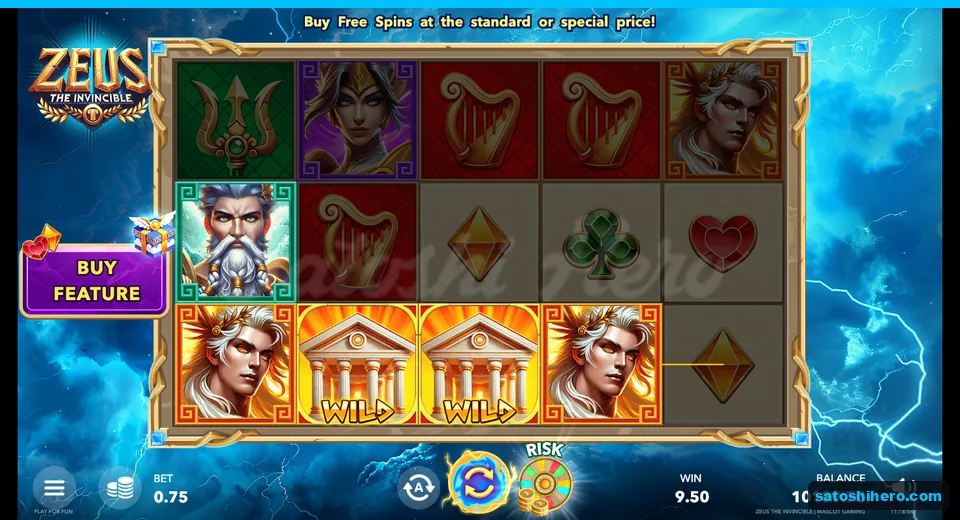
After my counted autoplay session, I captured a useful manual-spin example. Four Apollo symbols and two temple Wilds formed a 12.7x line win, returning $9.50 from my $0.75 stake. I kept that result outside the official 100-spin totals because it happened later. This example shows how substitution can bridge a line without changing the underlying left-to-right rule.
Symbol Values and Roles
Zeus ranks as the strongest regular symbol, followed by the other gods and themed objects. The paytable lists these multipliers for five, four, or three matching symbols from the left:
| Symbol | Five | Four | Three |
|---|---|---|---|
| Zeus | 166.67x | 50x | 6.67x |
| Poseidon | 100x | 16.67x | 6x |
| Athena | 50x | 10x | 5x |
| Apollo | 33.33x | 6.67x | 3.33x |
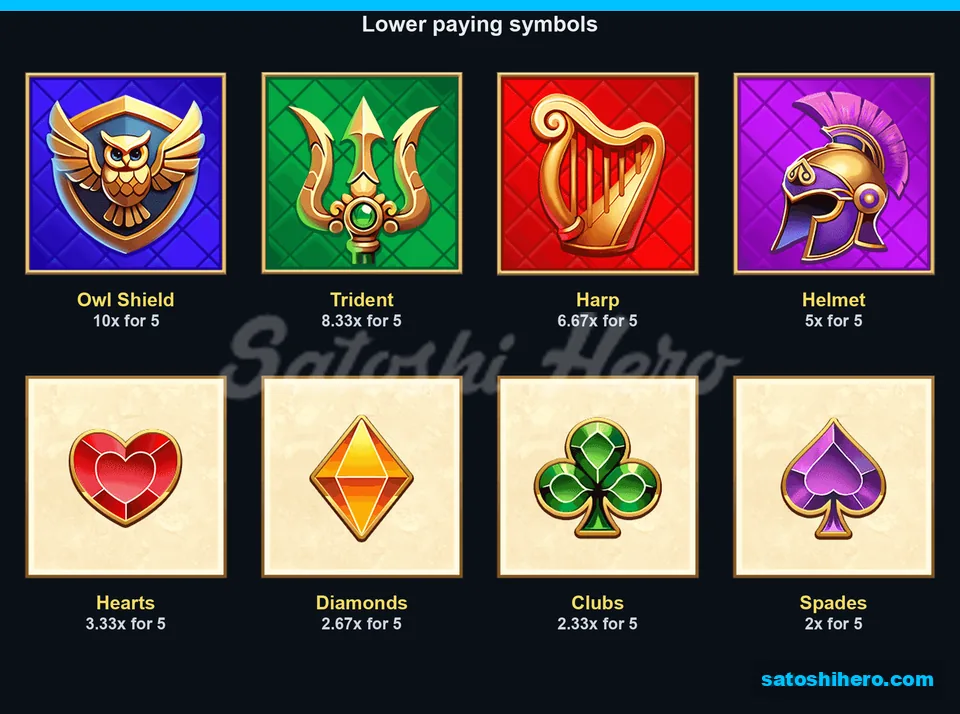
| Owl shield | 10x | 5x | 1.33x |
| Trident | 8.33x | 3x | 1x |
| Harp | 6.67x | 2.33x | 0.8x |
| Helmet | 5x | 1.67x | 0.67x |
| Hearts | 3.33x | 1.33x | 0.47x |
| Diamonds | 2.67x | 1x | 0.33x |
| Clubs | 2.33x | 0.8x | 0.33x |
| Spades | 2x | 0.67x | 0.2x |
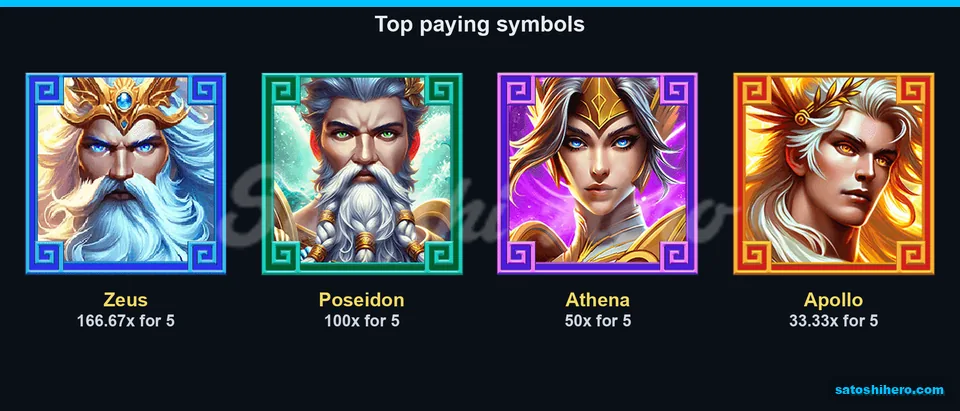

Stat Check: Five Zeus symbols pay 166.67x your total bet, while five spades return just 2x.
The large gap between premium gods and card suits gives each reel stop real visual weight. I like that you can judge a line quickly without opening the paytable repeatedly. Watch for premium portraits around temple Wilds, since a screen full of jewel-cut suits can still return very little. That simple hierarchy keeps line reading fast.
Theme and First Impressions
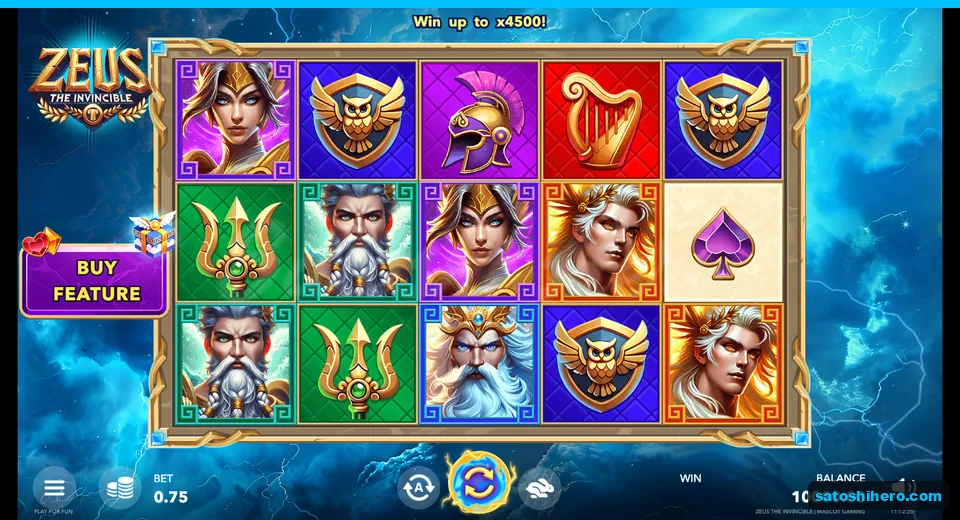
The presentation uses a familiar Greek-god setting with obvious visual differences between base play and free spins. A stormy blue sky flashes behind a worn golden frame, while the compact grid keeps every symbol readable. You see Zeus, Poseidon, Athena, and Apollo painted as portraits on colored cards. I won’t call the concept original, but its clean execution works.
An owl shield, trident, harp, and plumed helmet fill the middle tier. Jewel-cut card suits sit on cream tiles below them. During a bonus, the sky shifts into a fiery red storm, so you instantly recognize the new play state. The effect looks dramatic without obscuring paylines or sticky positions.
Mascot Gaming’s Greek mythology slot ties its art directly to its mechanics. Lightning turns Zeus into complete sticky Wild reels, while Storm transforms three other gods into individual sticky Wild symbols. That division gives the portraits a job beyond decoration. You can follow either feature by watching which gods stay fixed.
Zeus the Thunderer offers another Zeus-centered setting when you want more mythological spectacle. Zeus The Thunderer Deluxe also gives you a closely named thematic alternative, though the evidence here doesn’t support mechanical comparisons. Ze Zeus provides another deity-themed alternative with a distinct visual approach. The Tumbles offers a contrasting theme when you want to move beyond Greek mythology. In my view, this game values clarity more than surprise. Its visuals help you separate the two bonus states, and that matters more than novelty.
Lightning Free Spins
Three Lightning Scatters trigger 10 Lightning free spins. Zeus can appear only on reels 2, 3, and 4 during this round. Each Zeus expands across its full reel, becomes Wild, sticks in place, and grants one free Respin. The feature caps those extra Respins at three.
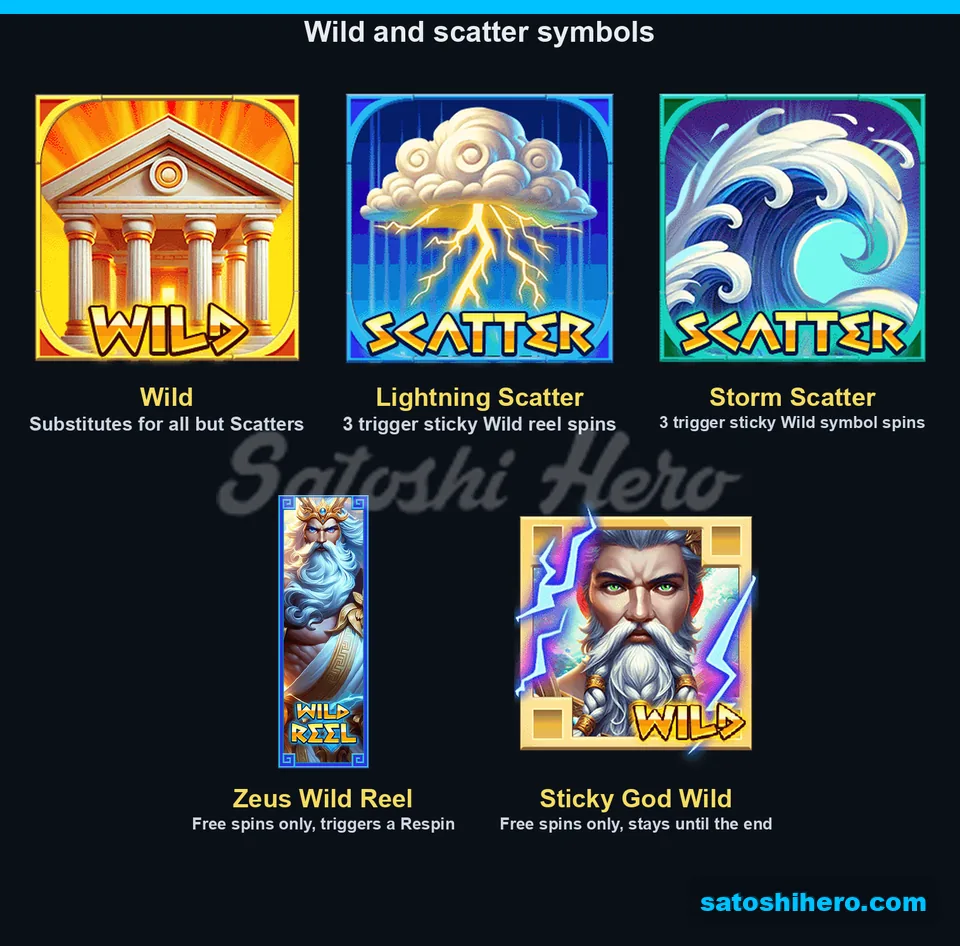
Every sticky Wild reel substitutes for all symbols during the feature. Spins run automatically at the triggering stake, and the round can’t retrigger additional free spins. This was the only bonus mode I reached during my counted test. Let me be real: full-reel Wilds create bigger visual drama than the base game, but they don’t promise a strong return.
Sticky Reels and Respins
One complete Wild reel can connect symbols across several of the 15 fixed paylines. Yet surrounding symbols still decide whether those routes complete, so a Zeus landing alone can’t secure a large payout. You should focus on reels 2 through 4, where each new Zeus can improve coverage and extend the round. The outer reels never create sticky Zeus reels.
Lightning differs sharply from Storm. This mode locks whole reels and can add Respins, while Storm accumulates individual Wild positions without extra spins. I prefer Lightning’s clear turning point because each Zeus changes the screen at once. You still need matching symbols on the edges, so keep your expectations grounded.
The Triggered Round
My Lightning feature arrived on spin 65 after a quiet opening stretch. One Zeus landed, converted into a sticky Wild reel, and supplied a free Respin. The complete round returned $28.75 from my $0.75 stake, equal to 38.3x. No second bonus appeared during the 100 counted spins.
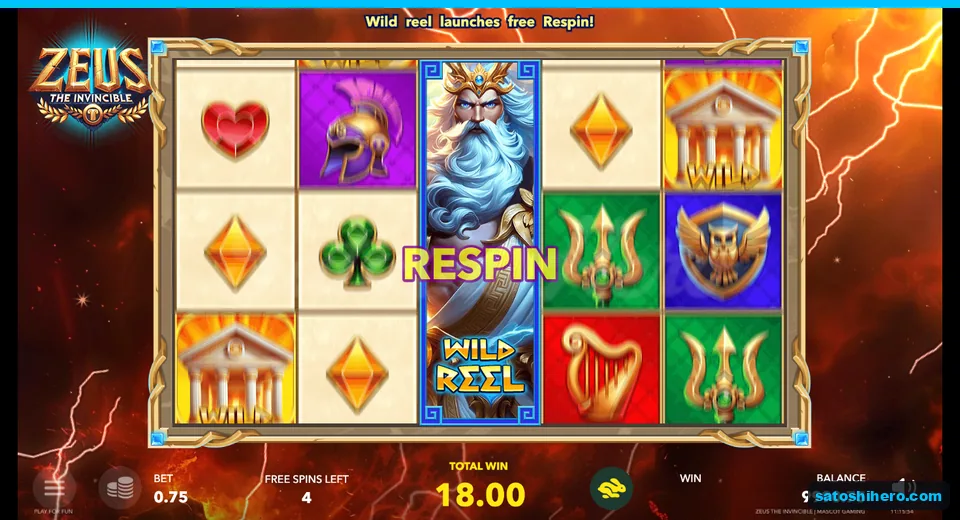

Player Hint: Watch the center three reels, because Zeus can create full Wild reels only on reels 2, 3, and 4.
That result felt solid rather than spectacular. It lifted the balance after the session’s low point, but a later base-game hit contributed far more. You should treat each added Respin as another chance, not a promised payday. Lightning offers the more dramatic system, while my observed round delivered a useful but limited recovery.
Risk’n’Buy
Risk’n’Buy combines two direct bonus purchases with a separate gamble for existing wins. Both controls appeared outside autoplay, but I used neither during my test. They disappear once autoplay starts, and a special purchase offer surfaced after some spins. I didn’t see evidence of a fixed schedule, so you shouldn’t expect that prompt at a predictable moment.
These tools change how quickly your balance can move. A feature purchase charges a large multiple immediately, while Risk puts money already won back in danger. In my opinion, both options demand a separate budget from ordinary spins. You need to judge the known cost before thinking about faster bonus access.
Buying the Two Rounds
Lightning free spins cost 69x the selected stake, and Storm free spins cost 75x. The game removes that purchase price from your balance as a bet, then runs the feature at the chosen stake. At my $0.75 setting, Lightning would cost $51.75 and Storm would cost $56.25. Those sums equal many regular spins at the same level.
I can’t rank either purchase because I didn’t buy them. The slightly lower Lightning price doesn’t prove better value, and the higher Storm cost doesn’t predict a stronger result. You should compare each immediate charge with your planned session budget. That decision matters more than the small gap between the two prices.
Gamble Rules and Limits
Risk lets you gamble an existing win for a larger multiplier, with a displayed ceiling of 1,000x the total bet. Losing that gamble can erase a payout you already secured. I skipped it because the base test aimed to observe normal play. You should count the whole exposed win as the amount at risk.

Beware: The 69x and 75x purchase prices hit hard in this risk profile, while Risk can erase an existing payout. Neither route shortcuts the fixed prize ceiling.
Fast access can feel tempting after a dry spell, but it doesn’t remove variance. The direct costs simply concentrate your exposure into one decision. I think patient bankroll planning beats chasing a feature after losses. Judge these controls by what leaves your balance immediately, not by what the bonus could return.
Storm Free Spins
Three Storm Scatters award 10 Storm free spins. Poseidon, Athena, and Apollo turn into Wilds whenever they land, then remain fixed until the round ends. Zeus stays a normal paying symbol instead of becoming sticky. The spins run automatically at the triggering stake and can’t retrigger another bonus.
Lightning locks full Zeus reels and can supply Respins. Storm builds coverage one transformed god position at a time without extending the round. That contrast makes Storm feel more gradual on paper, but I didn’t trigger it during the counted test. You should treat this section as documented rules rather than firsthand performance.
Individual sticky symbols could spread across different reels and rows as the 10 spins progress. Yet no rule guarantees enough gods to build dense coverage, so I won’t predict typical results from an unobserved round. You can judge its appeal by accumulation rather than sudden full-reel changes. Personally, I find the slower build interesting, though Lightning’s Respins sound more exciting.

Fun Detail: Zeus is the only god portrait that remains a regular symbol during the Storm feature.
That exception gives the round a neat thematic reversal. You watch the other three gods become helpers while the highest-paying portrait keeps its normal role. Choose by mechanic, not imagined value: complete Wild reels with Respins or individual sticky positions across 10 spins. Your preference matters more than any unsupported forecast.
How the Session Actually Played
My session stayed almost flat for 64 spins before two strong outcomes changed everything. The balance moved within a few bets of its $10,000.00 start, then reached its low point on spin 56. At that moment, I sat 18.7x my $0.75 stake below the opening balance. Honestly, the early run felt uneventful rather than brutal.
Spin 65 triggered Lightning free spins and returned 38.3x. Seven spins later, spin 72 paid $130.00 on one base-game result, equal to 173.3x. That hit did most of the work behind the profitable finish. You could feel the session switch character in a handful of spins.
Afterward, the balance drifted down but stayed comfortably ahead. Most other paying spins returned between a fraction of my stake and roughly 15x. Only 21 of 100 spins produced any payout, so little wins didn’t drive the result. The later 12.7x manual screenshot win remains outside this chronology and every test total.
The profit came from one large base spin, not steady accumulation. That uneven arc matches the stated risk character, though one session can’t establish future behavior. I liked the comeback, but I wouldn’t confuse profit with consistency. You need a stake that can absorb quiet sequences without forcing a change of plan.
A different event order could have felt much harsher. You shouldn’t assume a bonus appears inside 100 spins or rescues a falling balance. Bankroll for silence, then treat a major hit as an outlier rather than a rhythm.
RTP, Volatility and Our Test
The 95% RTP is theoretical, while high volatility lets individual sessions hinge on infrequent larger wins. The 4,500x maximum win sets the fixed prize ceiling. These figures frame exposure, but they can’t forecast your next result. I find the capped upside restrained beside the possible swings. You should separate modeled ranges from my live outcome before judging either one.
The 1,000-Spin Simulator Projection
The SatoshiHero Slot Simulator modeled 1,000 spins using the published math, prize cap, risk band, and my $0.75 live stake. Its median run finished 78x the stake down. The central 90% stretched from 328x down to 348x up. That broad range tells you more about possible movement than one selected path.
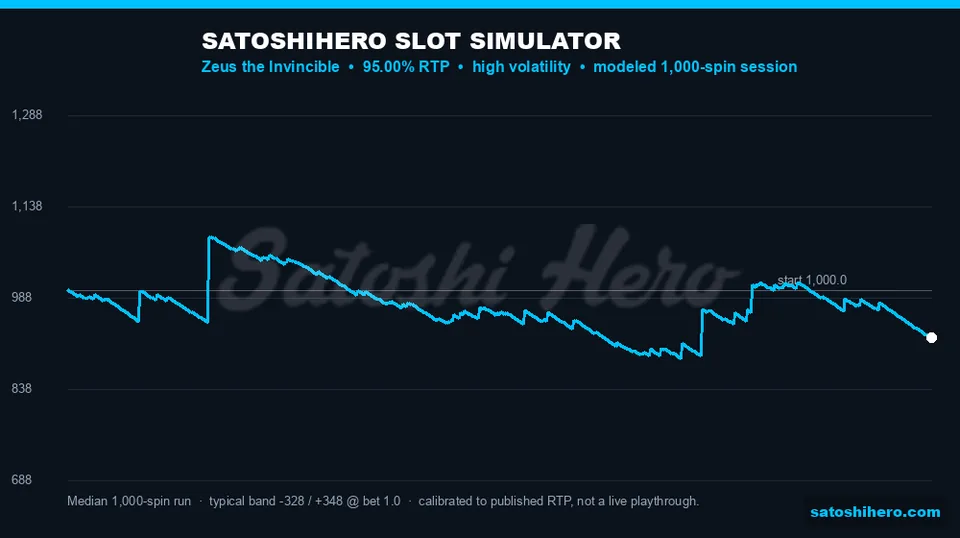
About 18% of modeled spins returned something. A free-spins-sized hit appeared roughly once per 46 simulated spins, but that rate isn’t a countdown. It doesn’t say your next 46 spins contain such an event. I think the wide finish range gives the clearest warning: even long modeled sessions can land far apart.
You should read the projection as a distribution, not a promise. The median loss doesn’t mean every run loses, while the positive edge of the range doesn’t offer a target. Modeled data helps with bankroll expectations because it displays dispersion. It can’t recreate the exact sequence you will see.
Our 100-Spin Live Session
I started with $10,000.00 in play money, wagered $0.75 per spin, and finished at $10,133.95. My net profit was $133.95, equal to 178.6x the stake. Exactly 21 spins paid something. The Lightning feature returned 38.3x, and my largest result reached 173.3x on spin 72.
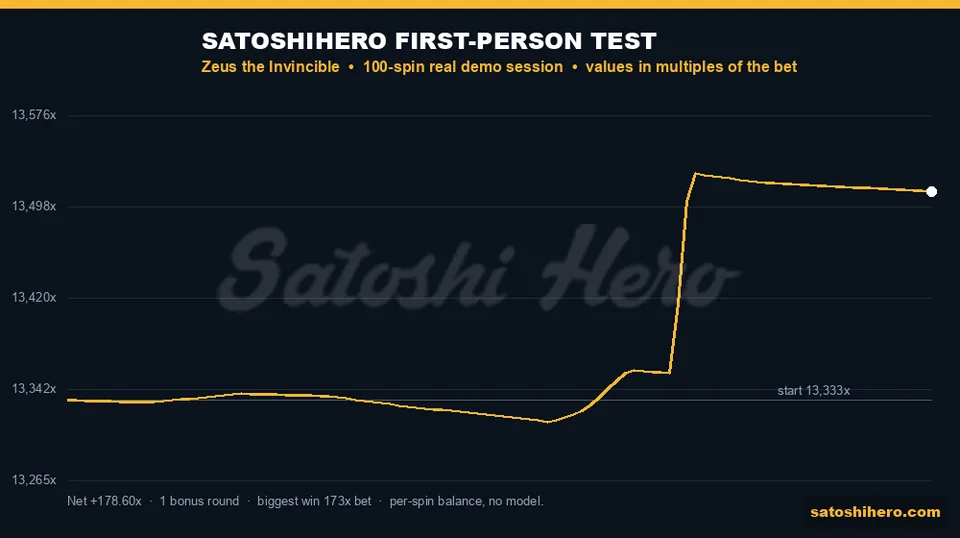
That 173.3x hit exceeded my final net profit, which shows how heavily one event carried the run. Without it, the story would look very different. You shouldn’t use this profitable sample to confirm or reject the theoretical figure. In my view, the test illustrates variance far better than it illustrates expected return.
Mascot Gaming publishes the theoretical return used here. One 100-spin session can’t redefine that figure, and the 1,000-spin chart remains a model rather than live play. Feature-specific theoretical returns can differ slightly by design. We verify the rules and test notes when confirmed information changes.
Use official math to set expectations and my test as one example of an uneven session. You saw a long flat opening, one useful bonus, and a much larger base hit. That sequence can explain the feel of play without predicting your outcome. The distinction keeps the numbers honest and practically useful.
Frequently Asked Questions About Zeus the Invincible
What kind of slot is Zeus the Invincible?
Zeus the Invincible is a Mascot Gaming Greek mythology slot with a 5×3 grid and 15 fixed paylines. It has a temple Wild, two Scatter types, and two sticky-Wild free-spin modes. Regular wins need at least three matching symbols from the left.
How do free spins trigger in Zeus the Invincible?
Three Lightning Scatters award 10 Lightning spins, while three Storm Scatters award 10 Storm spins. Both types appear only on reels 2, 3, and 4. Neither pays separately.
What happens in the Zeus the Invincible Lightning free spins?
Zeus symbols can land on reels 2 through 4 and expand into full-height sticky Wild reels. Each Zeus landing also grants one free Respin, with no more than three Respins per round. Additional free spins can’t retrigger during the feature.
How does the Zeus the Invincible Storm feature work?
Poseidon, Athena, and Apollo become sticky Wilds when they land, remaining fixed through the feature. Zeus keeps its regular paying role. The round lasts 10 automatic spins and doesn’t add Respins or retrigger.
What is Risk’n’Buy in Zeus the Invincible?
Risk’n’Buy offers Lightning for 69x the stake or Storm for 75x. Risk lets you gamble an existing payout toward a displayed 1,000x ceiling. I didn’t use either control.
What are the Zeus the Invincible RTP and max win?
The slot’s theoretical RTP is 95%, and its maximum win is 4,500x the total bet. Those figures describe the published math rather than a guaranteed session result. I consider that ceiling modest for the level of variance involved.
Is Zeus the Invincible high volatility?
Yes, Zeus the Invincible carries a high volatility rating. Only 21 of my 100 tested spins paid, the first 64 stayed almost flat, and one 173.3x hit defined the result. That sample shows possible unevenness without predicting another session.
What did the Zeus the Invincible simulator show?
The model’s median 1,000-spin run ended 78x the stake down. Its central 90% ranged from 328x down to 348x up. This projection maps possible outcomes and can’t tell you what the next session contains.
How did the Zeus the Invincible 100-spin test go?
I finished 178.6x my stake ahead. The naturally triggered Lightning round paid 38.3x, while my largest base-game hit returned 173.3x. That single hit exceeded the final net profit and carried most of the session.
Wrap-Up
Zeus the Invincible stands out through two different sticky-Wild bonuses on a readable fixed-line grid. Its main drawback is uneven risk paired with a modest prize ceiling. You get clear mechanics, but not gentle balance movement.

My Verdict
Patient line-slot fans can enjoy full Wild reels and accumulating Wild positions. Expect quiet spells, small line returns, and occasional session-changing hits rather than steady progress.
I liked how the Lightning trigger broke a flat opening and returned 38.3x. I didn’t like how heavily my final profit relied on one 173.3x base spin. The untested Storm round and purchases also limit any fair comparison between bonus choices.
Zeus the Invincible rewards careful stake selection more than feature chasing. This guide is updated periodically when verified rules or test evidence changes the practical picture.

Pros:
 Distinct bonuses: Two sticky-Wild systems create clearly different feature rhythms.
- Readable grid: Fixed lines and bold portraits make completed wins easy to follow.
- Strong top symbol: Five Zeus symbols return 166.67x the total stake.
- Useful controls: Autoplay stop settings help you manage a planned session.

Cons:
 Uneven payouts: One hit carried most of my profitable test result.
- Costly purchases: Direct bonus access exposes 69x or 75x immediately.
- Restrained ceiling: The maximum prize feels modest beside the sharp risk.

Best For: Patient fixed-line fans who enjoy Greek mythology and contrasting sticky-Wild features get the clearest appeal. You need enough budget discipline to tolerate quiet stretches without chasing losses.


























































Bets
All Bets
Game
Player
Date
Wager
Mult.Multiplier
Prize
 Royal Fruits 9: Hold 'n' Link
 Hidden
- 00:21:00
- 0×
- Royal Fruits 9: Hold 'n' Link
 mike_721
- 00:21:00
- 0×
- Almighty Diamonds: Hold 'N' Link
- Hidden
- 00:21:00
- 0×
- Mardi Gras Queen
- josh1998
- 00:20:58
- 0×
- Royal Fruits 9: Hold 'n' Link
- Hidden
- 00:20:57
- 0×
- Royal Fruits 9: Hold 'n' Link
- Hidden
- 00:20:54
- 0×
- Sugar Rush 1000
 casinoapp2022
- 00:20:52
- 0×
- Royal Fruits 9: Hold 'n' Link
- Hidden
- 00:20:51
- 0×
- Joker Glitz x1000
 Hidden
- 00:20:50
- 0×
- Sweet Lotto
 whodey39311
- 00:20:50
- 0.24×