

The Tumbles
By pressing play, you agree that you are above legal age in your jurisdiction and that your jurisdiction allows online gambling.

The Tumbles
RTP96.1%
VolatilityMedium
Max winx5,000
Ways46,656
Hit rate25.1%
ThemeAncient civilizations
ReleasedSep 2024

Ice, Mammoths and Multiplier Mayhem
The Tumbles slot drops you into a snowy Stone Age grid where every small win can crack blockers, wake multipliers and set up the next tumble. It plays like a grid puzzle first and a symbol-pays slot second, because cleared space decides how many ways can connect on the next drop. The medium-volatility math, 96.10% RTP and 5,000x cap give it a controlled risk profile, while the Free Spins round adds the real swing through multipliers that build across the feature.
Key takeaways
The Tumbles is a medium volatility slot from Relax Gaming with 96.10% RTP and 5,000x max win potential. It plays on a 6-reel, 6-row grid with up to 46,656 ways to win, blocker-clearing tumbles, additive multipliers and Free Spins as the main attraction. It aims at patient bankroll managers with an appetite for clear mechanics, cheerful visuals and bonus rounds that build through repeat tumbles. The test session below used a $2.00 stake, so the dollar results are easy to compare against the paytable and simulator figures.
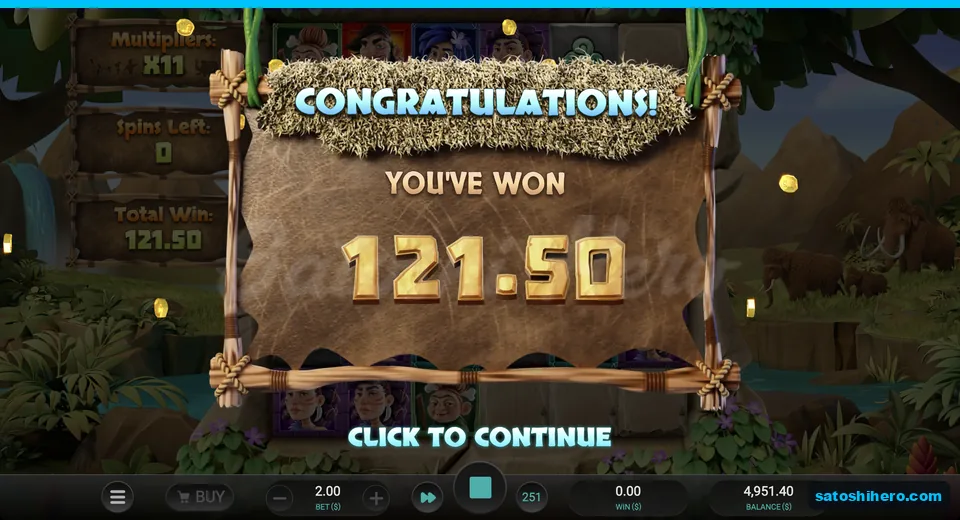
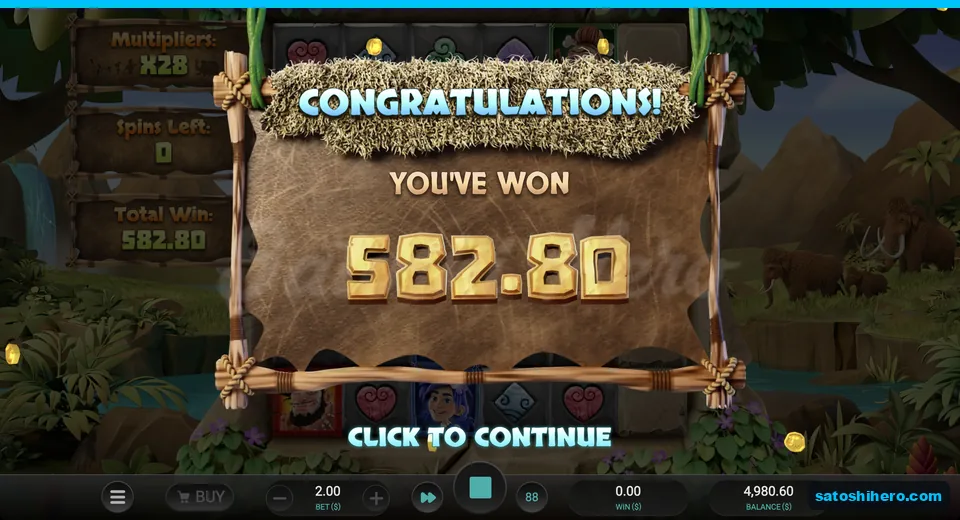
- Best bonus: Organic Free Spins gave my best value, paying $121.50, $582.80 and $31.10 at a $2.00 stake.
- Best buy: The Bonus Buy costs 50x the bet, and my $100.00 buy returned $103.70.
- RTP / volatility: Official base RTP is 96.10%, Buy Feature RTP is 96.50%, and volatility is medium.
- Max win: The maximum win is 5,000x the bet, and the round ends at that cap.
- Risk note: The simulator median finished $91.10 down at $2.00, so medium volatility can still grind.

Key Stat: The Tumbles slot uses up to 46,656 ways to win rather than fixed paylines.

Table of Contents
- How The Tumbles Works
- Grid and ways
- Symbols and pays
- Theme & First Impressions
- Visual style
- Base-game feel
- Blockers and Cascades
- Breaking the grid
- Why tumbles matter
- Multiplier Tiles
- Active vs inactive
- Added together
- Free Spins
- Trigger and rules
- Tested round results
- Bonus Buy
- Cost and trigger
- Our bought round
- RTP, Volatility & Our Test
- Simulator projection
- Our 500-spin session
- Frequently Asked Questions About The Tumbles
- Final Verdict
How The Tumbles Works
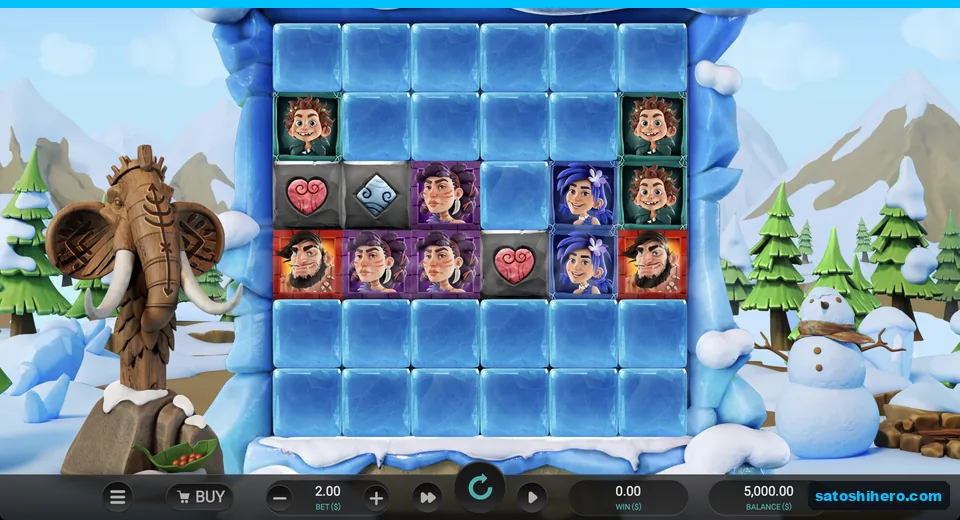
The Tumbles slot pays through up to 46,656 ways on a 6×6 grid, not fixed paylines. You need matching symbols on three or more adjacent reels from the leftmost reel, and extra copies on a reel multiply the ways count. That layout makes the first reel especially important because every paying path must begin there. When the left side stays blocked, even a busy-looking screen can fail to connect.
Grid and ways
The 6-reel, 6-row setup matters because the grid starts partly sealed by blockers. A small win may look weak, but it can break ice and open more active positions for the next drop. That means a $0.80 connection can still be useful if it clears the right part of the board. I paid more attention to where symbols landed than to the first payout amount, because space is the fuel for later tumbles.
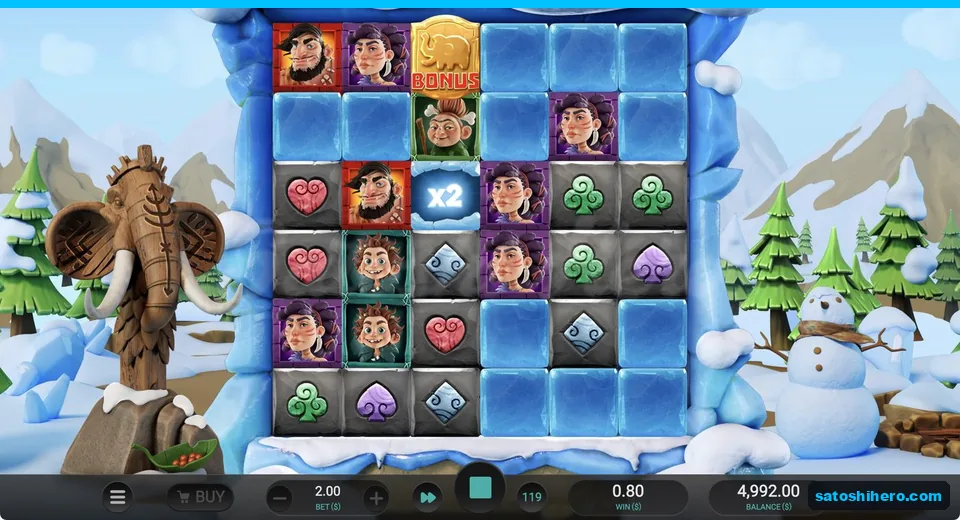
Only the longest match for each symbol counts, so you don’t get paid twice for shorter versions of the same symbol chain. The Great Pigsby Megaways gives you another non-fixed-payline format to compare, but The Tumbles slot feels more like a controlled grid puzzle than a reel-expansion race.
Desktop and mobile play use the same ways grid, features and pay logic. That helps you focus on timing, blockers and multipliers rather than changing decisions by screen size. The decision points stay simple because the spin button, bet level and buy panel do not change the underlying rules. I’d treat mobile play as the same game in a tighter frame, not a lighter version of the mechanics.
Symbols and pays
At a $2.00 stake, the bearded caveman pays $2.00 for six, $1.60 for five, $0.80 for four and $0.60 for three. The painted woman pays $1.20, $0.80, $0.60 and $0.40 across the same symbol counts. Those top-symbol amounts show why the slot needs tumbles, wilds or multipliers to produce a meaningful return. A clean six-symbol hit can still feel modest unless it sits inside a longer chain.
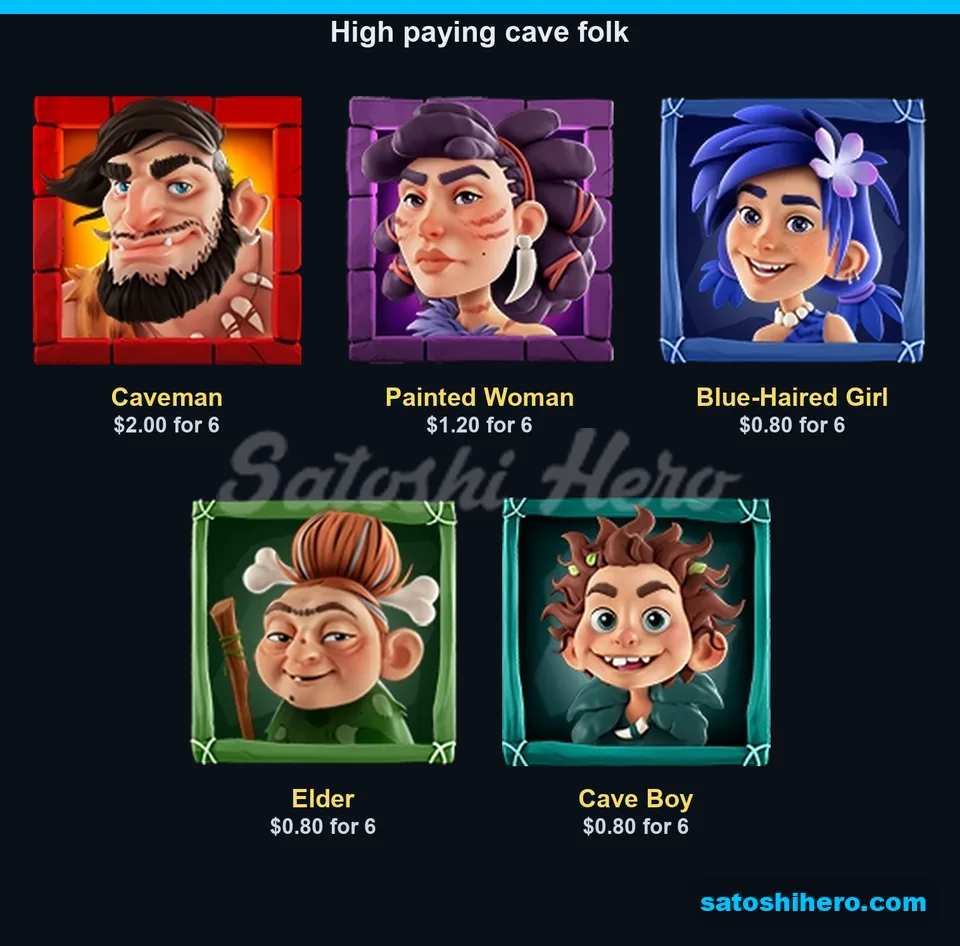
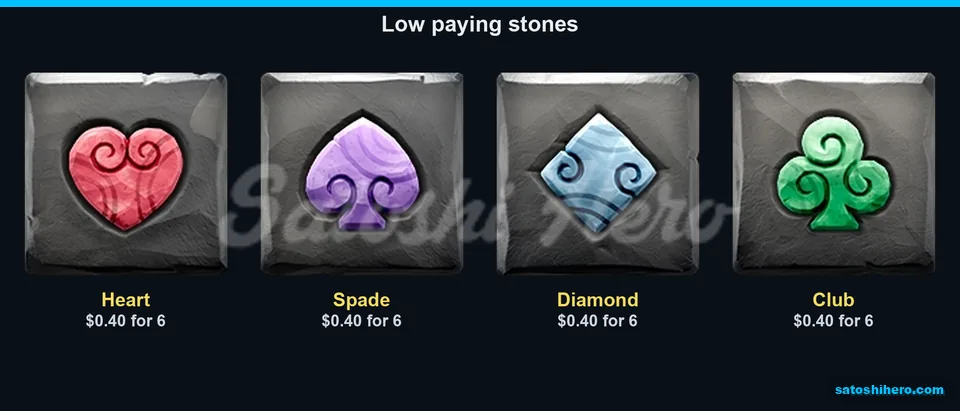
The blue-haired girl, elder and cave boy each pay $0.80, $0.60, $0.40 and $0.20. Heart, spade, diamond and club stones pay $0.40, $0.30, $0.20 and $0.10. These lower symbols appear often enough to keep tumbles moving, but their cash value is small at the test stake. Their best use is breaking blockers and extending a sequence until stronger symbols or multipliers connect.
The fiery W Wild lands on reels 2 to 6 and substitutes for paying symbols. The gold mammoth Bonus acts as the scatter, and you’ll care about it most when three symbols start the Free Spins path. The wild restriction matters because reel 1 still has to begin the way from the left. A strong-looking wild on the middle reels needs matching support on the opening side before it becomes valuable.
The paytable looks modest at $2.00, so the real value comes from ways growth, tumbles and multiplier timing. Once you understand the grid, the blocker mechanic becomes much easier to judge. I found the most useful read was not “did this spin pay,” but “did this spin leave the board more open than it started.” That keeps the game interesting even when individual symbol wins stay below the stake.
Theme & First Impressions
The theme is a bright snowy Stone Age setting with clean symbols, readable blockers and a soft cartoon feel. It won’t win originality awards for prehistoric slot design, but the snowy setting gives it more personality than the usual volcano approach. The ice also serves a practical purpose because it makes inactive spaces obvious at a glance. You don’t need to study the rules page for long before the board tells you what is locked and what can pay.
Visual style
The background shows a carved wooden mammoth totem on the left, with a snowman and pine trees on the right. Snow and ice frame the grid, so you always understand why blockers matter before the first payout lands.
The cartoon cave family has a bright, Pixar-like style that keeps the mood light. If you prefer playful, character-led slots over darker designs, The Great Pigsby sits in a similar comfort zone, though this game leans harder on grid feedback.
Base-game feel
Most base-game spins start with blue ice blocks covering large parts of the grid. That gives the opening view a slightly cramped feel, but it also makes each cleared space easy to notice. The first few drops can look busy without paying much, which fits the medium-volatility profile. Once blocks start breaking near the middle reels, the same screen feels more alive because new symbols have room to connect.
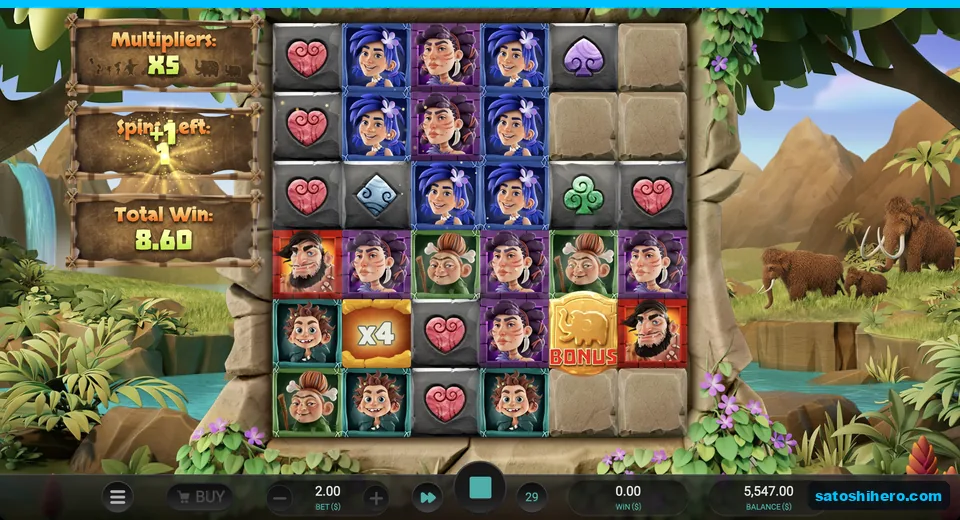
The Tumbles slot looks cheerful rather than edgy, and I like that contrast. You can read the mechanic before any major hit arrives, which helps because the multiplier rules need clear visual feedback. The Free Spins screen swaps the cold ice feeling for stone blockers, so the bonus round still looks connected to the base game while feeling like a separate mode. That small visual shift made it easy to tell which rules were active during testing.
Blockers and Cascades
Blockers are the key base-game obstacle, and every winning tumble can break nearby blockers to open more of the grid. The Tumbles slot uses ice or stone blockers as dead spaces, so they don’t pay on their own. The important detail is adjacency: a blocker has to sit directly next to a winning symbol to break. Diagonal hope is not enough, which makes the exact shape of a win matter.
Breaking the grid
Each spin places blockers among the normal symbols. Winning symbols disappear, and any blocker directly next to a winning symbol also breaks.
That simple rule creates the best tension in the base game. A tiny win beside four blockers may matter more than a cleaner hit in open space, because the next drop gets more room. During my run, the best base-game moments usually started with unremarkable pays that opened a central lane. Once that lane existed, new symbols had more chances to fall into adjacent-reel matches.

Strategy Insight: Don’t judge a spin only by the first small hit. The important part is whether the win breaks enough blockers to keep the cascade alive.
Why tumbles matter
After each win, remaining symbols fall and new symbols drop into empty spaces. No new blockers enter during the cascade, so every successful tumble can push the grid closer to its full 46,656-way shape. That rule is kinder than a system that keeps replacing obstacles mid-chain. Once the board opens, it stays open for the rest of that spin.
The early hits often pay under the stake, and that can feel flat. Still, longer cascades give the grid room to breathe, and that’s where the game finds its bite. I’d rather see a low-value match that opens three blocked cells than a small isolated pay that leaves the grid almost unchanged. The slot rewards board development first and raw symbol value second.
Numbers indicate the base game depends on chain length more than raw symbol value. Cleared space also improves the chance that multiplier tiles wake up at the right moment. The best base-game result in my test came from a long cascade, not a single expensive symbol line. That tells you how much of the experience sits in sequencing.
Multiplier Tiles
Multiplier tiles add together before they apply, so several small activations can turn one tumble chain into a stronger spin. Values range from x2 to x10, and they land only on reels 2 to 6. The additive rule is easy to follow because the game shows the active total rather than hiding the calculation. That clarity matters when a spin has several tumbles and the final payout depends on more than one tile.
Active vs inactive
Some multipliers land active, while others sit inactive inside blockers. An inactive multiplier wakes when a win forms directly next to it, which makes position just as important as value. A blocked x10 can look exciting, but it does nothing if the surrounding cells never pay. A lower tile in a better position can help more because it actually joins the total.
The best base-game hits tend to involve wins that wake several tiles before the cascade ends. You don’t need one huge multiplier to get paid, because several smaller ones can combine.

Insight: In Free Spins, active multipliers don’t reset after each spin; they build across the whole round.
Added together
The system uses additive math. If x2 and x4 activate, the game applies x6 to the total spin win, not just the final tumble. That total-spin treatment is important because it can lift earlier tumble wins in the same sequence. The calculation feels generous when a multiplier wakes late, because it can still affect the accumulated spin result.
If every blocker gets destroyed in the base game, the slot awards an extra high-value x5 to x10 multiplier on top. That rule gives full-grid clears a clear reward, though you shouldn’t expect them often. It also gives low-paying tumbles a reason to matter right up to the end of a chain. A spin that looks nearly finished can still gain value if the last blockers break.
The math suggests multiplier build-up drives the best moments. That’s why the bonus round feels more exciting than plain base-game tumbles. In the base game, multipliers reset after the spin, so each chain has to prove itself quickly. In Free Spins, the same mechanic has more time to grow and that changes the whole risk profile.
Free Spins
Free Spins are the strongest part of the game because active multipliers build across the whole round instead of resetting after each spin. The Tumbles slot awards 8 free spins when 3 or more Bonus symbols land during a game round. That structure turns the bonus into a multiplier race rather than a simple set of free base spins. The round can start quietly, then become much stronger once the running total climbs.
Trigger and rules
Each extra Bonus on the trigger adds 1 free spin. The round uses different reels with fewer blockers, more multipliers and larger multiplier chances. Fewer blockers make the grid feel less cramped from the start, but the stone blocks still matter because clearing them can improve the multiplier path. The feature keeps the blocker identity of the base game instead of replacing it with a unrelated bonus format.
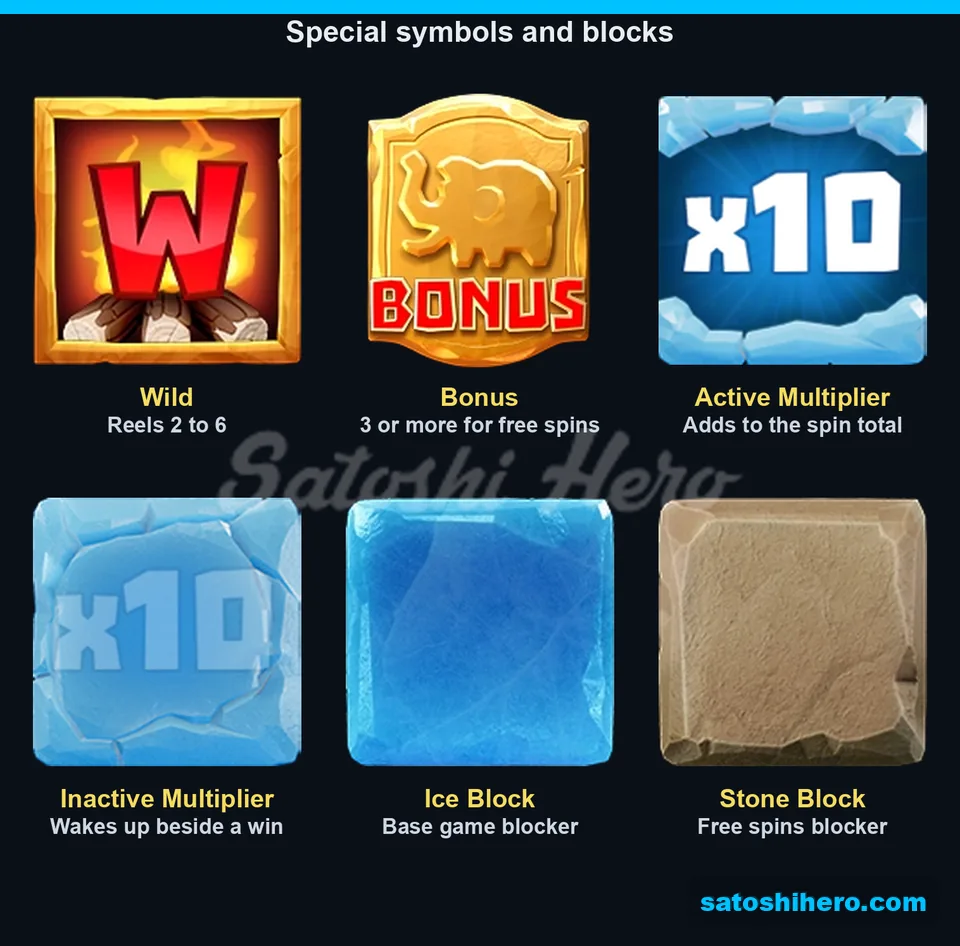
Active multipliers accumulate across the whole round, and the running total applies to every spin win. Any Bonus symbol during Free Spins adds 1 extra spin, while clearing every stone block can drop in a guaranteed x10 multiplier with the next symbols. That combination gives the feature two paths to improve: more spins or a better multiplier total. The strongest rounds usually need both board opening and multiplier collection.

This is where the game stops feeling like a modest ways slot and starts feeling properly dangerous. Spirit Of The Beast offers a different kind of bonus mood and pacing, but this one gets its drama from visible multiplier growth.
Tested round results
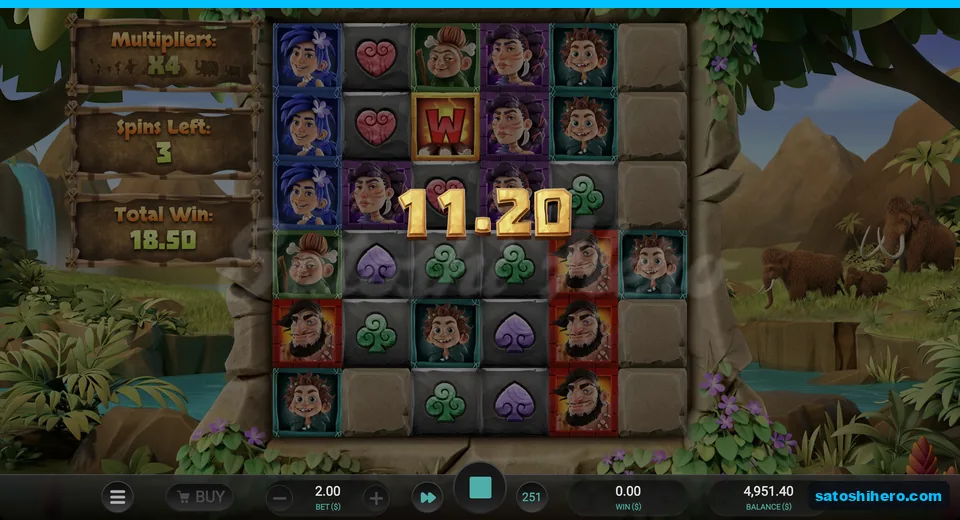
I triggered Free Spins three times without using the buy during my 500-spin test. Around spin 249, the multiplier reached x11 and the round paid $121.50. That first trigger mattered because it showed the feature could turn a drifting session back toward the starting balance. The payout was not huge, but it was a clean example of how the running multiplier helps ordinary wins add up.
Around spin 412, the best round stacked multipliers to x28 and paid $582.80. That equaled 291.4x the bet and lifted my balance from about $4,981 to about $5,561. The jump felt much larger than anything the base game had produced because the multiplier kept carrying forward. It also pushed the session far beyond the simulator’s central range, which is exactly why one short test should not be treated as a prediction.
A third round near spin 471 reached x9 and paid $31.10. The Free Spins gave the test session its clearest highs, and I’d rather chase them naturally than force them every few spins. The contrast between $582.80 and $31.10 also matters because a trigger alone is not the same as a strong feature. The multiplier total still has to build before the bonus becomes memorable.
Bonus Buy
The Bonus Buy costs 50x your bet and gives faster access to Free Spins, but my test buy barely cleared its price. At a $2.00 stake, that means a $100.00 upfront cost. The feature is useful if you want to skip base-game waiting, but the price makes every bought round feel exposed. One average-looking feature can leave you close to flat or behind.
Cost and trigger
The Buy Feature plays a spin that lands at least 3 Bonus symbols. The panel showed my $2.00 bet per spin and the $100.00 total, then the BUY button took the money straight away. There was no slow build into the trigger, so the emotional rhythm felt very different from organic play. You pay first, then judge whether the Free Spins round can justify that 50x entry point.
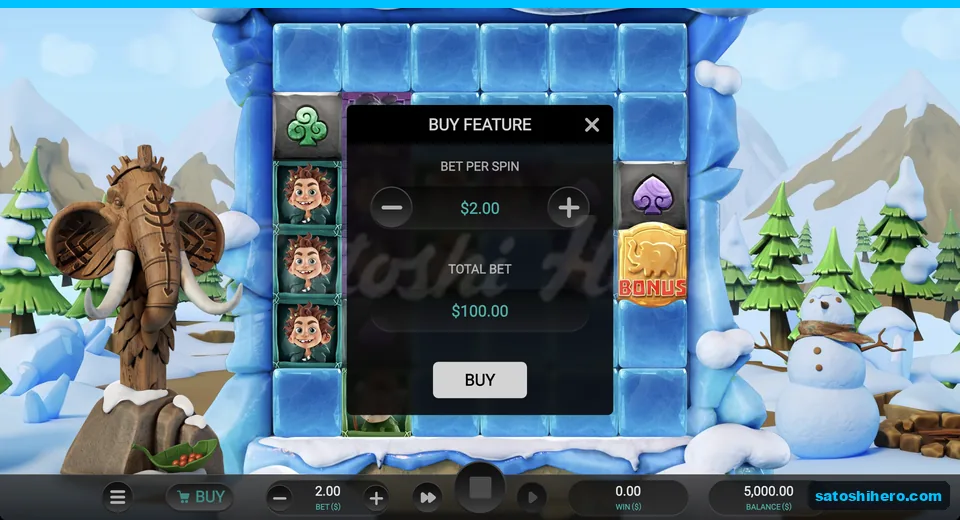
A Congratulations board confirmed 8 free spins and waited for a click. The Buy Feature RTP is 96.50%, so the number looks slightly higher than the base game, but convenience isn’t the same as profit.

Warning: The Buy Feature costs 50x your stake upfront. My test buy only cleared the price by $3.70, so don’t treat the buy as a shortcut to profit.
Our bought round
I bought Free Spins once from a fresh $5,000 balance. The multiplier panel climbed from x7 to x12, then x20 with one spin left. That was a promising shape because the round still had one final chance to add value. At the same time, the total shown on the screen was only $38.70, so the buy still needed a strong finish.
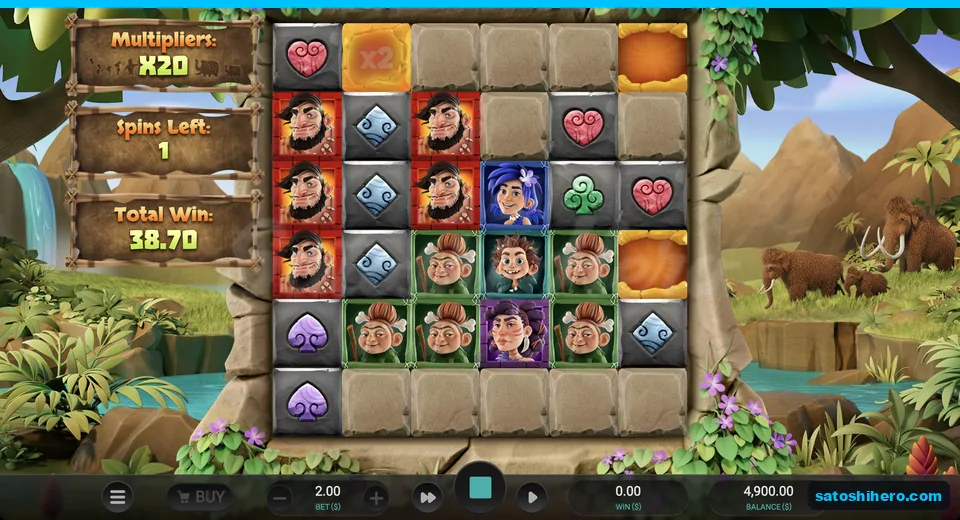
A final active multiplier pushed it to x25 on the last spin, where most of the money arrived. The round paid $103.70, or 51.85x the bet, which sat just above the $100.00 cost. That final spin saved the buy from feeling poor, but the margin stayed thin. I wouldn’t read the slight profit as evidence that buying is safer than regular spins.
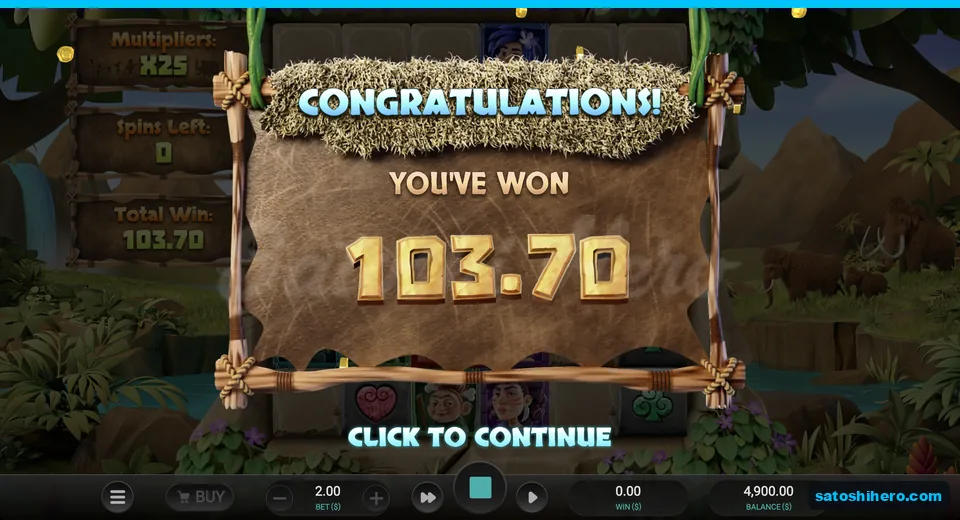
The buy did its job, but it didn’t feel spectacular. Natural Free Spins felt better value in my test, while the buy mainly saved time. The main trade-off is simple: the buy removes waiting, but it also concentrates risk into one paid feature. Regular spins gave me more chances to see the blocker system work before a bonus arrived.
RTP, Volatility & Our Test
The base game has 96.10% RTP, medium volatility and a 5,000x max win, while my 500-spin test landed far above the simulator’s typical range. Wins are capped, and a round ends if that cap gets reached. The numbers point to a game with controlled top-end potential rather than a jackpot-style ceiling. That makes the session texture easier to read, but it doesn’t remove short-term swings.
Simulator projection
The SatoshiHero Slot Simulator ran 1,000 spins at a $2.00 stake. It used 96.10% return, medium volatility and the 5,000x cap.
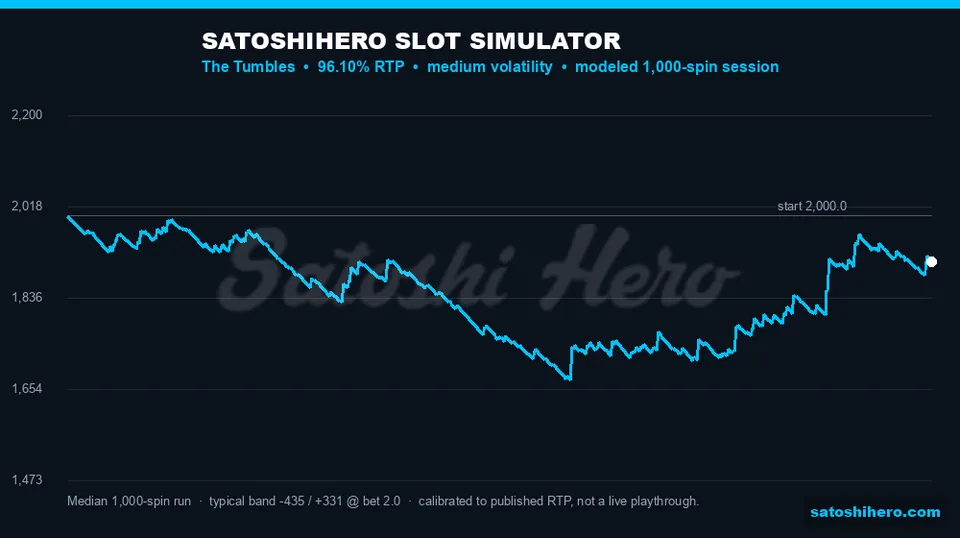
The median session finished $91.10 down. The middle 90% of runs landed between $434.60 down and $331.10 up, so the model showed plenty of grind despite the medium rating. That spread is the useful part of the model because it shows how different normal-looking sessions can feel. A medium label does not mean a smooth balance line.
About a quarter of spins returned something. A feature-sized hit appeared roughly once every 50 spins, while a 100x win showed as rare, around once every 13,333 spins. Those figures matched the feel of my run, where plenty of small tumbles appeared but the session depended on a few better sequences. The hit rate can keep the screen active without keeping the balance flat.
That’s a range of outcomes, not a forecast. If you want a more jackpot-style risk feel, The Great Pigsby Dream Drop creates a useful contrast, while this game keeps its ceiling capped and clearer.
Our 500-spin session
I played 500 spins at $2.00 in one autoplay run with quick spin on. I started at $5,000 and finished at $5,546.50, so my result ended $546.50 up. That finish sat well above the model’s central path, mainly because the second Free Spins round did so much work. Without that one feature, the session would have looked much closer to an ordinary grind.
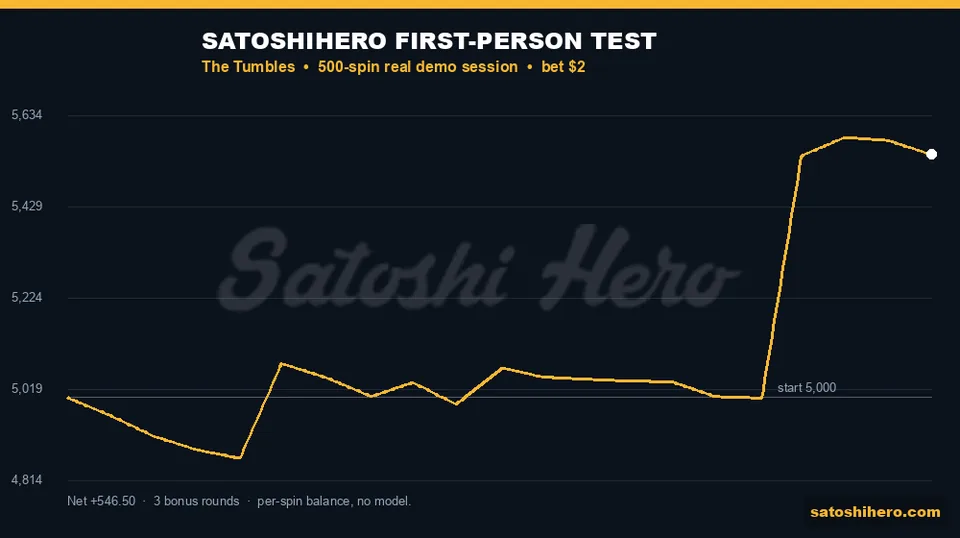
The first 100 spins drifted down to about $4,864. Most tumbles cleared a few ice blocks and paid well under the stake, which matched the simulator’s warning about grind. That opening stretch was still readable because I could see blockers breaking, but the balance did not reward every bit of progress. The slot can look active while still slowly taking back small bets.
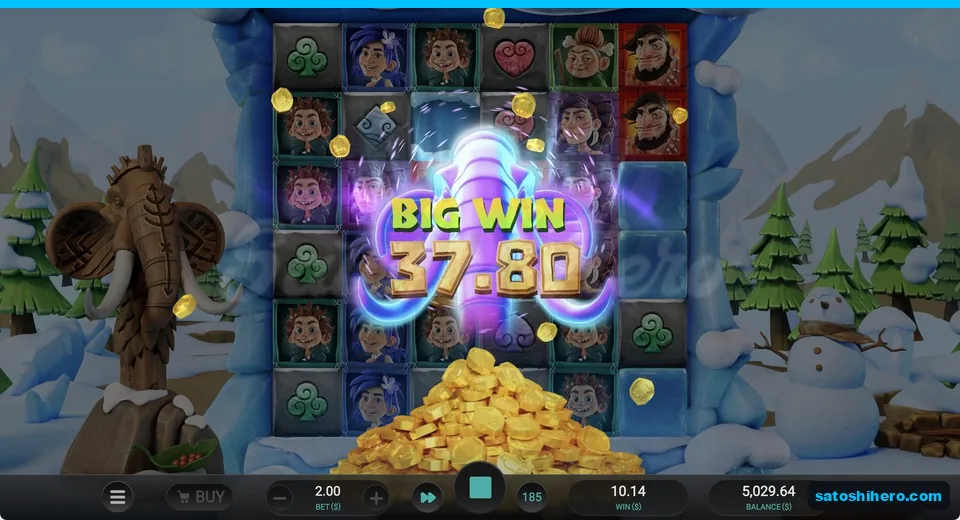
Around spin 110, a long cascade woke several multipliers and paid about $190. That was my best base-game result, and the balance hovered near the start after that. The hit stood out because it came from the game’s core mechanic rather than a bonus trigger. It also showed that the base game has real upside when the board opens and multipliers wake together.
Free Spins changed the test. The $121.50 round helped, the $582.80 round made the session, and the $31.10 round near the end barely shifted the final picture. That uneven set of results is useful context for the bonus because it proves the trigger is only part of the story. Multiplier growth decides whether a feature becomes a highlight or just another small recovery.
Theoretical RTP is the operator-published figure. One 500-spin session doesn’t change that return, and Buy Feature RTP can sit slightly different from base-game RTP by design. The simulator and live test show possible short-term texture, not your likely result.
The math looks fair for medium volatility, but the session still showed clear swings. We update guides like this when game data or in-casino testing changes.
Frequently Asked Questions About The Tumbles
How does The Tumbles slot pay?
The Tumbles slot pays up to 46,656 ways on a 6×6 grid. Ice or stone blockers fill much of the grid and break next to wins, so every tumble can open more ways.
How do multipliers work in The Tumbles slot?
Multipliers from x2 to x10 land on reels 2 to 6. Inactive ones wake next to a win, and all active values get added before they apply.
What happens in The Tumbles slot Free Spins?
Three Bonus symbols give 8 free spins with fewer blockers and bigger multipliers. Active multipliers add up for the whole round instead of resetting each spin.
How much is The Tumbles slot Bonus Buy?
The Buy Feature costs 50x the bet, which was $100.00 at the $2.00 stake used in testing. My bought round paid $103.70.
What did the 1000-spin simulator show for The Tumbles?
At $2.00, the median 1,000-spin session ended $91.10 down. The middle 90% of runs landed between $434.60 down and $331.10 up.
How did your 500-spin test of The Tumbles go?
My test finished $546.50 up at $2.00. Three organic Free Spins paid $121.50, $582.80 and $31.10, and the $582.80 round made the session.
What are the RTP and max win of The Tumbles slot?
The Tumbles slot has 96.10% base RTP and 96.50% Buy Feature RTP. Wins are capped at 5,000x the bet.
Final Verdict
The Tumbles stands out because its cheerful art hides a smart blocker and multiplier system. The main drawback is clear too: base-game pay values feel small until the grid opens or Free Spins land. The game is strongest when you watch the board as a developing puzzle rather than a simple spin-by-spin payout race. If you only care about instant high symbol pays, the early base game may feel too restrained.

My Take
Patient players get the most from this slot because the best moments need room to build. Expect small tumbles, a few dry patches and bonus rounds that can change the session fast. I’d play regular spins before leaning on the buy.
I like the way my organic Free Spins carried the 500-spin session, especially the $582.80 round. I don’t like how narrow the bought round felt, because $103.70 back from a $100.00 buy didn’t add much thrill. The bonus buy is cleanly priced and easy to understand, but the organic triggers gave me the better story. That matters in a slot where the appeal comes from watching blockers, multipliers and tumbles link together.
The Tumbles slot earns its place as a practical medium-volatility pick with a readable grid and honest risk profile. This guide is checked regularly against game data and in-casino testing.

Pros:
 Clear Grid Logic: Blocker breaks make every tumble easy to read.
- Strong Bonus Build: Free Spins multipliers grow across the full round.
- Fair RTP: 96.10% base RTP gives the math a solid base.
- Useful Test Data: Real $2.00 sessions show the slot’s short-term texture.

Cons:
 Small Base Pays: Symbol values need tumbles or multipliers to matter.
- Buy Risk: A 50x cost can return close to breakeven.
- Capped Ceiling: The 5,000x max win feels controlled, not huge.

Best For: This game fits patient bankroll managers who enjoy visible progress, clear grid mechanics and medium volatility. You get the most from it when you can tolerate quiet base-game stretches while waiting for Free Spins or a strong multiplier chain.
Similar Games















































Bets
All Bets
Game
Player
Date
Wager
Mult.Multiplier
Prize
 Galaxy Glitter
 blazecraft
- 14:20:06
- 0×
- Bunny's Bounty: Hold`n`Link
 nina87
- 14:20:06
- 0×
- Luck of Panda: Bonus Combo
- Hidden
- 14:20:05
- 0×
- Pelican's Bay: Rapid Link
 Hidden
- 14:20:02
- 0×
- Wild Buffalo Megaways: Hold N Link
- Hidden
- 14:20:01
- 0×
- Pelican's Bay: Rapid Link
- mike_721
- 14:20:01
- 0×
- Bunny's Bounty: Hold`n`Link
- nina87
- 14:20:00
- 0×
- Galaxy Glitter
 maya_81
- 14:19:58
- 0×
- Merry Cash Splash: Hold 'N' Link
 Hidden
- 14:19:57
- 0×
- Luck of Panda: Bonus Combo
- Hidden
- 14:19:56
- 0×