

Fire in the Hole 3
By pressing play, you agree that you are above legal age in your jurisdiction and that your jurisdiction allows online gambling.
Nolimit City

Fire in the Hole 3
Title:
Fire in the Hole 3
Payout:
96.05
Volatility:
very-high
Max multiplier:
70000x
Release:
June 3, 2025
Game Provider:
Nolimit City
Bitcoin Slots
Live game stats
Real RTP · 30d83.63%vs 96.05
Spins · 30d465
Biggest win · 30d$103
- Provably Fair
- Instant Crypto Payouts
- Thousands of Games

Written byElenaUpdated
Dynamite, Dwarfs and a Frozen Mine
Fire in the Hole 3 throws you into Nolimit City’s frozen mine with collapsing reels, dwarf chaos and brutal bonus pressure.
Fire in the Hole 3 is a very-high volatility slot from Nolimit City with 96.05% RTP and 70000 max win potential. It uses six reels, three active rows expanding up to six rows, and 486 to 46,656 ways rather than fixed paylines. It targets high-risk bonus hunters who can handle cold base-game stretches.
Key takeaways
- Best bonus: Lucky Wagon Spins is the main target, but my $60 three-Bonus buy returned only $11.00.
- RTP / volatility: Fire in the Hole 3 runs at 96.05% RTP with very-high volatility.
- Max win: The fire in the hole nolimit city ceiling is 70000, tied to a rare full-mine clear.
- Risk note: The slot uses expanding ways from 486 up to 46,656, not fixed paylines.
- Bankroll note: My 500-spin test at $1 ended $41 down from a $10,000 demo balance.

Warning: Very-high volatility means long dead stretches are normal. Don’t size your stake around the 70000 headline.

Table of Contents
- How Fire in the Hole 3 Works
- Expanding ways
- Core modifiers
- Symbols and Paytable Values
- Premium symbols
- Special symbols
- Theme and First Impressions
- Mine setting
- First spin feel
- Collapsing Mine Momentum
- Row expansion
- Chain reactions
- xBombs, Wild Mining and Split Symbols
- Multiplier wilds
- Mining triggers
- Lucky Wagon Spins Bonus
- Bonus triggers
- Enhancer row
- Bonus Buy Tested
- Cheapest buy
- Buy menu
- Base Game Feel and Bankroll Pacing
- Cold base game
- Stake sizing
- RTP, Volatility and Our Test
- Simulator projection
- Our 500-spin session
- Frequently Asked Questions About Fire in the Hole 3
- Final Verdict
How Fire in the Hole 3 Works
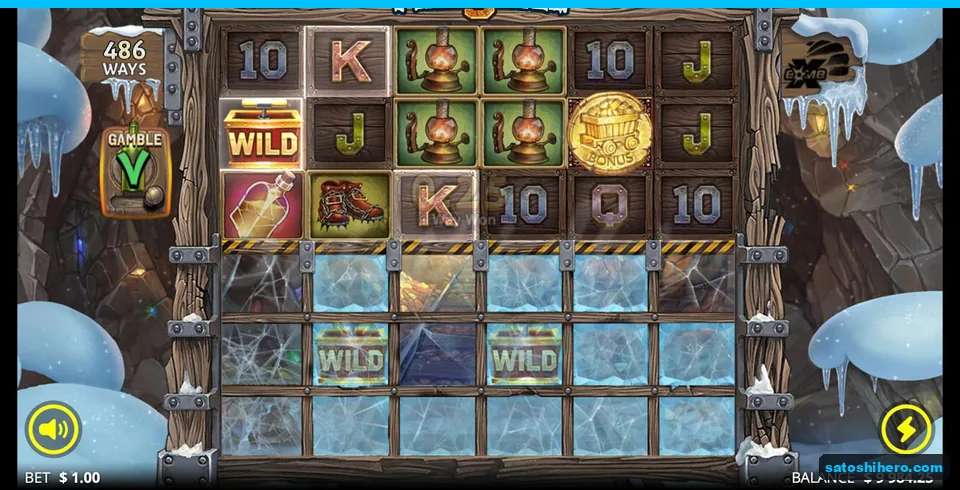
Fire in the Hole 3 works through collapsing wins on a six-reel mine grid that starts with three active rows and can expand to six. You win through 486 to 46,656 ways, not fixed paylines, so you should watch rows and connections rather than line counts.
I played at a $1 stake, which made the small chains easy to read. Every winning combination removes symbols, drops new ones from above and can open another row. The grid stays readable on desktop and mobile, though the busy bonus screen benefits from a larger display. I like that clarity, because you can see when a spin still has life.
Expanding ways
The slot begins with 486 ways while only three rows sit active. Each collapse can open one more row, and a fully opened mine reaches 46,656 ways. More rows create more connection space, so a plain-looking win can become much stronger after two or three drops.
You shouldn’t treat the grid as a normal six-reel setup. The real question is how much of the mine opens before the chain dies. That structure makes early collapses feel important, even when the first payout looks weak.
Core modifiers
Standard wins, xBomb Wild explosions, Wild Mining and xHole events can all trigger fresh collapses. xSplit also changes the shape of a reel by doubling every other symbol on it. These tools give the Fire in the Hole 3 slot its jagged rhythm, where a dry spin can suddenly look crowded.

Key Stat: The game doesn’t use fixed paylines. Its win potential expands as the mine opens from three to six active rows.
The mechanic only becomes dangerous when collapses open more of the board.
Symbols and Paytable Values
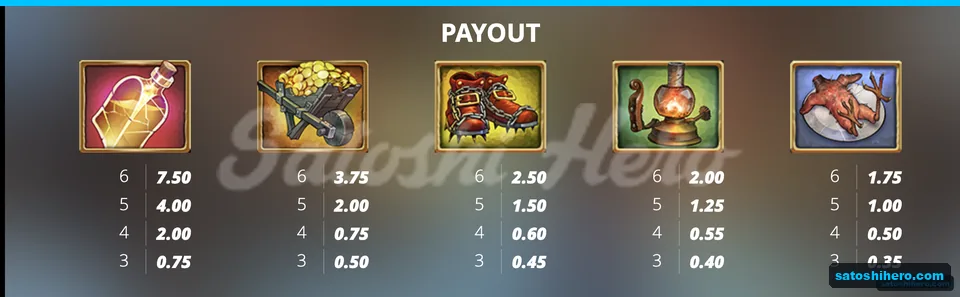
The nitro flask is the top regular symbol, paying 7.5x the bet for six of a kind. The gold crate Wild matters more than most regular pays, because it can substitute for standard symbols and help collapses continue.
I played at $1, so those six-symbol values translated into clear stake multiples. The five premiums are the nitro flask at 7.5x, the gold cart at 3.75x, the boots at 2.5x, the oil lamp at 2x and the roasted rat at 1.75x. The premiums helped during short dusty chains, but the modifiers carried the serious momentum. That’s a fair trade, because plain symbol wins alone rarely felt scary.
Premium symbols
The paytable puts the mining props above the card ranks. Six Aces pay 1.5x, while six Tens pay 1x. King, Queen and Jack sit between those values, so they mostly pad out small wins rather than drive the session.
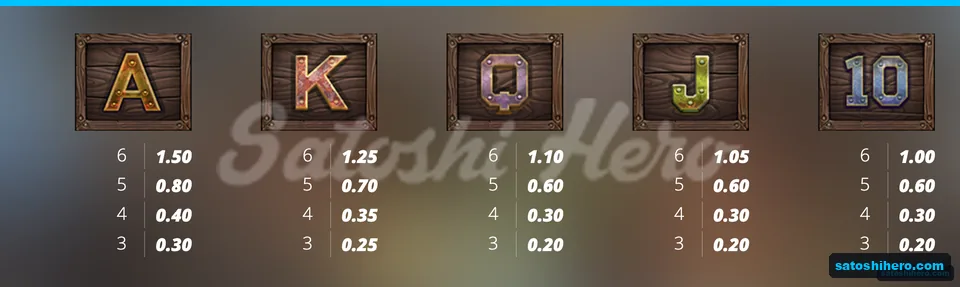
You’ll notice the top symbols most when the grid has already expanded. A 7.5x nitro hit looks better with more rows underneath it, especially if another collapse follows. Still, the paytable sets a floor, not the real ceiling.
Special symbols
The gold crate Wild substitutes for regular symbols, but it doesn’t replace special symbols. Mine cart Bonus symbols open Lucky Wagon Spins, while the xHole barrel and xSplit act as reel modifiers. You can read the special symbols quickly after a few spins, which helps when the mine gets busy.
My take is simple: the premiums pay fairly, yet the special symbols decide most memorable moments. The paytable sets the floor, but modifiers decide the hits you’ll remember.
Theme and First Impressions
The theme is a dirty, frozen Nolimit City mine with a red-bearded dwarf, dynamite, timber frames and icy lower rows. It doesn’t feel gentle, but that rough look fits the very-high volatility.
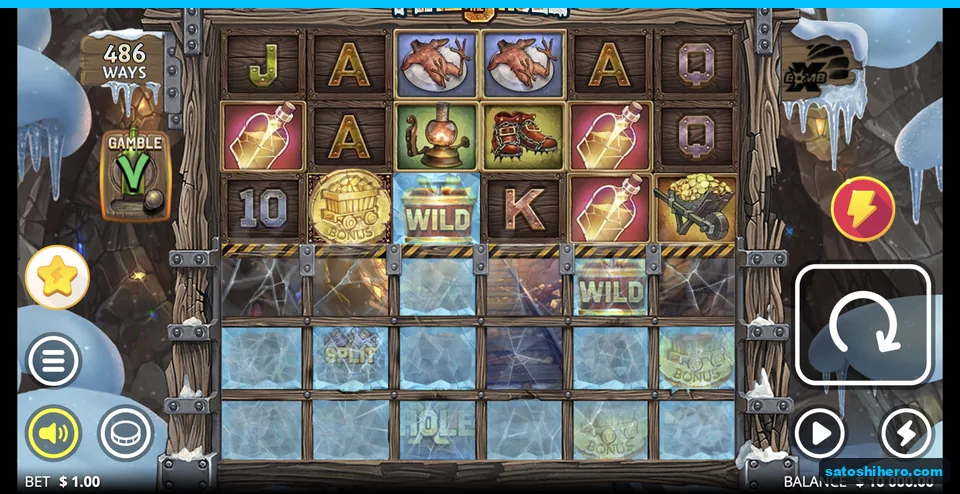
Fire in the Hole 2 players will know the returning dwarf and grim mineshaft identity, though this entry pushes the ceiling much harder. The six-reel grid starts tight, with frozen lower rows sitting below the active area. That visual lock makes every opened row feel like progress. I don’t think the theme feels cozy, but cozy would be wrong here.
Mine setting
Timber frames, ice, gold props and dynamite give the screen a harsh underground mood. The dwarf looks more like a menace than a mascot, which fits the slot’s punishing math. Fire In The Hole xBomb gives explosive wild fans a useful reference point, but this game feels colder and more bonus-led.

Insight: The frozen lower rows make the mine feel sealed at first, so every opened row changes the screen’s mood as well as the ways count.
The art works because it makes the mine feel cramped before the grid expands. You can almost feel the slot holding back space.
First spin feel
The first few spins feel tight because only three rows start active. When a collapse opens the fourth row, the screen gains breathing room and the ways count starts to matter. You shouldn’t expect every expansion to pay well, and that honesty helps the design.
The presentation works because it makes the volatility feel physical.
Collapsing Mine Momentum
Collapsing Mine is the engine that keeps a paid spin alive. Each collapse removes symbols, drops new ones and opens another row until the grid reaches six active rows.
Every spin begins with three active rows. A winning combination, xBomb explosion, Wild Mining trigger or xHole can fire a collapse. Winning symbols pay, disappear and let remaining symbols fall. In my 500-spin session, the mechanic often produced short dusty chains rather than major hits.
Row expansion
One collapse can open one extra row, up to six active rows. That move from three rows to six matters because the ways jump from 486 to 46,656. You can feel the tension rise as the board gets wider and deeper.
The mechanic looks explosive, but it doesn’t guarantee deep runs. Many chains ended after one or two drops during my test. That felt harsh, though it also made the rare longer chain more exciting.
Chain reactions
Wins and modifiers can feed another drop. An xBomb can clear surrounding symbols, Wild Mining can create Wilds and xHole can drain symbols into split forms. Each event gives the mine another chance to open space.

Strategy Insight: Watch the active rows, not just the first win. The slot only starts to feel dangerous once collapses open more of the mine.
You need patience here, because the base game often teases without paying much. Collapses create the slot’s best tension, even when the payout stays small.
xBombs, Wild Mining and Split Symbols
The main modifiers add momentum by clearing symbols, creating Wilds or splitting reels. xBombs matter most because they add +1 to the running win multiplier before the next collapse.

An xBomb Wild lands as dynamite. It explodes before the next collapse, wipes out nearby symbols and adds one to the running win multiplier. Linking several explosions across cascades is how the base game builds real force. I liked the idea more than the average result, because many bombs still failed to build a meaningful payout.
Multiplier wilds
The running multiplier gives xBombs their bite. A single bomb can help, but several bombs across cascades matter much more. You want space, repeat drops and enough regular wins to keep the sequence alive.
The Crypt has a similar taste for bleak pressure and feature-led tension, though its mood lands differently. Here, the mine grid makes each explosion feel more physical. You can see why volatile slot fans chase these moments.
Mining triggers
Wild Mining activates when three to six matching symbols align without forming a win. The game mines them out, creates one to four Wilds in the middle of the line and collapses the board again. That mechanic can rescue a dead-looking layout, which gives you something to watch beyond obvious wins.
An xHole drains regular symbols off the reels and returns them as split symbols of size one to three. In the bonus, it triggers three Frozen Wagon Spins. An xSplit doubles every other symbol on its reel, which can make one reel suddenly matter. The Cage shares that claustrophobic, high-pressure feeling, but this mine game leans harder into chain reactions.
The modifiers explain why the base game can look busy even during losing patches.
Lucky Wagon Spins Bonus
Lucky Wagon Spins is the hold-and-win feature, triggered by at least three mine cart Bonus symbols. The round starts with three spins, and each landed coin resets the spin counter to three.
Three Bonus symbols award Lucky Wagon Spins with two rows open. Four open three rows, five open four rows and six Bonus symbols guarantee a Persistent Dwarf. You can also buy the feature from the menu. My organic trigger during the 500-spin test paid $37.50 at a $1 stake, which felt useful but not huge.
Bonus triggers
The trigger structure matters because more Bonus symbols open more starting rows. Two rows from the three-Bonus version can feel cramped, while higher triggers give the feature more space. That difference became obvious after my later buy test.
You shouldn’t read a trigger as automatic rescue. My organic Lucky Wagon Spins landed mid-session and paid 37.5x, enough to claw back most losses. It didn’t flip the test into profit.
Enhancer row
The top enhancer row can reveal coin values from 5x to 100x the bet. It can also show multipliers from x2 to x25, Dynamite, a Persistent Dwarf or an Evil Dwarf. The Persistent Dwarf collects the board every spin, while the Evil Dwarf reactivates every coin.
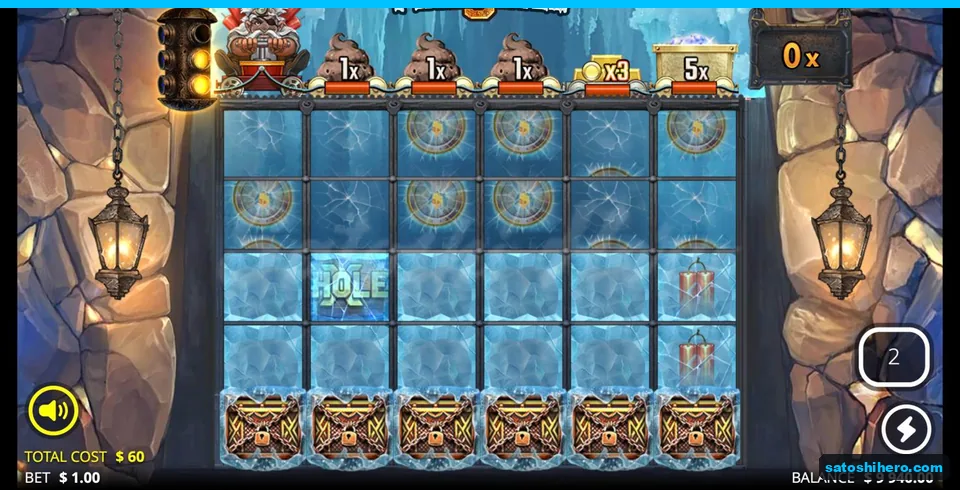
Insight: Six Bonus symbols don’t just open the feature. They guarantee a Persistent Dwarf, which can completely change the round’s ceiling.
The Fire in the Hole 3 max win is 70000, but most bonus rounds sit far below that. You play this feature for upside, not comfort. The bonus is the main reason to play, but it still punishes weak starts.
Bonus Buy Tested
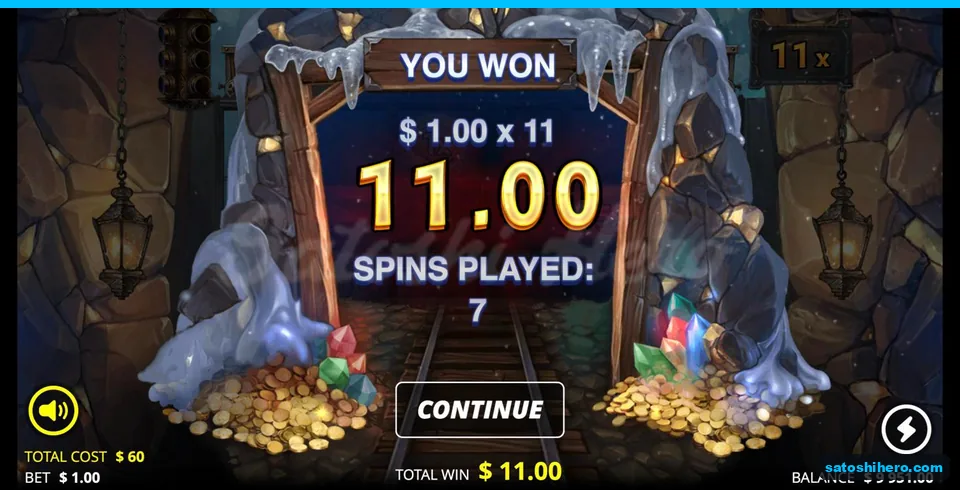
The cheapest Lucky Wagon Spins buy cost $60 at a $1 stake and returned $11.00. That result shows how risky even the entry-level buy can feel on a very-high volatility Nolimit slot.
I bought the three-Bonus version, which opened the board with two rows and three starting spins. The next spin charged the cost and dropped me onto the frozen hold-and-win board. Seven total spins followed. Coin values, multipliers up to x25 and an Evil Dwarf appeared, but the final collect reached only $11.00.
Cheapest buy
That $11.00 return equaled 11x my $1 stake. It also came back at less than one-fifth of the $60 buy price. Numbers indicate a clear lesson: the cheapest buy can still punish you fast.
Warning: A $60 buy returning $11 is exactly the kind of result you have to expect on a very-high volatility Nolimit slot.
I don’t mind a brutal buy when the ceiling justifies it. But this result felt icy, because the feature showed promising tools without converting them. You need to treat the buy as a high-risk shot, not a shortcut.
Buy menu
The menu also offers a four-Bonus buy at $200 and a five-Bonus buy at $500. Lucky Draw costs $240 and gambles which mode you land. Guaranteed dwarf buys cost $700 and $4,000, while God Mode Max costs $7,000.
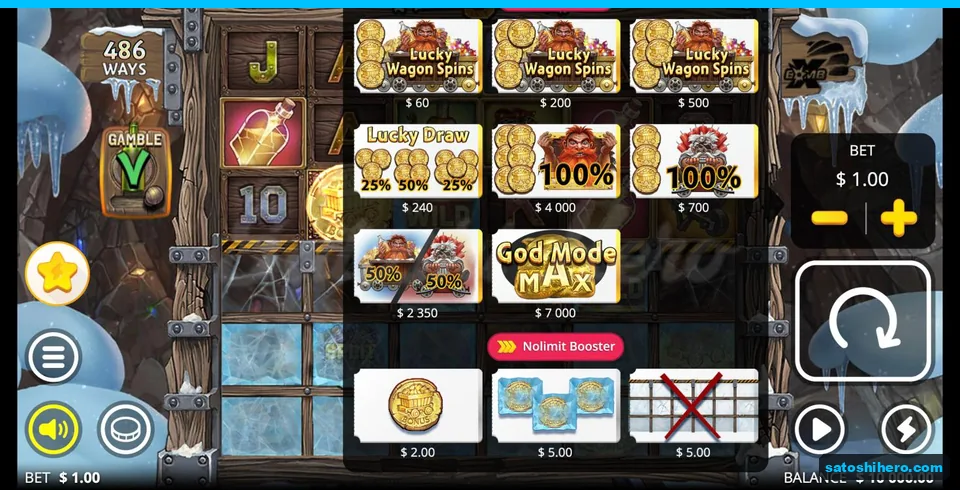
Bigger prices don’t remove the volatility. They simply push you into more expensive versions of the same brutal math. The cheapest tier is the most reasonable place to test the system first. The buy menu is exciting, but it should never replace sensible stake sizing.
Base Game Feel and Bankroll Pacing
The base game felt cold and streaky during the 500-spin demo test. One organic bonus helped, but the session still finished $41 down at a $1 stake.
I started with a $10,000 demo balance and finished at $9,958. The base game felt like a grind through dirt, rock and short collapse chains. One Lucky Wagon Spins round paid $37.50, or 37.5x, and clawed back most of the losses. It still left the full run negative.
Cold base game
You shouldn’t expect regular comfort wins here. The base game often flashed modifiers, opened a row or dropped a small premium hit, then stopped short. That rhythm can feel tiring if you’re waiting for steady payback.
Fire in the Hole 2 fans may recognize the harsh mine feel, but the bigger ceiling here makes the droughts feel sharper. The Rave offers chaotic volatility through a brighter style, while this slot keeps the pressure underground. I prefer the mine theme, but the pacing won’t charm everyone.
Stake sizing
Lower stakes give you more room to absorb dead stretches. I used $1 because it made the 500-spin session easy to track, not because it felt gentle. The demo bet range I tested ran from $0.20 to $5, and the Booster activates all six rows for 5x the bet.
Fire in the Hole 3 demo play on SatoshiHero lets you feel the collapses, bonus rhythm and buy menu before real play. That matters because this slot teaches through swings, not smooth returns. The best way to learn the slot is to test spin volume before raising stakes.
RTP, Volatility and Our Test
Fire in the Hole 3 has 96.05% RTP, very-high volatility and 70000 max win potential. My testing backed up the volatility label because the base game stayed dry even though one bonus softened the loss.
Nolimit City lists this as a Slots title, and the math fits the studio’s harsh style. You get a theoretical 96.05% RTP in this build, but that figure doesn’t promise a smooth session. The 70000 ceiling looks huge, yet the route there feels punishing. I’d call the risk honest rather than friendly.
Simulator projection
Our simulator modelled 1,000 spins at a $1 stake using 96.05% RTP, very-high volatility and the 70000 ceiling. The median session finished about $106 down. The middle band ranged from roughly $437 down to $671 up.
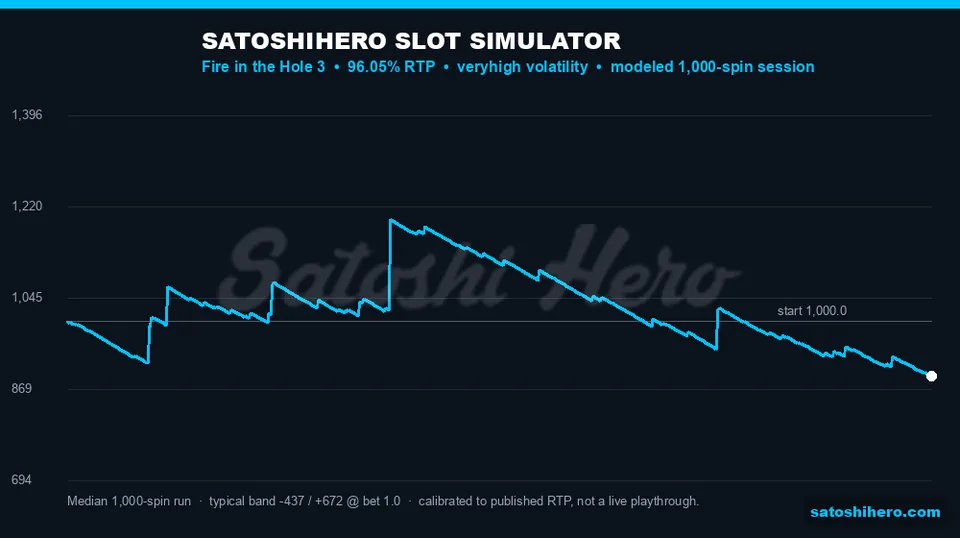
A feature appeared about once every 54 spins in the model. A 100x+ win appeared around once in 814 spins. That explains why a 500-spin run can still miss the slot’s serious upside. The model illustrates swings, not predictions.
Key Stat: The simulator showed a 100x+ win around once in 814 spins, which explains why a 500-spin run can still miss the slot’s serious upside.
Our 500-spin session
I ran 500 spins at $1 from a $10,000 demo balance and finished $41 down at $9,958. One organic Lucky Wagon Spins paid $37.50, or 37.5x my stake. The run stayed negative overall, which felt fair for a very-high volatility game.
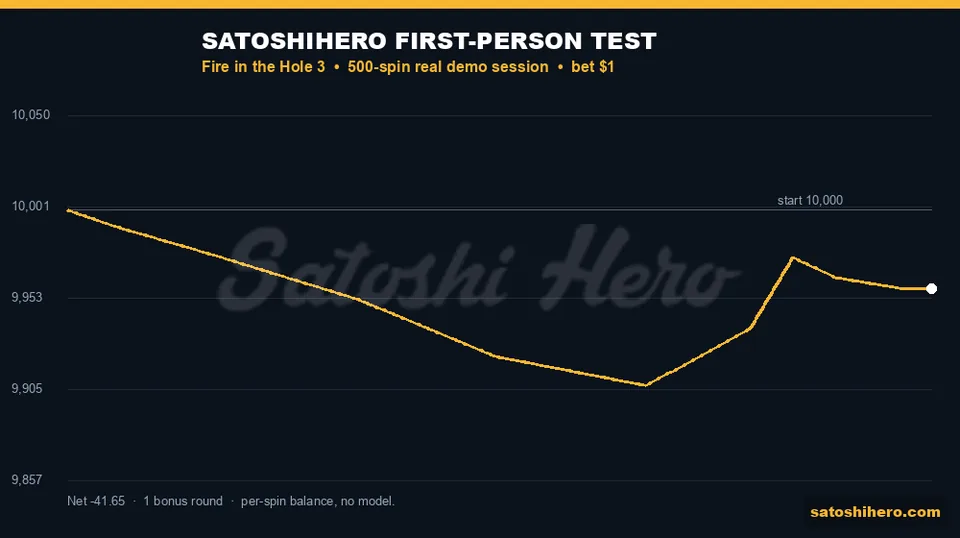
The result was mild compared with the ceiling. Still, the dry base-game stretches matched the volatility label better than the final loss did. You can lose patience long before you lose a huge amount, and that’s the real pressure.
The 96.05% RTP is the operator-published theoretical return for this build. A single 500-spin session is only a snapshot and doesn’t change that figure. Bonus buys and individual feature modes can sit slightly above or below the base return by design, so my $60 buy result should read as one tested outcome.
The math fits patient high-risk players, not anyone chasing steady returns.
Frequently Asked Questions About Fire in the Hole 3
How do you trigger the bonus in Fire in the Hole 3?
Land three or more mine cart Bonus symbols to start Lucky Wagon Spins. Three, four, five or six Bonus symbols open two, three or four rows, while six also guarantee a Persistent Dwarf. You can also buy the feature from the bonus menu.
What is the maximum win in Fire in the Hole 3?
The maximum win is 70000. It pays when a Fire in the Bowl win clears the whole mine and ends the round. That result needs a rare mix of xBomb multipliers and coin values.
What did the 500-spin Fire in the Hole 3 test return?
My 500-spin test started from a $10,000 demo balance at $1 per spin. I finished $41 down at $9,958, and my biggest hit was one organic Lucky Wagon Spins round paying $37.50.
Is the bonus buy worth it in Fire in the Hole 3?
My tested $60 three-Bonus buy returned $11.00. The buys offer flexibility, but very-high volatility means many rounds won’t recover their entry price. I’d test the cheapest option before even thinking about bigger tiers.
What is the real RTP of Fire in the Hole 3?
This build uses 96.05% RTP. Nolimit City can ship multiple RTP versions, so the exact return depends on the version available in the game build. The figure shouldn’t be read as a session guarantee.
How does the Collapsing Mine work?
Each spin starts with three active rows and opens one more row per collapse, up to six rows. Ways expand from 486 to 46,656. Wins, xBombs, Wild Mining and xHole can all trigger fresh collapses.
What is Fire in the Hole 3?
It’s a very-high volatility Nolimit City slot with expanding ways, mine-collapse cascades, xBomb Wild multipliers and Lucky Wagon Spins. It continues the gritty mining universe from earlier Fire in the Hole games and uses 70000 max win potential.
Where is the new Fire in the Hole?
Fire in the Hole 3 is playable on SatoshiHero in demo and real-play modes. The demo mode gives you a practical way to test collapses, bonus buys and bankroll pacing before using a real balance.
Final Verdict
Fire in the Hole 3 stands out because the expanding mine, xBomb multiplier pressure and Lucky Wagon Spins all chase a huge ceiling. The drawback is clear: the base game can feel cold, and even the cheapest buy can burn money fast.

My Take
High-risk slot fans get the most from this mine game when they accept the droughts upfront. I’d start with small base-game spins before testing any buy, because my $60 feature purchase returned only $11.00. Expect tension, not comfort.
I like the way collapses make every opened row feel meaningful. I don’t like how often the base game looks active without paying much. My 500-spin run ended only $41 down, but the session still felt dry for long stretches.
Fire in the Hole 3 earns its place as a brutal bonus-led guide subject because the real test exposed both sides of the math. My notes are checked regularly, especially around RTP versions, buy-menu behavior and demo testing.

Pros:
 Huge Ceiling: The 70000 cap gives high-risk players a real chase target.
- Readable Mechanics: Expanding rows make each collapse easy to follow.
- Strong Bonus Identity: Lucky Wagon Spins adds coins, multipliers and dwarf drama.
- Useful Demo Test: Real $1 testing shows how cold sessions can feel.

Cons:
 Harsh Base Game: Long dry stretches can drain patience before bonuses arrive.
- Risky Buys: My $60 buy returned $11.00, showing brutal downside.
- Busy Bonus Screen: Smaller displays can make enhancer details harder to track.

Best For: Volatility hunters, bonus-buy testers and Nolimit City fans get the most out of this slot. You need patience, a controlled stake and comfort with streaky sessions. If you want steady small wins, this mine will probably feel too punishing.


















































Bets
All Bets
Game
Player
Date
Wager
Mult.Multiplier
Prize
 Elephant's Gold: Bonus Combo
 josh1998
- 15:34:33
- 0×
- Stars Blast
- Hidden
- 15:34:32
- 7.94×
- Pots of Great Fortune - Hold & Win
 lakidd1987
- 15:34:31
- 0×
- Stars Blast
- Hidden
- 15:34:30
- 0×
- Galaxy Glitter
 blazecraft
- 15:34:30
- 0×
- Elephant's Gold: Bonus Combo
- josh1998
- 15:34:30
- 0×
- Royal Fruits 9: Hold 'n' Link
 nina87
- 15:34:30
- 0×
- Merge Up
 pentami141
- 15:34:27
- 143.98×
- Elephant's Gold: Bonus Combo
- josh1998
- 15:34:27
- 0×
- Pots of Great Fortune - Hold & Win
- lakidd1987
- 15:34:26
- 0.59×