

Generous Jack
By pressing play, you agree that you are above legal age in your jurisdiction and that your jurisdiction allows online gambling.


Building Bigger Chip Numbers with Generous Jack
Generous Jack slot turns numbered casino chips into left-to-right prizes, with duds breaking valuable sequences. Push Gaming sets this casino-table game on a four-row trapezoid board using Win What You See, not paylines or ways.
Generous Jack slot is a high volatility Push Gaming game with 96.23% RTP and 10,000x maximum win potential. On SatoshiHero, my 100 standard spins returned $31.00 from $50.00 without triggering Free Spins. The visible meter and number-building play reward patience, though single-chip wins can feel small.
Key takeaways
- Best bonus: I tested standard play only; Push-Up stayed off, and I didn’t purchase the 150x Bonus Buy.
- RTP / volatility: The theoretical return is 96.23%, and volatility is high.
- Max win: The cap is exactly 10,000x the base bet per game round.
- Risk note: My test included 21 spins without a win and finished 38x the bet down.
- Bankroll note: Push-Up costs 5x, 20x, or 50x the base bet, so upgraded spins consume funds quickly.

Table of Contents
- How the Generous Jack slot Works
- Number chip values
- Jack and dud symbols
- Win What You See in the Generous Jack slot
- Joining adjacent chips
- How duds split prizes
- Row Activation and Respins
- Opening extra rows
- The respin sequence
- Casino Theme and First Impressions
- Casino-table presentation
- Reading the board
- The Free Spins Meter
- Filling meter positions
- What happened in testing
- Free Spins Rules
- Rows carried forward
- Listed bonus option
- Push-Up Costs and Trade-Offs
- Costs by row
- Bankroll trade-off
- RTP, Volatility and Test Results
- Simulator projection
- Our 100-spin session
- Frequently Asked Questions About Generous Jack
- Final Verdict
How the Generous Jack slot Works
Each active row becomes a number read from left to right, so this game has no paylines or ways. A standard spin starts with only three active positions along the bottom. The closed rows above contain four, five, and six spaces. You need to check which rows glow before judging any result.
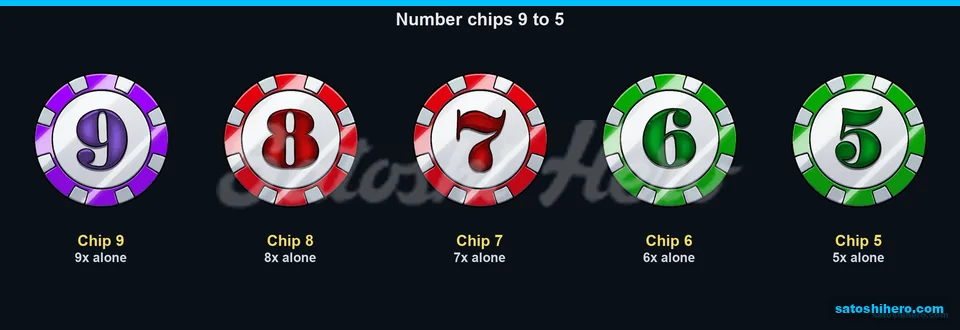
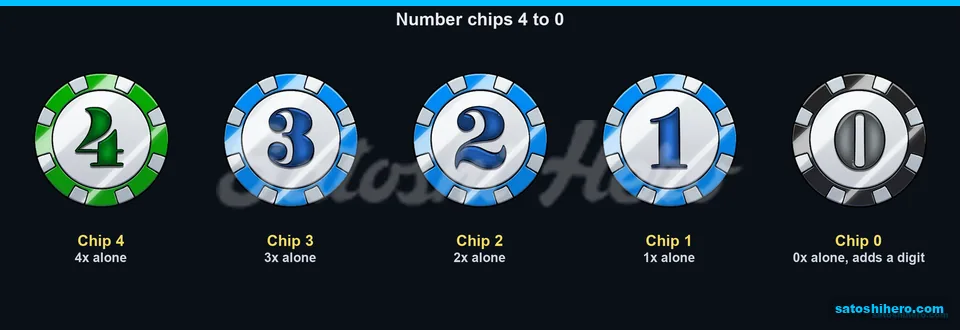
Numbered chips run from 9 down to 0. Chips 1 through 9 pay their face value as a base-bet multiplier when they land alone. At a $0.50 base bet, a lone 9 pays $4.50, while a lone 1 pays $0.50. Those displayed dollar values scale with your chosen base bet.
Number chip values
Chips 9 through 5 provide the stronger single-chip prizes, ranging from 9x to 5x. Chips 4 through 1 form the smaller group, ranging from 4x to 1x. A single 0 pays nothing, yet it can append a zero to the chip immediately left of it. That makes 0 more useful than its standalone value suggests.
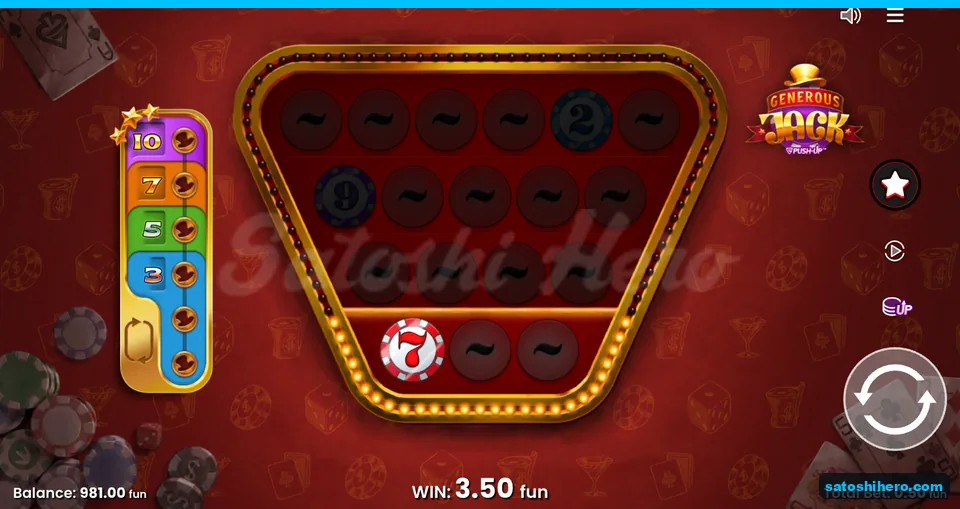
My biggest test hit showed how modest an isolated chip can remain. A red 7 paid $3.50 from my $0.50 stake, exactly 7x. No joined number appeared during the session, so every paying result came from one chip. You can understand the rules quickly, but the exciting outcomes depend on adjacency.
Jack and dud symbols
The gold Jack pays nothing directly. It enters the Free Spins meter and opens the next row when it lands on an active row. A dud also has no value, but it separates adjacent number chips into distinct prize groups. The game includes neither a wild nor a scatter, which keeps the symbol set unusually focused.

The two special symbols pull in opposite directions. Jack expands the feature system, while a dud interrupts number construction. I think that contrast gives every active space a clear purpose without clutter. You should identify Jacks and duds first, then read the remaining numbered sequence.

Key Stat: A lone numbered chip pays its face value in bet multiples, while adjacent chips can form much larger multi-digit prizes.
Win What You See in the Generous Jack slot
Every active row forms its prize by joining uninterrupted chips from left to right. A 5 followed by 0 becomes 50x, while 1 followed by 0 becomes 10x. The game concatenates those digits rather than adding them. You should read the entire row before calculating its value.
Duds split a row into separate number groups. The sequence 5, dud, 3 pays 5x plus 3x, giving 8x overall. Meanwhile, 5, dud, 0 pays only 5x because the isolated zero contributes nothing. Dud, 0, 5 also pays 5x, and 1, dud, 0 pays 1x.
Joining adjacent chips
Unbroken adjacency creates the mechanic’s biggest change in value. A lone 5 returns 5x, but a 5 beside 0 becomes 50x. Longer active rows follow exactly the same reading rule, which allows larger numbers without introducing extra payline logic. In my view, this is much cleaner than a dense conventional paytable.
My 100-spin test never formed a multi-digit number. Spin 87 landed one red 7 on the active bottom row, paying $3.50 from $0.50. That 7x result became my session high. You can see the potential immediately, though my play showed that visible potential doesn’t ensure joined digits.
How duds split prizes
A dud creates a hard break, so chips on either side can’t combine. Each valid group still pays separately, while an isolated zero adds nothing. Read every full row first, then add prizes from other active rows. This order prevents you from turning separated digits into an inflated result.

Strategy Insight: Read each active row as a complete sequence before adding row prizes. A zero can transform its left neighbor, while a dud blocks that connection.
Small changes in chip order can alter the payout sharply. The mechanic looks simple, but you can’t value a row by glancing at its highest digit alone.
Row Activation and Respins
A Jack on an active row opens the next row and begins a controlled respin sequence. First, the game collects that Jack into the meter and removes it from the board. The next row then lights up, and any Jacks already visible there enter the meter. You should distinguish the initiating Jack from those newly revealed symbols.
Those extra Jacks award a respin, but they don’t open another row themselves. During each respin, number chips remain locked while dud positions spin again. All active rows pay after the respins end. The next standard spin resets the board, leaving only the three-position bottom row active.
Opening extra rows
One activation expands the immediate sequence rather than unlocking all four rows automatically. That limitation matters because multiple visible Jacks on the new row can look more powerful than they are. They add meter progress and respins, not another direct row opening. I like the clear escalation, though the temporary board space can produce little value.
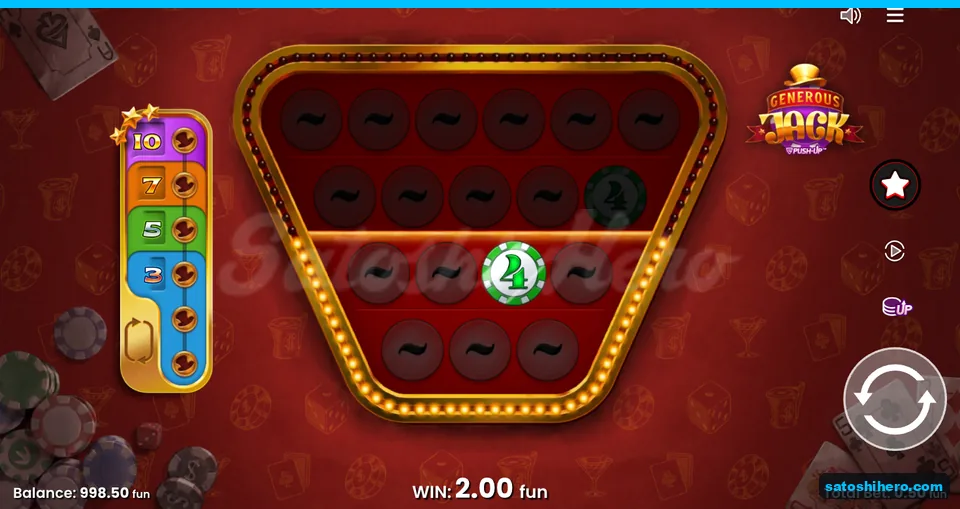
Spin 9 supplied my only Jack event. One Jack opened the second row, where two more Jacks entered the meter. The following respin left a green 4 on that row, paying $2.00 from my $0.50 stake. You get more anticipation from the expanded board, but not a guaranteed strong prize.
The respin sequence
Number chips stay locked while dud positions reroll, giving the sequence a visible target. Once respins finish, every active row gets evaluated and paid before the board resets. Wild Swarm also builds anticipation through collections, while this game uses them to open rows and construct numbers. Other Push Gaming comparisons include Tiki Tumble, Shamrock Saints, Samurai’s Katana, and Retro Tapes. The comparison fits the pacing, not the underlying mathematics.
Activation changes one spin sequence only. You don’t carry the extra row into your next standard spin, which keeps each expansion brief and easy to track.
Casino Theme and First Impressions
A red-felt casino table sits inside a gold trapezoid frame edged with marquee lights. Playing cards, dice, and chip stacks surround the board, reinforcing the table setting without crowding it. The mascot appears as a gold Jack coin wearing a top hat and bow tie. You won’t mistake the setting for a conventional fruit machine.
Numbered and blank casino chips replace fruit, card, and character symbols. That choice ties the visuals directly to the prize rule rather than applying a decorative skin. The theme itself feels familiar, but the trapezoid board creates a recognizable identity. I find that functional link more convincing than the mascot’s showman styling.
Casino-table presentation
Red felt separates the play area from the darker background. Gold rails frame the four widening rows, while marquee bulbs draw attention toward the upper board. Cards, dice, and spare chips sit outside the active spaces. You can focus on the chip order without visual noise.
Reading the board
Bright spaces show active positions, while dim upper spaces mark closed rows. A meter on the left displays collected Jacks without opening another panel. The resting screen in my session showed a $1,000.00 balance and $0.50 total bet. You can inspect both stake and meter progress while keeping the full board visible.
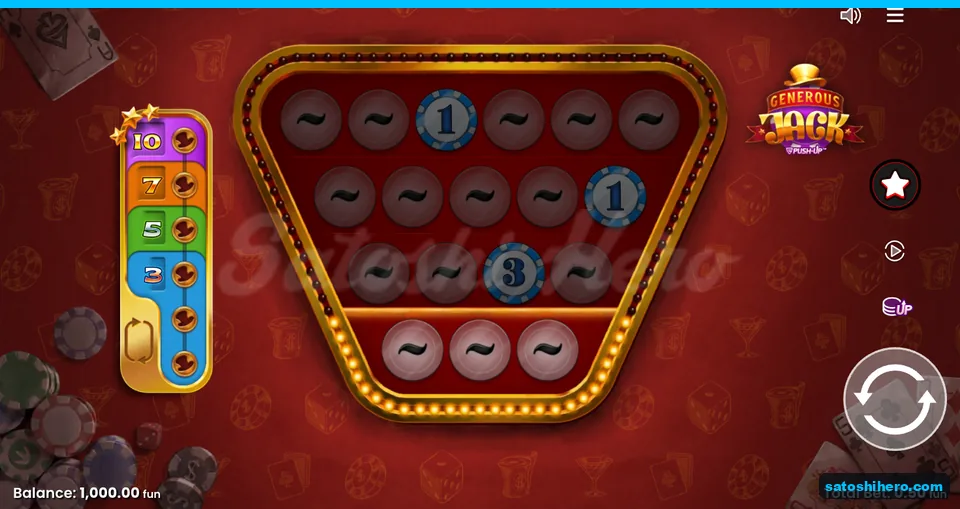

Insight: The top-hatted, bow-tied Jack appears as a gold casino coin, matching the chip-table setting around the meter.
The presentation supports the mechanic instead of distracting from it. That restraint won’t win awards for originality, but it makes the unusual number system easier to read.
The Free Spins Meter
Every collected Jack fills one random meter position, and completed sections award Free Spins. The listed awards are 3, 5, 7, and 10 spins, with a full meter granting 10. Collection count alone doesn’t settle the prize because placement matters. You need to watch filled positions rather than count Jack symbols only.
The first qualifying level starts with three consecutive Jack collections. Further consecutive collections can reach the larger awards. Yet three Jacks don’t automatically complete the three-spin section because each collection occupies a random position. I think that random placement makes progress exciting but less transparent than a simple counter.
Filling meter positions
Collecting a Jack and completing a section are separate events. Each symbol advances the meter, but only a completed prize pattern starts the corresponding award. Visible progress can still stop short of Free Spins. You can have several filled positions without earning a round.
What happened in testing
My only Jack event occurred on spin 9. Three Jacks filled three random meter positions, but those placements didn’t complete an award section. No other Jack appeared during the remaining spins, and Free Spins never started. The event expanded the board and paid $2.00, so it wasn’t entirely empty.
The meter felt slow in standard play. You see progress, but random placement decides whether it pays.
Free Spins Rules
Every row active when Free Spins trigger remains open throughout the round. The feature begins only after the triggering spin’s respins finish and its prizes get paid. Jacks don’t appear inside the feature, leaving number chips and duds on every carried row. You receive one number sequence from each active row per free spin.
The trigger state matters because more open rows create more number-building chances on every spin. Extra rows still don’t ensure valuable sequences, since duds can break digits and isolated chips can stay small. I didn’t trigger Free Spins during my 100-spin test, so I won’t present the feature as firsthand experience. You should treat this section as a rules-based explanation.
Rows carried forward
The active-row count at the trigger defines the feature layout. One open row supplies one short sequence, while several rows create more sequences with wider upper boards. That changes visible opportunity, not certainty. I like how the triggering board shapes the bonus.
Listed bonus option
The 150x Bonus Buy starts the Free Games Feature with a random number of spins. I didn’t purchase it, so my test offers no evidence about its value or performance. Standard play was the only mode I observed. You shouldn’t infer bonus quality from my base-game result.
The rows open at the trigger shape the entire bonus experience. That rule gives row activation real importance beyond its immediate respin payout.
Push-Up Costs and Trade-Offs
Push-Up opens extra rows before a base-game spin, but it sharply increases the total cost. Two active rows cost 5x the base bet, three rows cost 20x, and all four rows cost 50x. Prizes still use the base bet rather than the enlarged total charge. You pay for immediate board access, not larger prize units.
The option works only in the base game. I kept Push-Up off across all 100 tested spins, so I can’t rank its three settings from experience. The spending jump matters more than extra board space. I think the 50x tier demands careful planning.
Costs by row
The progression rises quickly from 5x to 20x and then 50x. A displayed base bet can understate how much one upgraded spin removes from your balance. Calculate total cost before pressing spin, especially at the four-row setting. You can’t judge affordability from the prize unit alone.
Bankroll trade-off
Divide your spending limit by the upgraded cost to estimate how many attempts it supports. More active rows provide more immediate sequences, but no supplied figure proves better expected value for any setting. Extra access shouldn’t be confused with a stronger guaranteed outcome. I prefer the clarity of standard play when comparing test results.

Warning: This high-volatility game can charge 50x the base bet for one Push-Up spin. Set your spending limit from the upgraded cost, not the prize calculation unit.
Push-Up buys immediate board access rather than a winning spin. You gain more chip positions, while accepting a much steeper charge each time.
RTP, Volatility and Test Results
The official profile combines a 96.23% theoretical RTP, high volatility, and a 10,000x maximum win per game round. High variance can create sharp balance swings and lengthy gaps between worthwhile prizes. My standard-play session never approached the cap and felt subdued without joined numbers or Free Spins. You should expect the risk profile to matter more than the bright table presentation.
Simulator projection
The SatoshiHero Slot Simulator modelled 1,000 spins with a bet unit of 1. Its median session ended 65.1x down. The lower 5% threshold finished 317.6x or more down, while the upper 5% threshold ended 322.7x or more up. Those figures describe a broad modelled spread, not observed play.
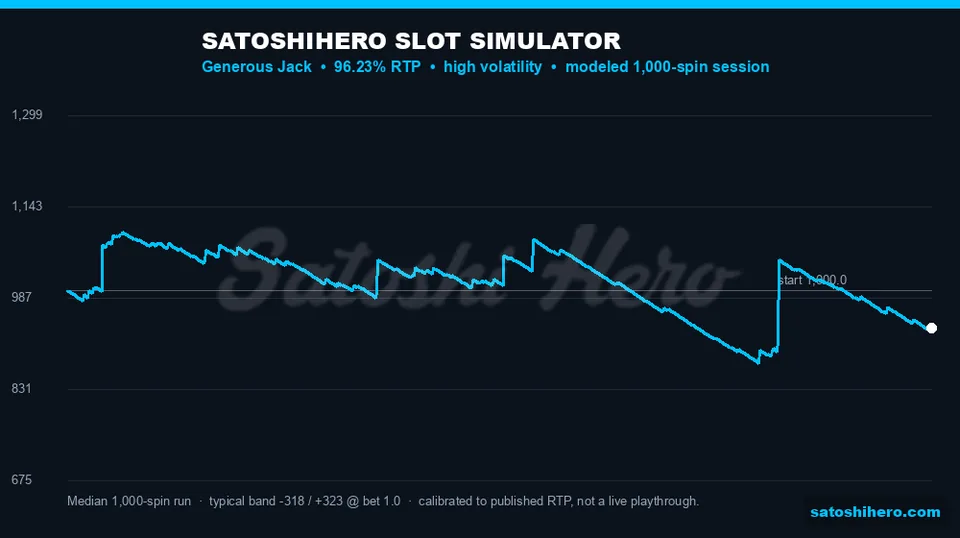
About 18% of modelled spins paid something. A feature-sized hit appeared roughly once per 46 modelled spins, while a result of at least 100x appeared roughly once per 1,610. Neither frequency creates a countdown or predicts your next spin. I think the wide percentile range illustrates the volatility better than the median alone.
The model’s positive upper tail doesn’t erase its losing median. You can finish far from either headline after 1,000 spins, because the output maps possibilities rather than forecasts.
Our 100-spin session
My test lost $19.00 across 100 standard spins. I started with $1,000.00, staked $0.50 each time, and wagered $50.00 overall. Returns totalled $31.00, leaving a $981.00 balance. The 38x deficit captures a quiet session where only 17 spins paid.
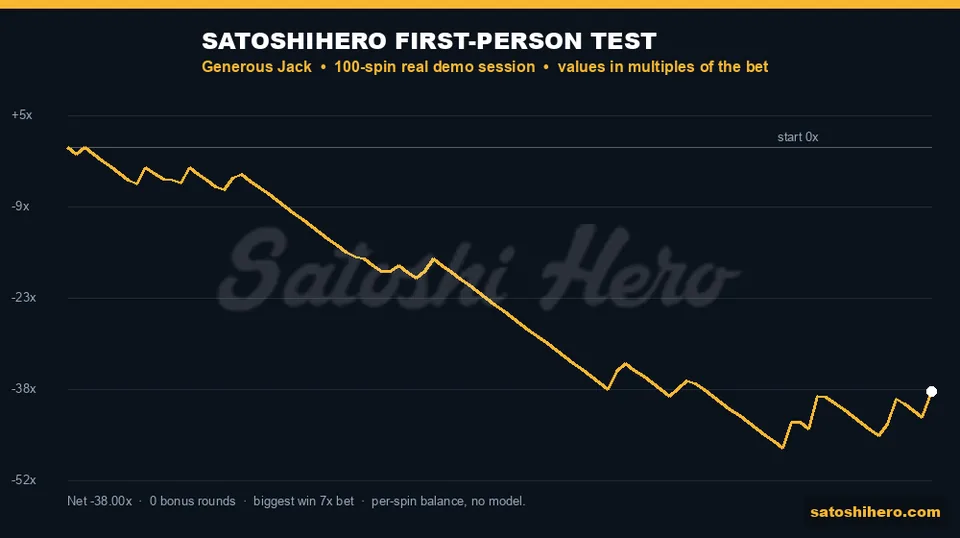
My wins included two at 1x, three at 2x, four at 3x, two at 4x, three at 5x, two at 6x, and one at 7x. Every payout came from one numbered chip. Spin 87 delivered the $3.50 high through a red 7. No joined number appeared, which removed the mechanic’s most distinctive payoff from actual play.
The longest winless run lasted 21 spins, covering spins 43 through 63. My balance returned to $1,000.00 once after spin 2, then reached $976.50 after spin 83. One Jack event arrived on spin 9 and paid $2.00 from the opened second row. No Free Spins followed, Push-Up stayed off, and I didn’t purchase the Bonus Buy.
That session shows how quiet standard play can feel when joined numbers and Free Spins don’t appear. You shouldn’t treat one short run as typical, though its 21-spin dry spell makes the risk tangible. I found the repeated single-chip returns less engaging than the rule set promised.
The 96.23% figure is the operator-published theoretical return, and one 100-spin session can’t confirm or disprove it. Simulator figures represent modelled variance rather than live results or forecasts, while separately configured bonus modes remain distinct unless verified figures say otherwise. Official details, simulated outcomes, and my observations stay separate.
Frequently Asked Questions About Generous Jack
How did my 100-spin Generous Jack slot test go?
I played 100 spins at $0.50 from a $1,000.00 balance and finished at $981.00. The $19.00 loss equalled 38x my bet, with 17 paying spins and a 7x high. Free Spins didn’t trigger. You can use the result as one firsthand example, not a prediction for your play.
How does Win What You See pay in Generous Jack slot?
Each active row forms a number from left to right. A 5 beside 0 becomes 50x, while 5, dud, 3 splits into 5x plus 3x for 8x. An isolated zero pays nothing, and lone chips 1 through 9 pay face value. You must read complete sequences before adding separate row prizes.
What does the Generous Jack slot symbol do?
The Jack enters the meter and opens the next row when it lands on an active row. Jacks visible on that new row also enter the meter and award a respin where dud positions reroll. On spin 9, three collected Jacks led to a $2.00 second-row payout. I liked the expansion, though it didn’t start Free Spins.
How are Free Spins triggered in the Generous Jack slot?
Collected Jacks fill random meter positions, and completed sections award 3, 5, 7, or 10 spins. Every row active at the trigger remains open throughout the round. My test didn’t complete a section, so Free Spins never started. You should track positions rather than assume three Jacks secure an award.
What did the 1,000-spin simulator show for Generous Jack slot?
The modelled median ended 65.1x down. Its lower 5% threshold was 317.6x or more down, while the upper 5% threshold was 322.7x or more up. About 18% of modelled spins paid. These outputs describe simulated variance and can’t forecast what you get.
What are the RTP and maximum win of the Generous Jack slot?
The game has a 96.23% theoretical RTP, high volatility, and a 10,000x win cap. Active chip rows become left-to-right numbers instead of paying through lines or ways. That combination offers distinctive mechanics but serious balance risk. You should size stakes for potential dry runs.
Final Verdict
Generous Jack slot stands out through a number-building rule that makes every zero and dud meaningful. Its main weakness is the quiet standard play I experienced, where no joined number or Free Spins appeared. The concept impressed me more than the session’s returns.

My Take
Number-building fans can find genuine novelty here, but high variance demands a firm spending limit. Expect ordinary single-chip wins to feel modest when row activations and joined digits stay absent.
I like how the board, symbols, and meter communicate one coherent mechanic. I don’t like how flat my 100 spins became after the lone Jack event, especially during the 21-spin dry spell. The $19.00 loss wasn’t extreme, yet the $3.50 best hit lacked excitement.
This Generous Jack slot guide is updated periodically to keep mechanics, specifications, and test presentation clear.

Pros:
 Distinct number system: Joined chips create prizes without paylines or ways.
- Readable board: Lighting separates active positions from closed rows immediately.
- Visible progress: The side meter keeps Jack collections easy to track.
- Connected design: Casino chips support both the theme and core mechanic.

Cons:
 Quiet standard play: Single-chip wins felt repetitive throughout my test.
- Costly upgrades: Push-Up can charge 50x the base bet per spin.
- Random meter placement: Several Jack collections can miss every award section.

Best For: Patient number-puzzle fans get the clearest appeal. You need to accept long dry spells, and you should manage high-risk spending without expecting frequent bonus action.












Other Push Gaming Games























































Bets
All Bets
Game
Player
Date
Wager
Mult.Multiplier
Prize
 Galaxy Glitter
 Hidden
- 00:18:24
- 0×
- Mr. Crystalman: Hold 'N' Link
 Hidden
- 00:18:24
- 1.19×
- Wild Buffalo: Megaways
 mike_721
- 00:18:23
- 0×
- Galaxy Glitter
- Hidden
- 00:18:23
- 0×
- Royal Fruits 9: Hold 'n' Link
 Hidden
- 00:18:22
- 0×
- Galaxy Glitter
- Hidden
- 00:18:22
- 0×
- Galaxy Glitter
- Hidden
- 00:18:21
- 0×
- Galaxy Glitter
- nina87
- 00:18:21
- 3.2×
- Galaxy Glitter
- josh1998
- 00:18:21
- 1×
- Elephant's Gold: Bonus Combo
- Hidden
- 00:18:20
- 2.65×