

Ice Lobster
By pressing play, you agree that you are above legal age in your jurisdiction and that your jurisdiction allows online gambling.

Ice Lobster
RTP96.06%
VolatilityVery high
Max winx5,000
Lines20
ThemeFishing
ReleasedApr 2024

Frozen Cages and Brutal Bonus Swings
Ice Lobster turns Pragmatic Play’s frozen fishing setup into a tense hunt for marked cages, not a smooth base-game grind.
Ice Lobster is a very-high volatility slot from Pragmatic Play with 96.06% RTP and 5,000x max win potential. It uses 5 reels, 4 rows, and 20 fixed paylines, with wins paying left to right from the leftmost reel. Bonus hunters with patient bankrolls get the clearest value here, especially if you like sharp swings and position-based features.
Key takeaways
- Best play: The bonus buy shows the main mechanic fastest, but it costs 100x the bet and can still miss if money lobsters land outside marked cages.
- RTP / volatility: Ice Lobster has 96.06% official RTP and very-high volatility, so you should expect dry base-game stretches.
- Max win: The maximum win is 5,000x, and I’d call that contained for this risk level.
- Risk note: Base-game returns looked small beside the $2 stake, so the free spins carried most meaningful results.
- Bankroll note: My 500-spin test finished $64 down at $2 per spin, but one strong bonus rescued a deeper drawdown.

Caution: Very-high volatility can hide a rough session behind a calm final number. In my test, the balance sat $230 down before the main bonus recovery.

Table of Contents
- Theme & First Impressions
- How Ice Lobster Works
- Reels and lines
- Symbol values
- Wilds, Scatters & Money Lobsters
- Wild and scatter
- Money symbols
- Free Spins
- Starting the round
- Collecting values
- Marked Cages and Multipliers
- Opening more cages
- Multiplier tiers
- Bonus Buy
- Cost and setup
- Buying risk
- Bought Bonus Result
- Test setup
- Final return
- How It Played Over 500 Spins
- Session shape
- Bonus frequency
- RTP, Volatility & Our Test
- Simulator projection
- Our 500-spin session
- Frequently Asked Questions About Ice Lobster
- Final Thoughts
Theme & First Impressions
Ice Lobster is an ice-fishing slot where the theme supports the bonus idea better than the base game. You see five reels frozen into blocks of ice, a bearded fisherman above the paytable, and a cartoon lobster scuttling along the seabed.
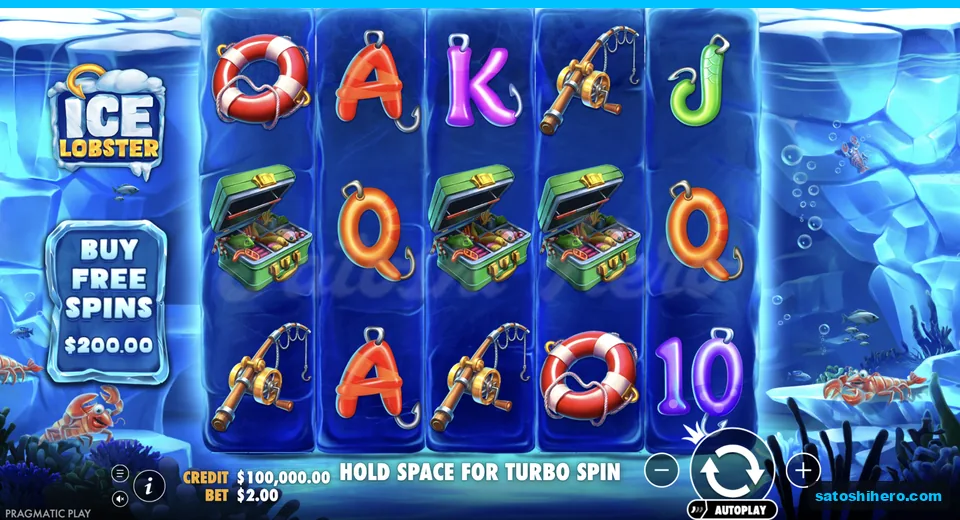
The scatter looks like a lobster on ice, which makes the visual identity click fast. I like that detail because it points straight at the feature rather than sitting there as filler art. The purchase sign frozen into the left wall also makes the bonus-buy option feel part of the scene.
This isn’t a wild theme, and it won’t win originality prizes. Still, the frozen cage setup gives the game more personality than a plain fishing reskin. If you enjoy icy slot atmosphere, Ice Mints gives you a cleaner cold-themed comparison, while this game leans harder into marked-position tension.

Did You Know? The frozen setting isn’t just decoration. The cage marks turn the icy grid into the main bonus map.
You’ll probably read the base game as a waiting room. That isn’t always a bad thing, but it does mean the theme can’t fully hide quiet stretches. If you need lively action on every spin, the cold style won’t carry those slow patches for you.
How Ice Lobster Works
Ice Lobster works as a true 5×4 fixed-payline slot with 20 fixed paylines. You don’t choose lines, so every $2 spin in my test used the full setup.
Reels and lines
The game uses 5 reels and 4 rows. Wins pay left to right, and matching symbols need adjacent reels starting from the leftmost reel. That makes the rules easy to read, which I appreciate when the bonus already asks you to track marked positions.
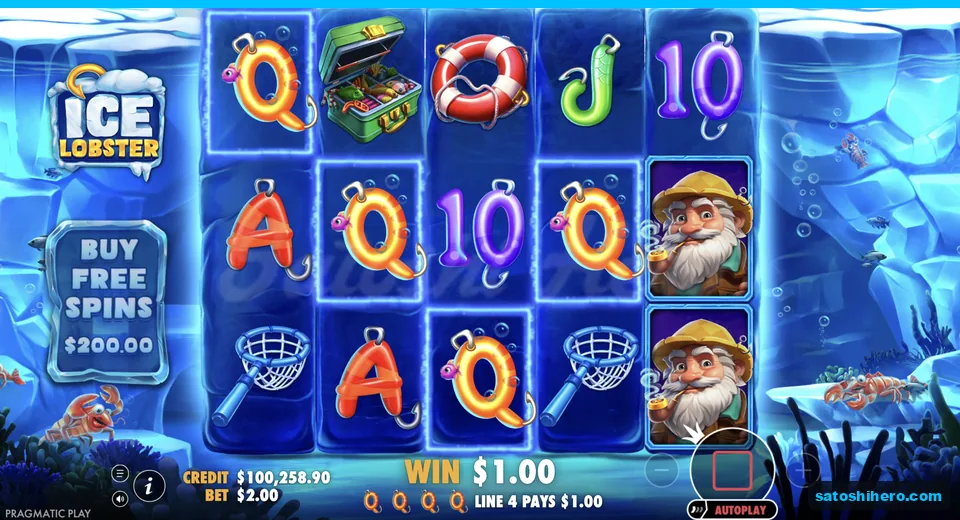
This is not a ways, cluster, or Megaways game. You’re dealing with fixed paylines, and the base game behaves like a classic line slot. It also ran cleanly for me on desktop and mobile through the SatoshiHero game page, without any layout trouble worth calling out.
Symbol values
At the $2 test stake, the fisherman sits at the top of the regular symbols. Five fishermen pay $200, four pay $20, and three pay $5. The tackle box pays $100 for five, while the lifebuoy and fishing rod each pay $50 for five.
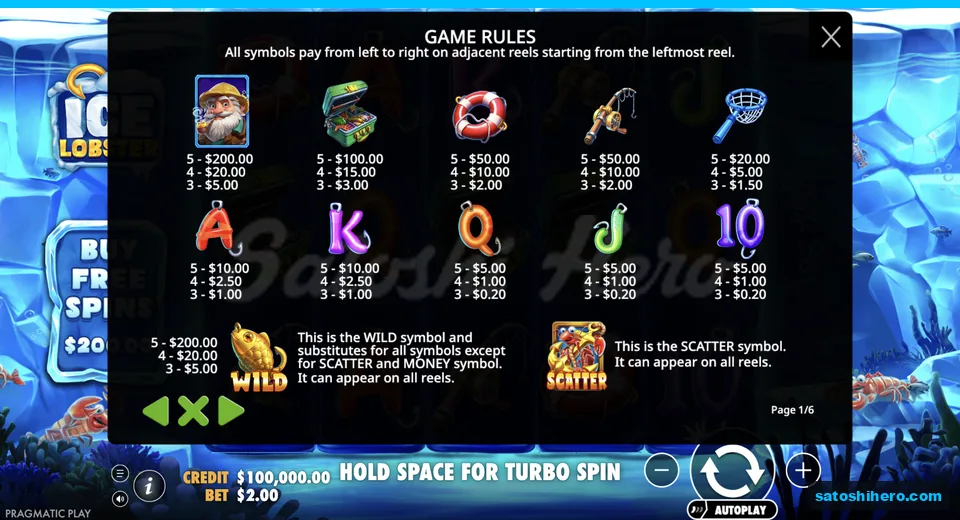
The net pays $20 for five. Ace and king each pay $10 for five, $2.50 for four, and $1 for three. Queen, jack, and ten each pay $5 for five, and that low-symbol end showed up often in my base-game play.
Small hits rarely changed the rhythm. Four queens paid $1 at a $2 stake, which tells you plenty about the base game. You can get frequent little flickers, but I didn’t feel much comfort from them.
Wilds, Scatters & Money Lobsters
The special symbols decide whether the slot feels dead or dangerous. The wild supports regular line wins, the scatter starts the free spins, and the money lobster only matters inside marked bonus cells.
Wild and scatter
The gold fish wild lands on all 5 reels. It substitutes for every regular paying symbol, but it doesn’t substitute for the scatter or the money symbol. At a $2 bet, five wilds match the fisherman’s $200 five-symbol payout.
I like the wild’s role because it stays simple. It doesn’t hijack the bonus, and it doesn’t pretend to solve the base-game drought. The lobster on ice scatter lands on all reels, and 3, 4, or 5 scatters can trigger free spins.
Money symbols
The money lobster appears only inside the bonus. It carries a random value from 0.5x to 1,000x the total bet, which sounds huge until you see the catch. It pays only when it lands on a marked position.

Quick Fact: A money lobster can show up to 1,000x the bet. If it misses a marked cage, it pays nothing.
That rule creates the whole personality of the game. The number on the lobster matters less than the cell it lands in, which feels cruel but clear. You can watch a big value sit on screen and still get nothing from it.
Free Spins
Free spins are the main event because scatters create marked positions that stay active for the whole round. Money lobsters only pay when they land on those marked cells.
Starting the round
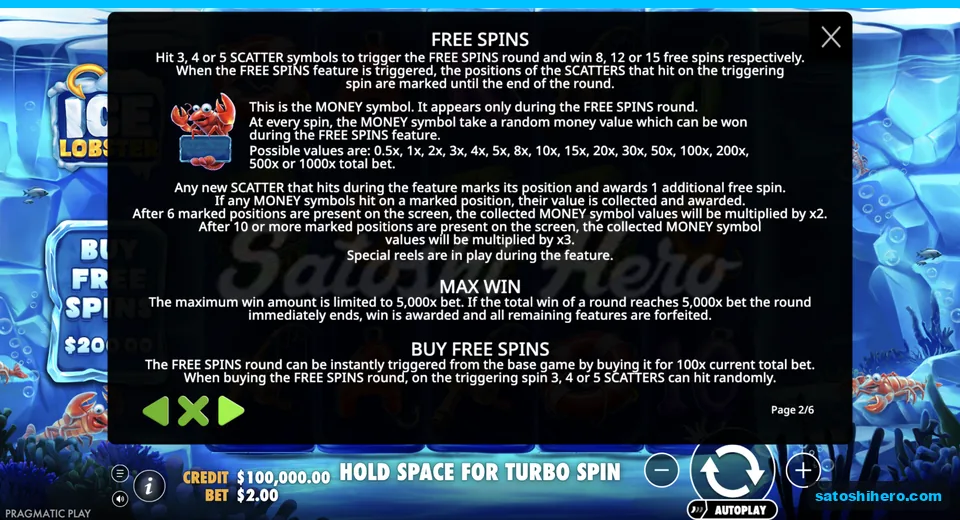
Three scatters award 8 free spins, four scatters award 12, and five scatters award 15. The cells where the triggering scatters land become marked cages. Those marks stay active for the entire round, so your starting layout matters straight away.
New scatters during the feature add one marked cell and one extra spin. That’s the engine I cared about most while playing. A round with more scatters gives you a wider paying area and more time to catch values.
Collecting values
Money lobsters can land with values from 0.5x to 1,000x the total bet. They only pay inside marked cells, and my bought round showed that rule in the harshest way. A $400 lobster landed two cells away from a marked cage and paid nothing.
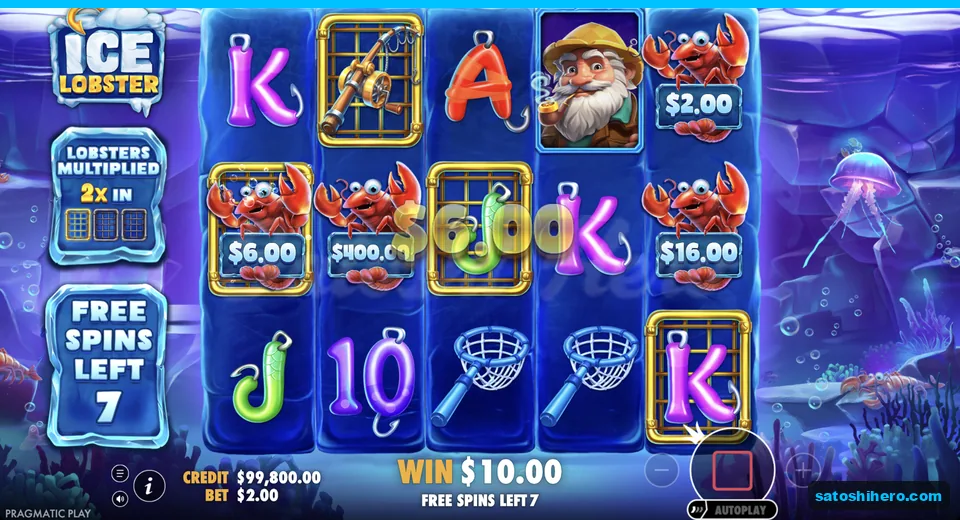
On that same spin, a $6 lobster landed in a cage and got collected. I don’t love watching $400 disappear, but I respect how clean the mechanic feels. You understand the pain instantly, and you know exactly what you need next.

Pro Tip: In this bonus, open cages matter more than one big lobster value. More scatters mean more paying positions and a better chance to collect.
The practical lesson is simple. More marked cells matter more than one flashy value. Free spins can look exciting while still paying little if the lobsters keep missing the cages.
Marked Cages and Multipliers
Marked cages drive the bonus because they decide which money lobsters count and when multipliers start. A bonus round improves when scatters open more cells, not just when high values appear.
Opening more cages
The initial scatter cells become the first marked cages. New scatters add more cages and one extra spin each, so a round can improve as it goes. I like that build-up because it gives every scatter real pressure.
This isn’t a separate random feature. It’s the actual bonus engine, and you feel it on every spin. Lobster House may appeal if you simply like lobster-themed slots, but this game’s hook comes from cage collection and multiplier pacing.
Multiplier tiers
Once 6 positions are marked, every collected lobster pays 2x. Once 10 or more positions are marked, every collected lobster pays 3x. These multipliers apply only to collected lobsters, not every money symbol on the screen.
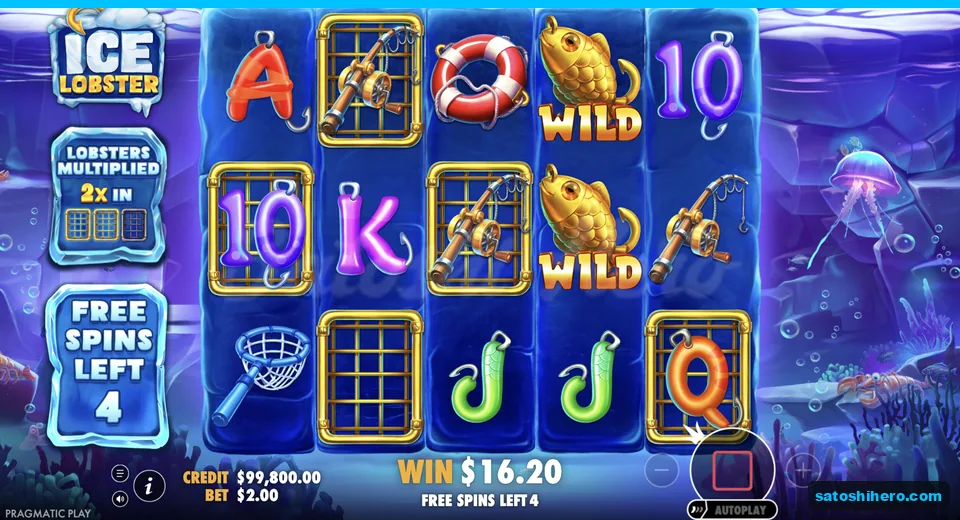
The maximum win remains capped at 5,000x. I think the tier system makes the bonus sharper, though early dead spins feel harsher because you know what a better board could do. During the feature, scatters become the symbols you want most.
Bonus Buy
The bonus buy costs 100x the total bet and starts free spins without waiting through the base game. At the $2 test stake, that meant a $200 buy.
Cost and setup
The buy opens with a triggering spin that can land 3, 4, or 5 scatters at random. That means a bought round can start with 8, 12, or 15 free spins. Your first marked cages also vary because scatter positions decide the opening map.
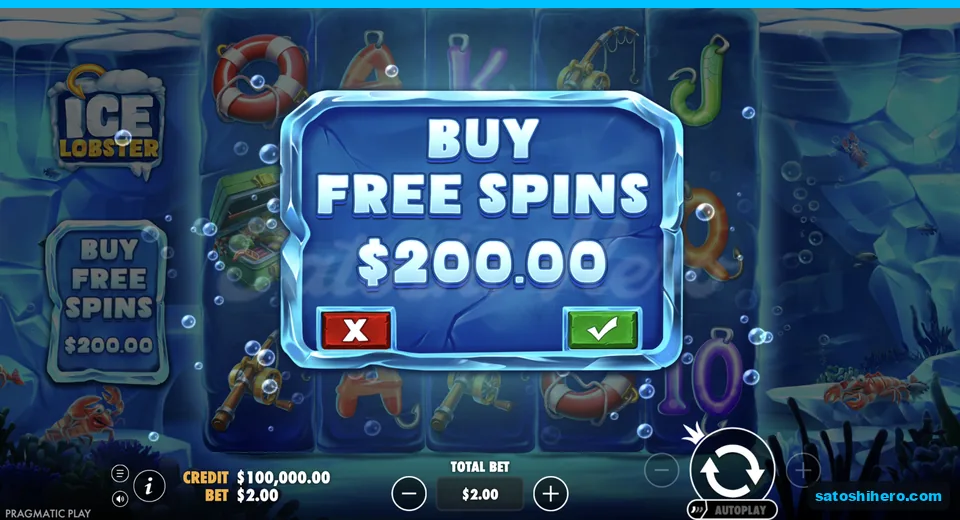
I can see why the buy tempts impatient players. It shows the main mechanic quickly, and the base game doesn’t offer much middle-ground excitement. But the price feels heavy in a very-high volatility slot, so you need to treat it like a risk event.
Buying risk
Buying free spins doesn’t guarantee a strong setup. You can still get large money lobsters outside marked cages, which creates the same pain as a natural trigger. At 100x the bet, a weak bonus can damage your balance fast.
The main guide spec uses 96.06% RTP. The rules screen I played showed a different buy RTP, so you should check the game info screen for the version in front of you. I wouldn’t sell the buy as safe; I’d call it a fast route to the real game.
Bought Bonus Result
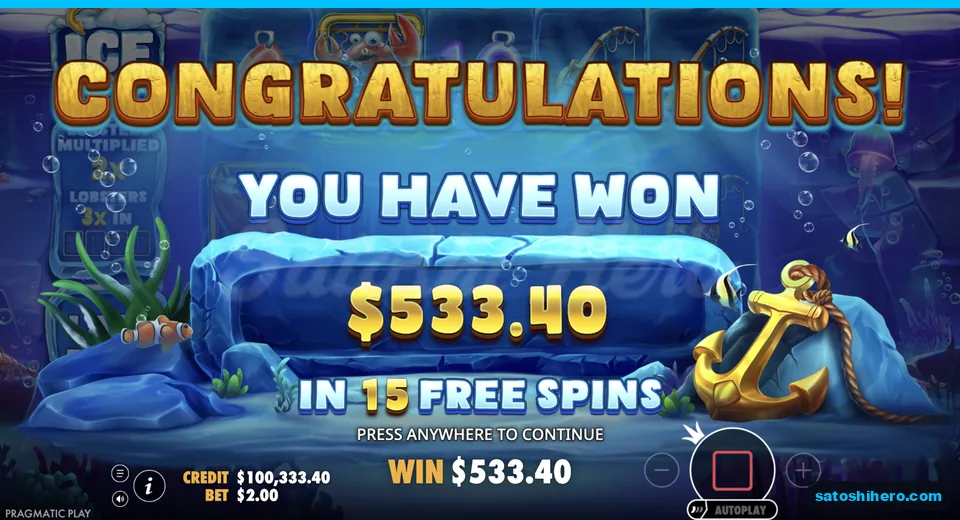
The bought bonus returned $533.40 from a $200 purchase, which made it a strong test result. The win came from extra scatters, more cages, and reaching the 3x tier rather than one giant lobster.
Test setup
I bought the free spins once on a fresh $100,000 balance. The bet was $2, so the buy cost $200. It opened with 12 spins, then stretched to 15 spins as more scatters landed.
That setup already felt better than a flat 8-spin start. Extra spins matter here because they also bring extra marked positions. I felt the round improve as the board widened, which is exactly what this feature needs.
Final return
The round finished at $533.40, equal to 266x the bet. It paid more than 2.5x the buy cost and reached the 3x collection tier. I’d call that a genuinely good result, but not a normal expectation.
One spin summed up the whole game. Four money lobsters landed with $6, $400, $16, and $2. Only the $6 lobster sat inside a marked cage, so the $400 lobster paid nothing.
That moment hurt, but the round kept catching scatters. The board widened, the multiplier climbed, and the final total came from better coverage rather than one monster value. Lobster Bob’s Crazy Crab Shack may fit you better if you want cartoon coastal energy with less focus on a harsh 100x buy.
Position beats displayed value in this bonus. Chase the scatters, not the values, because open cages decide what your round can collect.
How It Played Over 500 Spins
The 500-spin test finished only $64 down, but that final number hides a rough session shape. Ice Lobster bled early, recovered through one strong bonus, then slowly gave most of it back.
Session shape
I played 500 spins at $2 per spin. The balance started at $100,000 and finished at $99,936, creating a $64 loss. That sounds calm, but the path felt much rougher than the result.
The first 300 spins were a steady bleed. By spin 180, I sat $230 down with little to show beyond two small bonus rounds. Those paid $28.80 and $66.40, which didn’t do much against repeated $2 spins.
Around spin 280, the game finally did what it exists to do. Three scatters started a round that kept catching more scatters, stretched to 14 free spins, and paid $351.80. That one feature moved my balance from a deep drawdown to more than $140 ahead.
Bonus frequency
Three bonuses in 500 spins felt fair to me. The problem is the space between them. Base wins came as tiny hits, including $0.20 tens and $1 queens, and they didn’t cover the spin cost.
Did You Know? The 500-spin test ended only $64 down. Without the $351.80 bonus near spin 280, the result would have looked completely different.
The last 200 spins slowly gave most of the recovery back. That’s the honest read for your bankroll: miss the bonus, and you probably feel the bleed quickly. There’s almost no middle ground here, which makes patience more important than excitement.
RTP, Volatility & Our Test
Ice Lobster has 96.06% official RTP, very-high volatility, and a 5,000x maximum win. That mix points to bonus-dependent results, long quiet patches, and large swings from a small number of feature rounds.
Simulator projection
The SatoshiHero Slot Simulator modelled 1,000 spins at a $2 bet. It used the 96.06% RTP, very-high variance, and 5,000x ceiling. The median outcome showed a $212.10 loss.
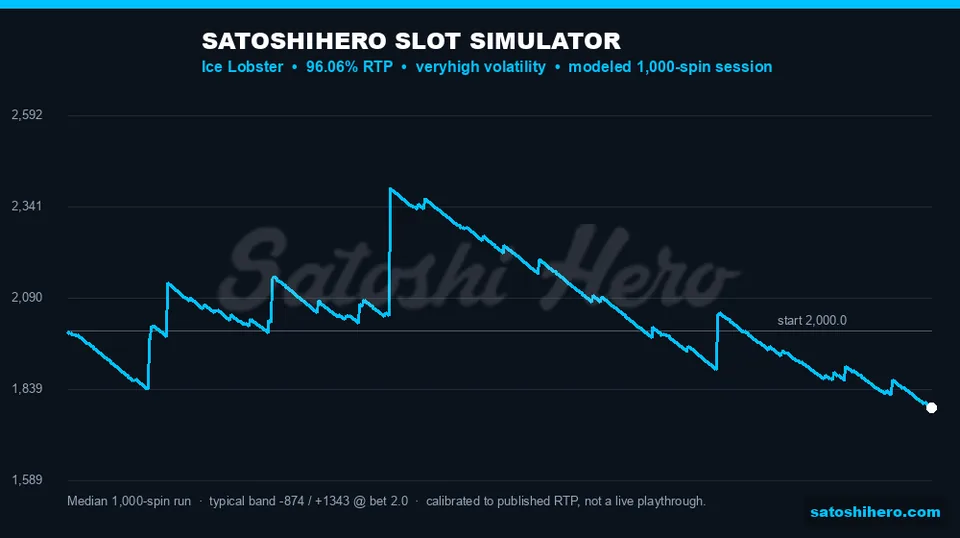
The wider range looked much sharper. The 5th percentile sat at $874.30 down, while the 95th percentile reached $1,343.30 up. About one spin in seven returned anything, which matched the dry base-game feeling from my session.
This projection shows range, not a promise. I think it does a good job of warning you that a mild ending can hide a nasty route. You need enough bankroll to survive the quiet parts before the feature has a chance to matter.
Our 500-spin session
My real test staked $1,000 across 500 spins at $2 each. I finished $64 down, which looks mild beside the simulator’s median loss. The path felt volatile because one $351.80 bonus did most of the work.
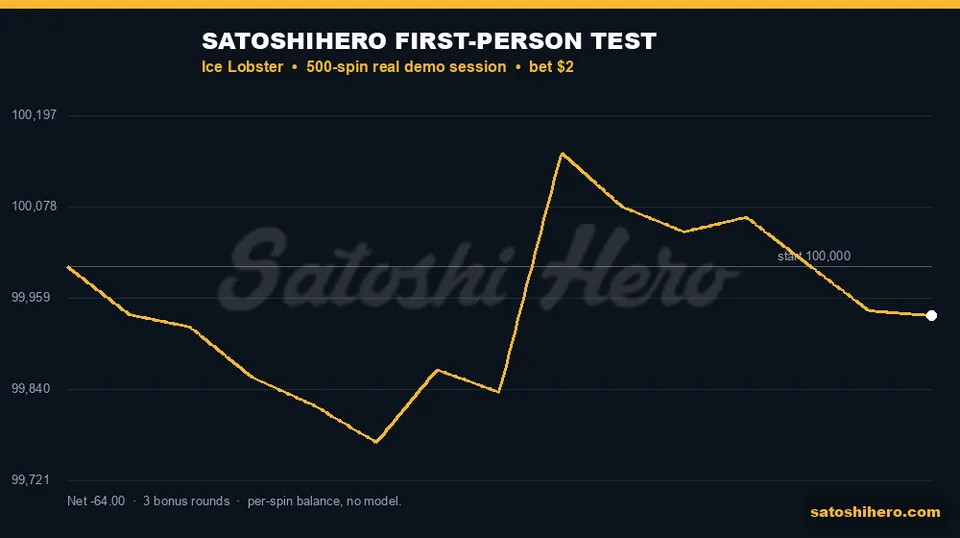
Before that bonus, the session looked ugly. After it, the balance drifted back toward the start as the base game kept nibbling away. That shape tells you more than the final number.
The 96.06% RTP is the operator-published theoretical return from official game data. One 500-spin session doesn’t prove or change that return, and bonus-buy RTPs can differ from base-game RTPs by design. Different return settings can appear in the game info screen, so the active rules panel matters.
Frequently Asked Questions About Ice Lobster
How much does the bonus buy cost in Ice Lobster?
The bonus buy costs 100x the total bet. At the tested $2 stake, that cost $200. The triggering spin can land 3, 4, or 5 scatters, opening with 8, 12, or 15 free spins.
How do marked positions work in Ice Lobster?
Scatter cells become marked when the bonus starts, and they stay marked throughout the round. New scatters add a marked cell and one extra spin. Money lobsters only pay when they land on marked cells.
What is the Ice Lobster free-spins multiplier?
The free-spins multiplier comes from the number of marked positions. Six marked cells activate 2x collections, while 10 or more marked cells activate 3x collections. More scatters widen the board and raise the collection rate.
How much can a money lobster be worth?
A money lobster can carry a random value from 0.5x to 1,000x the total bet. At $2, that means $1 to $2,000. It only pays if it lands on a marked position.
What did the 500-spin Ice Lobster test win?
The session lost $64. I started at $100,000 and ended at $99,936. The main swing came from a $351.80 bonus after a deeper drawdown.
What did the bought bonus pay in Ice Lobster?
The buy cost $200 and returned $533.40. That was 266x the bet and more than 2.5x the buy cost. The round stretched from 12 to 15 spins and reached the 3x tier.
What is the RTP of Ice Lobster?
The official RTP used in this guide is 96.06%. The tested game info screen showed a different build. You should check the in-game info panel for the active version before you play.
What is the maximum win in Ice Lobster?
The maximum win is 5,000x. This applies to the base game and bonus. I wouldn’t imply any higher cap, because that changes the risk picture.
Final Thoughts
Ice Lobster stands out because the marked-cage bonus creates real tension from a simple idea. The drawback is just as clear: the base game gives you very little comfort between features.

My Verdict
Bonus-focused players with steady bankroll control get the most from this slot. Expect dry patches, small line hits, and sudden feature swings. I’d keep stakes modest unless you’re buying the bonus on purpose.
I like the cage mechanic because it makes every scatter matter. I don’t like how many good-looking money lobsters can miss the active cells and pay nothing. My 500-spin session and bought bonus both proved that position beats value here.
Ice Lobster earns its place as a tense, bonus-heavy slot, and this guide is updated periodically when rules or return settings need checking.

Pros:
 Clear Bonus Hook: Marked cages make every scatter feel important.
- Strong Feature Tension: Big values can appear before the board catches them.
- Simple Base Rules: Fixed paylines make regular wins easy to understand.
- Useful Buy Option: The 100x buy shows the main mechanic fast.

Cons:
 Thin Base Game: Small line wins rarely cover repeated $2 spins.
- Harsh Misses: Large money lobsters can land outside cages and pay nothing.
- Contained Ceiling: The 5,000x cap feels modest for very-high volatility.

Best For: Patient bonus hunters and risk-aware players get the clearest read from this slot. You need comfort with long dry spells, sudden recoveries, and features where one scatter can change the whole board.

































































Bets
All Bets
Game
Player
Date
Wager
Mult.Multiplier
Prize
 Royal Fruits 9: Hold 'n' Link
 Hidden
- 00:18:30
- 0×
- Royal Fruits 9: Hold 'n' Link
- Hidden
- 00:18:27
- 0×
- Mardi Gras Queen
 josh1998
- 00:18:26
- 2.4×
- Royal Fruits 9: Hold 'n' Link
- Hidden
- 00:18:24
- 0×
- Grand Koala: Hold ‘N’ Link
- nina87
- 00:18:23
- 0×
- Royal Fruits 9: Hold 'n' Link
- mike_721
- 00:18:21
- 0×
- Royal Fruits 9: Hold 'n' Link
- Hidden
- 00:18:21
- 4×
- Sweet Lotto
 whodey39311
- 00:18:19
- 0×
- Super Hotfire Diamonds
 cristianarroyo843
- 00:18:18
- 0×
- Super Hotfire Diamonds
- cristianarroyo843
- 00:18:16
- 0×