

Sphere Smash
By pressing play, you agree that you are above legal age in your jurisdiction and that your jurisdiction allows online gambling.


Chasing the Glow Inside the Prize Sphere
Sphere Smash slot replaces reels, symbols and paylines with one illuminated prize sphere.
According to Octoplay, Sphere Smash is a low volatility slot with 95.81% theoretical RTP and 200x max win potential. Each wager charges the dome, and a full charge can begin a rising cash-prize sequence. Simple, reel-free play drives the appeal, while my 100-spin test returned $451 from $500 wagered and finished $49 down.
Key Takeaways
- Best play: The standard sphere game is the full experience, with no bonus, feature purchase or separate mode.
- RTP / volatility: The theoretical RTP is 95.81%, and the volatility is low.
- Max win: The overall cap is 200x the bet, not the 10x largest individual cash award.
- Risk note: My counted test included 76 non-paying spins from 100 bets.
- Bankroll note: One hundred rounds at the $5 default stake put $500 into play before returns.

Table of Contents
- How Sphere Smash Works
- No reels or paylines
- One dome, one outcome
- The Charge Mechanic
- Completing the charge
- Empty-spin frequency
- Theme and First Impressions
- Neon city stage
- Changing sphere skins
- Prize Ladder and Payout Scale
- All 22 values
- Single versus total wins
- Cash Prize Sequences
- Rising prize order
- Reading the total
- Interface, Stakes and Autoplay
- Stake and spin controls
- Autoplay risk limits
- What 100 Spins Felt Like
- Wins and dry spins
- Balance movement
- Sphere Smash RTP, Volatility and Our Test
- Simulator projection
- Our 100-spin session
- Frequently Asked Questions
- Final Take
How Sphere Smash Works
Sphere Smash slot has no reels, rows, paying symbols, paylines or ways to win. Every result comes from charge and cash-prize action inside the central dome. You press spin, watch the charge, then read the final total if the charge completes.
Each wager starts one charge attempt, and only a completed charge moves into cash awards. There are no wilds, scatters or hidden special symbols. Multiple awards can stack during one bet, so you should judge the finished WIN figure rather than one prize. I find the one-object format refreshingly clear, though reel fans could find it too bare.
No reels or paylines
A traditional left-to-right slot asks you to follow matching symbols across fixed positions. This game removes that structure entirely, so paylines aren’t concealed behind the interface. Line count, symbol frequency and reel patterns tell you nothing useful here.
Instead, you track whether the charge reaches the top and how much cash accumulates afterward. A stopped charge returns nothing, while a completed one can begin a sequence. That distinction makes the rules easy to grasp, but it also removes much of the visual variety found in standard slots.
One dome, one outcome
One wager follows a short order:
- You select your stake.
- The dome begins charging.
- The charge stops short or reaches the top.
- A completed charge can begin awarding cash prizes.
- The final WIN display shows the accumulated result.
I captured a simple completed result where the Earth globe paid $6 and the WIN display matched it. You don’t need to decode a paytable pattern after the animation ends. Follow the sphere, its prize band and the running total, and the outcome stays obvious.
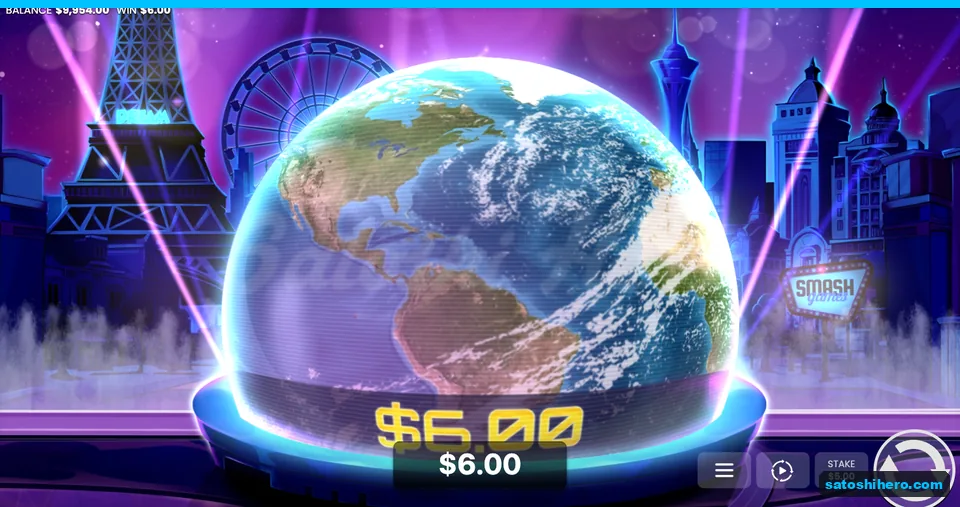

Factoid: Sphere Smash slot has no paylines or ways to win. Every result comes from the prize sphere.
The Charge Mechanic
Every bet charges the dome, but cash prizes appear only if that charge reaches the top. You see the dark resting sphere brighten into a cyan mirror-ball effect before the first award appears. The reveal looks interactive, yet you can’t influence its result.
My 100 counted bets included 76 spins that paid nothing. That figure describes one session, not a fixed miss rate. You should expect empty outcomes, even though the official volatility level is low. The contrast surprised me because the pacing felt drier than the label first suggested.
Completing the charge
A successful charge moves straight into the cash-prize sequence. The sphere lights fully, then the prize band starts showing awards while the running amount grows. You can watch that progression, but button timing doesn’t affect how far the charge travels.
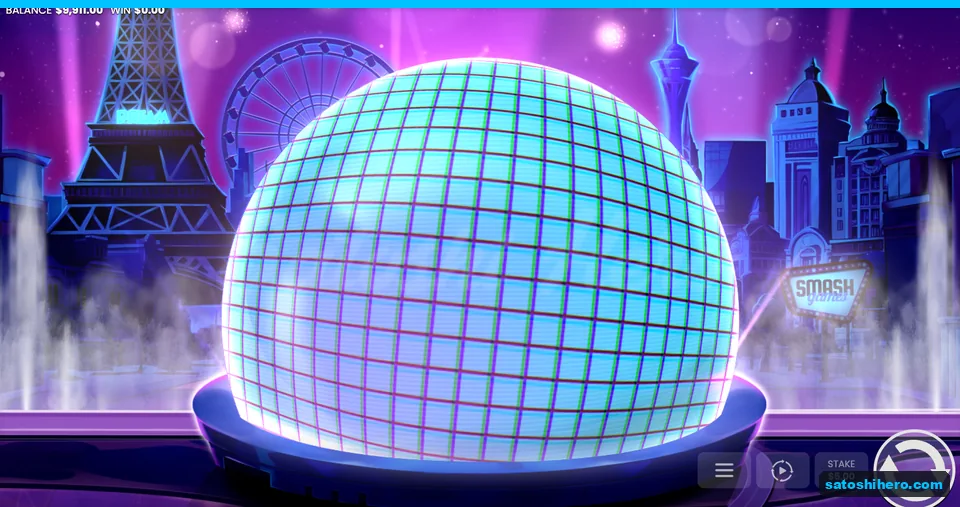
Nothing in the interface lets you stop or steer the animation. I like that honesty because there are no false choices dressed up as strategy. Still, the long reveal can feel decorative when the actual result has already been determined.
Empty-spin frequency
Those 76 non-paying bets made my short session feel dry despite the low volatility profile. Some gaps passed quickly, while others made the sparse screen seem especially quiet. You shouldn’t treat that count as the game’s true hit rate because 100 bets can’t establish a stable probability.
The dedicated math section compares my observed paying-spin rate with the simulator projection. For now, the practical lesson is simpler: low volatility describes the broader payout profile, not payment on most spins. The charge remains a visual reveal rather than a skill element.

Tactic: Choose your stake and autoplay amount before starting a batch. Stopping or timing the animation won’t improve the charge outcome.
Theme and First Impressions
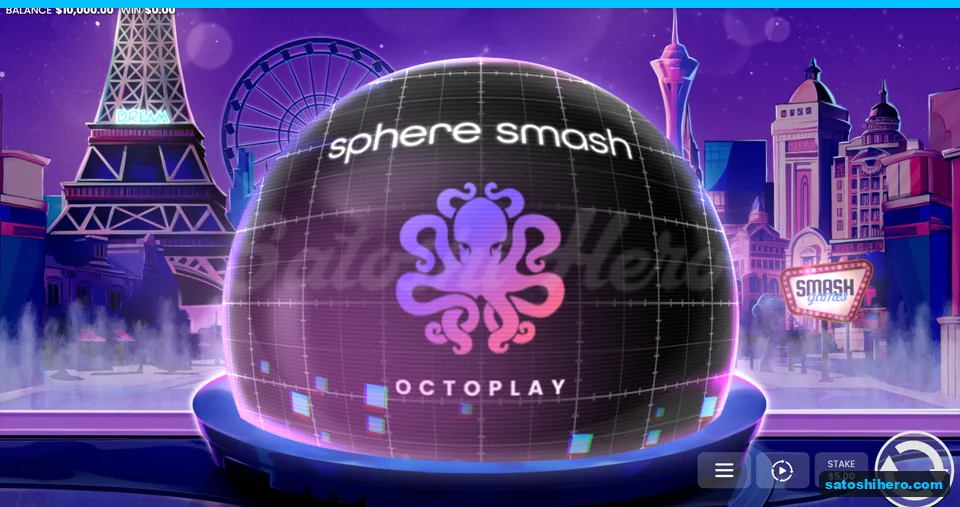
The game places one glowing dome on a sparse neon stage, backed by a night-time city skyline. You can spot an Eiffel-style tower, a Ferris wheel and a Vegas-style tower around the central object. The minimal framing tells you immediately where to look.
At rest, the sphere carries Octoplay’s octopus logo. A completed charge creates a mirror ball, while prize rounds can introduce other skins. I saw pumpkin and Earth designs, which added personality.
Neon city stage
Empty space surrounds the dome, making it the sole focus rather than one element among busy reels. Neon blues and purples shape the skyline without competing with the prize display. You can identify an active charge quickly because the sphere changes from dark to intensely lit.
The bottom-right corner holds the menu, autoplay, stake and spin controls. During my test, that compact arrangement kept the stage uncluttered and the $5 stake easy to check. I prefer this clean focus to fake complexity, though the scene offers little story or character work.
Changing sphere skins
Skins help mark activity during longer prize sequences. The mirror ball signals a completed charge, while the pumpkin and Earth designs make separate award runs easier to follow. You won’t find plot progression or elaborate bonus scenes, but the visual changes stop every win from looking identical.
Octoplay also uses the Smash name in Cyclops Smash and Aztec Smash, giving you alternatives with different presentation styles. Hot to Burn – 7 Deadly Free Spins provides another contrasting presentation built around conventional slot features. Those titles aren’t evidence of shared mechanics, math or volatility. Here, the shifting sphere carries almost the entire visual identity, and I think clarity wins over spectacle.

Discovery: The skyline uses familiar city shapes, while the dome changes from Octoplay’s logo to mirror-ball, pumpkin and Earth designs.
Prize Ladder and Payout Scale
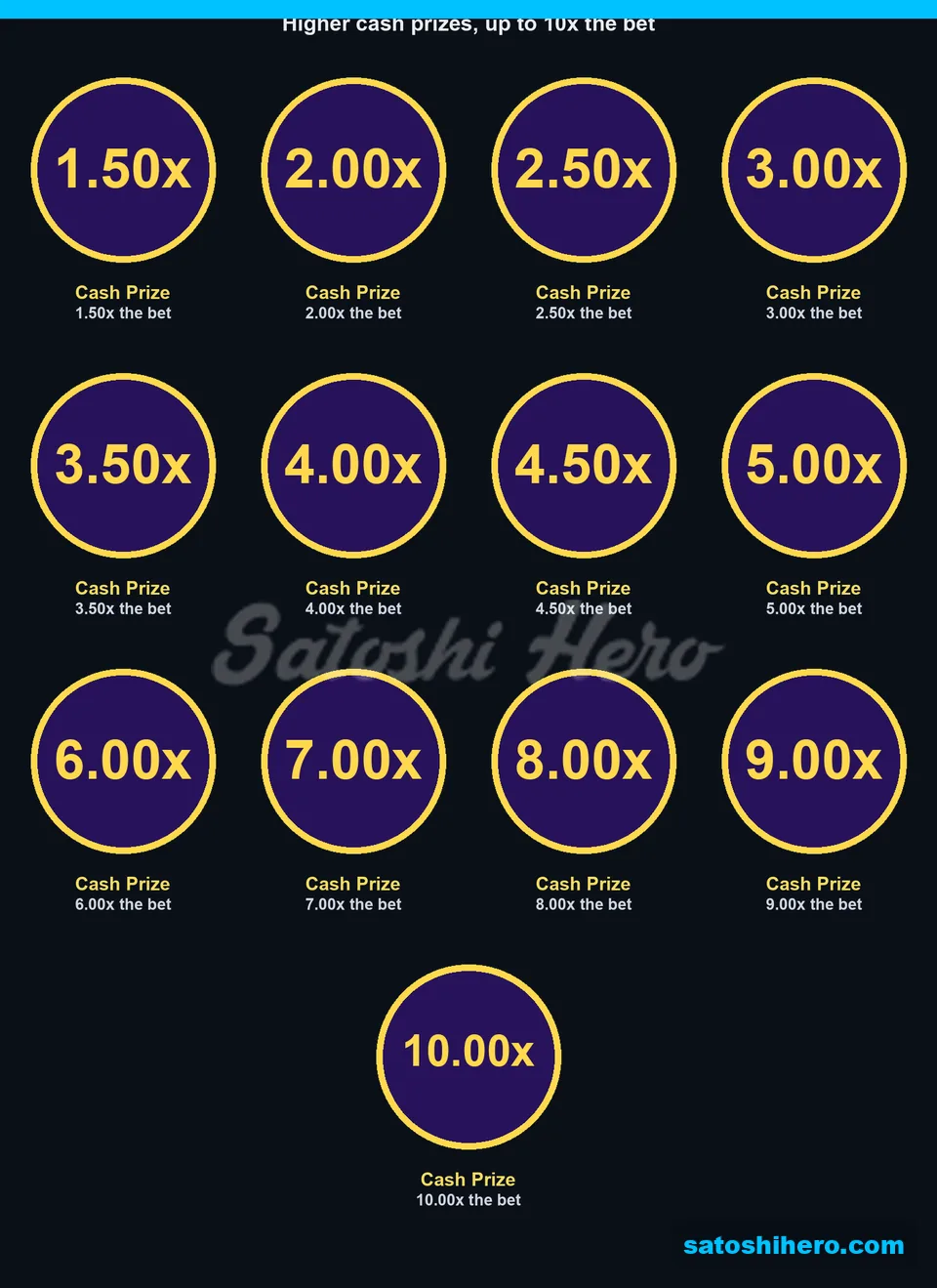
The game uses 22 cash-prize multiples, with individual awards ranging from 0.20x to 10x the stake. These are direct cash awards, not symbol payouts. You need to separate the current ladder value from the full result accumulated during the wager.
At my tested $5 stake, the smallest individual award was $1 and the largest was $50. That $50 figure represents the top single ladder prize, not the overall win cap. Several awards can build a larger final return, which makes the sequence more important than one chip.
All 22 values
The complete ladder divides cleanly into three groups:
- Lower group: 0.20x, 0.30x, 0.40x, 0.50x, 0.60x, 0.70x, 0.80x, 0.90x and 1.00x.
- Middle group: 1.50x, 2.00x, 2.50x, 3.00x, 3.50x, 4.00x, 4.50x and 5.00x.
- Upper group: 6.00x, 7.00x, 8.00x, 9.00x and 10.00x.
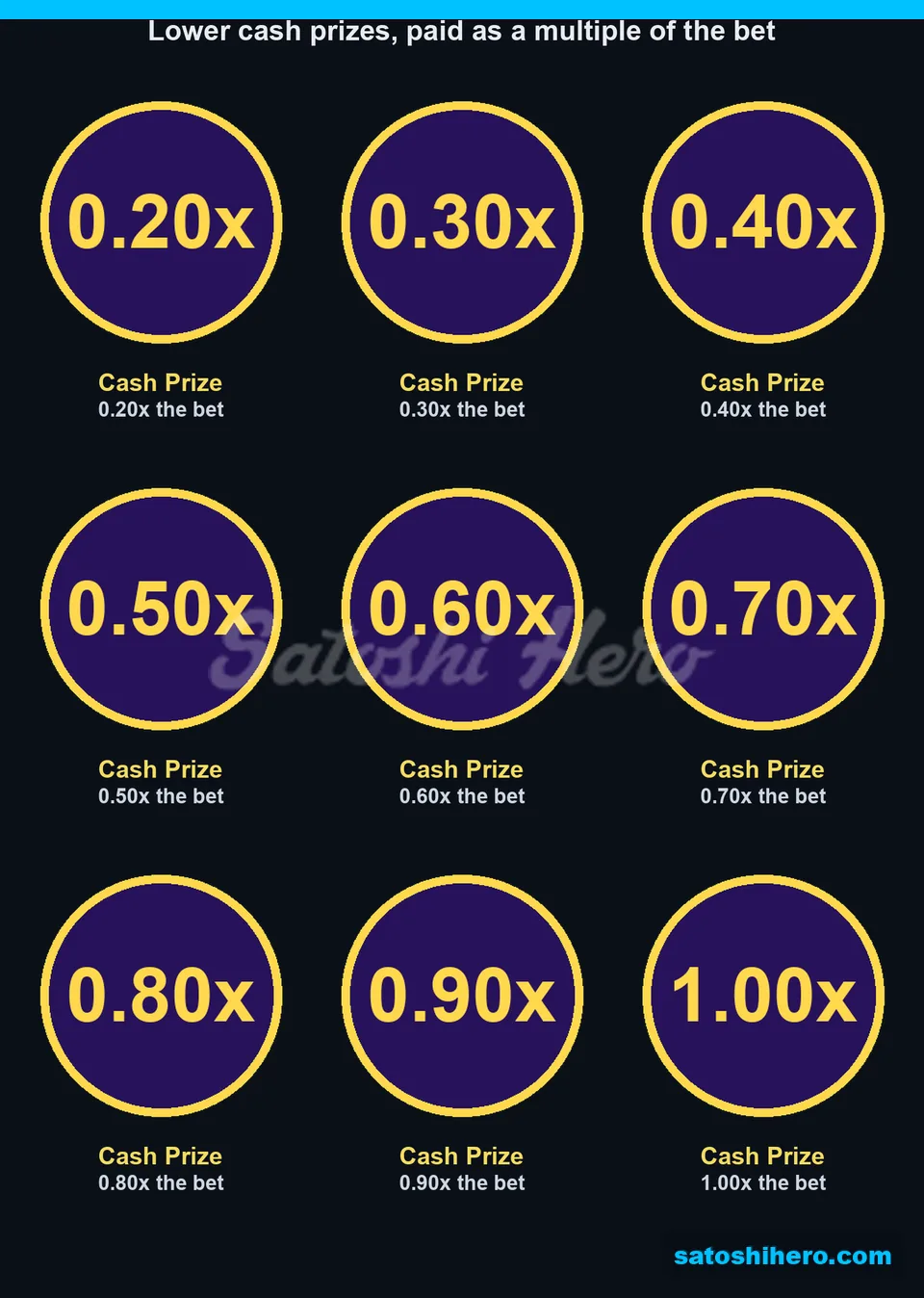
Lower values rise in 0.10x steps through 1.00x. The middle group advances by 0.50x through 5.00x, followed by five whole-number values. I like this readable progression because you can translate awards without a conventional paytable.
Single versus total wins
At $5, a 0.20x award adds $1, while a 10x award adds $50. Repeated prizes and higher new values can push the completed WIN amount beyond $50. You should watch both the current band and the running total beneath the sphere.
That distinction matters during quick sequences, since one visible prize doesn’t tell you the final return. My view is that the ladder itself looks modest, but accumulation gives it useful tension. Larger outcomes come from the whole sequence, not one ladder chip.
Cash Prize Sequences
A completed charge can start a sequence of up to 65 cash prizes on one bet. Each new unique value must exceed the previous unique value, so the sequence climbs instead of introducing a lower new prize. One value can appear no more than three times.
The running total grows beneath the sphere until the sequence ends. You can still finish below your stake when only one or two low awards appear. In my session, longer sequences produced the meaningful hits, although an early prize never guaranteed that the climb would continue.
Rising prize order
Unique values rise through the ladder, but repeats can occur before the next increase. A value can appear up to three times. You shouldn’t read that pattern as a predictable route toward upper prizes.
I watched low openings stop quickly as well as sequences that kept adding value. The uncertainty gives the stripped-back game its only real suspense. I found that effective in short bursts, but it can’t match a layered free-spins round for variety.
Reading the total
Three figures matter during an active sequence:
- The prize band shows the current cash award.
- The figure beneath the sphere shows the running sequence total.
- The top WIN display shows the completed amount after the sequence ends.
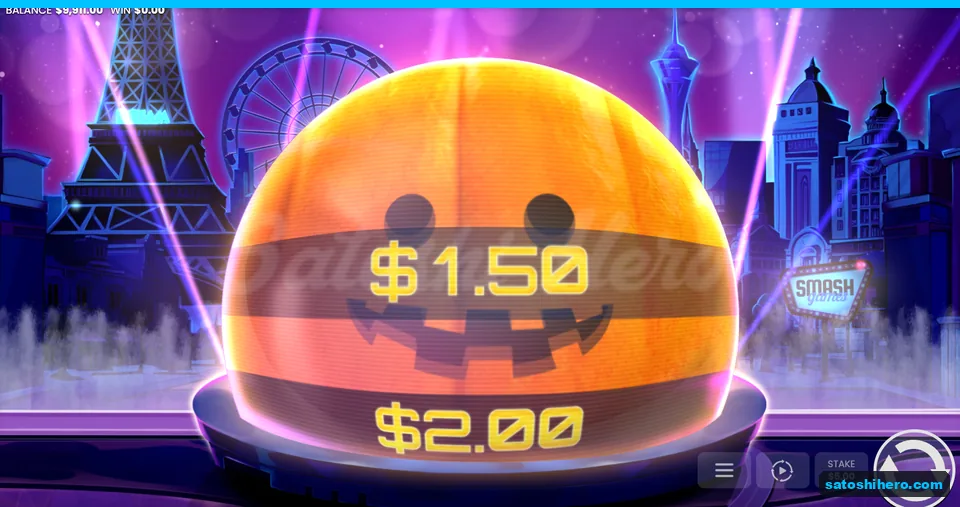
I saw running totals of $1, $1.13, $1.50, $2, $2.38, $3.50 and $4.17 as prizes stacked. Those amounts weren’t extra denominations beyond the 22-value ladder. They represented changing accumulated totals, so you need to keep them separate from the current prize.
One pumpkin sequence showed a $1.50 current prize with $2 accumulated below it. That frame captures the mechanic better than a static value list. The sequence can climb, but no early award tells you how long it will last.
Interface, Stakes and Autoplay
The interface keeps menu, autoplay, stake and spin controls in one compact bottom-right cluster. With no reel grid, the rest of the screen stays open and readable. You can set stakes from $0.10–$1,000, while the demo opens at $5.
I used that $5 default throughout the counted session. You can play the free demo or real version on SatoshiHero, and the same focused layout translates naturally across mobile and desktop screens. I find setup unusually quick because no feature menu or bonus buy interrupts the main controls.
Stake and spin controls
The stake selector sits beside the spin button, so checking your wager takes little effort. Every press then starts another charge attempt. You don’t select lines or feature modes.
That simplicity lowers setup friction, but the broad stake range demands attention. A misplaced selection near the upper end can change exposure sharply. We verify control details to keep these instructions useful.
Autoplay risk limits
Autoplay offers batches of 20, 50, 100, 200 or 500 rounds. At $5 per round, a 100-round batch puts $500 into play before returns. You should choose the stake and batch size together because larger runs increase turnover quickly.
Optional stops cover a win multiplier, total amount at risk and feature switch. The total-at-risk setting gives you more practical control than staring at each charge animation. Autoplay doesn’t change prize values, completion chances or the underlying math. I prefer a firm loss boundary over trusting the low volatility label.
There is no bonus buy or free-spins round to select before play. That keeps every batch consistent, but it also leaves no alternate mode when the core loop feels repetitive. Set your exposure first, then start autoplay only when both numbers make sense.
What 100 Spins Felt Like
My 100-spin test produced 24 paying bets, while 76 empty spins made the pace feel less generous than expected. Ten returns paid less than my $5 stake, and 14 beat it. You should remember that a paying result can still lose money on that wager.
Eight outcomes reached at least $20. Those results softened dry stretches, but they arrived unevenly. I thought the limited final loss matched the profile, even though empty bets felt stark.
Wins and dry spins
The 24 paying results split into ten sub-stake returns and fourteen profitable hits. That mix matters because a small award can light the sphere without restoring the full wager. You need to compare the completed WIN amount with your stake before calling an outcome profitable.
My best return arrived after the session had already reached its low point. That timing shows why a short run can feel rough before one larger sequence changes the balance path. Still, you can’t use my result order to forecast when your next substantial return could appear.
Balance movement
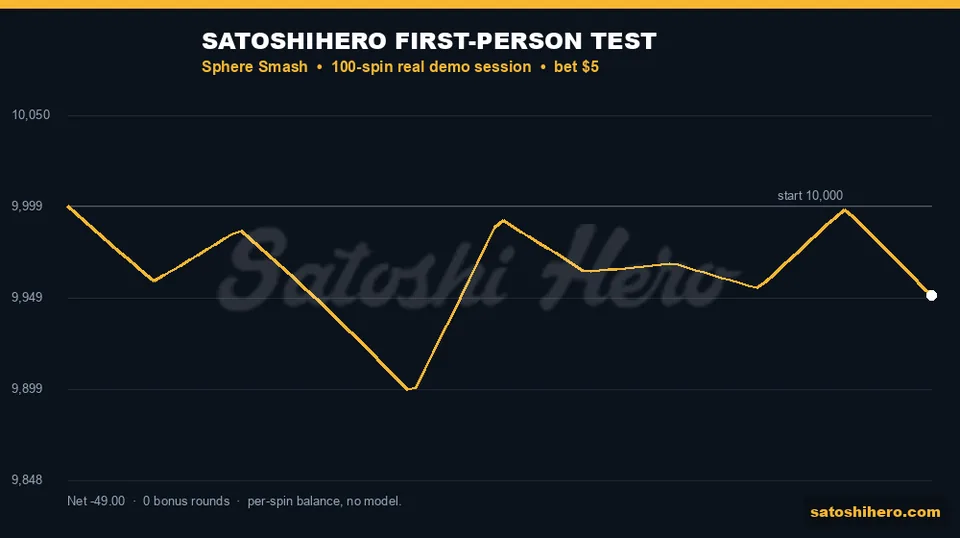
The balance peaked at $10,012 after spin 12, then dropped to $9,890.50 after spin 42. Later play moved roughly between $9,945 and $9,999 before finishing at $9,951. I found that rebound notable because the session recovered much of its mid-run loss without ending ahead.
Extra spins used to capture a clean win image weren’t included in the counted figures. The recorded arc illustrates possible pacing rather than predicting another session. You should expect simple rhythm and plenty of empty outcomes instead of constant small returns.

Proceed Carefully: Low volatility doesn’t mean low risk or frequent wins. My test had 76 non-paying bets and finished $49 down.
Sphere Smash RTP, Volatility and Our Test
Sphere Smash slot has a 95.81% theoretical RTP, low volatility and a 200x maximum win. Official specifications, modeled outcomes and my live observations answer different questions. You should use each evidence class without treating any one session as a guarantee.
The maximum win feels modest beside feature-heavy slots, though it fits this simple prize-sequence format. I don’t see that cap as a flaw for casual sessions, but big-win hunters could find it restrictive. The real interest comes from how balances move within a compact payout range.
Simulator projection
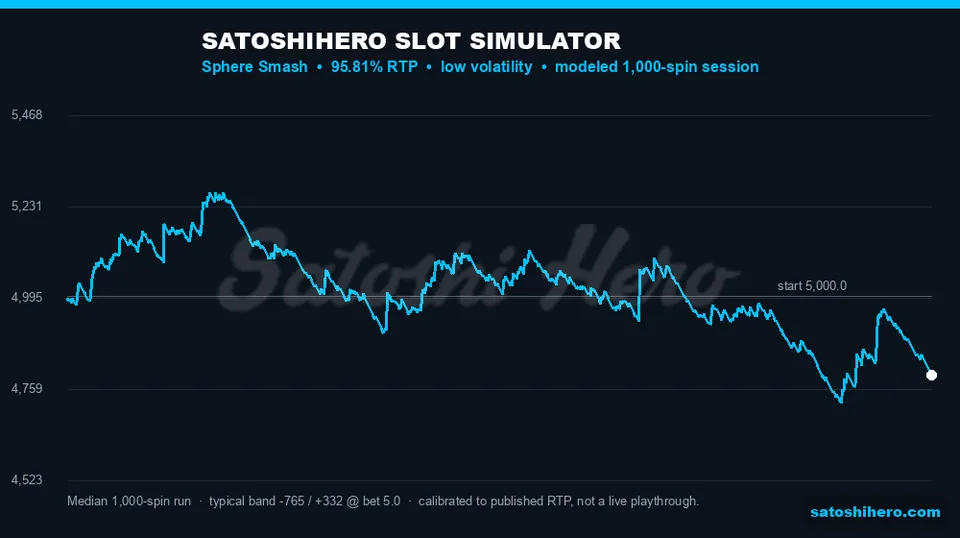
The SatoshiHero Slot Simulator modeled 1,000-spin sessions at a $5 stake. It used the stated math profile and a one-million-spin sample. The projection produced these figures:
- Approximate hit frequency: 34%.
- Median result: $204.60 down.
- Fifth-percentile result: $764.80 down.
- Ninety-fifth-percentile result: $332.40 up.
Most modeled sessions drifted downward, while a meaningful minority finished ahead. You can’t predict your next session from this range because the model doesn’t know the game’s random-number output.
I see the projection as a useful range, not a playing tip. Its median loss reflects modeled 1,000-spin batches rather than my live record.
Our 100-spin session
My counted test produced this result:
- Starting balance: $10,000.
- Spins: 100 at $5 each.
- Total wagered: $500.
- Total returned: $451.
- Final balance: $9,951.
- Net result: $49 down, equal to 9.8 stakes.
- Paying spins: 24.
- Best result: $103 on spin 43, equal to 20.6x.
- Next-best results: $86.50 on spin 88 and $63.50 on spin 12.
My observed paying-spin rate was 24%, below the model’s approximate 34% projection. That gap illustrates short-session variance rather than proving either figure wrong. You should also note that eight spins returned at least $20, so a small group of stronger results carried much of the recovery.
I liked the way the $103 best hit pulled the balance away from its low point. Yet 100 spins only provide a snapshot, and they can’t establish the true payout frequency. The final $49 loss says what happened in my test, nothing more.
The 95.81% theoretical RTP is Octoplay’s published figure, while one live session has no bearing on that return. The simulator is a mathematical projection, not a record of played spins. No separate bonus return applies because there is no bonus buy or free-spins mode.
Frequently Asked Questions
How does Sphere Smash slot pay?
Sphere Smash slot pays cash awards from its sphere rather than symbol combinations. Each bet charges the dome. A completed charge can start up to 65 rising awards, with each value appearing no more than three times.
What prize values can Sphere Smash slot award?
The ladder runs from 0.20x to 1.00x in 0.10x steps, then 1.50x to 5.00x in 0.50x steps. It finishes with 6.00x, 7.00x, 8.00x, 9.00x and 10.00x, making the individual range $1 to $50 at a $5 stake.
Does Sphere Smash slot have paylines, wilds or free spins?
No. Sphere Smash slot has no paylines, ways to win, wilds, scatters, free spins or bonus buy. The charge and cash-prize sequence form the complete game.
What did 100 spins at $5 return?
I started with $10,000 and finished at $9,951 after wagering $500 and receiving $451. The counted test lost $49, included 24 paying spins and peaked with a $103 result on spin 43.
How often did Sphere Smash slot pay in the test?
Sphere Smash slot paid something on 24 of my 100 counted spins. Fourteen returns exceeded the $5 stake, ten fell below it and 76 paid nothing, but that observed 24% rate isn’t a fixed probability.
What does the 1000-spin simulator project for Sphere Smash slot?
The model projects an approximate 34% hit frequency, a median result of $204.60 down and a fifth-percentile result of $764.80 down. Its ninety-fifth-percentile outcome is $332.40 up, but the range is a projection rather than a prediction.
What are the RTP and maximum win of Sphere Smash slot?
Sphere Smash slot has a 95.81% theoretical RTP, low volatility and a 200x maximum win. The 200x overall cap differs from the 10x largest individual cash award because one sequence can stack multiple prizes.
Final Take
Sphere Smash stands out by stripping slot play down to one charged dome and an ascending prize sequence. That clarity feels fresh, but the absence of reels, characters and bonus modes can make longer sessions repetitive.

My Read
Try it when you want direct, low volatility play without feature menus or symbol rules. Expect dry individual spins, modest balance movement and occasional longer prize sequences rather than constant small payments.
I like how easily the interface communicates every result, and my $49 loss stayed contained across $500 of turnover. I don’t like that 76 empty spins made the core loop feel sparse, even with a $103 best hit.
The Sphere Smash slot keeps its promise of simple prize-sphere play, and its control details are checked regularly.

Pros:
 Clear mechanic: One dome makes every result quick to understand.
- Readable ladder: Exact prize multiples keep cash awards easy to track.
- Flexible stakes: The broad range supports many bankroll sizes.
- Useful controls: Autoplay limits help you set exposure before each batch.

Cons:
 Frequent empty spins: My counted session produced 76 non-paying bets.
- Limited variety: No reels or bonus modes can make long play repetitive.
- Modest ceiling: The 200x cap won’t excite dedicated big-win hunters.

Best For: Reel-free slot fans who value clarity, controlled autoplay and restrained balance swings. The format also fits short sessions where you don’t want bonus buys, symbol rules or layered features.
































































Bets
All Bets
Game
Player
Date
Wager
Mult.Multiplier
Prize
 Royal Fruits 9: Hold 'n' Link
 zelencov2309
- 10:21:10
- 0×
- Wild Buffalo Megaways: Hold N Link
 Hidden
- 10:21:10
- 0×
- Mighty Stars
 nina87
- 10:21:09
- 0×
- Galaxy Glitter
 blazecraft
- 10:21:08
- 0×
- Fortune Skulls
- mike_721
- 10:21:08
- 0.39×
- Royal Fruits 9: Hold 'n' Link
- zelencov2309
- 10:21:08
- 0×
- Royal Fruits 9: Hold 'n' Link
- zelencov2309
- 10:21:07
- 0×
- Mighty Stars
- nina87
- 10:21:06
- 0×
- Pelican's Bay: Rapid Link
 Hidden
- 10:21:05
- 0×
- Royal Fruits 9: Hold 'n' Link
- zelencov2309
- 10:21:05
- 0×