

Disorder
By pressing play, you agree that you are above legal age in your jurisdiction and that your jurisdiction allows online gambling.


Broken Suburbia and Brutal Math in Disorder
The Disorder slot throws Nolimit City’s broken suburban family theme onto 6 reels with 96.11% RTP, high volatility and a 23,500x max win cap.
Quick Summary: This high volatility Nolimit City slot uses 1,728 ways, tumbles, Fire Frames, Enhancer Cells and several bonus modes. I tested it through a 500-spin $1.00 session plus two bonus buys. The takeaway was clear: serious upside exists, but bankroll pressure hits hard when only one organic bonus lands. The Disorder slot demo and real play are available on SatoshiHero.
Key takeaways
- RTP / volatility: Disorder is a Nolimit City slot with 96.11% RTP, high volatility and a 23,500x max win.
- Best bonus: Obsessive Compulsive Spins lists 96.11% RTP, matching the base game return.
- Risk note: My 500-spin test had one organic bonus paying $149.20, yet still ended $144.85 down.
- Best play: The rules say declining Extra Spin gives the best return, and I pressed NO on a $50.00 offer.
- Bankroll note: Tumbles and split symbols look busy, but high volatility still drained my balance between meaningful hits.

Key Stat: The max win is 23,500x, and the game info quotes that as roughly 1 in 2.77 million rounds.

Table of Contents
- Disorder slot mechanics and payouts
- Suburban horror theme and first impressions
- Fire Frames
- Enhancer Cells
- Bonus modes
- Bonus buy test results
- Extra Spin decision
- RTP, volatility and test results
- Simulator projection
- Our 500-spin session
- Frequently Asked Questions About Disorder
- Final Verdict
Disorder slot mechanics and payouts
Disorder slot pays through 1,728 default ways across 6 reels, not paylines. Wins need adjacent matching symbols from the leftmost reel onward, then winning symbols disappear and new symbols tumble into place. You should watch the WAYS counter above the reels because split symbols can push the count far past the default. The W Wild substitutes for any regular paying symbol, which helps chains stay alive.
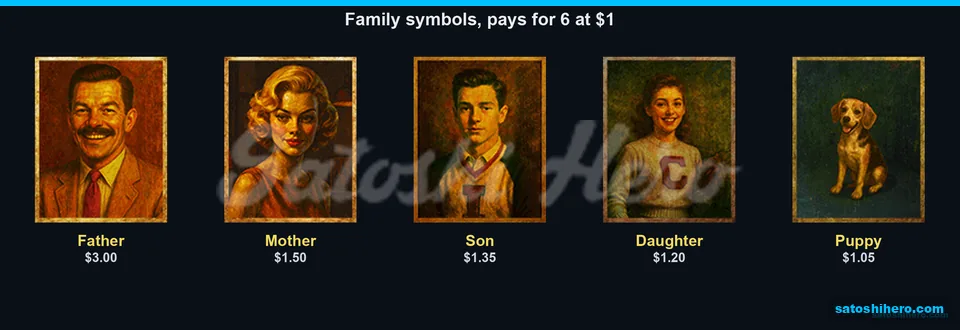
At a $1.00 bet, the family portraits carry the best base values. The father pays $3.00, $1.50, $1.00 and $0.50 for 6, 5, 4 and 3 matches. The mother pays $1.50, $0.90, $0.35 and $0.30, while the son pays $1.35, $0.90, $0.35 and $0.30. The daughter pays $1.20, $0.75, $0.30 and $0.25, and the puppy pays $1.05, $0.75, $0.30 and $0.25.
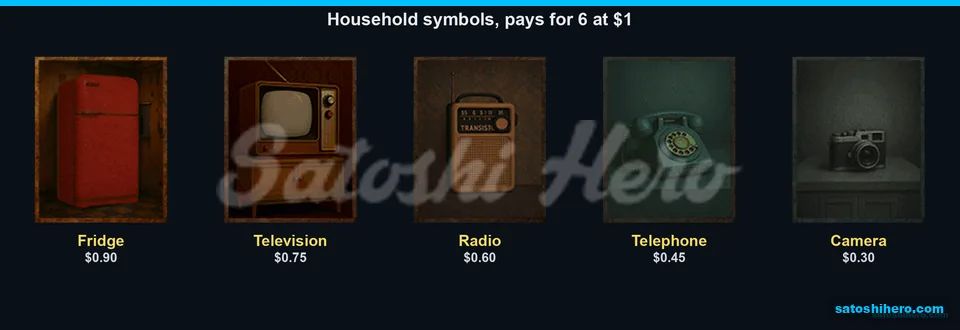
Household symbols sit below the family photos. Six fridges pay $0.90, televisions pay $0.75, radios pay $0.60, telephones pay $0.45 and cameras pay $0.30. Those values look small, but split symbols can make low symbols matter during tumbles. You won’t mistake this for a calm classic slot, and that’s the point.

Strategy Insight: Watch the ways counter rather than just the reels. Fire Frames can make a hit look bigger because split symbols multiply the number of active ways.
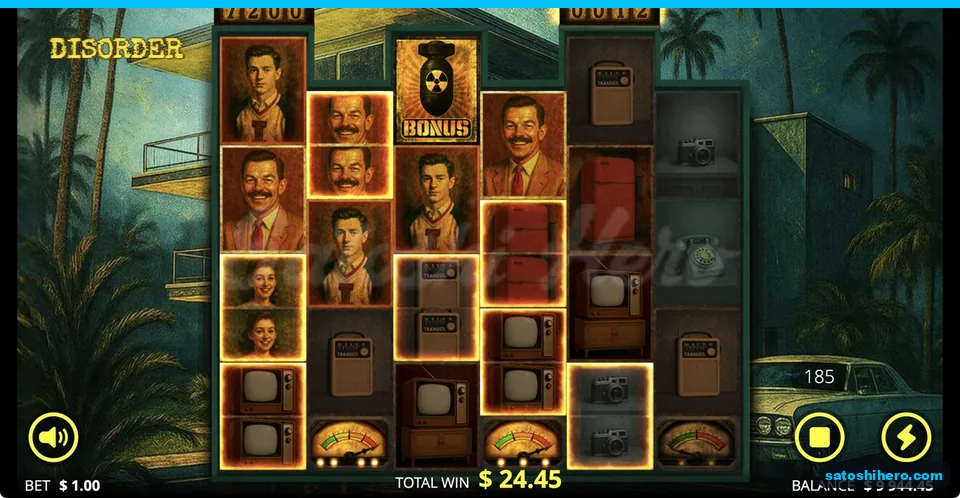
My test felt active from the start, even while the balance leaked. At spin 65, a long tumble chain of family portraits paid $40.05 and triggered the “LET ME OUT JOHN!” scene. That was a strong base-game moment, but it also showed the slot’s trap: movement doesn’t always mean profit. If you know Whacked!, expect the same taste for chaotic feature behavior and sharp volatility.
The game played smoothly on mobile and desktop during the test, with no need for a separate setup. I’d still start with smaller stakes because the animation can make a cold run feel busier than it is. Numbers indicate the base game needs a real feature hit to change the session curve. You get energy, but you also get pressure.
Suburban horror theme and first impressions
The theme turns a neat suburban family setup into an ugly psychological-horror slot. Nolimit City sets the base game in front of a mid-century house with palm trees, a tidy lawn and a vintage car, then twists that order into visible disorder. The free spins move into a dim basement with one bare bulb, and that change lands hard. I like the commitment, though some players may bounce off the tone fast.
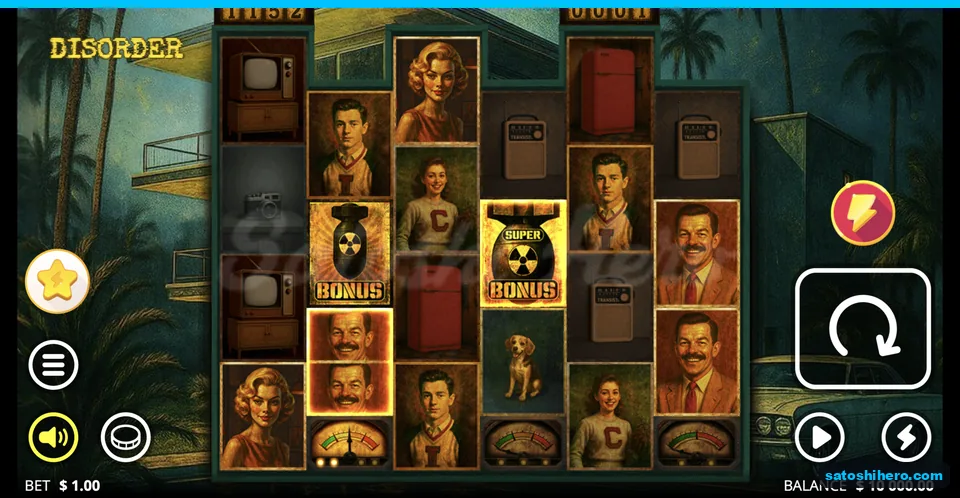
Paying symbols use aged family photos: a moustached father, blonde mother, son, daughter and beagle puppy. Lower symbols include a red fridge, television, radio, rotary telephone and camera. Big wins cut to short scenes with lines like “CLOSE THE DOOR!”, “LET ME OUT JOHN!”, “FULL BLOWN PSYCHOSIS” and “REDRUM”. The slot doesn’t wink much, and that makes it more memorable.

Warning: The game opens with a disturbing-images warning, and the feature scenes lean into psychological horror.
Data can’t measure taste, but theme strength matters when you’re playing 500 spins. I found the setting stronger than a generic spooky reskin because every symbol fits the house-gone-wrong concept. You may prefer Land of the Free if you want a cleaner, brighter mood after this darker suburban horror. Still, the unsettling style gives this game a clear identity.
The sound and visuals keep pressure on you without turning messy. Bonus scenes feel like short shocks rather than long cutscenes, which helps the pace. I wouldn’t call the theme comfortable, and I don’t think it tries to be. That honesty gives the slot its edge.
Fire Frames
Fire Frames split symbols and can turn a normal ways count into something much larger. They appear randomly on the reels, and any symbol landing inside one splits into two. A single paying symbol can split up to 16 times, so one frame can change the shape of a tumble. You should care because each split raises active ways.
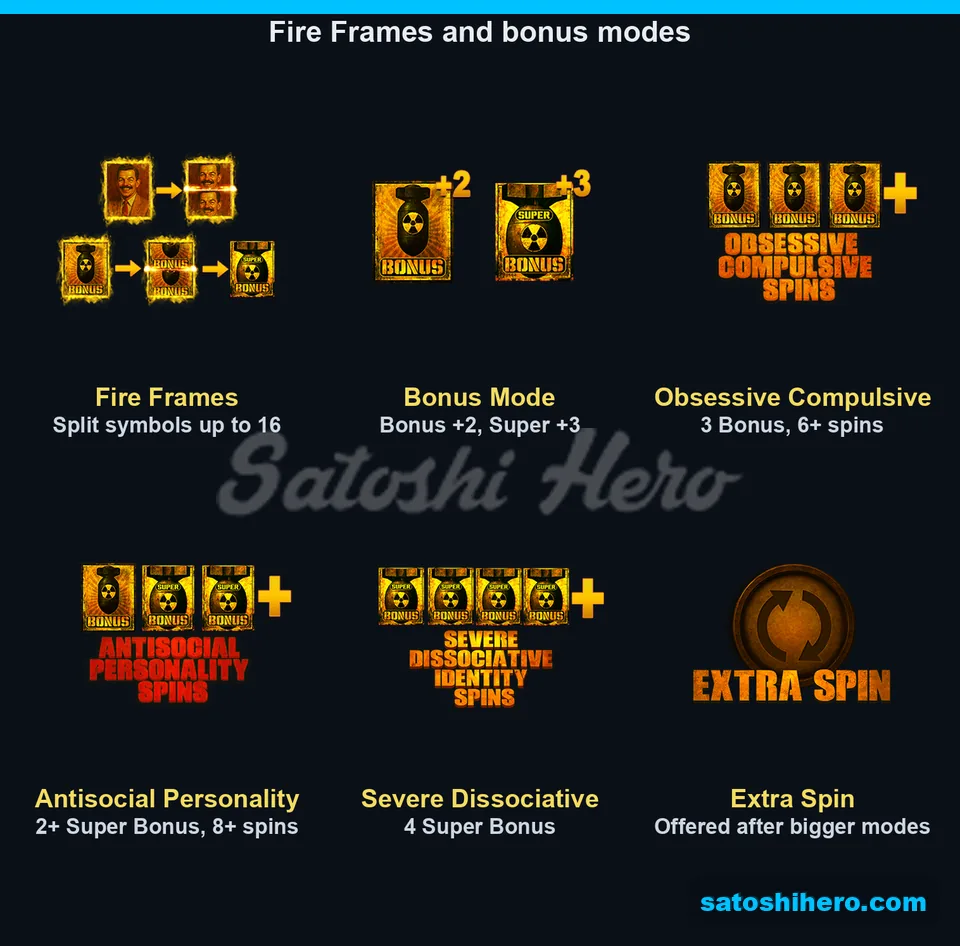
A Bonus symbol inside a Fire Frame upgrades into a Super Bonus symbol. That upgrade matters because Super Bonus symbols can improve the starting mode and spin count. Fire Frames also help unlock Enhancer Cells, so they feed multiple systems at once. The design feels aggressive, but it stays readable if you track one counter at a time.
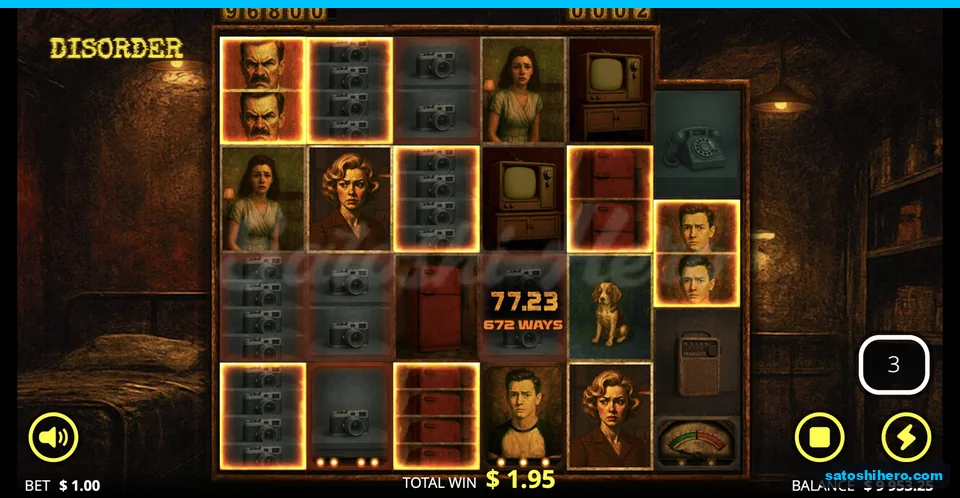
During my organic Obsessive Compulsive Spins round, split cameras and family portraits created the best moment of the whole test. One spin reached 77.23 over 672 ways and turned into the backbone of a $149.20 bonus. That didn’t save the full session, but it showed why Fire Frames matter. When they line up, the grid finally feels dangerous in a good way.
I like this mechanic because it gives weak symbols a reason to matter. You don’t need every spin to show premium portraits if splits keep adding ways. Still, the feature can look louder than the payout. Keep your eyes on the total win, not only the visual chaos.
Enhancer Cells
Enhancer Cells trigger from Fire Frame counts and add special effects from reels 2, 4 and 6. Four Fire Frames open the cell on reel 2, seven open reels 2 and 4, and nine open all three. After that, every two extra Fire Frames fire all cells again. The cells fire left to right, while xBomb always goes last.
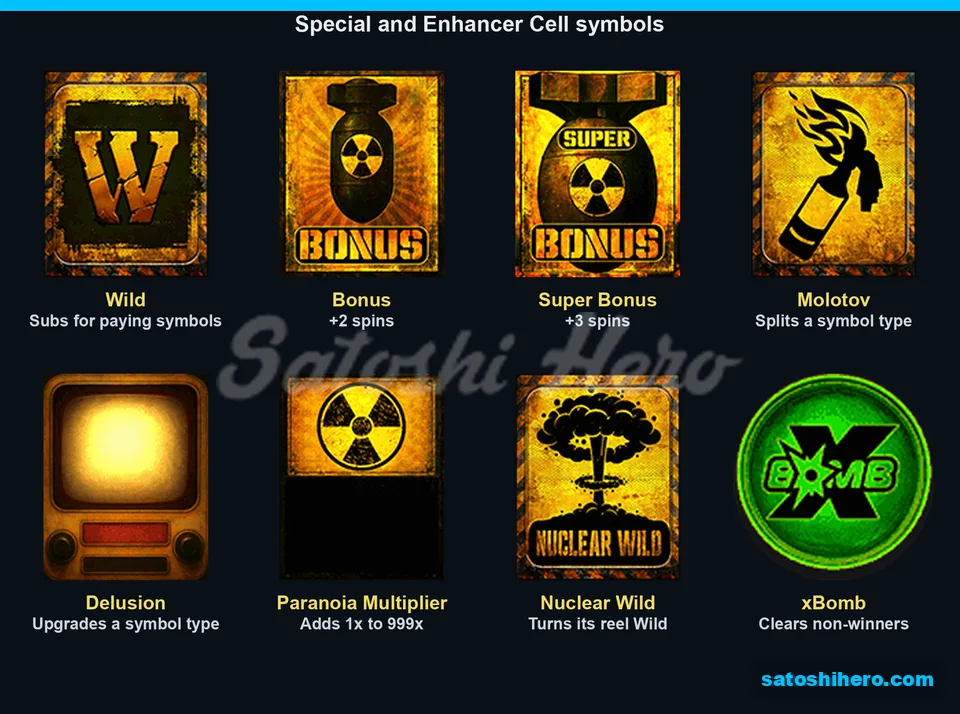
Molotov picks a paying symbol and splits every copy of it. Delusion turns every copy of one paying symbol into the highest paying symbol on the reels. Paranoia Multiplier adds a random 1x to 999x to the win multiplier for the rest of the round, then becomes a Wild. Nuclear Wild turns every paying symbol on its reel into W Wilds, and xBomb removes non-winning regular symbols while adding 1 to the multiplier.
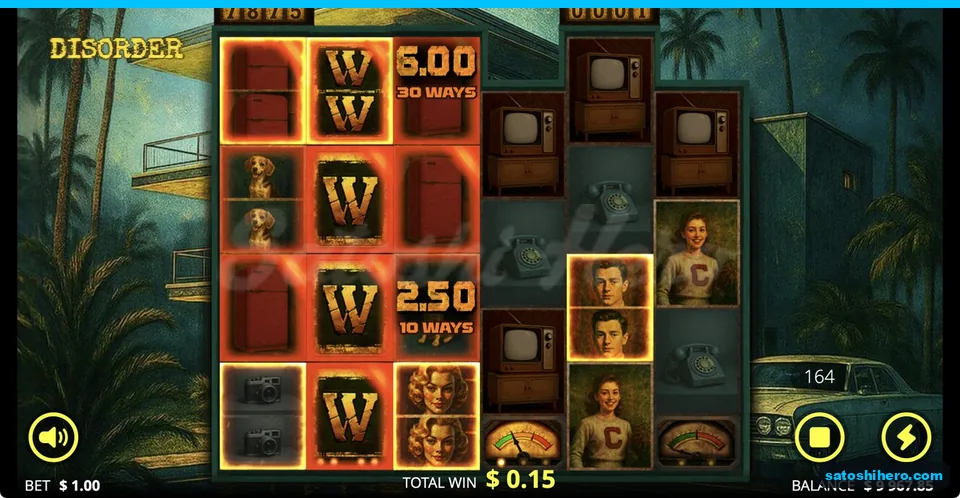
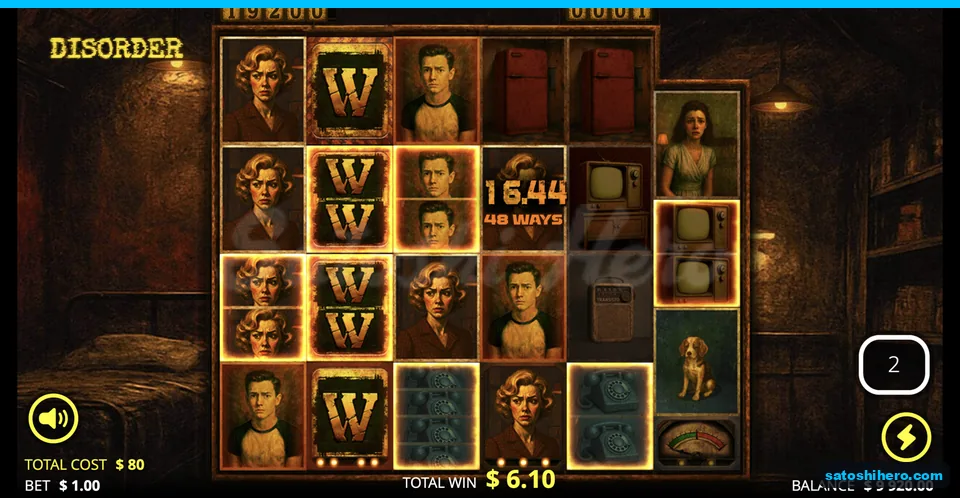
The base game gave me a Nuclear Wild reel that paid $6.00 over 30 ways. That sounds small, but it gave a clear look at how reel conversion can rescue a weak board. In the bought Obsessive Compulsive Spins round, another Nuclear Wild helped create a 16.44 hit over 48 ways. I wanted more from that buy, but the mechanic itself worked cleanly.
Enhancer Cells are the slot’s most interesting layer because they reshape a tumble instead of just adding decoration. You can feel the difference when the gauges open, especially after several Fire Frames stack up. My opinion: this system carries the game more than the theme does. The math still bites, but the feature design has bite too.
Bonus modes
The slot has three bonus tiers, and Super Bonus symbols decide how strong the round starts. Bonus symbols award 2 spins, while Super Bonus symbols award 3 spins on the trigger spin and during the round. Fire Frames land more often in bonuses than in the base game. You want quality symbols, not just any trigger.
Three Bonus symbols with at most one Super Bonus award 6 or more Obsessive Compulsive Spins. In that mode, the win multiplier and Fire Frames reset after every spin. Three Bonus symbols including at least two Super Bonus award 8 or more Antisocial Personality Spins, where the multiplier doesn’t reset. Four Super Bonus symbols award Severe Dissociative Identity Spins, where the multiplier keeps building all round.

Insight: A Super Bonus symbol can upgrade a lower bonus mode, so trigger quality matters as much as the number of symbols.
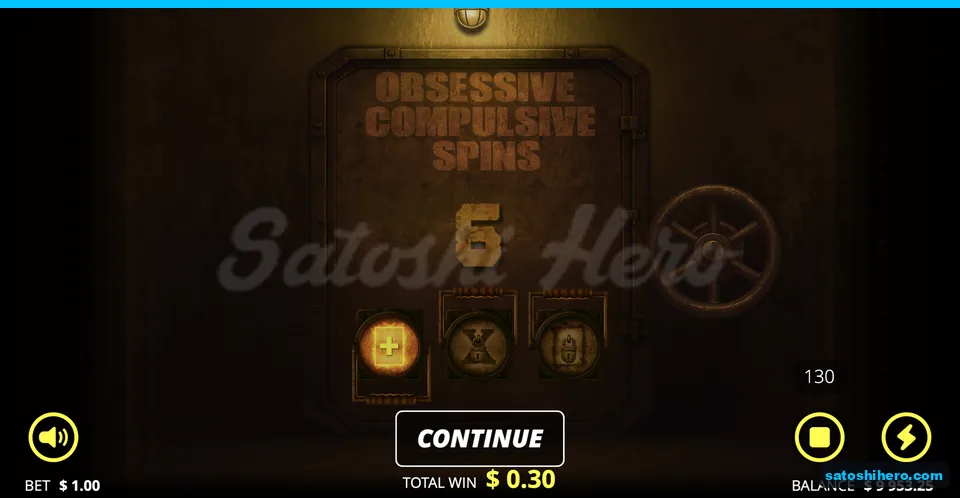
My organic trigger came at spin 120. Three Bonus symbols awarded 6 Obsessive Compulsive Spins, and one spin split cameras and portraits for 77.23 over 672 ways. The round paid $149.20, my biggest hit in the 500-spin test. It lifted the balance to about $10,102, then the rest of the session slowly gave that edge back.
Feature-led slots like Wixx can change risk profile through bonus structure, and this game takes that idea to a harsher place. The higher modes matter because persistent multipliers make later spins more valuable. You can feel the weaker mode’s reset rule working against you. I still liked the organic bonus, but I never forgot it was the lowest tier.
Bonus buy test results
Both tested bonus buys lost money against their cost, even though the 300x buy produced a strong-looking 165.00 hit. The buy menu sells Obsessive Compulsive Spins for $80, Antisocial Personality Spins for $300 and Severe Dissociative Identity Spins for $800. Lucky Draw costs $370 and lands 25% Obsessive Compulsive Spins, 50% Antisocial Personality Spins and 25% Severe Dissociative Identity Spins. Boosters cost $2, $4 and $15 per spin.
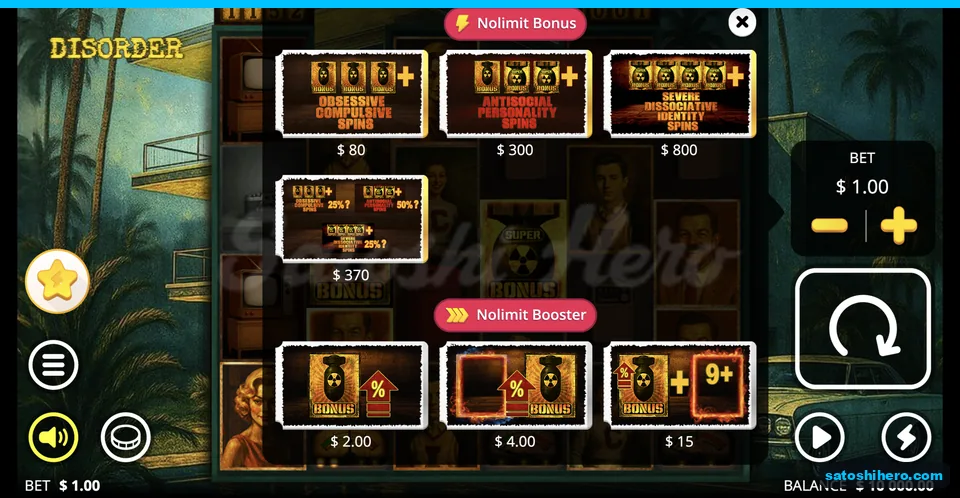
Clicking a buy card opens a red ACTIVATE window. That arms the buy on the spin button, and the next spin charges the cost before opening the round. I’d test the feature flow in demo slot Disorder before putting real money behind a buy. The menu feels slick, but slick menus don’t reduce variance.
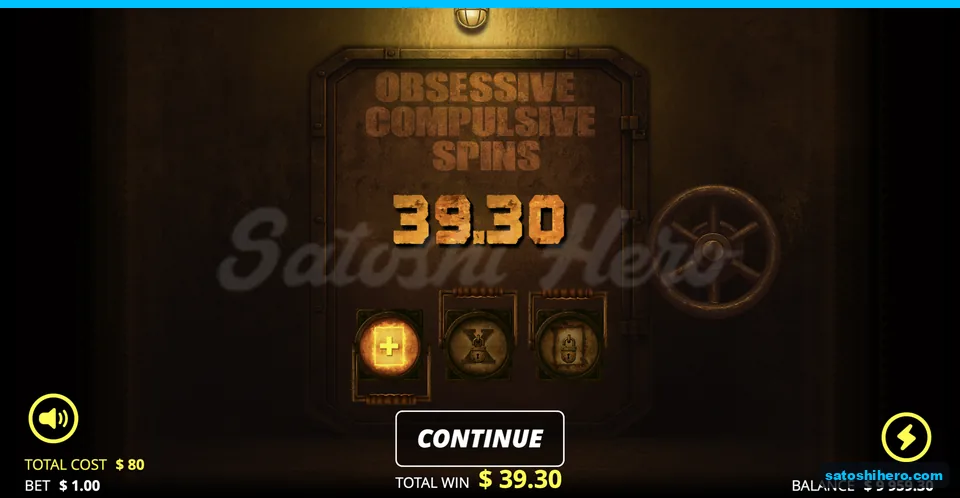
My Obsessive Compulsive Spins buy started from a fresh $10,000 balance and cost $80. The vault door showed 8 spins, which felt promising at first. A Nuclear Wild turned a reel into W symbols for a 16.44 hit over 48 ways. The round paid $39.30, roughly half the cost.
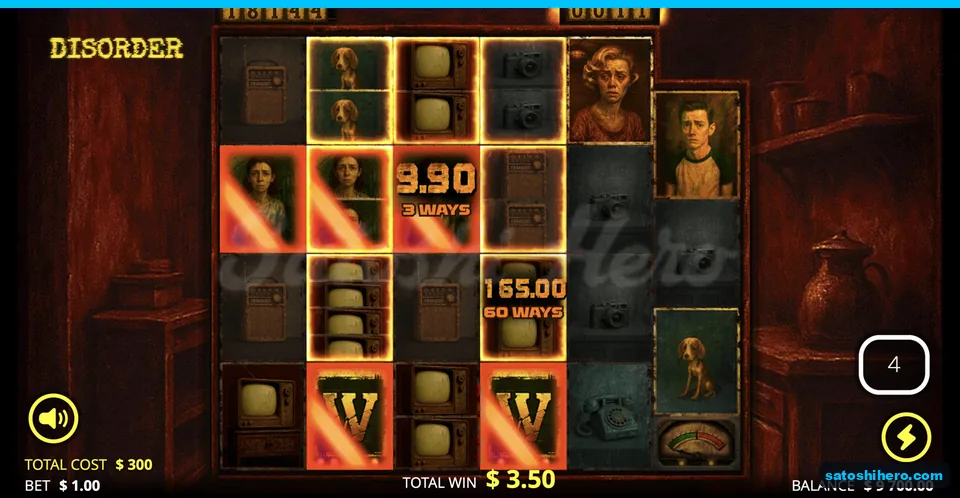
Warning: The 300x buy still paid less than its cost in testing, even with an x11 multiplier and a 165.00 single hit. Don’t treat the buy menu as a shortcut to profit.
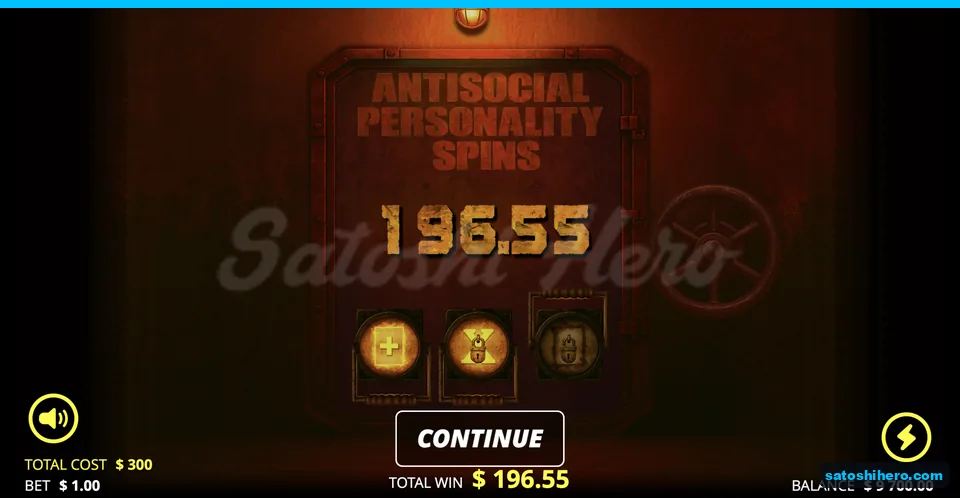
The Antisocial Personality Spins buy also started from a fresh $10,000 balance and cost $300. It opened on 8 spins in a red room, and the multiplier climbed to x11 and stayed there. One spin paid 165.00 over 60 ways with the REDRUM scene. The final payout reached $196.55, about two thirds of the buy price.
I didn’t buy Severe Dissociative Identity Spins, Lucky Draw or the boosters in this test. That restraint mattered because the first two buys already showed the cost pressure. The numbers suggest buys can create stronger moments, but they can still fall short fast. If you chase them, set a fixed buy budget first.
Extra Spin decision
The Extra Spin can extend stronger bonus modes, but the rules say the best return comes from declining it. It can appear after Antisocial Personality Spins or Severe Dissociative Identity Spins. The offer keeps the win multiplier and any sticky Fire Frames. The game only offers it when the cost is no more than the win just made.
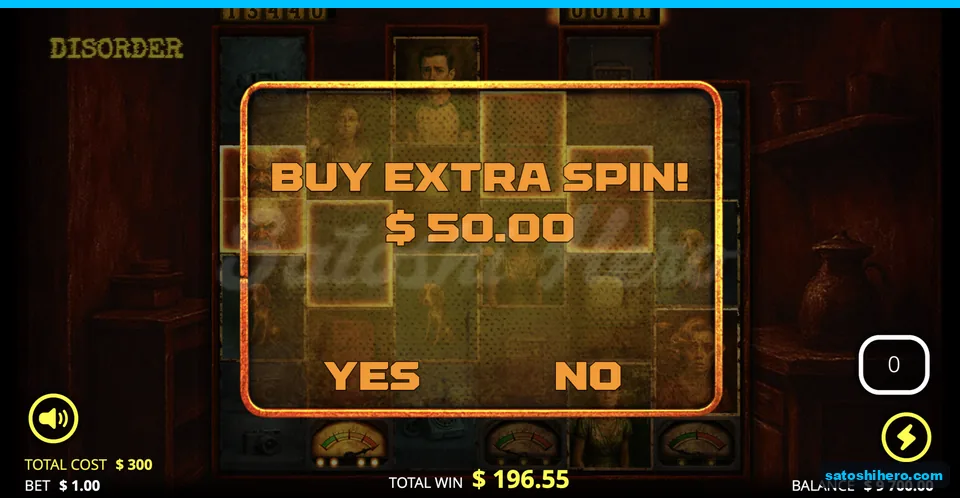
After my bought Antisocial Personality Spins ended, the game offered one more spin for $50.00. I pressed NO, and the round closed at $196.55 from a $300 cost. That felt boring in the moment, especially after a red-room bonus with an x11 multiplier. Boring was still the right call.
Strategy Insight: If you’re playing by listed return rather than chasing emotion, the game’s own rules point to declining the Extra Spin.
This feature tempts you because it appears when the round still feels warm. You’ve seen the multiplier hold, you’ve seen the scene hit, and one more spin sounds harmless. Data says the opposite. I’d rather bank the result and judge the whole session than pay extra after a losing buy.
RTP, volatility and test results
Disorder has 96.11% theoretical RTP, high volatility and a 23,500x max win. The splash screen says extreme, which matches how my session felt. The win multiplier can reach 9,999x, and the 23,500x cap comes with odds quoted at roughly 1 in 2.77 million rounds. The Disorder slot max win is huge, but you shouldn’t expect generous pacing between features.
Try the Disorder slot demo on SatoshiHero if you want to feel that pacing before real play. I’d make that choice before increasing stake size, because the base game can look active while your balance drifts down. Nine to Five gives a cleaner comparison point if you want a different bankroll feel, since this game leans hard into feature pressure. The math suggests patience matters more than visual activity.
Warning: High volatility means long dry spells can happen even when the grid looks active. Set your stake so a bad 500-spin stretch doesn’t wreck your session.
Simulator projection
The SatoshiHero Slot Simulator ran at 96.11% return, high volatility, the 23,500x cap and a $1.00 stake across 1,000 spins. Its median session finished $67.70 down. The middle 90% of runs landed between $320.10 down and $363.40 up. That spread tells you more than the median alone.
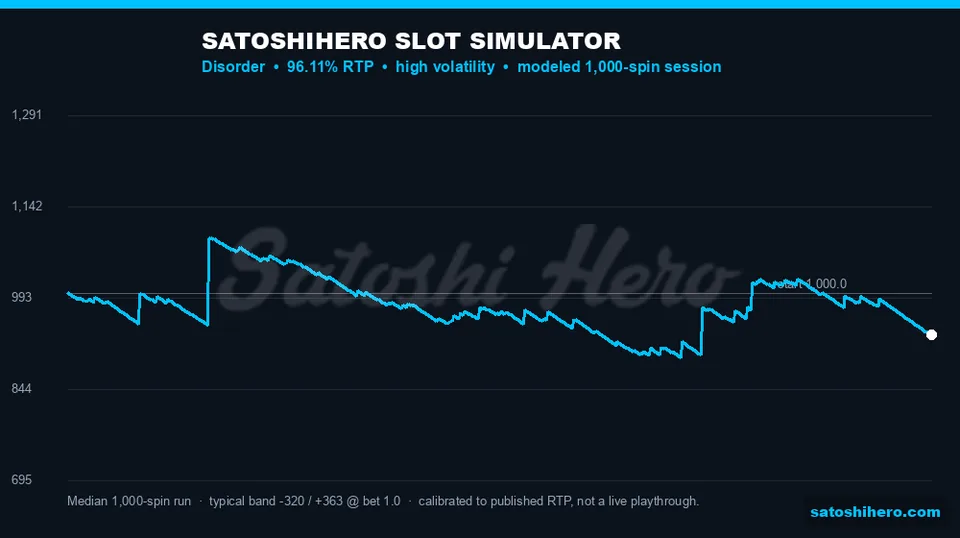
About 18% of spins returned something. A feature-sized hit appeared roughly once every 45 spins, while a 100x win appeared about once every 1,754 spins. Those numbers don’t predict your next session, but they frame the risk. I like simulator ranges because they stop RTP from sounding cleaner than real play feels.
Our 500-spin session
I played 500 spins at $1.00 in two autoplay runs of 250 with turbo on. My balance moved from $10,000 to $9,855.15, so I finished $144.85 down. That result landed a little worse than the simulator median. The grid stayed busy, but the balance leaked after the main bonus.
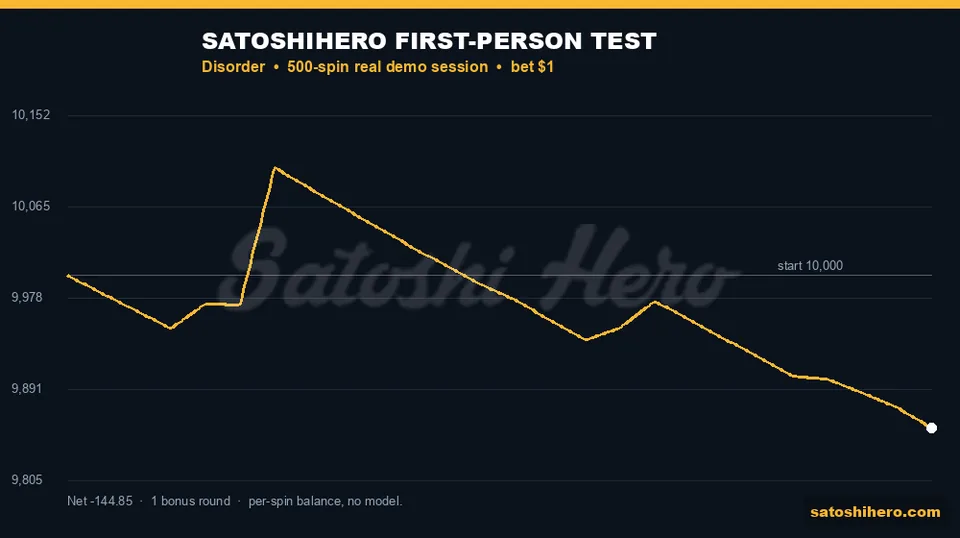
Spin 65 produced a long tumble chain of family portraits for $40.05 and showed the “LET ME OUT JOHN!” scene. Spin 120 triggered 6 Obsessive Compulsive Spins from three Bonus symbols. One bonus spin split cameras and portraits across 672 ways for 77.23. The full round paid $149.20 and lifted my balance to about $10,102.
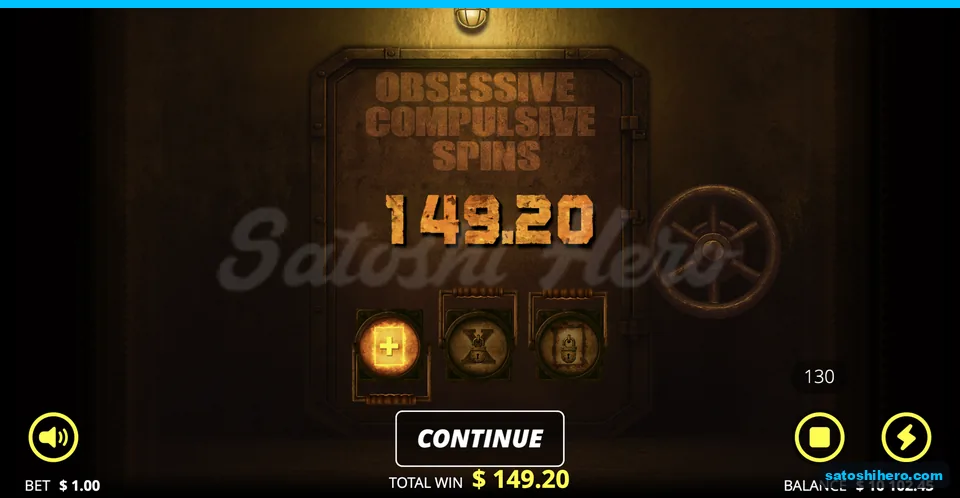
That was my only bonus in the session. Later, a Nuclear Wild reel paid $6.00 over 30 ways, and another tumble chain near spin 325 paid $40.70. Those bumps helped, but they didn’t reverse the slide. My honest read: the slot feels more eventful than its session curve.
The 96.11% RTP is the operator-published theoretical figure. A single 500-spin session doesn’t prove or disprove that return, and bonus-buy RTPs differ slightly by design. Compare the buy menu by its listed values rather than assuming every mode returns exactly the same.
Frequently Asked Questions About Disorder
How does Disorder slot pay?
Disorder slot uses 6 reels with 1,728 ways by default and tumbling wins. The father portrait pays $3.00 for 6 at a $1.00 bet.
What do Fire Frames do in Disorder slot?
Any symbol landing in a Fire Frame splits in two, up to 16 times. A Bonus symbol in a Fire Frame becomes a Super Bonus.
What are the Enhancer Cells in Disorder slot?
Cells under reels 2, 4 and 6 open at 4, 7 and 9 Fire Frames. They reveal Molotov, Delusion, Paranoia Multiplier, Nuclear Wild or xBomb.
Which bonus modes does Disorder slot include?
Obsessive Compulsive Spins reset the multiplier each spin. Antisocial Personality Spins keep it, and Severe Dissociative Identity Spins build it all round.
Should you take the Extra Spin in Disorder slot?
The rules say the best return comes from declining it. I pressed NO when it was offered for $50.00.
Can you buy the bonus in Disorder slot?
Yes. The three modes cost 80x, 300x and 800x, a Lucky Draw costs 370x, and three boosters cost 2x, 4x and 15x.
What did the Disorder slot 1000 spin simulator show?
At $1.00, the median 1,000-spin session ended $67.70 down. The middle 90% of runs landed between $320.10 down and $363.40 up.
How did your 500-spin test of Disorder slot go?
I finished $144.85 down. My only bonus, 6 Obsessive Compulsive Spins at spin 120, paid $149.20.
What happened when you bought the Disorder slot bonuses?
Obsessive Compulsive Spins cost $80 and paid $39.30. Antisocial Personality Spins cost $300 and paid $196.55.
What are the RTP and max win of Disorder slot?
The game returns 96.11% and the maximum payout is 23,500x.
Final Verdict
Disorder stands out because it joins ugly suburban horror with a layered feature system that actually changes spin texture. Its main drawback is simple: high volatility can eat a session even when you hit one solid organic bonus. You get personality and risk in equal measure.

My Take
Patient volatility hunters and bonus-feature fans get the most from this game. Expect active reels, sharp swings and long stretches where the balance moves the wrong way. I’d start in demo mode or at a small stake before testing the buy menu.
I like the Fire Frames, Enhancer Cells and bonus-mode ladder because they gave my session real turning points. I don’t like how both bonus buys lost money despite strong-looking moments. My 500-spin session felt exciting, but the final number stayed negative.
This Disorder slot guide is checked regularly against game rules, test notes and live play findings. If the math or feature menu changes, the guide should reflect that before you rely on it.

Pros:
 Strong feature depth: Fire Frames and Enhancer Cells create meaningful board changes.
- Clear math profile: RTP, volatility and max-win data set expectations fast.
- Memorable theme: The suburban horror style feels specific and unsettling.
- Real test evidence: Session and buy results show how the risk feels.

Cons:
 Harsh dry spells: High volatility can drain balance despite active visuals.
- Costly buys: Tested buys paid less than their starting prices.
- Dark tone: Disturbing scenes may push some players away.

Best For: High-volatility math trackers get the clearest value here. The game rewards patience more than impulse, especially if you resist Extra Spin offers and treat bonus buys carefully. If you want gentle pacing, this won’t be your comfort slot.


































Bets
All Bets
Game
Player
Date
Wager
Mult.Multiplier
Prize
 Galaxy Glitter
 Hidden
- 20:15:27
- 0×
- Galaxy Glitter
- Hidden
- 20:15:24
- 0×
- Royal Fruits 9: Hold 'n' Link
 lakidd1987
- 20:15:22
- 0×
- Galaxy Glitter
- Hidden
- 20:15:21
- 0×
- Galaxy Glitter
 nina87
- 20:15:18
- 3.6×
- Galaxy Glitter
- Hidden
- 20:15:18
- 0×
- Depths of Fortune 2
 tomstacey1993
- 20:15:16
- 0.29×
- Big Banker Bonanza
- Hidden
- 20:15:16
- 0×
- Royal Fruits 9: Hold 'n' Link
- lakidd1987
- 20:15:16
- 0×
- Galaxy Glitter
- Hidden
- 20:15:15
- 0×