

Devil's Crossroad
By pressing play, you agree that you are above legal age in your jurisdiction and that your jurisdiction allows online gambling.

Devil's Crossroad
RTP94.03%
VolatilityHigh
Max winx13,180
Hit rate21.73%
ThemeHorror
ReleasedJan 2024

Deal with the Devil at the Crossroads
Devil’s Crossroad slot throws you onto a cursed Nolimit City cross-board where every win starts from the Devil Wild in the centre.
Devil’s Crossroad is a high volatility slot from Nolimit City with 96.06% RTP and 13,180x max win potential. It uses a 17-position cross layout with no reels, no fixed paylines, and wins that pay outward from the centre. High-volatility hunters get the clearest match here, but my 500-spin test showed why the demo matters first.
Key takeaways
- Best bonus: The $80 Redemption Spins purchase returned $210.00 at a $1.00 stake, beating the $500 upgraded buy in this single test.
- RTP / volatility: Normal play runs at 96.06% RTP with high volatility, though my session felt harsher because no bonus landed.
- Max win: The cap is 13,180x, and any round stops immediately when that total appears.
- Risk note: No fixed paylines exist, so you read wins from the centre across four cross sections.
- Bankroll note: Expect dry stretches, and use the Devil’s Crossroad demo to learn the board before risking real balance.

Table of Contents
- How Devil’s Crossroad slot Works
- Crosslink wins
- Wilds and Scatters
- Symbols and Payouts
- Top symbols
- Low symbols
- Theme & First Impressions
- Crossroads setting
- Contract mood
- Redemption Spins
- Coin board rules
- Standard buy result
- Upgraded Redemption Spins
- Upgrade triggers
- Premium buy result
- Bonus Buy Flow
- Arming the buy
- Test limits
- Lucky Draw
- Weighted ticket
- No booster
- Debt to be Paid
- Max win cap
- Hit-rate context
- RTP, Volatility & Our Test
- Simulator projection
- Our 500-spin session
- Frequently Asked Questions About Devil’s Crossroad
- Final Verdict
How Devil’s Crossroad slot Works
Devil’s Crossroad slot works through crosslink wins, not paylines. Every paid run starts from the Devil Wild in the centre and stretches outward across four separate cross sections.
Crosslink wins
The board uses 17 positions, with four cross sections of four symbols meeting at one shared centre. That centre always holds the Devil Wild, so you should watch it first. The cross-board stays readable on mobile and desktop because the fixed middle and four arms never move. I like that clarity, because the layout looks strange for a few spins.
Wins pay by distance from the middle, not by lines. Each side of a cross section counts separately, and only the highest win per crosslink pays. Winning symbols clear, the rest fall inward, and new symbols drop behind them. One spin can keep clearing several times before it dies.

Key Stat: This isn’t a fixed-payline slot. The important question is how far matching symbols stretch from the centre, not how many lines are active.
Wilds and Scatters
The Devil Wild substitutes for every symbol except Scatter. Paying symbols directly beside the centre can randomly turn Wild, which lets arms stitch together from the middle. You can feel that when a dull-looking clear suddenly reaches into another arm. The mechanic gives the base game more life than its harsh pacing suggests.
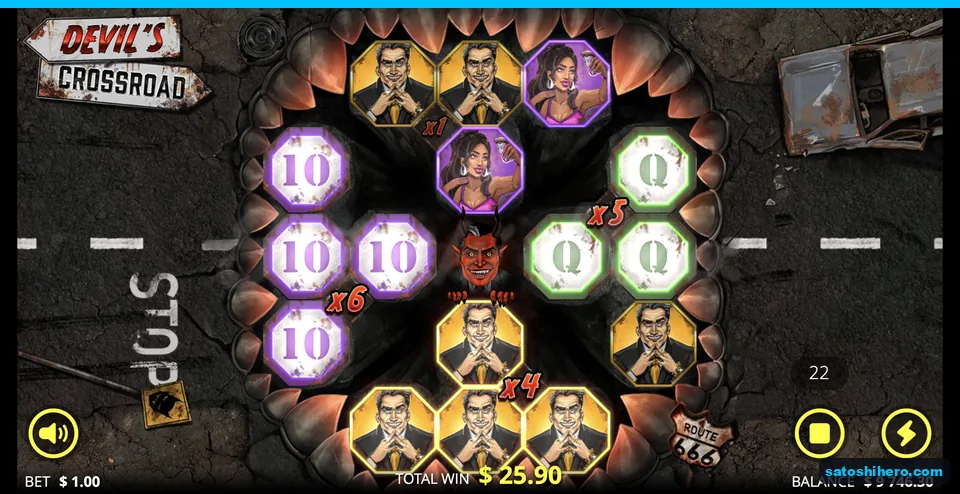
The Cross Multiplier adds the real bite. When a win lands, every other copy of that same symbol also clears from the board. Each extra removed symbol adds +1 to the multiplier for its own cross section, so all four arms climb separately. In my test, one base spin reached x6 on one arm and x5 on another.
The Scatter is a goat head inside a gold octagon. It appears only in the middle row or middle column of a cross section, and four Scatters open Redemption Spins. If one lands beside the centre, that section goes dead while matching symbol types clear elsewhere. Watch the centre first, then check which arm multipliers are building.
Symbols and Payouts
The paytable uses five character symbols, five card-plate symbols, the centre Devil Wild, and a restricted Scatter. At my $1.00 test stake, the values made the top characters matter most once multipliers started climbing.
Top symbols
The Suited Dealmaker pays $10.00 for five at $1.00 stake. The Rock Singer pays $6.00, the Green Bruiser pays $4.00, the Blue-Haired Gamer pays $3.00, and Gym Girl pays $2.00. Four-symbol hits pay roughly half those amounts, while three-symbol hits sit near a quarter. You won’t beat this game through bare symbol pays alone, and that feels intentional.

Numbers indicate the character symbols matter most during multiplier chains. A plain $10.00 five-symbol result gets more interesting when an arm already sits at x4 or x5. You can also see why the board clears low at first, then improves when duplicate removals push the arm higher.
Low symbols
The rusted card plates fill the lower half of the table. Ace pays $1.20 for five, King pays $1.00, Queen pays $0.80, Jack pays $0.60, and Ten pays $0.40. Four-symbol and three-symbol payouts scale down in the same rough pattern. These figures match the $1.00 stake I used, so they map cleanly to my session notes.
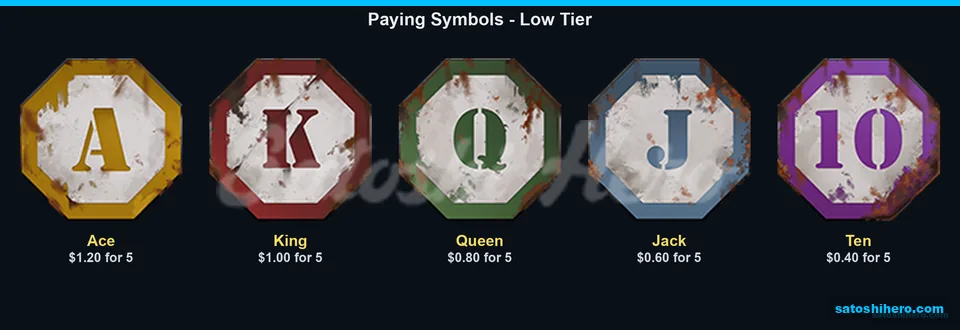
Low symbols still matter because Cross Multipliers care about removals. Tens helped my best base hit near the end, when suited men and tens rolled three arms upward together. That surprised me a little. You can’t dismiss the card plates when the board starts clearing in layers.
Theme & First Impressions
The theme is a dark American South crossroads deal, and the cross-shaped board makes that idea feel built in. I saw a red-skinned dealer in a black suit waiting to buy a soul.
Crossroads setting
The board sits in cracked asphalt inside a ring of stone teeth. A rusted wrecked car leans on the verge, and a Route 666 sign points the mood in exactly one direction. Highway To Hell uses a similar dark-road energy, but this game ties the road image directly into the win shape. The theme won’t win subtlety awards, but the execution has bite.
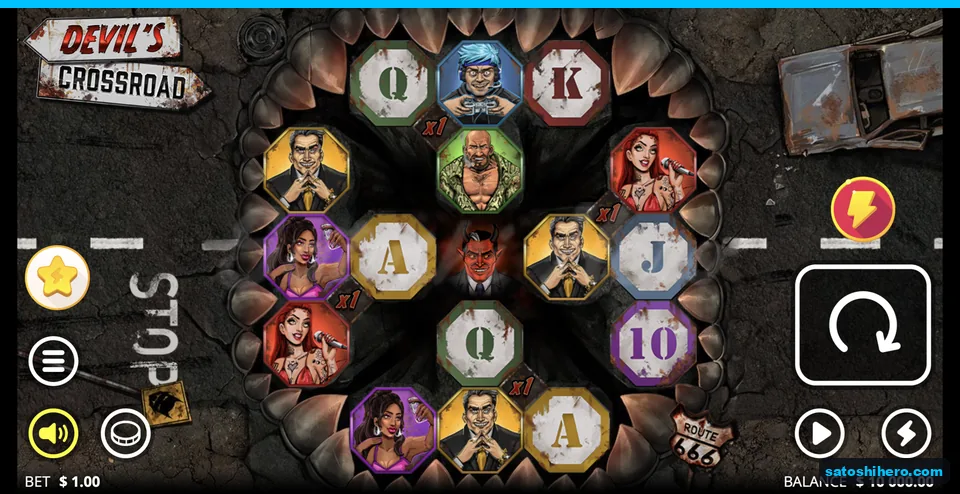
Devil’s Crossroad slot doesn’t rely on reels to sell its setting. The four arms meet at the Devil Wild like a ritual mark on the road. That visual logic helps you learn the board faster. I prefer this to horror dressing that has no mechanical purpose.

Insight: The cross layout does more than look different; it turns the whole board into a cursed junction with the Devil Wild sitting at the meeting point.
Contract mood
The bonus visuals push the soul-deal idea harder. A six-eyed black cat appears, a candle burns on a skull, and the feature opens like a contract signing. You sign before the bonus begins, which gives the buy sequence a theatrical sting. It feels heavy-handed, but Nolimit City commits fully.
Sound and pacing also support the mood. The board can sit cold, then suddenly scrape into several clears with multipliers ticking upward. You get a game that feels tense even when the payout stays small. I don’t think the theme alone carries it, but the board design makes the crossroads concept stick.
Redemption Spins
Redemption Spins turns the base game into a 5×5 coin round with three spins, reset-on-coin rules, and deadly-sin features. Four Scatters start it, though my 500-spin run never triggered it naturally.
Coin board rules
The round starts with three spins and resets to three whenever a coin lands. Every coin value counts as a multiple of your stake, so a coin showing $25 at $1.00 stake means $25.00. Filling a full column arms the feature slot above that column. Once armed, that feature fires on every following spin in the same column.

The deadly-sin features change coin values in different ways. Gluttony adds its value to every coin, Wrath multiplies one random coin, and Lust advances the upgrade bar. Greed collects line values into one coin, Envy copies the highest board value, and Pride adds one coin’s value to others in its line. xWays Hoarder xSplit fans may recognise the appeal of value build-ups that grow through repeated feature hits.


Strategy Insight: If you’re testing the bonus menu, the standard ticket is the cleaner first stop. The price is much lower, and the round still shows the core coin-board mechanics.
Standard buy result
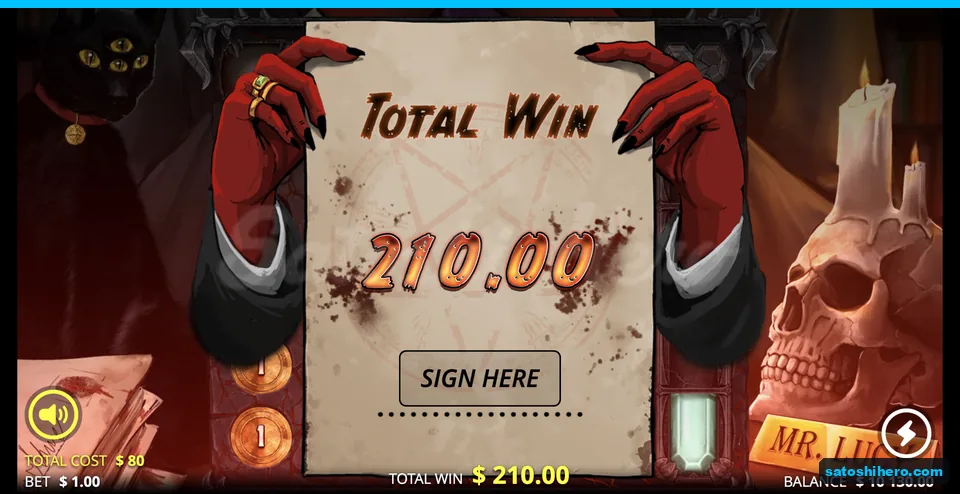
I bought the standard round once for $80 at a $1.00 stake. It landed the Scatters, moved into the contract sequence, then opened the 5×5 board. The coin board filled steadily and two columns completed. Feature slots included +1 and x2, which gave the round enough movement to stay interesting.
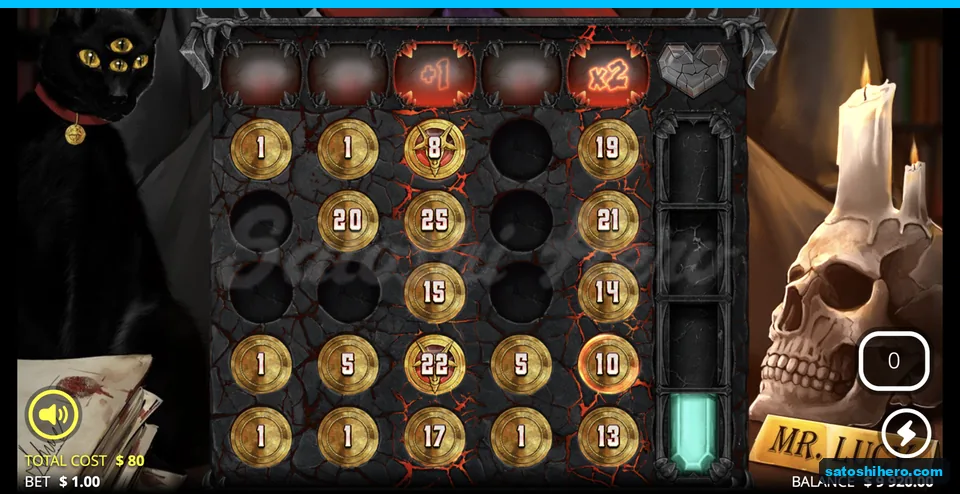
Two Devil coins landed, showing $8 and $22. The values climbed as high as $25 before the round settled. The final payout reached $210.00 from the $80 buy, which beat the upgraded purchase in my single test. That’s not a promise, but it made the cheaper ticket the clear winner on my sheet.
Upgraded Redemption Spins
Upgraded Redemption Spins adds row features as well as column features, which gives the round more moving parts. The direct buy costs $500 at a $1.00 stake, and my test showed that price doesn’t protect you.
Upgrade triggers
You can upgrade the round by filling four levels of the upgrade bar. The bar gains levels through Lust features and through Scatters landing beside the centre during normal play. Landing all four Scatters next to the centre also opens the upgraded version. I like the ambition, but the route looks steep in normal play.
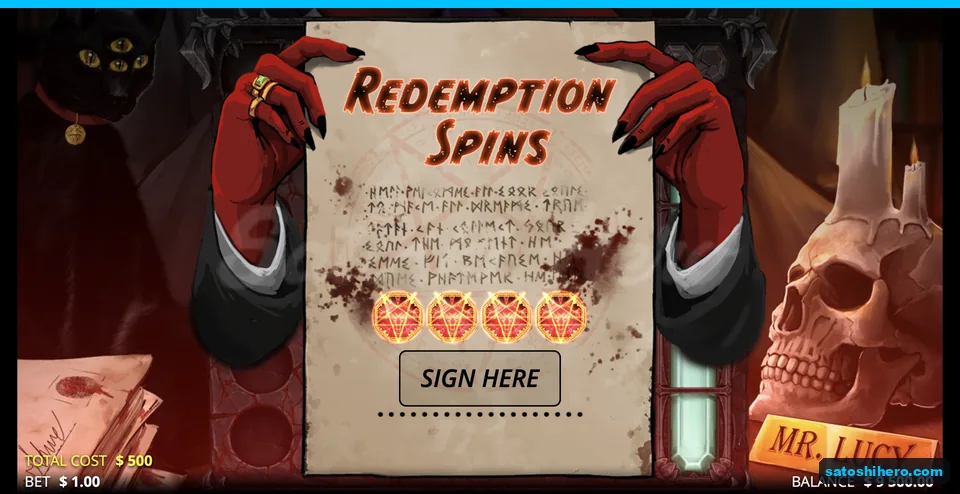
Once upgraded, the board shows feature slots for rows and columns. Completed lines can arm features vertically and horizontally, so each filled line does more. A Devil coin can fire a row feature on top of its column feature. xWays Hoarder 2 is a fair comparison for players drawn to layered feature escalation and sharp variance.

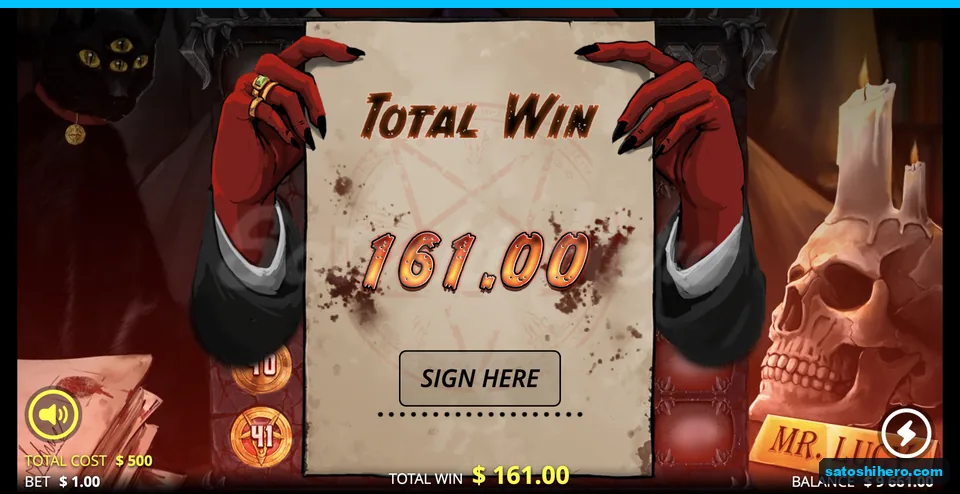
Warning: The upgraded buy is expensive relative to the base stake. In this test, the $500 ticket returned only $161.00, so don’t treat the higher price as a stronger result.
Premium buy result
I bought the upgraded round once on a fresh $10,000.00 balance. The contract showed four lit seals, then the board opened with row and column feature slots visible. A row slot paid +20 early, and coin values climbed to $41 and $40. That looked promising for a few spins.
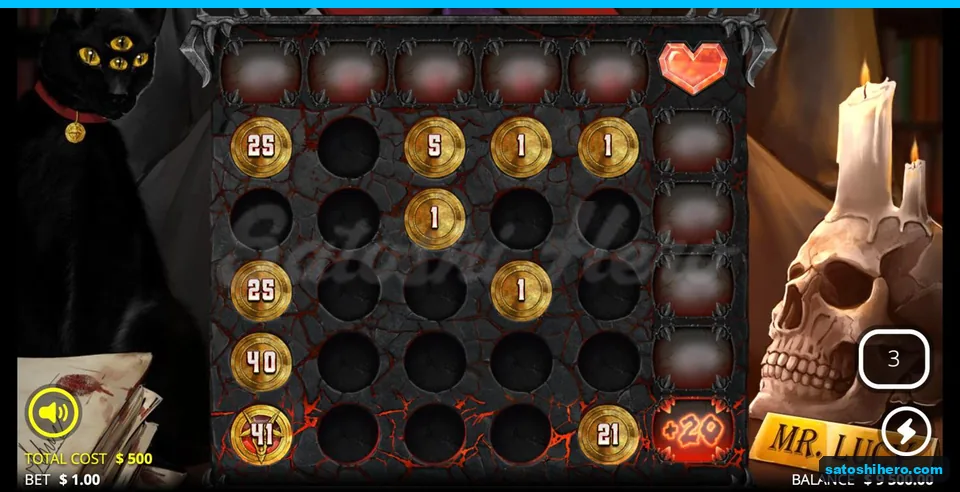
The board never filled, and the round closed at $161.00. That is only about a third of the purchase price, which stung. One buy can’t judge the long-term value, but this single result was a hard miss. You should treat the premium ticket as a high-risk shortcut, not as a better outcome.
Bonus Buy Flow
The bonus buy flow uses an arm-then-spin process, so the game doesn’t take your money when you first click the card. The price leaves your balance only when you press the priced spin button.
Arming the buy
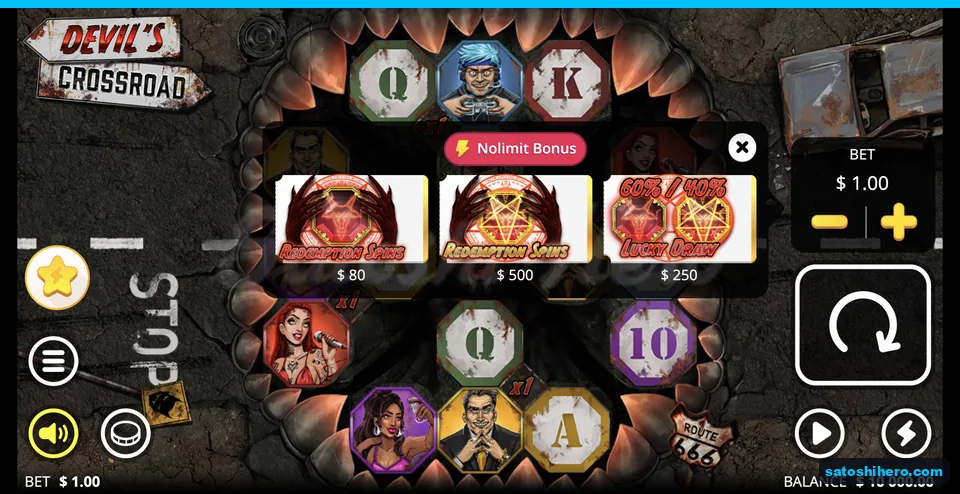
Clicking a bonus card opens a red panel with an ACTIVATE button. ACTIVATE arms the purchase and adds the price badge to the spin button. The next spin takes the money, lands the Scatters, and brings up the contract. You then sign before the round begins, which fits the whole deal-with-the-devil tone.
The fixed options I tested were the $80 standard Redemption Spins and the $500 Upgraded Redemption Spins. Each used a separate fresh $10,000.00 balance. That separation keeps the two results clean. I don’t like menus that take funds too early, so this two-step flow feels fair.
Test limits
Each fixed option got one purchase in my test. The $80 round paid $210.00, while the $500 round paid $161.00. Those outcomes describe my sample, not your next click. Data shows the cheaper buy won my test, but variance can flip that story fast.
The Devil’s Crossroad demo gives you the safer place to learn this flow before using real balance on SatoshiHero. You can see how ACTIVATE differs from SPIN without paying for the lesson. That matters because the game presents expensive options in a dramatic menu. Learn the interface first, then decide whether the risk fits your bankroll.
Lucky Draw
Lucky Draw is a $250 weighted ticket at the tested $1.00 stake, not a fixed bonus purchase. You gamble on which Redemption Spins version you receive, so control drops even though the stated return matches the base game.
Weighted ticket
The ticket prints a 60% / 40% split across the two Redemption Spins editions. Its published return is 96.06%, matching the fixed truth used for the game. I still skipped it because I wanted known targets for the test. Some players prefer fixed tickets because they know exactly which feature they bought.
That trade-off defines the draw. You may land the richer version, or you may not. Nine to Five makes a useful contrast here because simpler bonus expectations can feel easier to price mentally. Devil’s Crossroad slot asks you to accept more uncertainty before the round even starts.
No booster
I found no side bet and no stake booster. The star on the left rail opened an empty promotions panel, not a gameplay modifier. That keeps the menu cleaner than I expected. It also means the real choice sits between fixed buys and the weighted ticket.
I don’t think the matched return makes Lucky Draw the automatic pick. Numbers matter, but control matters too when the ticket costs $250. If you value knowing the exact round you bought, the fixed menu gives a clearer decision. If you accept the split, the draw becomes a volatility choice.
Debt to be Paid
Debt to be Paid is the 13,180x maximum-win cap, and any round that reaches it stops immediately. The game pays the capped total, then ends the round.
Max win cap
The official cap is 13,180x the base bet. That is a strong chase figure, but it isn’t inflated beyond the game rules. At $1.00 stake, that ceiling would mean a $13,180.00 payout. You should still judge the game by how often it grinds, not by the ceiling alone.
This cap can matter inside a bonus where coin values and features keep growing. Yet the round stops when the total reaches the cap, so extra potential doesn’t continue past that point. Land of the Free may attract similar max-win chasers, but this game makes the road rougher through its cross multipliers and bonus droughts.
Hit-rate context
The rules page prices the capped outcome at roughly one round in 3,903,200. That figure explains why the max win feels remote even for a high volatility slot. The more common experience involves dead spins, small clears, and long dry spells. My 500-spin session matched that pattern almost too well.
The max win is strong, but it doesn’t turn every bonus into a realistic chase. You need patience for base-game grind and discipline around the buy menu. I respect the cap, but I wouldn’t build a session around hunting it. Treat it as the ceiling, not the plan.
RTP, Volatility & Our Test
Devil’s Crossroad slot has 96.06% theoretical RTP, high volatility, and a 13,180x maximum win. My 500-spin test still finished $196.00 down, with zero natural Redemption Spins triggers.
Simulator projection
Our SatoshiHero Slot Simulator used 1,000 spins at $1.00 with 96.06% RTP, high volatility, and the 13,180x cap. The median finish came out $68.20 down. The middle 90% of modelled sessions ran from $320.50 down to $362.70 up. A feature-tier round appeared around once in 45 spins in the model.
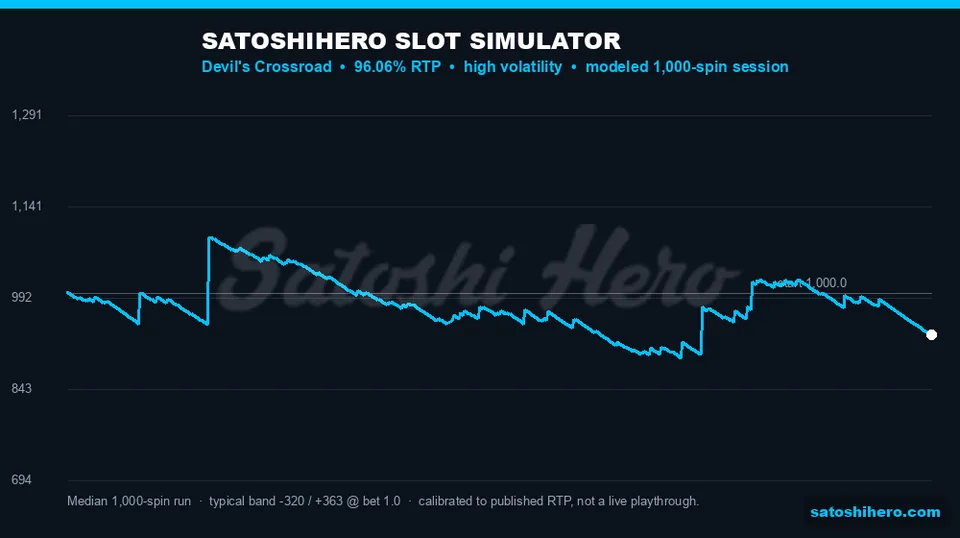
The model also put a 100x+ win around once in 1,757 spins. That number tells you why a 500-spin test can miss the better moments. It doesn’t predict your next session or tell when four Scatters may arrive. I use it for spread shape, not for prophecy.
Our 500-spin session
I played 500 spins at $1.00 from a $10,000.00 starting balance. The session finished at $9,804.00, so I lost $196.00. No natural Redemption Spins round appeared. That was the bluntest lesson from the test.
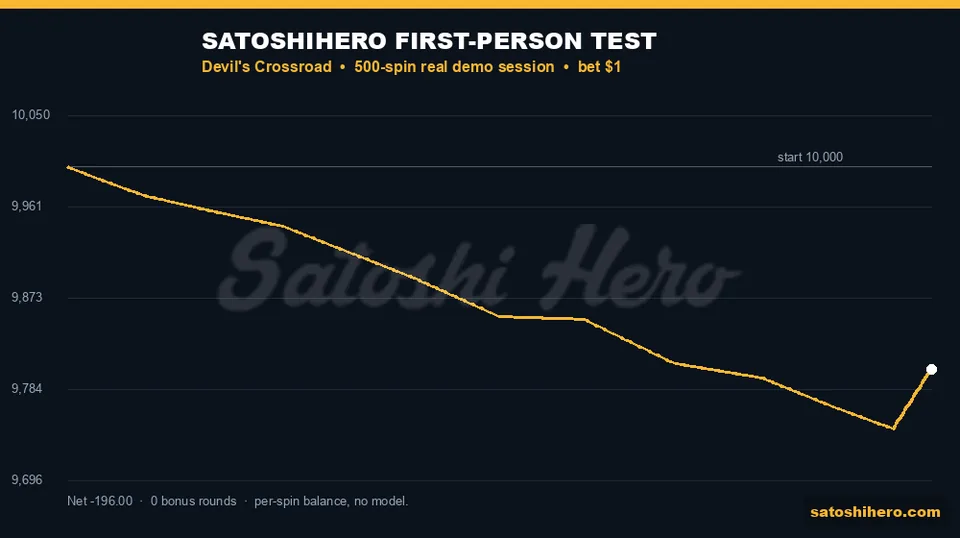
The base game wasn’t empty, but most rounds landed between $0 and about $3.00. Cross multipliers still pushed some arms to x4, x5, and x6, which kept the board from feeling dead. My best hit came near spin 480, when suited men and tens rolled three arms upward together. It returned about $70.00, and I caught it mid-build at $25.90 on screen.
The balance never climbed above the starting line after the first few spins. That made the whole test feel like a slow grind with one small rescue late. Numbers indicate the official high rating fits, even if the splash screen felt harsher to me. You need enough bankroll depth to survive long gaps.
The theoretical RTP is the operator-published figure, and a single live session doesn’t change it. Bonus-buy RTPs match the fixed game figure here, so treat my test as pacing evidence, not proof of expected return.
Frequently Asked Questions About Devil’s Crossroad
How does Devil’s Crossroad slot actually pay?
It pays outward from the centre instead of along fixed lines. Four cross sections meet at one central position, and each side counts separately. Only the highest win per crosslink pays, then winning symbols clear, fall inward, and refill.
What is the Cross Multiplier in Devil’s Crossroad slot?
When a win pays, every other copy of that same symbol also clears and lifts its own cross section multiplier by one. Four arm multipliers can climb independently, and my testing showed x6 on one arm and x5 on another.
How do you trigger Redemption Spins in Devil’s Crossroad slot?
Four Scatters open Redemption Spins. The Scatter only appears in the middle row or middle column of a cross section, and no natural trigger appeared in my 500-spin test.
What happens inside Redemption Spins in Devil’s Crossroad slot?
The game switches to a 5×5 coin board with three spins. The counter resets when coins land, and completed columns arm deadly-sin features that affect coin values.
Which Devil’s Crossroad slot bonus purchase costs more?
The $80 ticket at a $1.00 stake buys the standard round with column features only. The $500 ticket buys the upgraded version with row and column features, and the upgrade can also come from the four-level upgrade bar.
Is the Lucky Draw purchase in Devil’s Crossroad slot worth taking?
It costs $250 at a $1.00 stake and uses a 60% / 40% split across the two Redemption Spins versions. Its stated return is 96.06%, but I skipped it because the outcome isn’t fixed.
What did the Devil’s Crossroad slot test return?
The 500-spin test at $1.00 finished $196.00 down, from $10,000.00 to $9,804.00, with zero bonus triggers. The $80 buy paid $210.00, while the $500 buy paid $161.00.
What are the Devil’s Crossroad slot RTP and maximum win?
Normal play uses 96.06% RTP. Standard buy RTP is 96.06%, upgraded buy RTP is 96.06%, Lucky Draw RTP is 96.06%, and the maximum win is 13,180x.
Final Verdict
Devil’s Crossroad stands out because its cross-board actually changes how you read every spin. The main drawback is simple: long dry patches can dominate before the coin bonus appears.

My Take
I like the base-game structure more than the payout rhythm. Patient players who study the arms, multipliers, and bonus prices get the most useful information from this game, but impatient bankrolls may hate the wait.
I like the $80 buy result because it showed the coin system without draining the whole test balance. I don’t like that the $500 buy looked promising, then closed at $161.00. My natural 500-spin run also proved that Redemption Spins can stay hidden for a long stretch.
The Devil’s Crossroad slot guide is updated periodically against the live game screen and rules page. Use the demo first if the cross-board still feels busy, because mistakes near the bonus menu can cost more than a cold base-game run.

Pros:
 Original Board: Crosslink wins make each spin feel different from standard reels.
- Clear Math: RTP, buy returns, and cap appear plainly in the rules.
- Strong Theme: The crossroads setting matches the mechanics instead of sitting beside them.
- Useful Demo: The interface teaches expensive buy steps before real balance moves.

Cons:
 Harsh Pacing: Long bonus droughts can drain patience and bankroll.
- Costly Upgrade: The $500 buy can miss despite richer mechanics.
- Busy Rules: New players need time to read cross sections correctly.

Best For: Bonus-buy testers, high-volatility hunters, and mechanics-first players get the strongest match here. You need comfort with dry spells, separate arm multipliers, and expensive feature choices. If you want simple line wins, this cross-board may feel too demanding.






























































Bets
All Bets
Game
Player
Date
Wager
Mult.Multiplier
Prize
 3 Witches: Bonus Combo
 bjgrandy149
- 00:17:25
- 0.5×
- Royal Fruits 9: Hold 'n' Link
 mdp0fxo
- 00:17:24
- 0×
- Royal Fruits 9: Hold 'n' Link
 nina87
- 00:17:22
- 0×
- 3 Witches: Bonus Combo
- bjgrandy149
- 00:17:22
- 0×
- Halloween Harvest: Rapid Link
- Hidden
- 00:17:21
- 0×
- 3 Witches: Bonus Combo
- bjgrandy149
- 00:17:21
- 0×
- Big Banker Bonanza
- josh1998
- 00:17:20
- 0×
- Halloween Harvest: Rapid Link
- Hidden
- 00:17:20
- 0×
- Halloween Harvest: Rapid Link
- Hidden
- 00:17:19
- 0.99×
- 3 Witches: Bonus Combo
- bjgrandy149
- 00:17:19
- 0×