

Xpander
RTP96.25%
VolatilityVery high
Max winx10,000
Hit rate33.4%
ThemeSport
ReleasedJul 2021

Neon Clusters and a Restless Multiplier Box
Xpander slot throws bright fruit symbols onto a 7×7 cluster grid while a hopping multiplier hunts for winning groups.
Xpander is a very-high volatility slot from Hacksaw Gaming with 96.25% RTP and 10,000x max win potential. Bets run from $0.20 to $100.00, the demo opened at $2.00, and the Free Spins buy returns 96.2%. It uses cluster pays, not paylines, and that 10,000x cap ends the round at once if it lands.
Key takeaways
- Best bonus: Xpander slot offers one Free Spins buy at 129x the bet, and my $258.00 buy returned $220.60.
- RTP / volatility: The official RTP is 96.25%, and Hacksaw Gaming rates volatility as very-high.
- Max win: The maximum win is 10,000x the bet, and the round ends immediately at that cap.
- Risk note: My 500-spin test lost $628.60 at $2.00 per spin without triggering Free Spins.
- Bankroll note: You need patience because small tumbles rarely offset a missed bonus.

Warning: Very-high volatility means the 96.25% RTP doesn’t protect one session. My 500-spin test still lost $628.60 without Free Spins.

Table of Contents
- How Xpander slot Works
- Cluster win rules
- Symbol pay tiers
- Theme & First Impressions
- Neon fruit style
- Board readability
- Hopping Multiplier
- Box position
- Hit potential
- Double Up and Grow Symbols
- Multiplier upgrades
- Box growth
- Free Spins
- Trigger rules
- Persistent progress
- Bonus Buy Test
- Bought round setup
- Final payout
- RTP, Volatility & Our Test
- Simulator projection
- Our 500-spin session
- Bankroll Fit
- Bet sizing
- Cold stretches
- Who This Slot Suits
- Good fit
- Reasons to skip
- Frequently Asked Questions About Xpander
- Final Verdict
How Xpander slot Works
Xpander works as a 7×7 cluster pays game where wins form from 5 or more matching symbols touching horizontally or vertically. You don’t get paylines here, so stop looking for left-to-right patterns. Winning symbols disappear, fresh symbols drop into the gaps, and the drops continue until no new cluster forms.
This setup gives you clear rules but sharp variance. The WILD substitutes for every paying symbol except the FS scatter, which keeps cluster building simple. Hacksaw places the game inside its Hoppers series because a multiplier box stays on the grid every spin. Mobile and desktop play keep the same layout and controls, so you’re reading one board either way.
Cluster win rules
Numbers indicate a clean win condition: 5 matching symbols need to connect by side contact. Diagonal links don’t count, and isolated matches don’t matter. You should watch the whole board because a win can form anywhere.
Cascading drops give each paid spin a second chance to connect. But the base game can still feel stingy when clusters land away from the multiplier box. That tease defines the Xpander slot experience early.
Symbol pay tiers
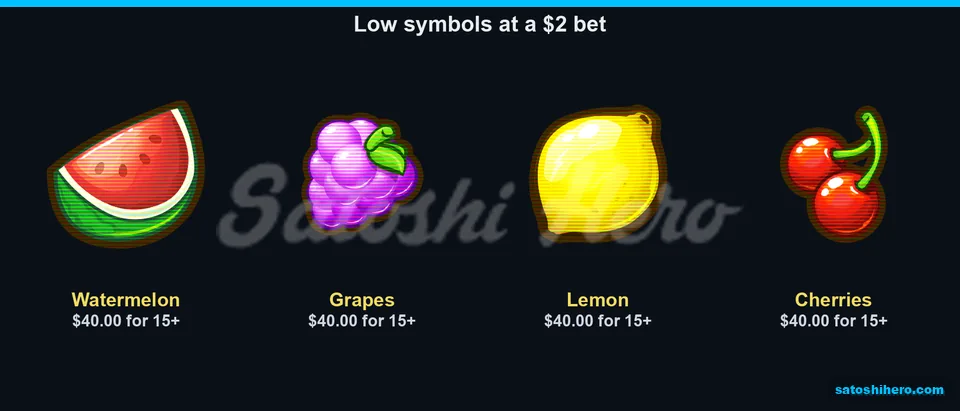
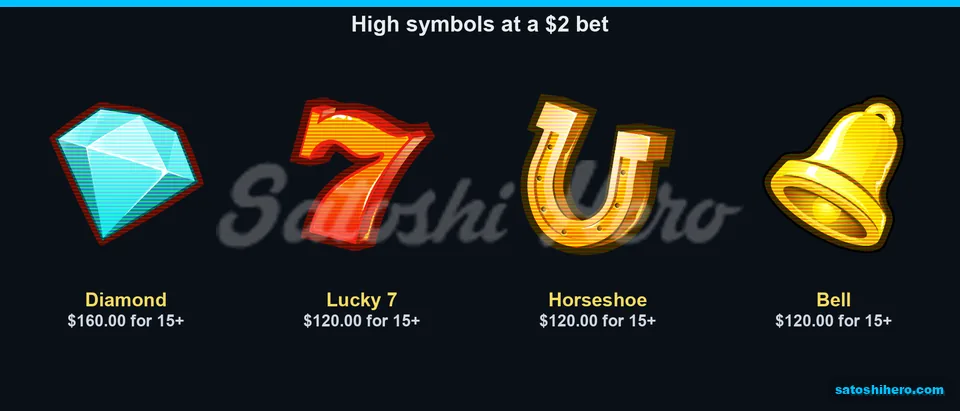
At my $2.00 stake, fruits form the low-pay group. Cherries, lemons, grapes and watermelons paid from $0.20 for 5 symbols up to $40.00 for 15 or more. Bell, horseshoe and lucky 7 paid higher, from $0.50 for 5 up to $120.00 for 15 or more.
Diamond sits at the top. It paid $1.00 for 5 symbols, $16.00 for 8, $80.00 for 12 to 14, and $160.00 for 15 or more. Those numbers look strong, but you still need size, placement and the hopper connection to make them bite.
Theme & First Impressions
The theme is a neon fruit-machine setup with classic symbols, a purple skyline and a bright green XPANDER logo over the board. You see cherries, lemons, grapes, watermelons, bells, horseshoes, lucky 7s and cyan diamonds. The chunky cartoon style keeps the 7×7 grid readable, which matters more than fancy animation here.
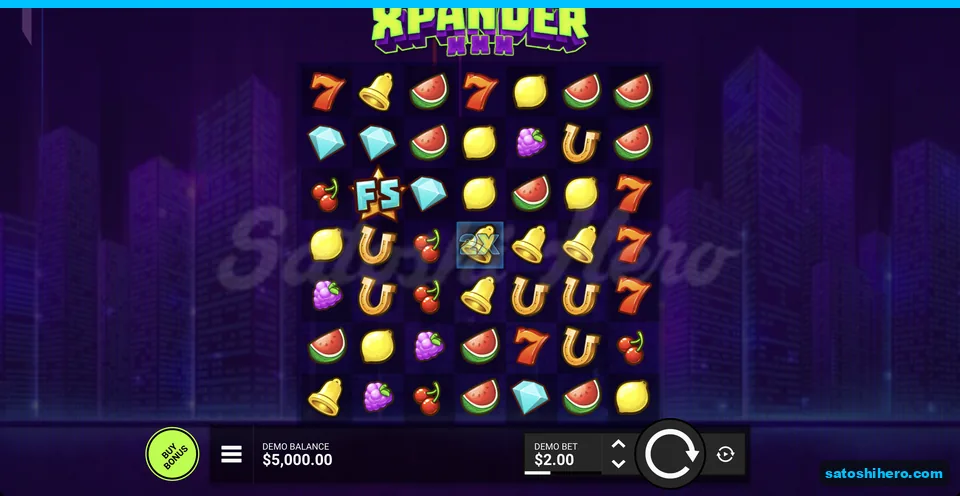
The artwork won’t win originality awards. Still, the bright palette helps you track clusters, Grow symbols and the single-cell 2x multiplier box without squinting. If you like clean, colourful slot screens, Xmas Drop gives a similar readable feel with a different seasonal tone.
Neon fruit style
The purple night skyline gives the fruit theme a sharper edge. It doesn’t look like a plain retro machine, and that helps the Xpander slot stand apart from older fruit setups. You can read the symbols quickly, which helps when tumbles fire fast.

Insight: The game uses familiar fruit-machine symbols, yet the neon skyline and hopper box make it feel more modern than a plain retro fruit slot.
Board readability
Visual clarity helps you judge each spin quickly. The box position, the cluster shape and the special symbols all stand out on the board. I like that practical choice because the mechanic needs instant feedback.
The screen stays busy without turning messy. You still feel every miss when the box lands one cell away from a strong cluster. That near-hit tension gives the presentation its bite.
Hopping Multiplier
The hopping multiplier multiplies a cluster only when its box overlaps at least part of that winning group. A multiplier box sits over the grid on every spin, and mine opened as a single-cell 2x box in the base game. Before each spin, it hops to a random new position.
You may see the box grow or strengthen, but it still needs a cluster underneath it. That gap between promise and payout makes the base game tense. I liked the idea immediately, though the test proved it can look more exciting than it pays.
Box position
Position drives the whole feature. If the box sits on empty space, nothing special happens, even when clusters hit elsewhere. You can have a decent tumble and still feel robbed because the multiplier missed by one cell.

Key Stat: The box doesn’t need to cover the whole cluster. If it overlaps any part of the winning group, the multiplier applies.
Hit potential
The multiplier value can reach 128x, and the box can grow to 4×4. Data shows that bigger coverage matters because the board holds 49 cells. A 4×4 box covers far more space than a single cell, so it has a better chance to touch wins.
That doesn’t make the feature reliable. In my 500 spins, I saw strong-looking hopper states land away from meaningful groups. The mechanic creates real chase value, but you shouldn’t treat every upgrade as money banked.
Double Up and Grow Symbols
Double Up boosts the multiplier value, while Grow makes the box larger and easier to connect with clusters. Double Up symbols double the current multiplier from 2x to 4x, then 8x, 16x, 32x, 64x and 128x. Several can land on one spin, so a quiet board can suddenly show a serious number.

Grow symbols use a counter. Every 3 Grow symbols increase the box from one cell to 2×2, then 3×3 and 4×4. Each growth also awards a free respin, which gives you another shot at landing a paid cluster under the box.
Multiplier upgrades
The multiplier value grabs attention first because 128x looks huge. But value alone doesn’t help when the box misses the winning group. You should treat Double Up as only half the job.
In the base game, progress doesn’t carry from one paid spin to the next. That reset hurts. It explains why the feature can tease you with an 8x box, then leave nothing lasting after a miss.
Box growth
Grow symbols felt more important during my play. A larger box gives the multiplier more board coverage, and that matters on a 7×7 grid. You can’t control the hop, so size becomes your best ally.

Strategy Insight: Watch the Grow counter more than the multiplier value in the base game. A bigger box makes it much easier for the multiplier to touch a winning group.
Cascading drops can help after a growth, especially when fresh symbols fall into the box area. Still, the base game wipes progress fast. Free Spins matter because those upgrades finally get time to build.
Free Spins
Free Spins matter because the multiplier value and box size stay active for the whole round instead of resetting after each paid spin. Three or more FS scatters trigger the feature, and the round starts with 5 free spins. 1UP symbols add one extra spin each, which can stretch the bonus at the right moment.
This is the feature chase. Grow and Double Up progress keeps building across the round, and the maximum state reaches a 4×4 box at 128x. You get one BUY BONUS option only, with no ante bet and no FeatureSpins modes.
Trigger rules
The natural trigger needs at least 3 FS scatters. I didn’t hit it across 500 paid spins, which says plenty about the volatility in practice. You may need a long runway if you want to see the feature without buying it.
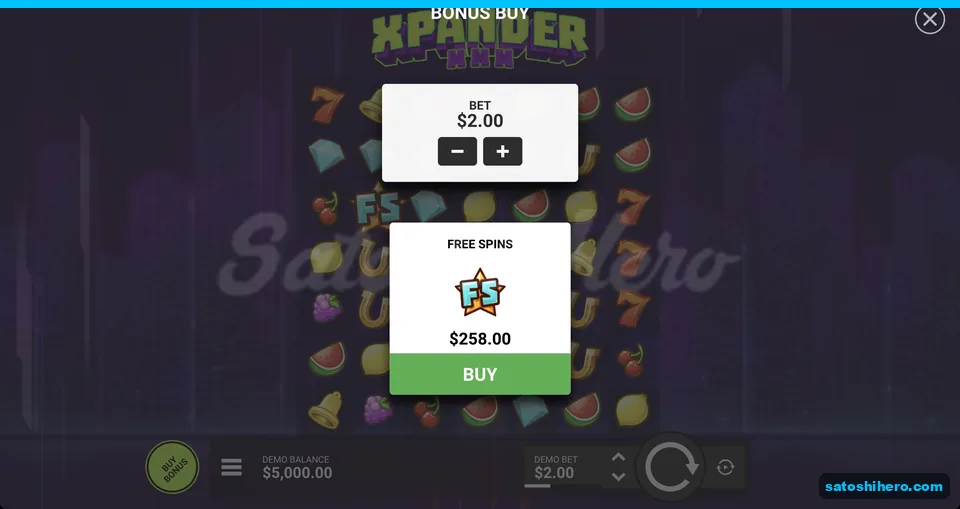
The buy costs 129x the bet. At my $2.00 stake, that meant $258.00. The buy RTP sits at 96.2%, slightly below the 96.25% base figure, so I don’t see it as a shortcut to profit.
Persistent progress
Persistent progress changes the whole mood. In the base game, a 3×3 box can vanish after one paid spin. In Free Spins, every Grow and Double Up stacks into the same round.
Wishbringer may appeal to readers who like feature-led buildup, but Xpander keeps the chase tighter through one central multiplier box. I prefer that focus. The feature gives the hopper mechanic room to become more than a one-spin tease.
Bonus Buy Test
The tested Free Spins buy cost $258.00 at a $2.00 stake and paid $220.60, or 110.3x the bet. I started with a fresh $5,000.00 demo balance, pressed BUY BONUS, selected the only Free Spins card and confirmed the $258.00 price. The intro screen promised 5 spins with multiplier progress kept.
That promise mattered quickly. Grow symbols pushed the box to 4×4 early, while Double Ups lifted the multiplier to 8x. 1UP symbols stretched the round from 5 to 9 spins, which gave the large box enough time to find real clusters.
Bought round setup
The setup felt strong before the final payout landed. A 4×4 box covers enough space to make every tumble interesting. You can feel the difference between this mode and the base game straight away.
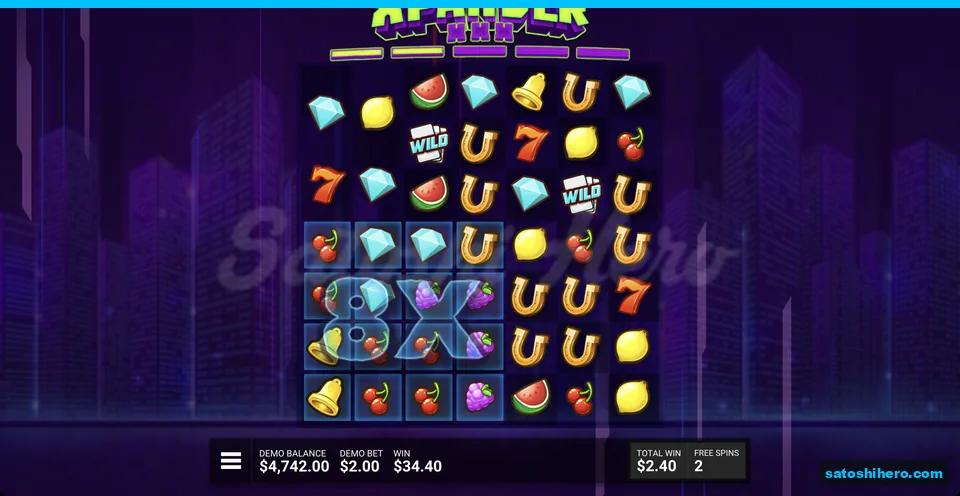
I liked the pace, but the price stayed in my head. A $258.00 buy needs more than one decent hit to clear break-even. That pressure makes the bonus exciting and uncomfortable at the same time.
Final payout
Late spins did most of the work. Groups under the big 8x box paid $34.40 and $68.00, and the round passed $126.20 with one spin left. The final payout reached $220.60, which finished about $37.40 short of the buy price.
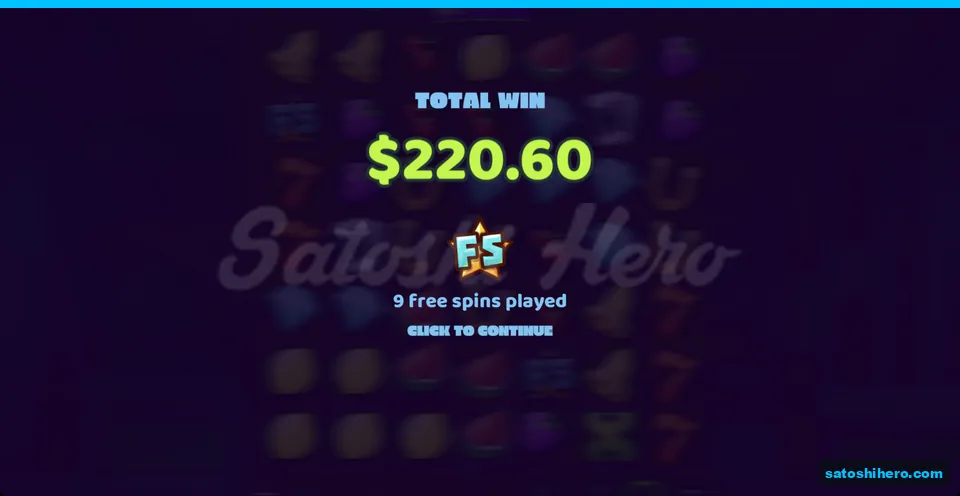
Insight: The bought round stretched from 5 to 9 spins because 1UP symbols added extra spins during the feature.
That result felt fair for very-high volatility but not generous. I got meaningful action, a full-sized box and a losing result. The test showed why Free Spins are the target, yet also why the buy carries real risk.
RTP, Volatility & Our Test
Xpander has 96.25% theoretical RTP, very-high volatility and a 10,000x maximum win, so the math points to sharp swings rather than smooth sessions. The 10,000x cap ends the round immediately if reached, even when free spins remain. You’re chasing a high ceiling, not a steady drip of small profit.
My first-person data gives this guide its edge. Generic pages can repeat the RTP, but my session showed how the numbers feel when the bonus never appears. Limbo fans may recognise that swingy outcome profile, even though this game uses clusters rather than crash-style timing.
Simulator projection
I modelled 1,000 spins at $2.00 using the published 96.25% return, very-high volatility and 10,000x cap. The median session finished about $208.60 down. The middle 90% of runs landed between $872.10 down and $1,349.90 up.
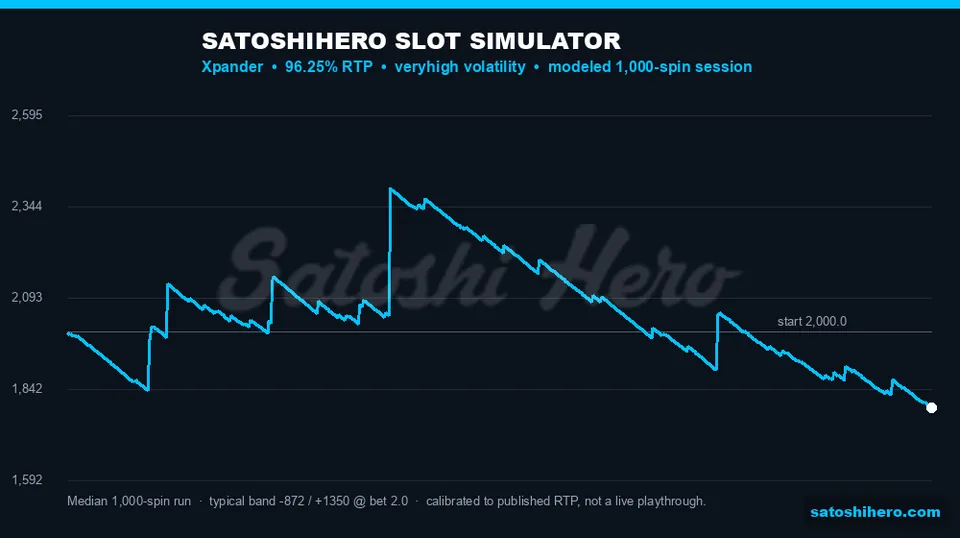
That spread matters more than the average. The model put a feature-sized hit at roughly 1 in 54 spins, while a win above 100x landed around 1 in 811. Ze Zeus also speaks to max-win chasers, but this game adds the visual build of the hopper box.
Our 500-spin session
I played 500 spins at $2.00 from a fresh $5,000.00 demo balance. I finished at $4,371.40, down $628.60, with no Free Spins trigger. The result landed worse than the simulator median but still inside the model’s middle band.
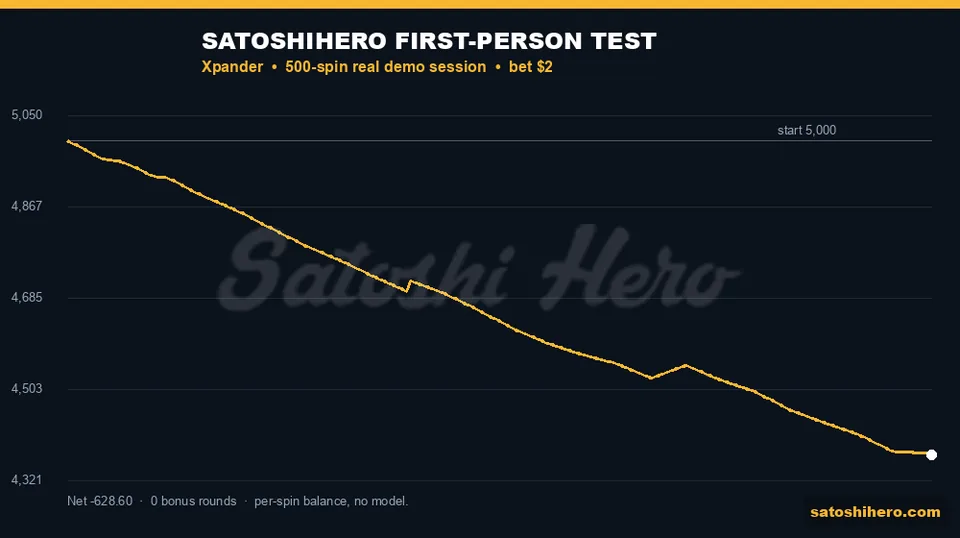
The session split into two parts. After 58 spins, the demo server stopped autoplay at $4,925.20, so I reopened the game and played the remaining 442 spins. That second stretch lost another $553.80.
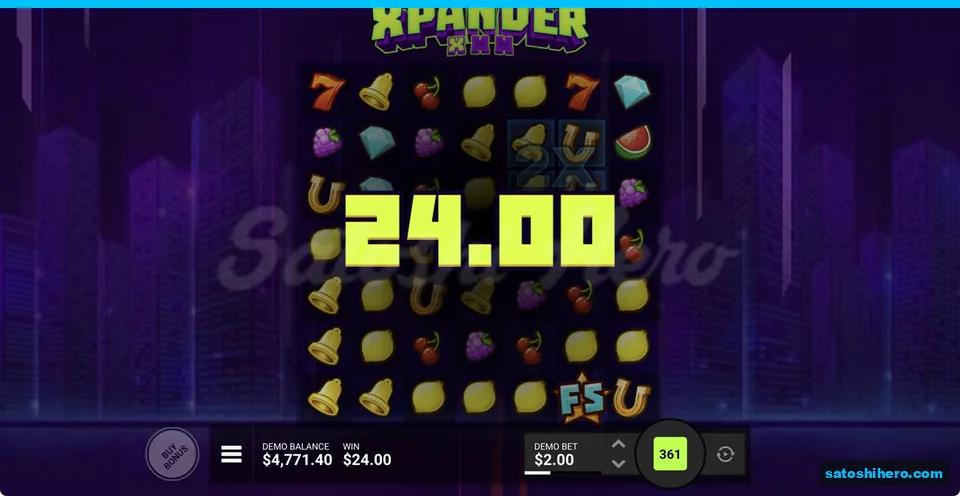
Most tumbles paid $0.20 to $2.00. My best single spin returned about $39.80, and the cleanest base-game hit was a lemon group under a 2×2 2x box paying $24.00. I watched the hopper reach 2×2 and 3×3 often, but it kept missing the best clusters.
Theoretical RTP is the operator-published figure for the game’s return model. One live or demo session doesn’t change that number, and per-bonus RTPs can differ slightly from the base game by design.
Bankroll Fit
This slot fits a patient bankroll better than a casual grinder because the base game can drain balance while you wait for Free Spins. The familiar fruit symbols make it look relaxed, but the numbers tell a harsher story. At $2.00 per spin, my 500 spins created $1,000.00 in turnover and still lost $628.60.
You get many small tumbles, yet those hits didn’t offset the missed bonus. The base game produced plenty of $0.20 to $2.00 returns during my test. That kept the session moving, but it didn’t stop the downhill grind.
Bet sizing
Lower stakes make more sense if you want to sample the bonus naturally. You need enough spins to let the scatter trigger appear, and very-high volatility can punish short bankrolls. I’d rather test the rhythm at $0.20 or $0.40 before pushing higher.
The $258.00 buy at $2.00 stake shows the other route. It gives direct access to the best mode, but it doesn’t solve variance. My bought round looked strong and still fell short of break-even.
Cold stretches
Cold stretches feel sharper because the hopper keeps teasing potential. You may watch a good multiplier sit on the board, only for clusters to land somewhere else. That visual miss hurts more than a plain dead spin.
The game feels best when the box grows and sticks through Free Spins. The base game alone can feel punishing, especially if you prefer frequent bonus triggers. Bankroll pressure defines the experience as much as the feature design.
Who This Slot Suits
This game fits cluster fans, bonus-build hunters and very-high volatility players better than steady base-game grinders. You need comfort with dry spells, because the 500-spin test showed how cold the base game can run. The decision comes down to whether you enjoy one clear feature chase enough to tolerate those misses.
You can play the game on SatoshiHero in demo and real mode. I’d start in demo first because the hopper mechanic looks friendlier than it feels over hundreds of spins. The first few sessions can teach you whether the rhythm suits your bankroll.
Good fit
- Cluster-pay fans get simple 5-symbol connection rules and clear tumbling wins.
- Feature chasers get a central mechanic built around growth and multiplier persistence.
- High-risk players get very-high volatility with a 10,000x ceiling.
- Bonus-buy fans get one direct Free Spins option at 129x the bet.
That profile is narrow but clear. If you enjoy watching one mechanic build across a bonus round, Xpander slot gives you that focus.
Reasons to skip
- Frequent-bonus seekers may dislike long stretches without Free Spins.
- Payline fans won’t find traditional left-to-right line wins here.
- Low-pressure players may find the 129x buy too steep.
- Base-game grinders may tire of small tumbles and missed multiplier positions.
Wings of Horus makes more sense if you want a mythic theme instead of neon fruit visuals. This game wins on mechanical clarity, not story or atmosphere. You should skip it if you need smoother balance movement.
Frequently Asked Questions About Xpander
How does the hopping multiplier in Xpander slot work?
A multiplier box sits on the grid and jumps between spins. Any winning cluster it overlaps gets multiplied by its current value. Double Up symbols can raise the value to 128x, and every 3 Grow symbols can expand the box up to 4×4 with a free respin.
Is Xpander slot a cluster pays slot?
Yes, Xpander slot uses a 7×7 cluster pays grid. Wins need 5 or more matching symbols touching horizontally or vertically, and winning symbols disappear so new symbols can tumble into place.
What makes the Xpander slot free spins different from the base game?
Free Spins keep the multiplier size and value active for the whole round. The feature starts with 5 spins, and 1UP symbols add extra spins. That persistence lets Grow and Double Up symbols build on previous progress.
What did the Xpander slot free spins buy pay in testing?
At $2.00, the Free Spins buy cost $258.00. My round reached a 4×4 box at 8x, played 9 spins and paid $220.60. That equalled 110.3x the bet.
What does the Xpander slot simulator predict for 1,000 spins?
At $2.00 per spin, 96.25% RTP and very-high volatility, the simulator median finished about $208.60 down. The middle 90% of runs landed between $872.10 down and $1,349.90 up.
What happened in the Xpander slot 500-spin first-person test?
I started with $5,000.00 and ended with $4,371.40. That was a $628.60 loss across 500 spins, with no Free Spins trigger. My best single spin returned about $39.80.
What is the RTP and maximum win of Xpander slot?
The base game RTP is 96.25%, and the Free Spins buy RTP is 96.2%. The maximum win is 10,000x the bet, and the round ends immediately if that cap lands.
Can you buy the bonus in Xpander slot?
Yes, there is one Free Spins buy at 129x the bet. At my $2.00 stake, it cost $258.00. The game doesn’t include an ante bet or FeatureSpins modes.
Final Verdict
Xpander stands out through a clean cluster grid, a restless hopper box and a bonus round where progress finally sticks. Its main drawback is brutal base-game variance when Free Spins stay away. The 96.25% RTP and 10,000x cap look strong, but the ride can feel rough.

My Take
Feature-build fans should try it in demo before risking larger stakes. Expect small tumbles, missed multiplier positions and occasional bursts when the box finally connects. I wouldn’t treat the bonus buy as a fix for a cold session.
I like how clearly the hopper mechanic explains every near miss and every multiplied hit. I don’t like how my 500-spin session drained $628.60 without one natural Free Spins trigger. The $220.60 bought bonus gave good action, but it still lost money.
The Xpander slot guide is checked regularly against the game screen and tested results. That matters because the math only tells part of the story, while real sessions show how the variance feels.

Pros:
 Clear Mechanic: The hopper box makes wins and misses easy to understand.
- Strong Ceiling: A 10,000x cap gives high-risk players a real chase.
- Readable Board: Bright symbols help you track clusters and special icons fast.
- Focused Bonus: Free Spins let multiplier progress build instead of resetting.

Cons:
 Harsh Base Game: Small tumbles didn’t offset my missed bonus trigger.
- Steep Buy: The 129x Free Spins price can pressure bankrolls quickly.
- Limited Variety: One bonus buy leaves fewer feature paths to explore.

Best For: Patient cluster players get the most value from this game’s clear feature chase. You’ll need tolerance for dry base-game stretches and a bankroll plan that can handle very-high volatility. Skip it if you want frequent bonuses, traditional paylines or smoother balance movement.



























































Bets
All Bets
Game
Player
Date
Wager
Mult.Multiplier
Prize
 Royal Fruits 9: Hold 'n' Link
 Hidden
- 02:23:59
- 0×
- Wild Clusters
 mdp0fxo
- 02:23:58
- 0.19×
- Pelican's Bay: Rapid Link
- nina87
- 02:23:56
- 0.6×
- Galaxy Glitter
- josh1998
- 02:23:54
- 0×
- Wild Clusters
- Hidden
- 02:23:51
- 0.49×
- Royal Fruits 9: Hold 'n' Link
- Hidden
- 02:23:50
- 0×
- Wild Clusters
- Hidden
- 02:23:47
- 0.39×
- Pelican's Bay: Rapid Link
- nina87
- 02:23:47
- 0.6×
- Red Hot 100
 mbongigycolombe
- 02:23:46
- 0×
- Elephant's Gold: Buy Bonus Combo
- Hidden
- 02:23:45
- 0×