

Superstar Sevens
By pressing play, you agree that you are above legal age in your jurisdiction and that your jurisdiction allows online gambling.


Electric 7s with a Real Bite
Superstar Sevens throws retro fruit symbols onto a fast 6×5 cluster grid, then lets Lightning multipliers turn plain hits into sharper swings.
Superstar Sevens is a medium volatility slot from Hacksaw Gaming with 96.37% RTP and 10,000x max win potential. My tested $2 session finished down $272 after 500 spins, though three organic free spins rounds kept the balance close before a late cold spell. It fits arcade-fruit fans who like clusters, cascades, and bonus-buy tension.
Key takeaways
- Best bonus: Base spins felt steadier than forcing Reel Charge, because my tested $200 buy returned only $21.20.
- RTP / volatility: Hacksaw lists 96.37% RTP and medium volatility, while bonus buys carry sharper swings.
- Max win: The ceiling sits at 10,000x, reached through stacked multipliers or six red 7 scatters.
- Risk note: Cluster wins can appear often, but the biggest upside still needs Lightning and free spins.
- Bankroll note: Keep bonus-buy money separate from your base-spin budget, because one buy can miss hard.

Table of Contents
- How Superstar Sevens Works
- Grid and clusters
- Symbols and values
- Theme & First Impressions
- Retro arcade style
- Speed and feel
- Super Cascade and the Cascade Counter
- Cascades after wins
- Counter multipliers
- Epic Lightning Multipliers
- Multiplicative values
- Big-hit setup
- Free Spins Modes
- Three trigger levels
- Mode differences
- Bonus Buy Test
- Buy menu options
- Reel Charge result
- RTP, Volatility & Our Test
- Simulator projection
- Our 500-spin session
- Frequently Asked Questions About Superstar Sevens
- Final Verdict
How Superstar Sevens Works
Superstar Sevens uses cluster pays on a six reel, five row grid, so you win by connecting matching symbols rather than following fixed lines. You need five or more matching symbols touching horizontally or vertically anywhere on the screen. That makes the Superstar Sevens slot easy to read, but it doesn’t play like an old line game. If you like non-standard win shapes, Xpander makes a useful comparison because it also asks you to think beyond fixed line paths.
Grid and clusters
You scan the full 6×5 layout for connected groups, not left-to-right paths. That matters because a win can start in the middle, near the edge, or across a messy block of symbols. I like that structure here, because it makes weak-looking spins worth watching for another second. You don’t need to trace paylines, so the game feels cleaner than its loud fruit styling suggests.
Every paid cluster triggers a Super Cascade. The game removes the winning symbols, drops new ones into the gaps, and checks for fresh clusters. You may see one small hit turn into a better spin if the drops keep connecting. That pace rewards attention, especially when the Lightning symbols join the same spin.
Symbols and values
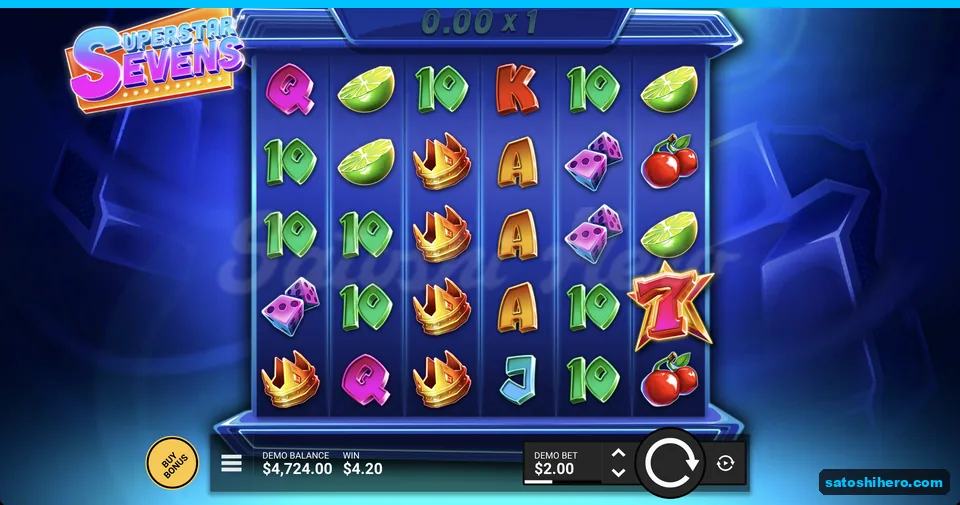
The low symbols are 10, Jack, Queen, King, and Ace. Higher payers include the green lime, blue diamond, red cherries, purple dice, and gold crown. The red flaming 7 acts as the scatter for free spins. Blue Lightning and gold Epic Lightning drive the multiplier system, so you should watch them more closely than the fruit symbols.
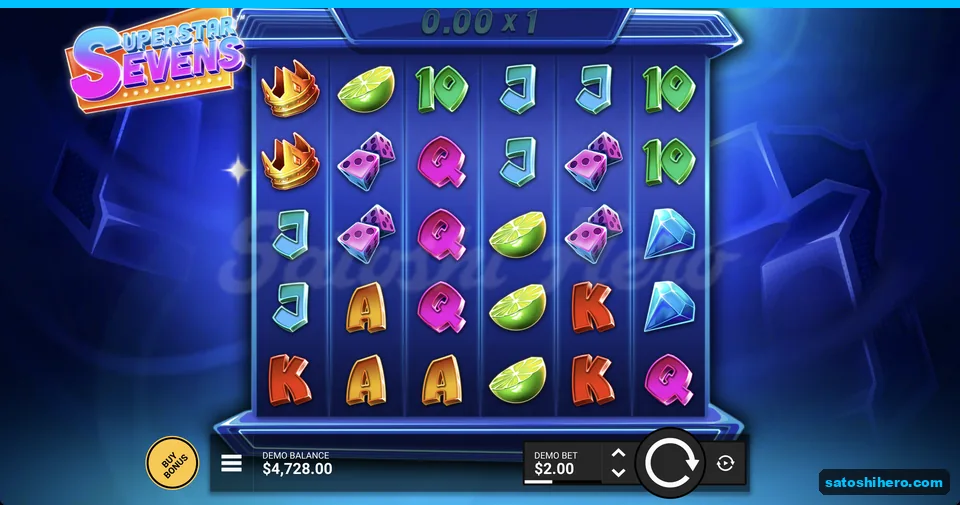
Hacksaw keeps the icons large, so the 6×5 grid stays readable on desktop and mobile. You can test the game in demo or real mode on SatoshiHero, and the live mechanics and published specs are checked regularly against the game page. My take is simple: the paytable won’t surprise veteran slot players, but the cluster system gives familiar symbols better movement.
Theme & First Impressions
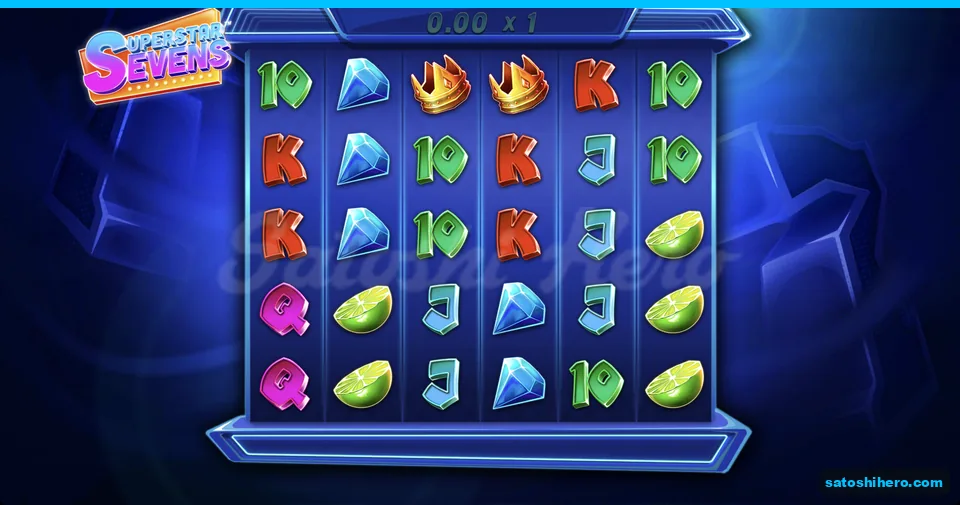
The game looks like a classic fruit machine, but it feels faster because Hacksaw wraps the old symbols in electric blue arcade energy. You get flaming red 7s, limes, cherries, diamonds, dice, and crowns falling through a bright grid. Superstar Sevens Hacksaw style leans loud and clean rather than subtle. The theme won’t win originality awards, but the execution feels punchy.
Retro arcade style
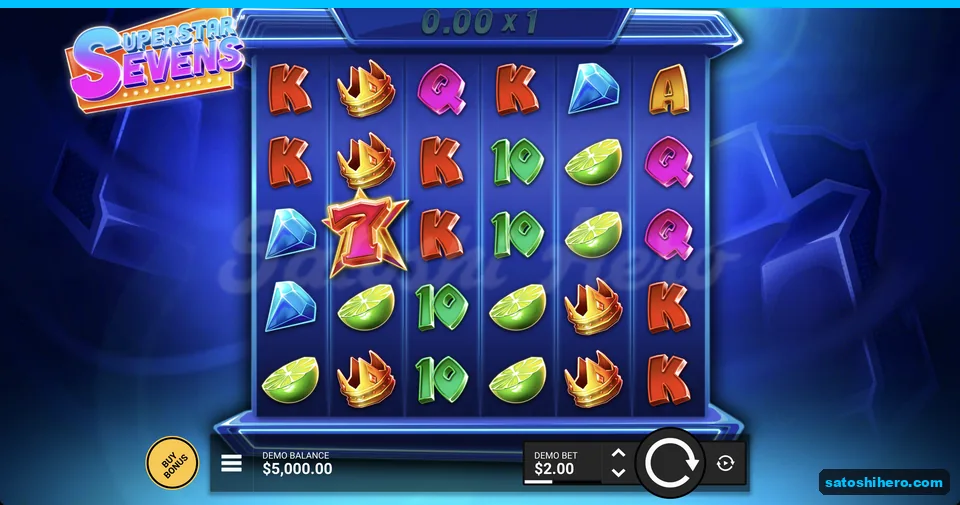
The electric blue backdrop gives the slot its sharper edge. It crackles behind the fruit symbols and makes the red 7s stand out fast. You get the clear casino-symbol language of an old fruit machine, but the grid and cascades make it feel more modern. I prefer this approach to a flat retro skin, because the presentation matches the feature pace.
Twenty-One sits at the other end of the mood scale. That game makes more sense if you prefer calmer table-game rhythm over loud arcade fruit action. Here, you get color, movement, and constant symbol drops. If that visual noise bothers you, the theme may feel tiring across a longer session.
Speed and feel
Super turbo made my test session move very quickly. You can follow the grid easily, but several cascades in a row can race by if you don’t slow down. I liked the pace for testing, though I’d lower speed during bonus rounds. You don’t want to miss how the Counter builds when Lightning lands.

Key Stat: Superstar Sevens looks like a classic fruit slot, but it pays through clusters on a 6×5 grid rather than fixed paylines.
That mix gives the theme more bite than the symbol set suggests. The skin feels familiar, while the engine keeps you watching every drop. You get nostalgia without waiting through slow reel drama. For me, that balance works better than the artwork alone.
Super Cascade and the Cascade Counter
Super Cascades turn one paid spin into a chain of wins, while the Cascade Counter can turn cleared symbols into a spin-wide multiplier. Every winning cluster disappears, then fresh symbols fall into the empty spaces. If more clusters form, the chain continues. You want those extra drops because they can build the Total Win Bar before the final payout.
Cascades after wins
All wins from one spin collect in the Total Win Bar above the grid. The game pays that bar when the cascade sequence ends. That layout helps you track the full spin value instead of staring at separate little wins. I liked this because you can see whether a spin has real momentum or just one small cluster.
A weak-looking hit may improve if the next symbols connect well. You shouldn’t expect every cascade to save a spin, though. Many chains stop after one or two drops. The feature feels fair when it connects, but it doesn’t hand out drama on every paid result.
Counter multipliers
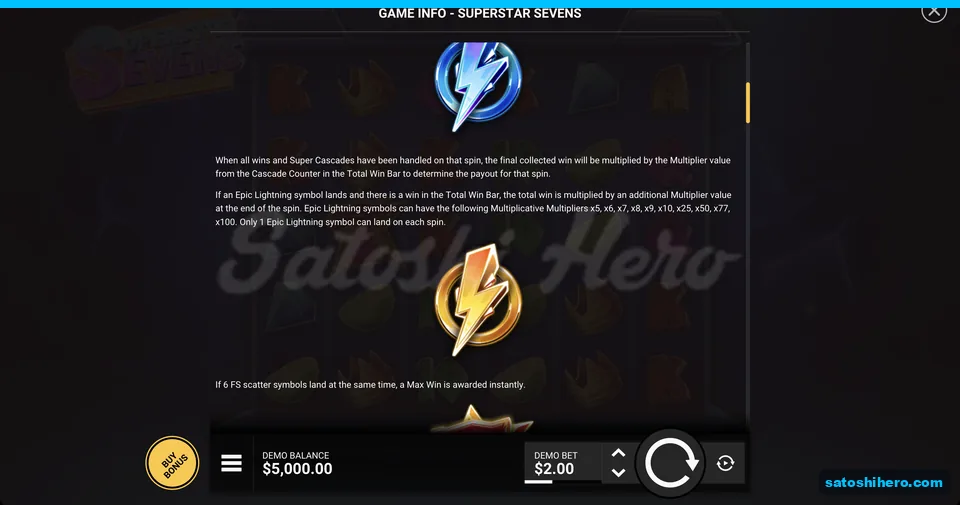
Blue Lightning needs to land with a win to activate the Cascade Counter. Once active, non-winning symbols removed by the cascades convert into additive multiplier value. Low symbols add 1x per winning cluster, while high symbols add 2x per winning cluster. The final multiplier applies to the whole spin win at the end.

Strategy Insight: Small cluster wins matter more when blue Lightning lands, because extra cascades can feed the Counter before the Total Win Bar pays.
That additive setup gives Superstar Sevens its cleverest base-game twist. You don’t just want a win, you want a win with enough removed symbols to feed the Counter. I found myself watching blue Lightning more than the higher-paying fruits. That says plenty about where the game hides its real bite.
Epic Lightning Multipliers
Epic Lightning is the biggest single-spin booster because it multiplies the whole Total Win Bar after other win-building work has happened. Blue Lightning adds value first, while gold Epic Lightning multiplies the final spin total. That order matters for you, because stacked effects can turn a tidy cluster chain into a proper hit. The feature feels exciting, but it still needs a paid spin underneath it.
Multiplicative values
Gold Epic Lightning can apply 5x, 6x, 7x, 8x, 9x, 10x, 25x, 50x, 77x, or 100x. It only helps when there is already a win in the Total Win Bar. One Epic Lightning can land per spin, so you aren’t chasing several gold bolts at once. I like that limit because it keeps the mechanic clear.
The gold symbol can feel cruel when it lands without enough win value attached. That happened often enough in testing to make me respect the setup. You need the right order: clusters first, Counter value if possible, then the gold multiplier. Without that base, even a flashy multiplier can feel wasted.
Big-hit setup
The strongest route starts with Super Cascades building a decent Total Win Bar. Blue Lightning then adds Counter value through cleared symbols. Gold Epic Lightning can multiply that finished amount by a much larger value. You can see why the 10,000x max win needs several parts to align.
Six red 7 scatters can also award the 10,000x max win instantly. That route sounds cleaner, but you shouldn’t build a plan around it. Numbers indicate the more typical big-hit route comes from stacked Counter and Epic Lightning action. I like the design, though it can tease you with near-misses.

Insight: Six red 7 scatters landing at once awards the 10,000x maximum win instantly, but the more typical big-hit route is stacked Cascade Counter and Epic Lightning action.
That makes Epic Lightning the symbol I cared about most during bigger spins. It doesn’t guarantee a great result, and it can land too late or too small. Still, the whole slot feels flatter without that gold bolt threat. You need it for the top-end story.
Free Spins Modes
Superstar Sevens has three free spins modes, and each one raises the Lightning action in a different way. Three red 7 scatters trigger Reel Charge, four trigger Lucky Strike, and five trigger the hidden Juicy Joltz mode. Each bonus starts with 10 free spins. Extra red 7s during a bonus can add more spins.
Three trigger levels
Reel Charge is the entry mode. It keeps the base mechanics but improves the chances of landing both Lightning symbols. Lucky Strike gets more aggressive because it puts a Lightning symbol on every spin, so the Cascade Counter stays live. Juicy Joltz is the top mode, where the Total Win Bar multiplier carries across spins and doesn’t reset.
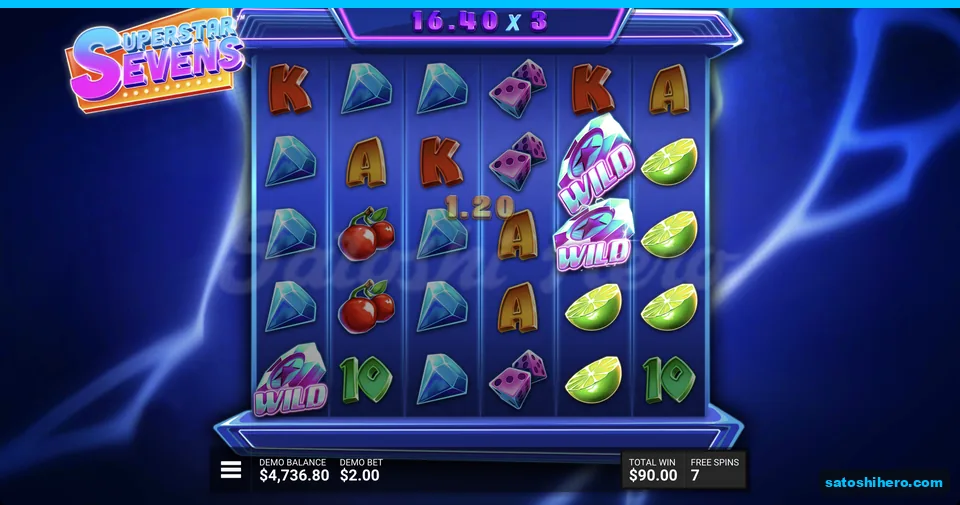
Six red 7 scatters can award the 10,000x max win instantly. That sounds huge because it is, but the normal bonus path matters more in real play. My organic free spins kept the test balance close for most of the session. You need those feature rounds because base clusters alone rarely carry a long run.
Mode differences
Reel Charge feels more accessible, but it still needs Lightning and cascades to do real damage. Lucky Strike creates more pressure on each spin because the Counter is always available. Juicy Joltz has the most interesting rolling multiplier feel, although Epic Lightning can’t land there. I don’t mind that tradeoff because the persistent multiplier gives the mode its own identity.
Stormforged may appeal if you like lightning-style energy and high-impact feature moments, though this game leans more into fruit-slot nostalgia. Here, the bonuses feel tied to the core grid rather than bolted on. You don’t switch into a totally different mini-game. That consistency helps the slot feel sharper than its simple symbols imply.
Bonus Buy Test
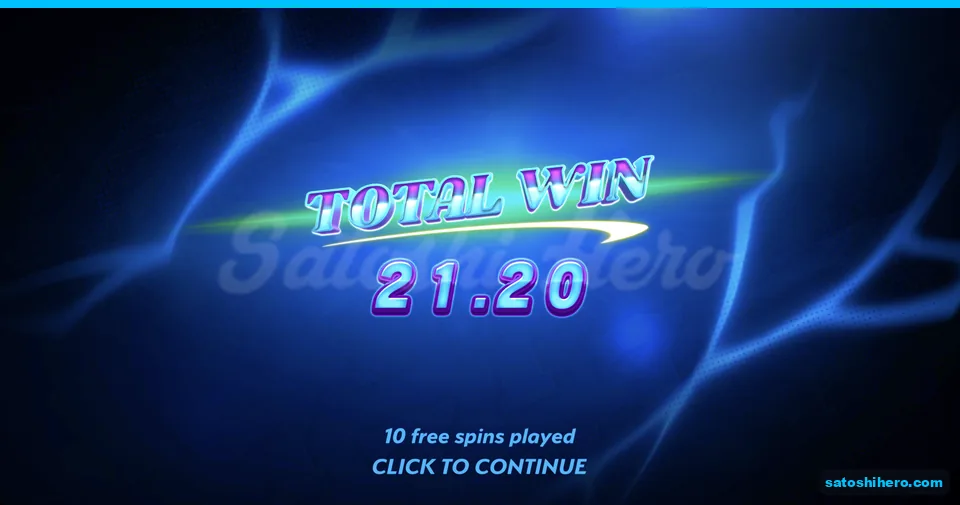
The tested Reel Charge buy showed the danger clearly, because a $200 buy returned only $21.20 despite landing early Wilds. At my $2 stake, Reel Charge cost 100x the bet. Lucky Strike cost $500 at the same stake. Bonushunt and Juiced FeatureSpins can raise the trigger rate per spin, but they also push you into a more volatile route.
Buy menu options
The buy menu gives impatient players direct access to free spins. You can choose Reel Charge for $200 or Lucky Strike for $500 at the tested $2 stake. Those prices make the decision meaningful because one weak round can erase many base spins. I wouldn’t call the cheaper buy safe, because the test proved the opposite.
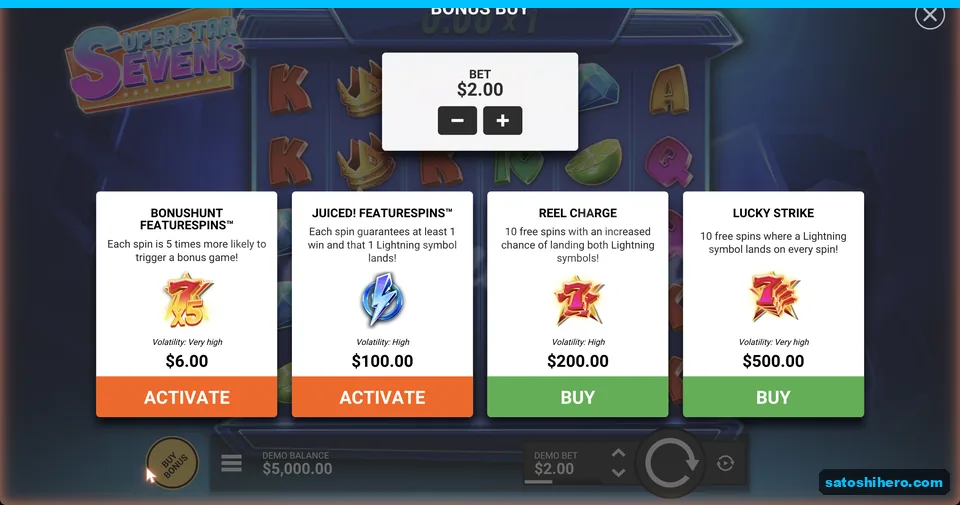
Bonushunt and Juiced FeatureSpins sit between base play and direct buys. They raise the chance of reaching features per spin, but they don’t remove variance. You still need the grid to connect when the feature arrives. Wishbringer is worth comparing if you like feature-driven slots but want a different style of bonus tension.
Reel Charge result
I bought Reel Charge once from a clean $5,000 balance. Three purple 7 Wilds landed early and created a small lift. The round never caught the Lightning action it needed, so the ten spins finished at only $21.20. That returned 10.6x the $2 stake, but it missed the $200 cost by a wide margin.
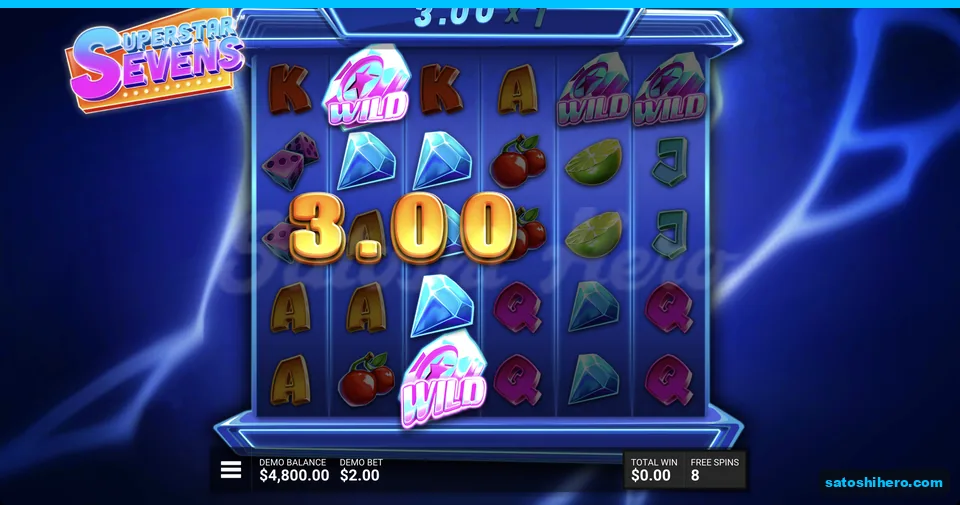

Warning: The $200 Reel Charge buy returned only $21.20 in testing. Don’t treat the cheaper buy as a safe shortcut, because it still needs Lightning and cascades to connect.
That result made the entry buy feel tempting but risky. You can see the appeal because 100x sounds manageable beside the $500 Lucky Strike price. My result showed how quickly the math can bite when the Counter stays quiet. If you buy, set a hard cap before you click.
RTP, Volatility & Our Test
Superstar Sevens has 96.37% theoretical RTP, medium volatility, and test results that showed steady base-game pacing with sharp swings around features and buys. The math suggests a balanced profile, not a gentle one. You can see frequent cluster activity, but your larger outcomes still depend on free spins, Cascade Counter, and Epic Lightning. That makes bankroll control more important than the medium label may suggest.
Simulator projection
Our simulator modelled 1,000 spins at the $2 stake against 96.37% RTP and medium volatility. The median session finished around $86 down. The 5th to 95th percentile band ran from about $430 down to $338 up. The model landed a feature about once every 50 spins.
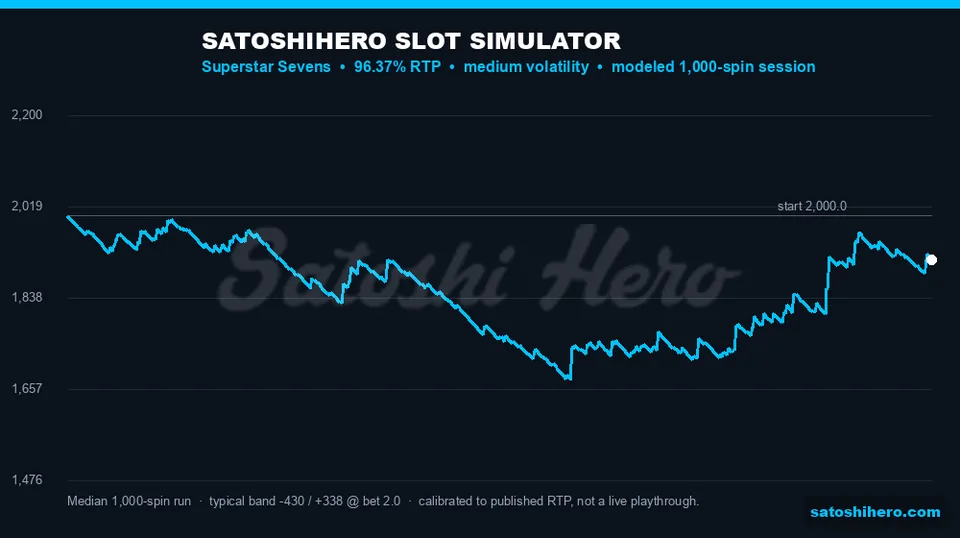
Those numbers indicate a medium-variance shape with regular movement. You don’t face the same brutal drought profile as some extreme slots, but the upside doesn’t arrive from tiny clusters alone. Features create the meaningful jumps. I like the balance, although the buy menu clearly pushes risk higher.
The projection also helps explain why my live run felt plausible. A $272 loss over 500 spins sits below the model’s median pace, yet it doesn’t look strange for this volatility. You need enough spins to let features appear. Even then, the best feature still needs Lightning to convert.
Our 500-spin session
I played 500 spins at $2 in super turbo from a fresh $5,000 balance. I finished at $4,728, down $272 for the run. Three organic free spins rounds triggered and kept the balance close to even for most of the test. My best hit came from the first free spins round, where Wilds and the Cascade Counter pushed the Total Win Bar past $90.
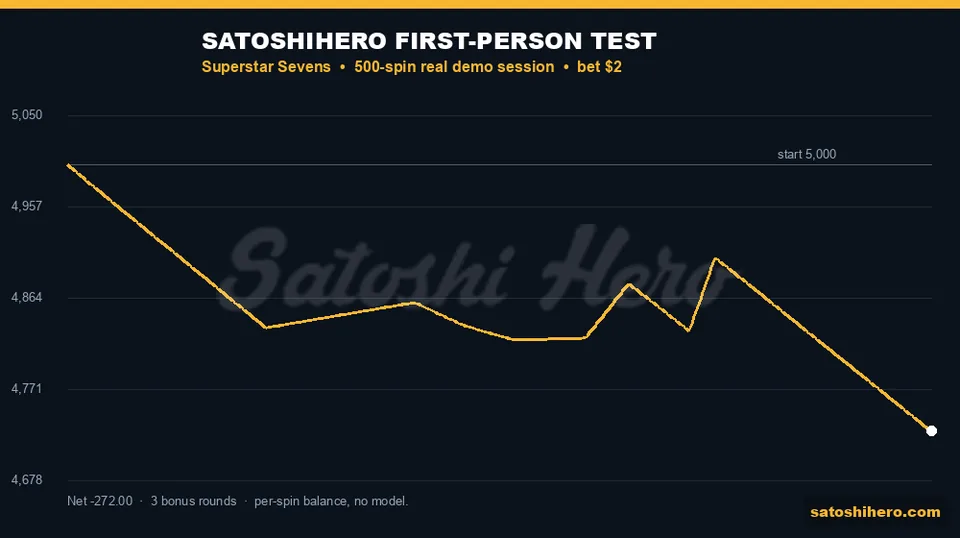
A late cold base-game stretch dragged the final balance down. That part felt like true medium volatility rather than a collapse. The game gave me enough features to stay engaged, but it didn’t turn one of them into a major swing. I don’t mind that arc, because it matched the numbers more than the theme’s flashy surface.
Key Stat: My 500-spin test ended $272 down at $2 per spin, while the simulator median sat around $86 down across 1,000 spins.
The gap between those two figures matters. A shorter live session can land above or below the model without saying the math has changed. Here, the result felt slightly cold but still reasonable. You should treat my run as one real session, not a promise of your next one.
The 96.37% RTP is the operator-published theoretical return. One 500-spin session is a short live sample and doesn’t change that figure. Bonus-buy and FeatureSpins options can carry different return and variance profiles by design, so treat tested results as session evidence rather than a prediction.
Frequently Asked Questions About Superstar Sevens
How does Superstar Sevens pay?
Superstar Sevens pays through clusters on a six reel, five row grid. You need five or more matching symbols connected horizontally or vertically anywhere on the grid. Every win triggers a Super Cascade, which removes the winning symbols and drops new symbols into place. A single paid spin can chain several wins that collect in the Total Win Bar.
What do the Lightning symbols do in Superstar Sevens?
The blue Lightning symbol activates the Cascade Counter when it lands with a win. That Counter turns non-winning symbols cleared by cascades into additive multiplier value, with low symbols adding 1x and high symbols adding 2x per cluster. Gold Epic Lightning then multiplies the full spin win by 5x up to 100x. Only one Epic Lightning can land per spin.
How can you trigger the free spins in Superstar Sevens?
You trigger free spins by landing three, four, or five red 7 scatters together. Three scatters start Reel Charge, four start Lucky Strike, and five start hidden Juicy Joltz. Each mode begins with 10 free spins, and extra red 7s during a bonus can add more spins. Six red 7 scatters can award the 10,000x max win instantly.
What are the RTP and max win of Superstar Sevens?
Superstar Sevens has 96.37% RTP, medium volatility, and 10,000x max win potential. The biggest multiplier route comes from stacking Cascade Counter value with Epic Lightning. Six red 7 scatters can also award the maximum win instantly. Bonus buys can create higher variance than standard base play.
Is Superstar Sevens a paylines slot?
Superstar Sevens isn’t a paylines slot. It uses a 6×5 cluster-pays system with no fixed paylines to count. You win by connecting five or more matching symbols horizontally or vertically. That means you scan connected groups, not line paths.
Is the Reel Charge bonus buy worth it in Superstar Sevens?
Reel Charge can be worth testing only if you accept bonus-buy variance before you start. My $200 Reel Charge buy returned $21.20, even after three purple 7 Wilds landed early. That was 10.6x my $2 stake but far below the buy cost. I’d rather treat Reel Charge as a capped experiment than a shortcut.
Final Verdict
Superstar Sevens stands out because it makes a familiar fruit-slot shell feel sharper through clusters, cascades, and Lightning multipliers. The main drawback is clear: the bonus buys can miss badly, even when the entry price looks manageable. You get solid math, but you still need patience.

My Take
I’d play this with base spins first and only test buys with money set aside before the session starts. Expect active cluster movement, occasional feature pressure, and stretches where the grid simply doesn’t connect. The game has enough bite for bonus hunters, but it isn’t a soft ride.
I like the Cascade Counter because it gives small clusters a reason to matter. I don’t like how the $200 Reel Charge buy can look friendly while returning only $21.20 in a real test. My 500-spin session felt honest: three bonuses, one useful hit, and a late slide that pulled the balance down.
Superstar Sevens earns its place as a clean, fast cluster slot with stronger math appeal than its simple fruit theme suggests. The mechanics and published specs are updated periodically against the live game page, so the numbers stay tied to the version you can play.

Pros:
 Clear cluster wins: You can read connected groups quickly on the 6×5 grid.
- Strong RTP: 96.37% gives the math a competitive base.
- Layered multipliers: Blue and gold Lightning create real single-spin upside.
- Three bonus modes: Each free spins tier changes the Lightning pressure.

Cons:
 Risky buys: My $200 Reel Charge test returned only $21.20.
- Familiar theme: Fruit symbols feel clean but not very original.
- Fast cascades: Super turbo can make bonus action easy to miss.

Best For: Arcade-fruit fans, cluster-pay regulars, and measured bonus hunters get the most from this slot. You should enjoy watching multipliers build across a spin, not just waiting for one giant symbol. If you hate buy-menu variance, stick to base spins and let the free spins arrive naturally.


























































Bets
All Bets
Game
Player
Date
Wager
Mult.Multiplier
Prize
 Luck of Panda: Bonus Combo
 mike_721
- 09:05:57
- 0×
- Luck of Panda: Bonus Combo
 Hidden
- 09:05:57
- 0×
- Luck of Panda: Bonus Combo
- Hidden
- 09:05:54
- 0×
- Luck of Panda: Bonus Combo
- mike_721
- 09:05:54
- 0×
- Luck of Panda: Bonus Combo
- mike_721
- 09:05:51
- 0×
- Luck of Panda: Bonus Combo
- Hidden
- 09:05:51
- 0×
- Piggy Bankroll: The Big Stash
 davidm5
- 09:05:50
- 0×
- Piggy Bankroll: The Big Stash
- davidm5
- 09:05:49
- 0.99×
- Luck of Panda: Bonus Combo
- Hidden
- 09:05:48
- 0×
- 4 Royal Bags
- Hidden
- 09:05:47
- 0×