

Cubes 2
By pressing play, you agree that you are above legal age in your jurisdiction and that your jurisdiction allows online gambling.

Sticky Colours and Cold Runs in Cubes 2
Cubes 2 strips slots down to coloured blocks, cluster wins and brutal high-volatility bonus tension.
Cubes 2 is a high volatility slot from Hacksaw Gaming with 96.33% RTP and 11,000x max win potential. The game features a 5×5 grid that can grow to 11×11, cluster wins instead of paylines, and sticky-colour free spins. Aimed at patient cluster hunters with a taste for clean maths, it plays on SatoshiHero in demo and real play.
Key takeaways
- Best bonus: Free Spins landed twice in my 500-spin test, paying $52.80 and $104.60 from organic triggers.
- RTP / volatility: Cubes 2 has 96.33% RTP and high volatility, so you need room for dry stretches.
- Max win: The official maximum win is 11,000x, while Multi-Color Free Spins has a 7,500x feature cap.
- Risk note: Wins come from clusters of 5+ same-colour cubes, not paylines, so you watch connected groups.
- Bankroll note: My $2.00 session fell from $5,000.00 to $4,572.40, and both tested buys lost money.

Table of Contents
- Theme & First Impressions
- How Cubes 2 Works
- Cluster wins
- Colour payouts
- Expanding Grid and Corner X Multipliers
- Growing grid
- Corner multipliers
- Free Spins
- Trigger and picks
- Sticky colour prizes
- Multi-Color Free Spins
- How it starts
- Feature ceiling
- Bonus Buy Menu
- Buy options
- Cost vs risk
- Bought Free Spins Test
- Buying process
- Test result
- Bought Multi-Color Test
- Sticky colour result
- Final payout
- RTP, Volatility & Our Test
- Simulator projection
- Our 500-spin session
- Frequently Asked Questions About Cubes 2
- Final Verdict
Theme & First Impressions
The slot looks simple because every visual choice pushes your eye toward colour groups. Hacksaw Gaming uses its Pocketz format here, so you get a compact screen built around phone play first. You see a dark teal backdrop, floating grey blocks, flat cube symbols and a bubbly white CUBES logo. You won’t find a story, character cast or elaborate world.
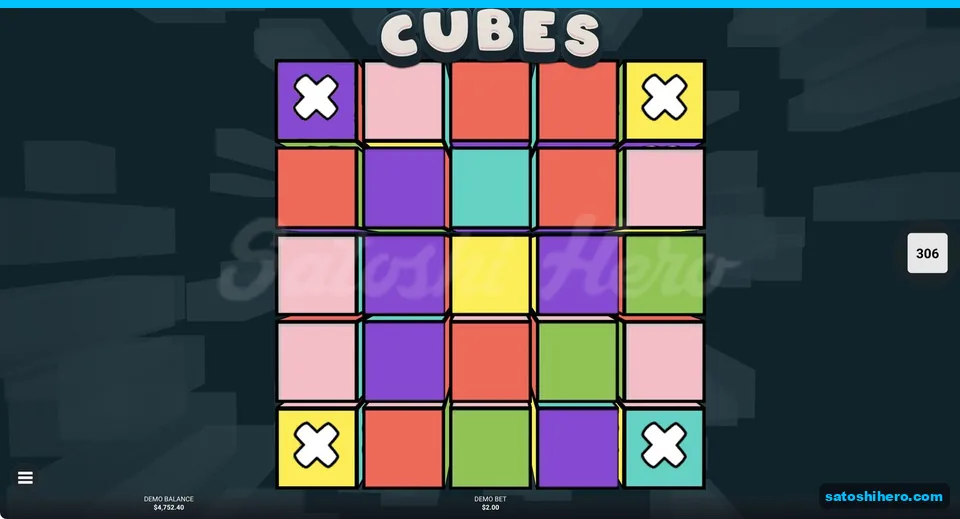
Wins light up the matching cubes, then the grid zooms out as it expands. That motion matters because you can spot whether a cluster might crawl toward a corner X. The theme won’t win originality awards, but the minimal look makes every cluster easy to read on mobile. Desktop play works fine, though the layout clearly feels built for your thumb.
Players who know Cubes can place the sequel fast: it keeps the stripped-back block identity but adds growing-grid and sticky-colour tension. That extra tension helps because the base screen can look plain almost to a fault. Precise test notes matter with a slot this numbers-led. The plain design helps you track the mechanics, which is the real point here.

Key Stat: Cubes 2 uses Hacksaw’s Pocketz format, so the layout stays readable on a phone screen first.
How Cubes 2 Works
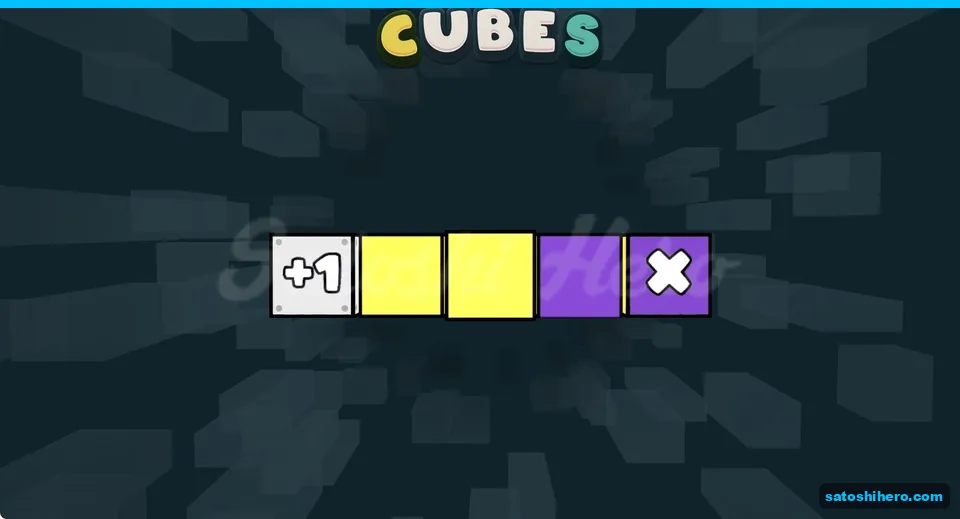
Cubes 2 pays clusters of matching cubes, so you watch connected colour groups rather than paylines. The base grid starts at 5×5, and a win needs 5 or more cubes of the same colour touching horizontally or vertically. Clusters can form anywhere on the grid. You don’t get fixed paylines, wilds or scatters.
Cluster wins
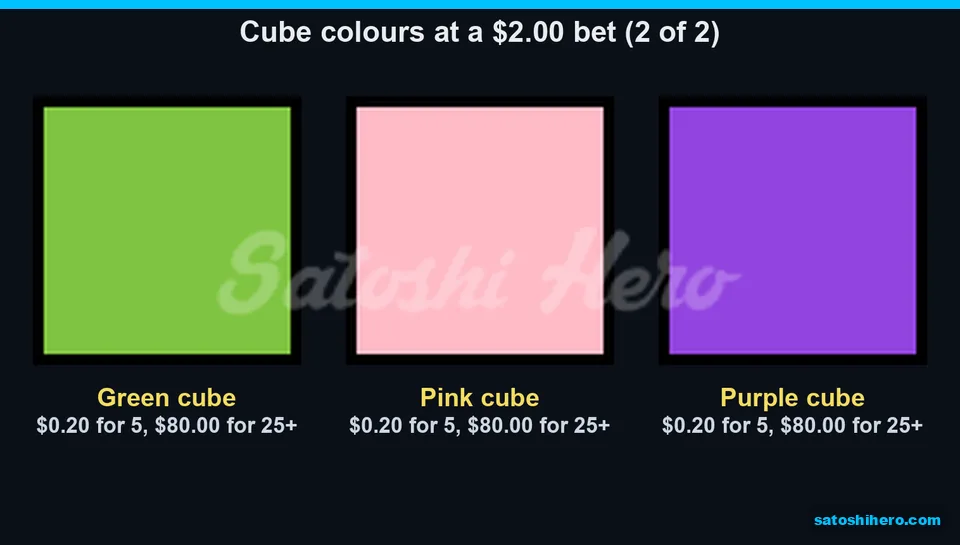
Six cube colours appear in the base game: yellow, teal, red, green, pink and purple. Every colour pays the same, which keeps the screen easy to parse. You only need to judge cluster size, position and whether the group can reach a corner. I like that clarity, because the game already asks you to accept rough variance.
You should treat the cubes demo screen as a paytable lesson before betting higher. The Cubes 2 demo helps because the game can feel cold before the grid finally does something interesting. Turbo was the only speed setting I noted in testing, and I used it for the 500-spin session. That speed makes dead spins pass quickly, but it can also hide how many misses you take.
Colour payouts
At a $2.00 bet, the paytable starts small. A 5-cube cluster pays $0.20, 6 pays $0.40, 7 pays $0.60, 8 pays $3.00, and 9 pays $6.00. Bigger groups lift sharply: 10 to 11 cubes pay $8.00, 12 to 14 pay $20.00, and 15 to 19 pay $48.00.
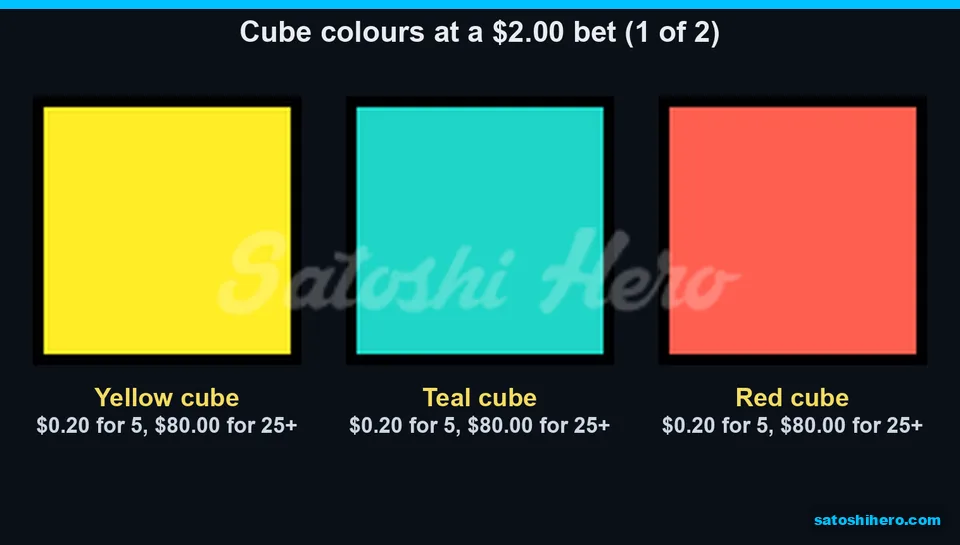
The top colour payouts at that stake are $64.00 for 20 to 24 cubes and $80.00 for 25 or more. Bigger hits come from growing clusters and corner multipliers, not line wins. Numbers indicate the early paytable steps barely matter unless the grid expands. You need the board to grow, but growth alone doesn’t save a weak cluster.
Expanding Grid and Corner X Multipliers
The expanding grid and corner X multipliers create the main suspense. A small win can turn into a larger result if it climbs the paytable and reaches a corner. You should watch the starting 5×5 corners from the first spin. That is where the most interesting base-game tension lives.
Growing grid
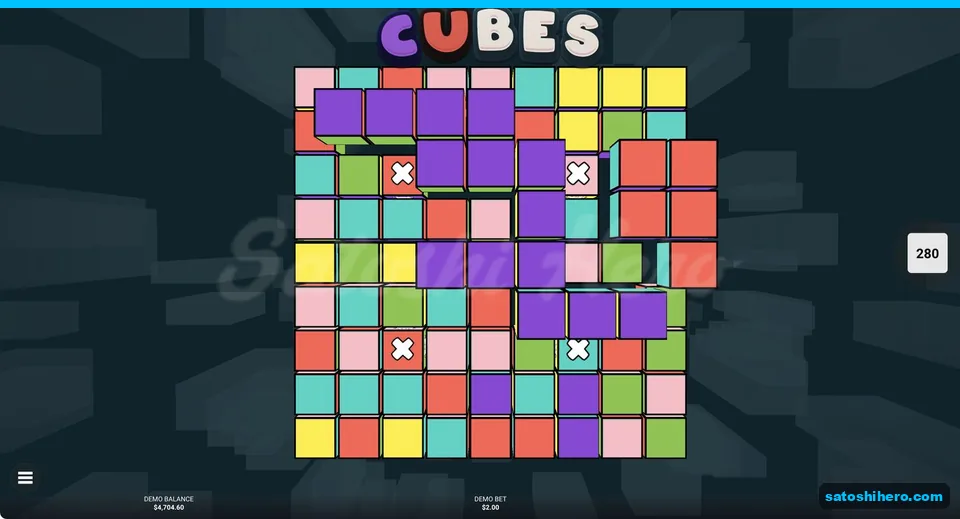
The first winning spin expands the grid by one cube in every direction, from 5×5 to 7×7. New cubes can extend the same cluster, and another paytable step can expand the board again. The grid can grow up to 11×11. Wins pay only after the grid stops growing.
My test showed why that rule can tease you. A 14-cube purple cluster spread near a corner after the grid had grown to 9×9, yet the result still felt modest. Bigger boards look exciting, but the math suggests they need meaningful cluster upgrades. You can see plenty of movement without getting a serious payout.
Corner multipliers
Each corner of the starting 5×5 grid holds an X cube. If a winning cluster touches an X, that X becomes a multiplier equal to the cluster size. Several corner X values add together. A 9-cube cluster touching two corners would multiply by 18.
That rule gives the base game its best sweat. When a colour creeps toward two corners, you can feel the round sharpen. I don’t think the visual style sells drama on its own, but the corner maths does. You get the cleanest moments when a plain block group suddenly has multiplier pressure.

Strategy Insight: Big-looking boards don’t always mean big payouts. The key is whether the cluster climbs the paytable and touches corner X cubes.
Free Spins
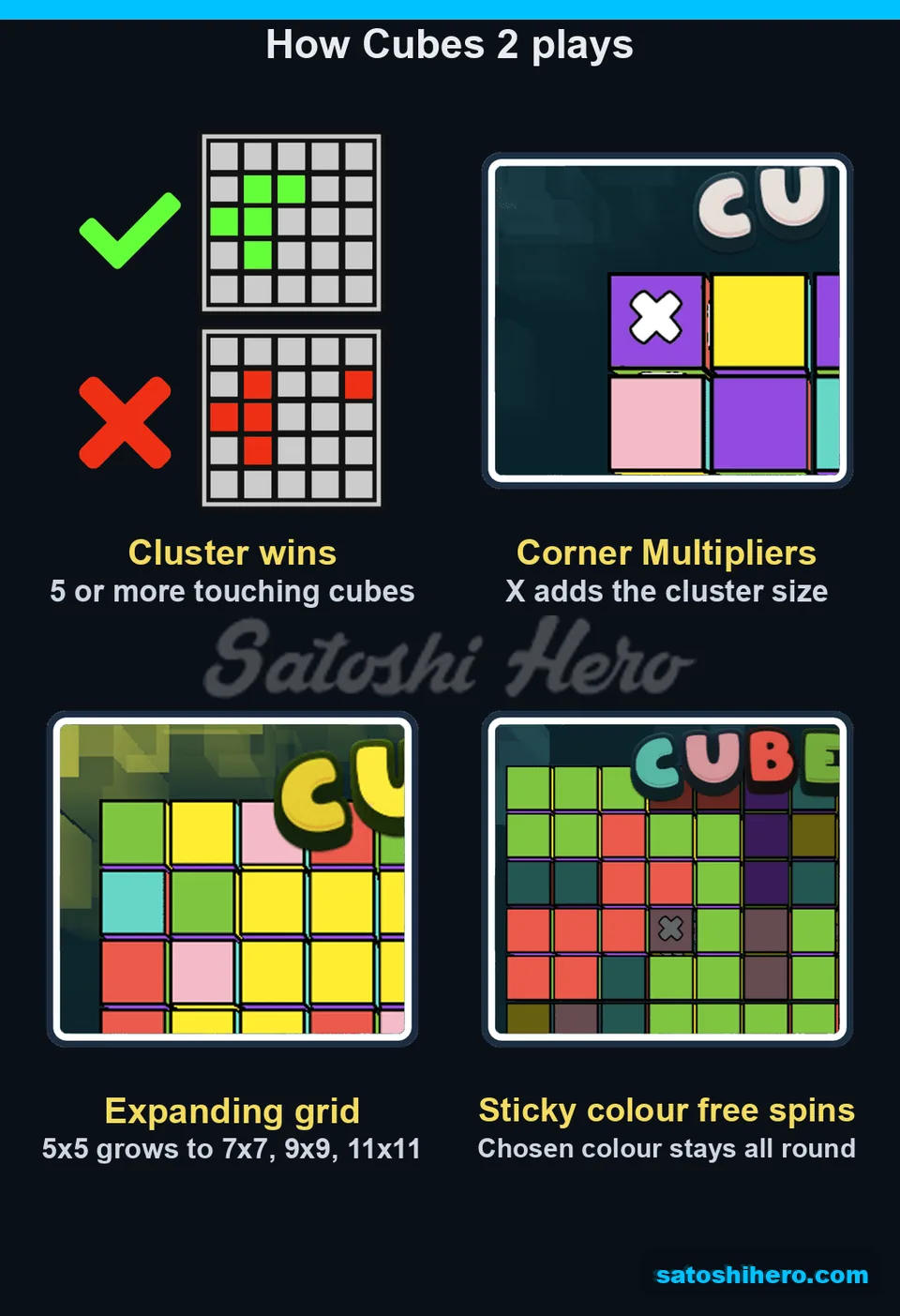
Free Spins are the main sticky-colour feature, and my two organic rounds showed how hard the prize targets can be. Winning clusters in 5 or more different colours on one spin trigger the round. You start with 5 free spins, then pick mystery cubes until a colour appears. Extra spins can appear during the pick stage, up to 12 total.
Trigger and picks
The revealed colour becomes sticky for the full round. The grid doesn’t shrink between spins, and every win in the chosen colour sticks. You want the sticky block to grow fast, because the prize ladder starts far away. I like the idea more than the hit rate, since the screen can look promising while the meter barely moves.
Chaos Crew 2 gives another flavour of rough Hacksaw bonus pacing, but it leans on character chaos rather than sticky clusters. Here, you read the board more clinically. If you enjoy numbers, you may appreciate that sharper structure. If you need constant fireworks, this feature can feel stingy.
Sticky colour prizes
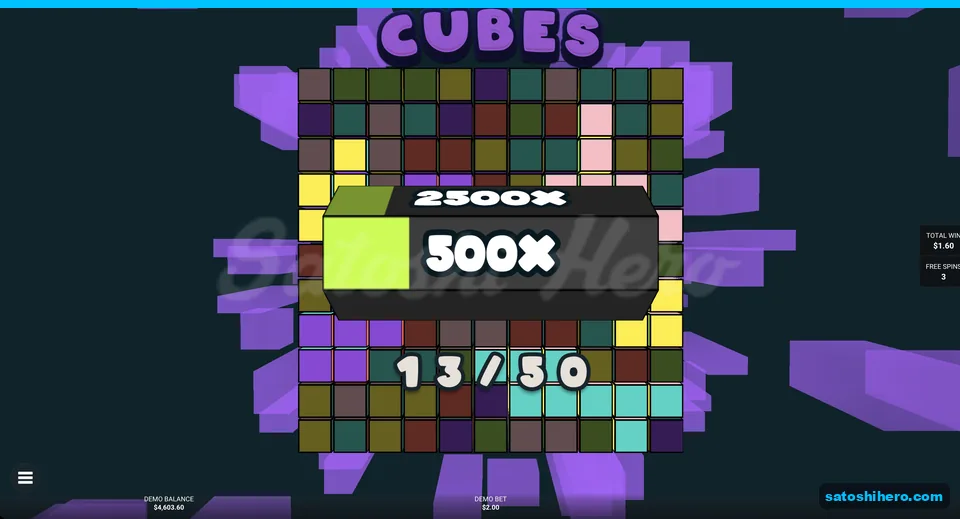
The sticky thresholds are clear: 50 cubes pay 500x, 70 cubes pay 2,500x, and 90 cubes pay 7,000x. My first organic round arrived around spin 10 after 5 colours won on one spin. I picked an extra spin, then yellow as the sticky colour. Six spins paid $52.80.
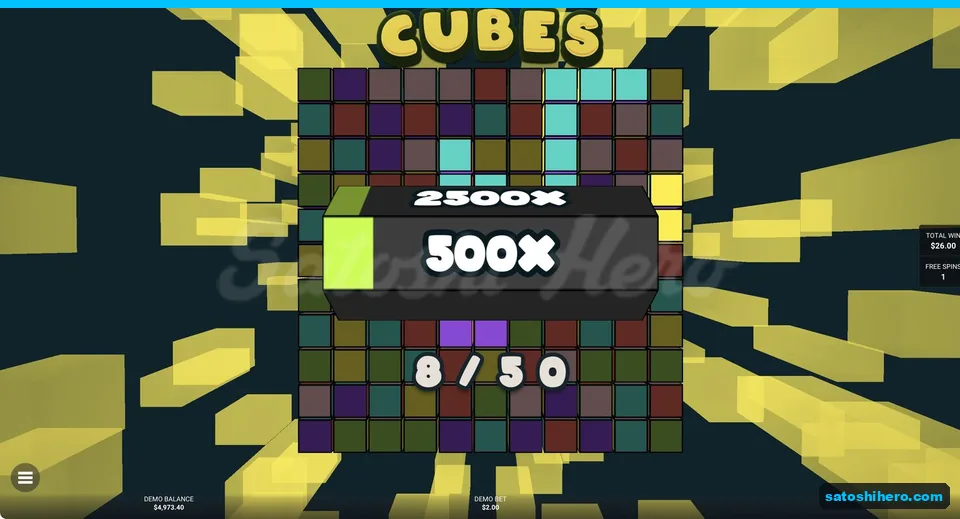
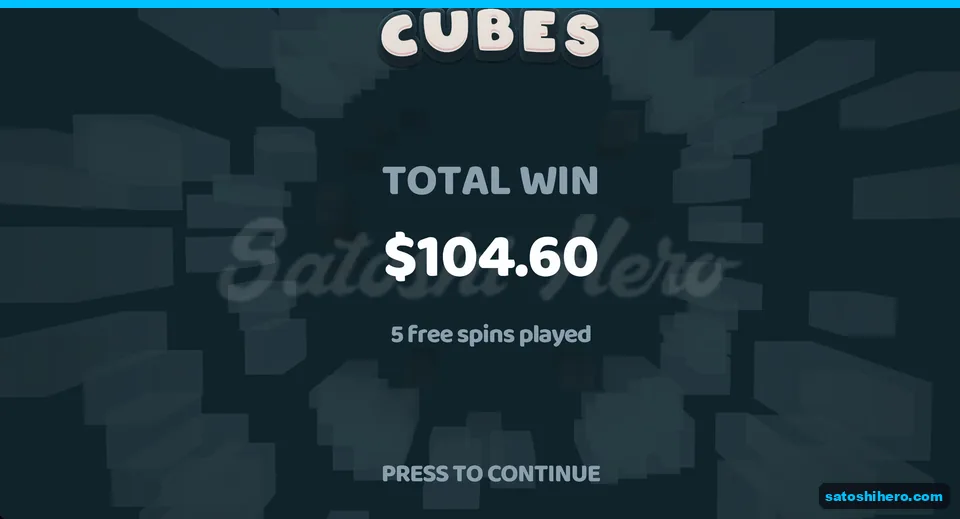
That yellow block reached only 11 of the 50 cubes needed for the first prize. My second organic Free Spins landed around spin 370, with purple as the sticky colour. Five spins paid $104.60, the biggest result of my session. The round looked better than the first, yet it still missed the real sticky-colour prize zone.
Multi-Color Free Spins
Multi-Color Free Spins can build several sticky colours, but the trigger and cap keep it risky. The round starts when all four corner multipliers land in the same colour on the first spin. That trigger asks the base game to line up a very specific board. You should not treat it as a regular base-game expectation.
How it starts
The pick screen reveals 5 to 10 free spins. Every colour collected during the picks becomes sticky for the round. The grid doesn’t shrink between spins, so several sticky colours can build together if you collect them. That sounds flexible, but the feature still needs strong sticky growth to matter.
I didn’t hit this trigger organically during the 500 spins. That absence fits the high volatility rating, and it makes the buy-test result more useful. You can see the feature’s shape without pretending it appears often. My honest take: it looks more active than standard Free Spins, but activity isn’t the same as profit.
Feature ceiling
Multi-Color Free Spins has a maximum feature payout of 7,500x the bet. The official full-game maximum win remains 11,000x. That gap matters because a feature ceiling doesn’t equal the total game ceiling. Numbers indicate the round offers more routes to sticky growth, not a softer risk profile.

Insight: Multi-Color Free Spins has its own 7,500x cap, while the full game maximum is 11,000x.
You still need sticky colours to spread across a large grid. If they stall, the round can burn through spins while giving you only small cluster payments. I like the cleaner mechanic, but I don’t like how easily it can look busy and still miss the buy price. That tension defines the feature.
Bonus Buy Menu
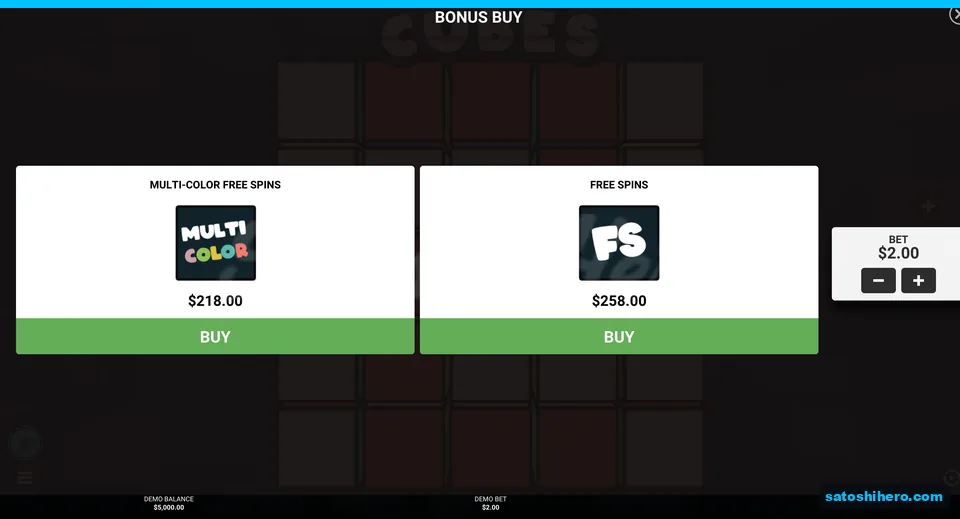
The bonus buy menu offers two expensive shortcuts, and neither gives safer access to wins. At a $2.00 bet, Multi-Color Free Spins costs $218.00, or 109x. Free Spins costs $258.00, or 129x. Both bonus buys run at 96.3% RTP.
Buy options
No FeatureSpins appeared in the tested menu. Standard bets run from $0.20 to $75.00, while feature buys can go above that standard bet limit. You should read the buy price as the true stake for that decision. A $2.00 base spin can turn into a $258.00 risk instantly.
That is why the menu demands a different bankroll mindset. If you try a buy, size the bet around the feature cost, not the base spin. I don’t see these buys as a smart shortcut to profit. They are high-risk ways to sample the game’s most volatile moments.
Cost vs risk
Buying doesn’t guarantee a sticky-colour prize threshold. The first sticky prize still needs 50 cubes, and that target felt steep in my tests. The buy prices feel harsh when a half-built sticky block can still pay below cost. You can be close visually and still lose clearly.
2 Wild 2 Die sits in a similar risk conversation for bonus-buy pressure, but this slot feels more abstract and mechanical. Here, you aren’t chasing theme chaos or character moments. You chase cluster size, sticky spread and corner maths. That colder style won’t appeal to everyone.

Warning: Because Cubes 2 is high volatility, treat the 109x and 129x buys as high-risk shortcuts, not safer versions of the base game.
Bought Free Spins Test
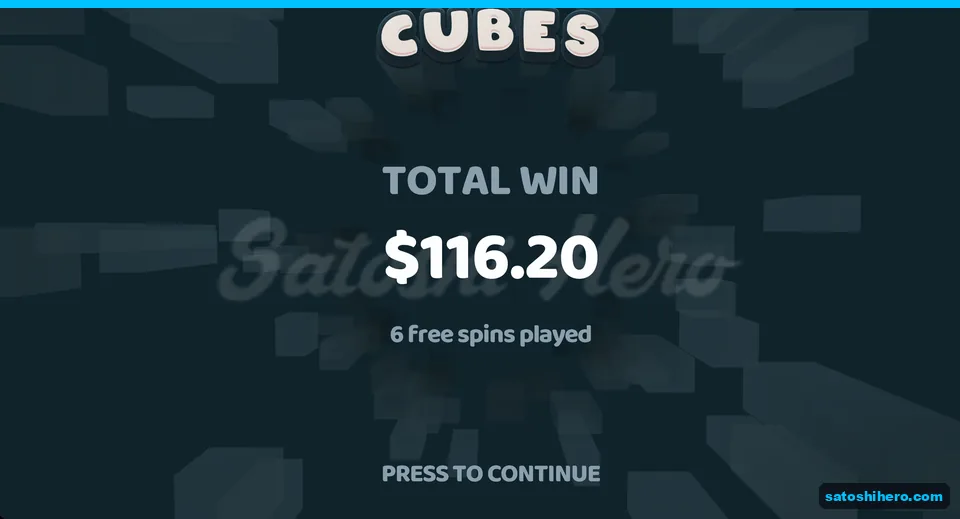
The bought Free Spins round paid $116.20 from a $258.00 buy, which made the near-miss feel more painful than exciting. I tested it on a fresh $5,000.00 balance at a $2.00 stake. This was one first-person result, not a predicted outcome. The numbers still show how quickly a buy can fall short.
Buying process
The flow was simple. I pressed BUY BONUS, chose BUY on the Free Spins card and confirmed with OK. Then I picked mystery cubes manually. The first cube gave an extra spin, and the second revealed purple.
That setup gave me 6 spins with purple sticky. You can feel hopeful at that point because one extra spin means more chances to spread. Still, the price sits in the background. At $258.00, the round needs much more than a decent-looking sticky block.
Test result
Purple grew to 26 of the 50 cubes needed for the 500x prize. The round paid $116.20, equal to 58.1x the bet. That sat well below the $258.00 price. Numbers indicate the feature wasn’t dead, but it wasn’t close to a buy recovery.
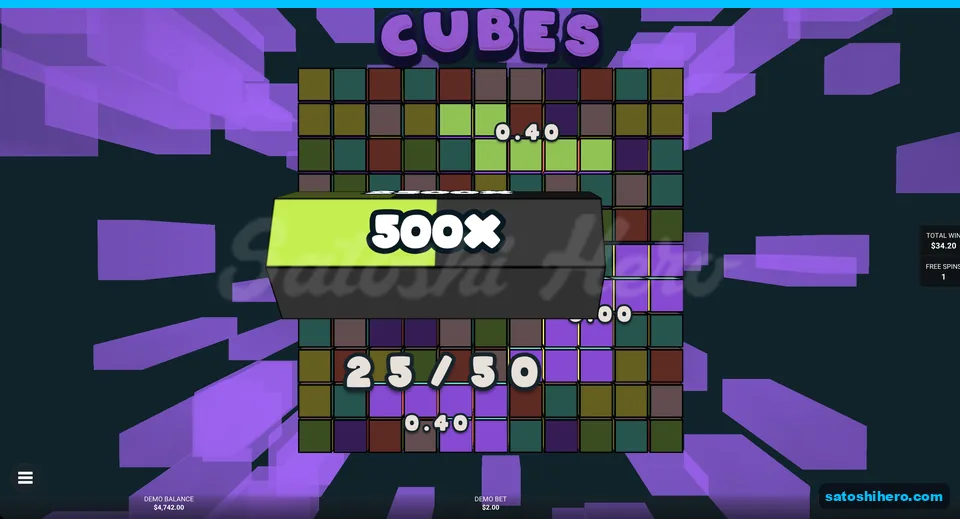
The near-miss hurt because the block reached more than halfway to the first threshold. You can watch a colour spread, feel the grid open up and still land short. I prefer when a buy either clearly fails or clearly explodes. This one sat in the awkward middle, and that makes the loss feel sharper.
Bought Multi-Color Test
The bought Multi-Color Free Spins round did better than the standard buy, but $150.00 still failed to cover the $218.00 cost. I started from another fresh $5,000.00 balance at $2.00. The result lost less than the Free Spins buy. It still proved that a busier feature doesn’t guarantee a stronger return.
Sticky colour result
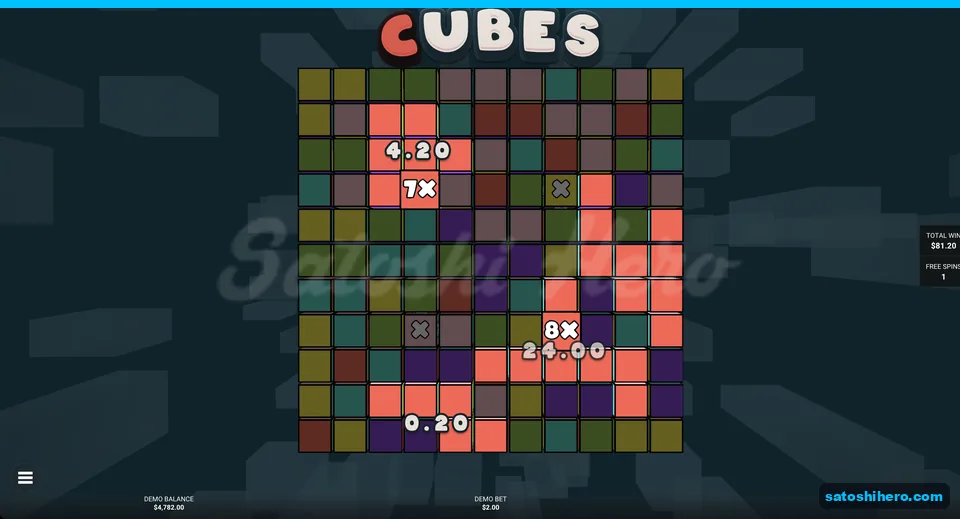
The picks revealed red as the only sticky colour, then gave 7 free spins. Red clusters stuck and spread across the full 11×11 grid. That looked better on screen than the standard buy. You could see the board filling, and that creates real feature tension.
Ze Zeus can help you place feature-driven volatility against another SatoshiHero option, though this game feels cleaner and more mechanical. Here, the drama comes from spread and multipliers rather than mythology or presentation. I like that stripped-down focus. It makes the loss easier to understand, even when it stings.
Final payout
X cubes added multipliers such as 7x and 8x. One spin paid $34.40, which gave the round its best moment. The final result was $150.00, equal to 75x the bet and about two thirds of the buy price. That is better than the standard buy, but still a loss.
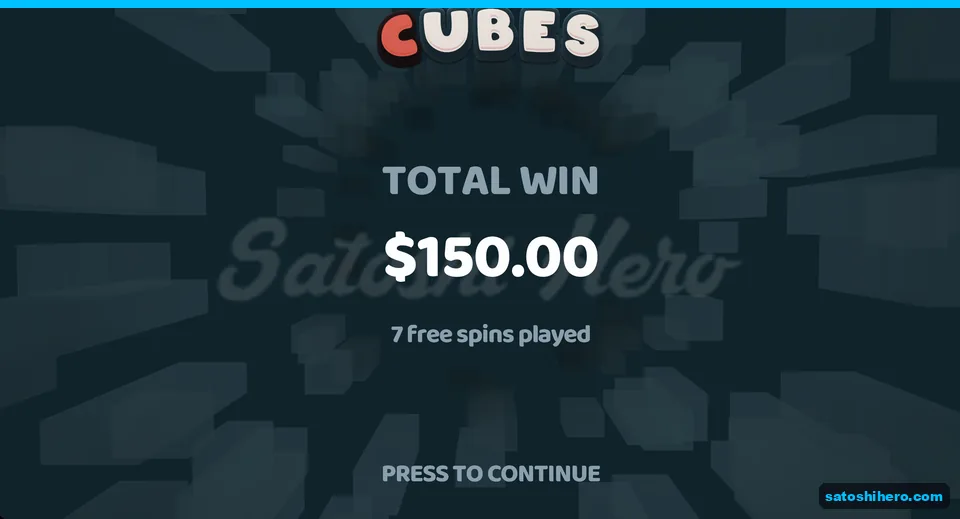
The feature looked busier than the payout felt. You can see red covering a wide board and expect more than the meter gives back. Data from my two buys points to the same lesson: sticky growth needs to reach prize thresholds, not just look active. I wouldn’t chase this feature after one miss.
RTP, Volatility & Our Test
Cubes 2 has 96.33% theoretical RTP, high volatility and 11,000x max win potential, but my 500-spin session still finished down after two bonus rounds. That combination tells you plenty. The math can be fair on paper while short sessions feel punishing. You need to judge stake size before chasing the grid.
Simulator projection
Our simulator modelled 1,000 spins at $2.00 with 96.33% RTP, the high volatility band and a 11,000x cap. The median run finished $131.10 down. Most runs landed between $637.10 down and $733.10 up. A feature-sized hit appeared around once in 45 spins.
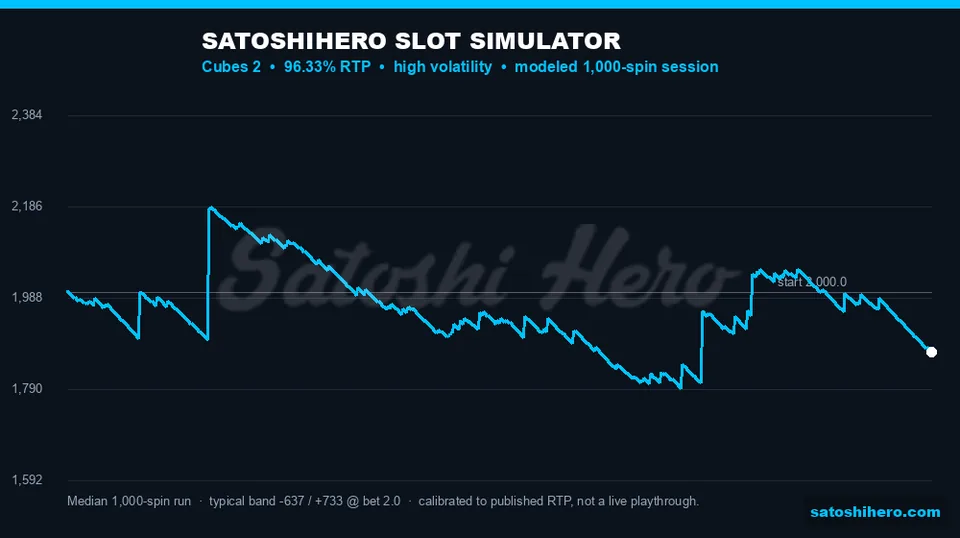
The 100x+ win appeared around once in 1,748 spins. That figure explains why base play can feel slow despite regular small grid events. The SatoshiHero Slot Simulator compares many possible sessions side by side. It doesn’t tell you what one session may do.
Bankroll control matters more here than in a simpler instant-risk game like Limbo, where you choose the payout target directly. In this slot, the board decides how long you wait for clusters and sticky features. You should keep the stake small enough to handle 200+ spins. I wouldn’t push bet size after a cold patch.
Our 500-spin session
I played 500 spins at $2.00 from $5,000.00 and finished on $4,572.40. That put me down $427.60, a little worse than the simulator median. Free Spins came almost straight away around spin 10. Five different colours won on one spin, and the 6-spin round paid $52.80.
After that, the base game ground down. Most spins paid nothing, and 9×9 grid moments often paid only a few dollars unless multipliers helped. The 14-cube purple cluster near a corner looked like it had potential, yet it didn’t change the session arc. You can get motion without momentum.
A second Free Spins round landed around spin 370 with purple sticky. It paid $104.60 over 5 spins and became my biggest result. The balance lifted back to about $4,700.00 before the last 130 spins slid down again. This is the kind of high-volatility slot where two bonuses can land and the session can still finish clearly negative.
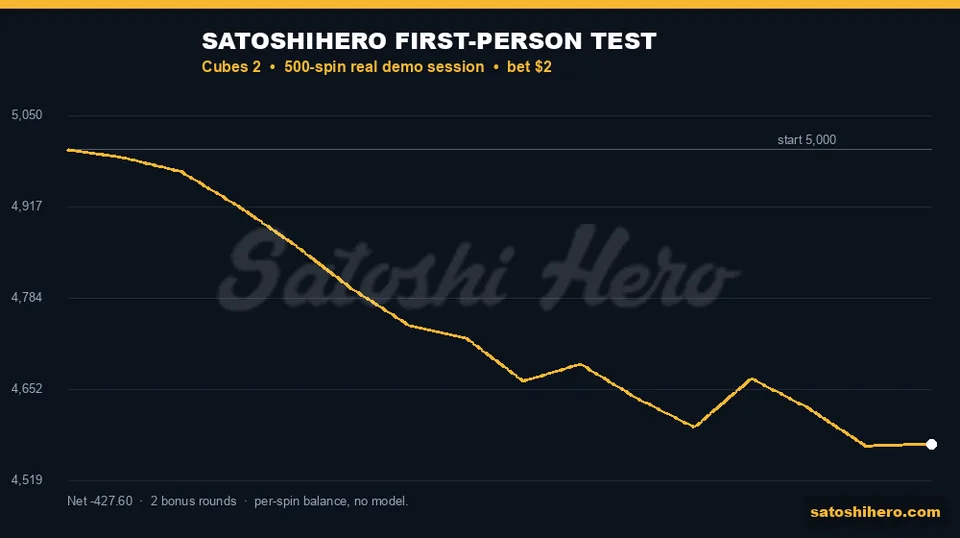
The theoretical RTP is the operator-published theoretical return figure, while one 500-spin live session doesn’t prove or change it. Bonus-buy RTPs can sit slightly differently from the base game by design. The simulator is a modelling aid, and my first-person test is one real session.
Frequently Asked Questions About Cubes 2
What happened in 500 real spins of Cubes 2?
I played 500 spins at $2.00 from $5,000.00 and finished on $4,572.40, down $427.60. Two organic Free Spins rounds paid $52.80 and $104.60.
How do wins work in Cubes 2?
Five or more cubes of the same colour touching horizontally or vertically make a cluster. After a win, the grid can grow from 5×5 up to 11×11, and wins pay once it stops growing.
How do the Corner Multipliers work in Cubes 2?
Each corner of the starting grid holds an X. A cluster touching one turns it into a multiplier equal to the cluster size, and several corners add together.
How can you trigger Free Spins in Cubes 2?
Winning clusters in 5 or more colours on one spin start Free Spins. Four corner multipliers in the same colour start Multi-Color Free Spins instead.
What did the bonus buys pay?
Free Spins cost $258.00 and paid $116.20. Multi-Color Free Spins cost $218.00 and paid $150.00, so both bought features lost money in my test.
Which RTP and max win does Cubes 2 use?
The RTP is 96.33%, both tested bonus buys run at 96.3%, and the official maximum win is 11,000x.
Final Verdict
Cubes 2 stands out because it turns a plain block grid into tense cluster maths. The main drawback is clear too: high volatility can beat up your balance even when you trigger bonuses. You get clean mechanics, but you don’t get comfort.

My Take
Patient cluster players can get a sharp, numbers-led slot here. Expect cold base-game stretches, tense sticky rounds and bonus buys that can miss badly. I wouldn’t play it with a thin bankroll.
I like the clean cluster reads and the way corner X cubes create pressure from simple shapes. I don’t like how the bought Free Spins reached 26 sticky cubes and still paid only $116.20 from a $258.00 buy. My 500-spin session made the risk feel real, not theoretical.
Cubes 2 deserves attention if you value mechanics over theme, and this page is updated periodically. Keep the stake modest, test the demo first and don’t assume two bonus rounds can rescue a session.

Pros:
 Clean Cluster Reads: Shared colour pays make every board easy to understand.
- Strong Tension: Corner X multipliers give simple spins a real sweat.
- Real Test Depth: First-person results show how the slot behaves under pressure.
- Mobile Layout: Pocketz formatting keeps the grid clear on small screens.

Cons:
 Harsh Buys: The 109x and 129x costs can miss badly.
- Plain Theme: Minimal visuals won’t excite players wanting story or characters.
- Cold Base Game: Dead spins can stack up before features appear.

Best For: Bankroll-aware cluster fans get the most from this slot when they keep stakes modest. Abstract-mechanics fans get sticky-colour tension and high-volatility testing. If you need frequent character-driven action, the plain style may feel too dry.














































Bets
All Bets
Game
Player
Date
Wager
Mult.Multiplier
Prize
 Book Of Nile: Lost Chapter
 Hidden
- 22:17:22
- 0.49×
- Galaxy Glitter
 Hidden
- 22:17:21
- 0×
- Luck of Panda: Bonus Combo
- nina87
- 22:17:21
- 0×
- Master Joker
 DISMEMBERMAN
- 22:17:19
- 0×
- Slime Bonanza
- thomas032172
- 22:17:18
- 6.04×
- Master Joker
- DISMEMBERMAN
- 22:17:17
- 0×
- Master Joker
- DISMEMBERMAN
- 22:17:16
- 0×
- Slime Bonanza
- thomas032172
- 22:17:16
- 0×
- Rocket Dice
 Hidden
- 22:17:15
- 0×
- Master Joker
- DISMEMBERMAN
- 22:17:15
- 0×