

Rolling Roger
By pressing play, you agree that you are above legal age in your jurisdiction and that your jurisdiction allows online gambling.


Rolling Roger Rolls Beyond the Lines
Roger rolls across the board and determines which symbols count, making each spin feel different from a conventional line slot.
Rolling Roger is a medium volatility slot from Habanero Systems with 97.95% RTP and 50,000x max win potential. It uses a 5-reel, 3-row board and Rolling Pays, where Roger collects symbols along his route. Patient collection fans should appreciate the visible mechanic and gradual build toward Scatter access.
Key takeaways
- Best bonus: Play the base game and build the acorn meter because the tested demo had no bonus buy.
- Core mechanic: Roger collects symbols across 3 to 15 unique positions instead of using fixed paylines.
- RTP / volatility / max win: The official profile combines 97.95% RTP, medium volatility, and 50,000x potential.
- Risk note: Scatters stay locked until 40 acorns, so an extended base-game spell can test your patience.
- Bankroll note: Choose a stake that can absorb a slow build rather than expecting an early feature.

Table of Contents
- Rolling Roger at a Glance
- How Rolling Roger Works
- How Wilds Change Counts
- Symbols and Payouts
- Reading the Pay Table
- Theme and First Impressions
- Art Serves the Route
- Building the Acorn Counter
- Free Games
- My Feature Result
- How the 100 Spins Played
- Following the Balance Arc
- RTP, Volatility and Test Data
- Simulator Projection
- Our 100-Spin Session
- Frequently Asked Questions About Rolling Roger
- Final Take
Rolling Roger at a Glance
Rolling Pays replaces fixed paylines, so you follow Roger’s path rather than scan horizontal patterns. Every wager equals 25 times the selected value, with all actual bets and results shown in dollars. My demo opened at a $0.50 selected value, bet level 1, and a $12.50 total bet.
I started with a $2,000.00 play-money balance, equal to 160 bets. That cushion looked comfortable, yet Scatter access first required 40 acorns. The high published return looks unusually appealing on paper, but you still need patience during that opening build.
Autoplay offered 10, 20, 30, 50, 100, or 500 spins. I could stop it for Free Games, a chosen balance drop, or any win above a selected amount. Quick Spin sat inside the settings menu, while no bonus buy appeared in my tested demo.
You can try the same game at SatoshiHero in demo or real mode. This guide keeps Habanero’s published specifications, my observed results, and our modeled projections separate. That distinction matters because a test result can’t turn a theoretical figure into a personal promise.
The controls feel straightforward once you stop treating the board like a line slot. Your next spin still depends on the route, the collected-symbol sign, and the acorn meter. The essential answers above set the frame; the detailed test evidence now shows how those parts interact.
How Rolling Roger Works
Rolling Pays awards symbols gathered along Roger’s route across the 5-by-3 board, not symbols arranged on fixed lines. Roger starts from reel 3, position 3 for each bet configuration. He then travels through 3 to 15 unique positions without crossing the same spot twice.
Every regular symbol under his route enters the collection counter. Three or more copies of one symbol qualify for a payout, and only that symbol’s longest match counts. Wins from different symbols combine, so you should watch the wooden sign beside the board as Roger moves.
If a route gathers more than six matching symbols, the six-symbol award applies again for every extra copy. Values scale directly with your selected bet level on every spin. When the roll ends, Roger drops to the bottom while non-paying symbols disappear, which gives each result a tidy visual finish.
How Wilds Change Counts
A Wild substitutes for every regular symbol but not the Scatter. Crossing one increases every symbol count by one, including symbols the route never touched. The Wild pays alone only when Roger gathers no other symbols, an unusual rule that makes the live counter more useful than visual guesswork.
Roger can’t collect Scatter symbols anywhere along his route. Any Scatter award joins the Rolling Pays result independently, so you can see both systems contribute to one spin. Rolling in Treasures also leans on movement-led collection, but this game ties each payout directly to one hedgehog’s non-repeating route.

Factoid: There are no fixed paylines. A paying result depends on the symbols Roger collects along his route.
In the base-game win view, visible Wilds and Scatters sit beside the live counter. Focus on the changing totals rather than any apparent row. That path, not a horizontal symbol pattern, decides every regular-symbol payout you receive.
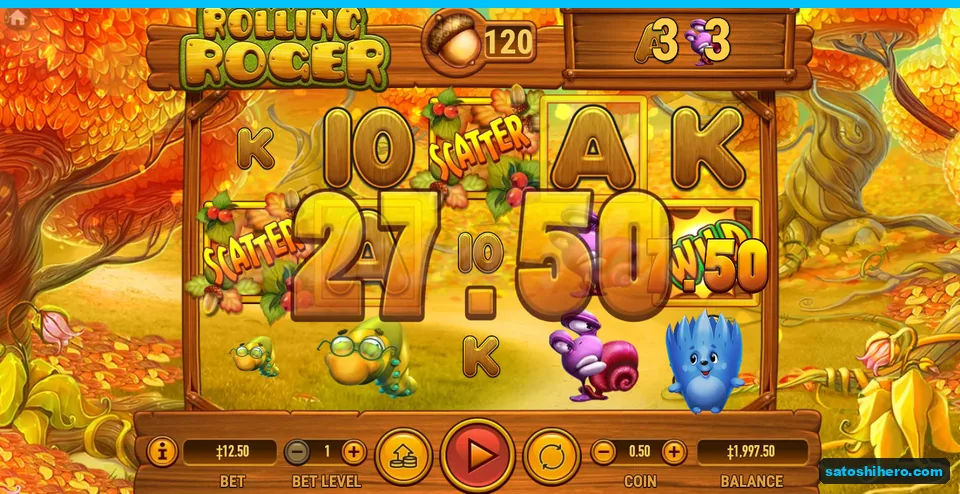
Symbols and Payouts
The Wild tops the collected-symbol table at 200x for six, while the smallest value I recorded was 0.2x. These values came from my tested $12.50 total bet and appear as bet multiples. Each row runs from six collected symbols down to three.
| Symbol | Six collected | Five collected |
|---|---|---|
| Wild | 200x | 100x |
| Snail | 100x | 50x |
| Bee | 60x | 30x |
| Caterpillar | 40x | 20x |
| Frog | 24x | 12x |
| A | 16x | 8x |
| K | 10x | 5x |
| Q | 6x | 3x |
| J | 4x | 2x |
| 10 | 2x | 1x |
| Symbol | Four collected | Three collected |
|---|---|---|
| Wild | 5x | 2x |
| Snail | 10x | 1.6x |
| Bee | 8x | 1.2x |
| Caterpillar | 5x | 1x |
| Frog | 4x | 0.8x |
| A | 2x | 0.6x |
| K | 1x | 0.4x |
| Q | 0.8x | 0.4x |
| J | 0.6x | 0.2x |
| 10 | 0.4x | 0.2x |
Reading the Pay Table
Premium creatures deliver the strongest regular-symbol values after the Wild. Six snails return 100x, while six bees reach 60x and six caterpillars reach 40x. You shouldn’t overlook the frog, since its 24x top entry still beats every carved card letter.
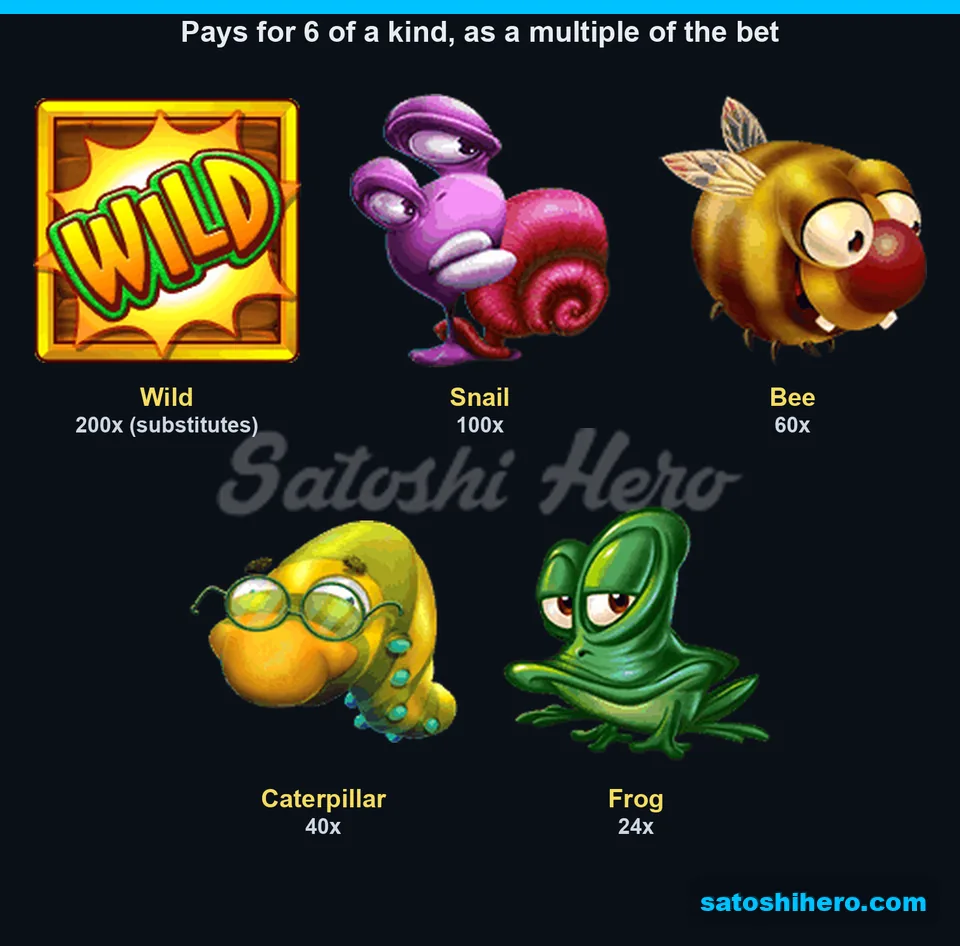
At the low end, three J or 10 symbols return 0.2x. That matched the smallest payout I logged, and it explains why some visible collections barely move the balance. The symbol-pay view puts the creature tier together, making those jumps easy to compare.
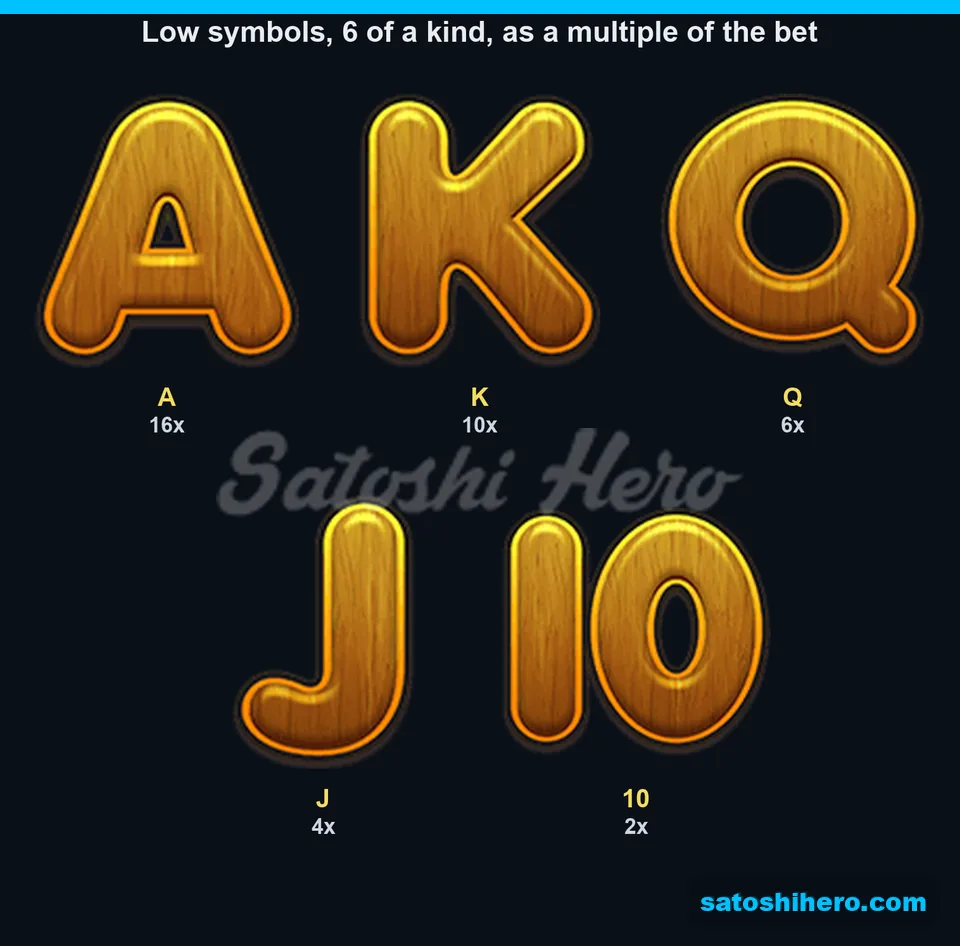
Four Scatters return 10x the total bet, while five return 100x. Those awards don’t require Roger to cross them. You can therefore receive a Scatter result alongside Rolling Pays, even though the collection counter handles the two elements separately.

Tactic: Check the collected-symbol counter rather than looking for a line across the reels. The path total determines your payout.
Extra copies beyond six make the six-symbol value especially important. Each added copy repeats that top table award, so a long route can build value without forming a conventional pattern. Follow the wooden collection sign, because searching the board for paylines will only hide what paid you.
Theme and First Impressions
A bright cartoon woodland makes Roger’s movement easy to follow. The 5-by-3 board sits inside a chunky wooden frame, with orange autumn leaves filling the base-game background. Roger appears as a blue hedgehog who rolls through symbols on every spin.
The creature cast includes a sleepy green frog, purple snail, bee, and caterpillar wearing glasses. Carved wooden letters cover the lower-paying card symbols. You can identify the hierarchy quickly, and the playful faces give even small collections some character.
Above the board, an acorn counter displays the stored total. A second wooden sign lists everything Roger gathers during the active route. That sign earns its screen space because you can read a busy spin without reconstructing the path afterward.
Art Serves the Route
The woodland theme won’t win originality awards, but Roger’s visible route gives the art a clear mechanical purpose. Journey to the West offers a mythological adventure for readers who prefer grander storytelling over this light cartoon forest. Here, the modest setting keeps attention on the moving collector.

Discovery: The forest changes from autumn leaves to snow when Free Games begin.
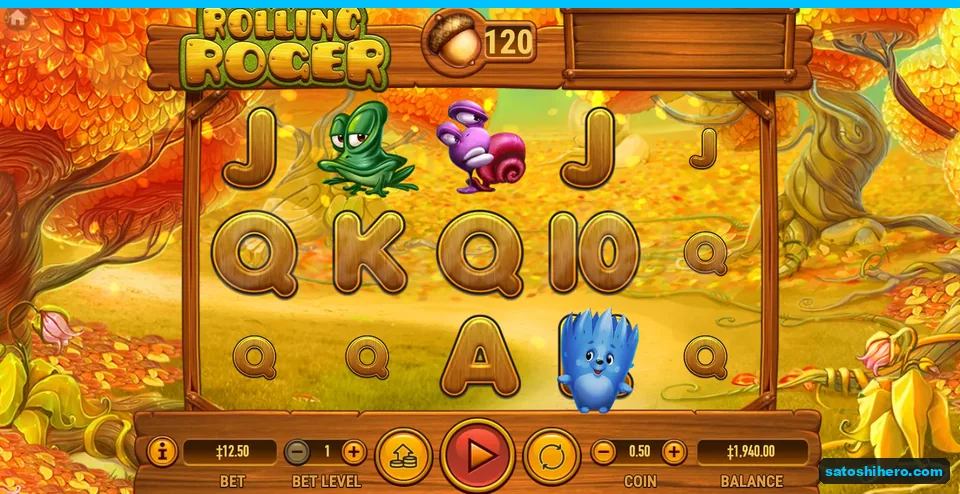
At rest, the base-game view identifies Roger, the wooden frame, forest symbols, and acorn meter immediately. During Quick Spin, the sign and route animation still keep the outcome readable. You don’t need to pause every result, although I think normal speed better shows why each collection paid.
The snowy feature scene provides a clear state change without replacing the familiar board. You always know whether the acorn budget is active, and the wooden interface remains consistent. The visual design supports the collection mechanic instead of distracting from it.
Building the Acorn Counter
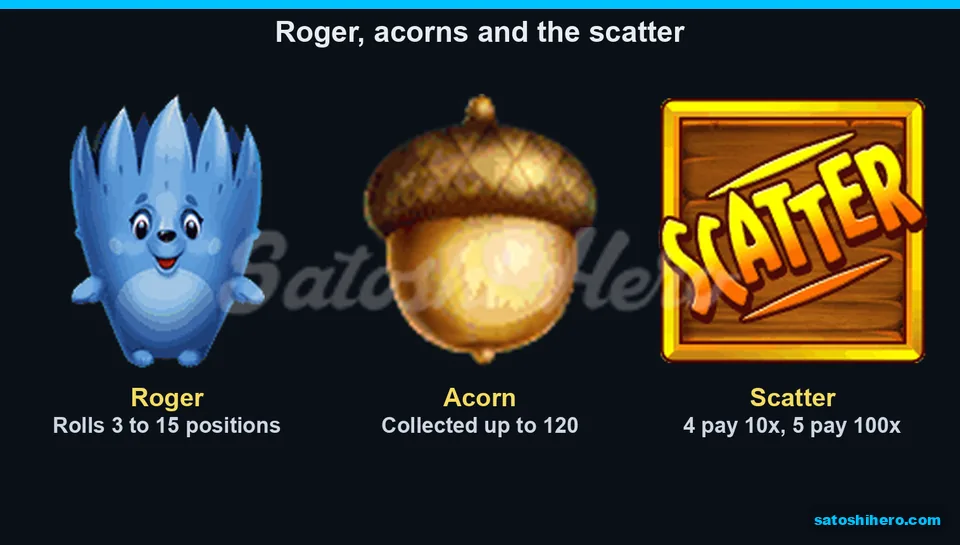
Acorns unlock Scatters at 40 and fund Free Games, while the meter holds up to 120. Certain symbols crossed during base play add one acorn. Reaching the first threshold opens bonus access, but it doesn’t start the feature by itself.
Three or more Scatters still need to land after that unlock. This distinction changes how you should read the meter: 40 means eligibility, not an approaching guarantee. I saw my counter sit at 120 through much of the later session without forcing another bonus.
Stored acorns pay for both spins and Wild transformations during Free Games. One free game costs one acorn, while each transformation consumes five. A full meter therefore offers a larger resource pool, yet expensive Wild changes can use that pool faster than the spin count suggests.
Each bet configuration keeps its own saved acorn total. If you change the setup, you can see different progress because the game doesn’t merge every meter into one shared balance. Check the visible count before switching, especially when your chosen configuration has already reached Scatter access.

Proceed Carefully: Don’t treat 40 or 120 acorns as a guaranteed trigger. The threshold only makes Scatters available; it doesn’t promise when three can appear.
A dedicated Roger, acorn, and Scatter view clarifies their separate roles. Roger follows the route, acorns build and fund the feature, while Scatters activate it after unlocking. The meter controls access and possible feature length, not a guaranteed trigger countdown for you.
Free Games
Three or more Scatters trigger Free Games after the acorn meter unlocks them. The round then spends the stored balance, using one acorn for each free game. It keeps the same stake as the triggering spin and can’t retrigger.
As Roger moves, selected symbols can randomly transform into Wilds for five acorns each. Those changes support multiple collection counts immediately, but they also reduce the remaining resource pool. You gain broader symbol help now in exchange for fewer possible spins later, which gives the feature its central tension.
Scatter symbols don’t appear at any point during this round. The background shifts to a snowy forest, and the wooden sign tracks the games left. I liked that clear presentation because you can see the feature budget shrinking without digging into a help screen.
My Feature Result
My only observed feature started on paid spin 44. It ran for 18 free games and returned 60.2x the bet, making it the largest result in my 100-spin test. One strong round doesn’t establish an expected bonus return, though it showed how sharply the feature can change a weak balance path.
The tested demo offered no bonus buy, so I had to unlock Scatters and land the trigger through base play. Hot to Burn – 7 Deadly Free Spins has a more conventional Free Spins focus. This feature feels more resource-driven because your acorn budget governs its possible length.
You should watch each five-acorn Wild conversion alongside the remaining count. A transformation can strengthen the active route, yet repeated conversions can shorten the round quickly. I find that trade-off more interesting than a fixed block of spins, even though it removes any sense of a predictable duration.
The feature’s 60.2x return rescued much of my test loss without producing a profit. That result felt meaningful because the earlier balance had dropped sharply. Preparation matters more here than in a standard fixed-spin bonus, but your full meter still can’t promise a trigger.
How the 100 Spins Played
My 100 paid spins ended 3.8x the bet down, but one 60.2x Free Games result hid a much rougher path. I used a $12.50 stake and started from $2,000.00 in play money, equal to 160x the bet. Those conditions gave the test a clear, repeatable frame.
I played the first spin manually, then ran autoplay with stop-on-Free-Games switched off. Only my first 100 paid spins counted toward results. Extra spins captured afterward served only for images and stayed outside every result reported here.
Following the Balance Arc
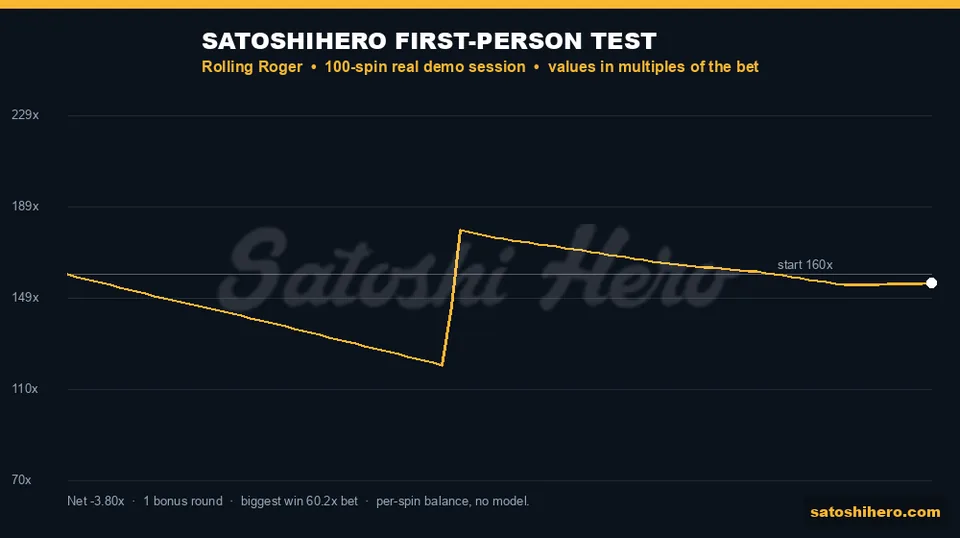
Twenty-four paid spins returned something, though that observed share isn’t a promised hit rate. The first 43 spins pulled the balance down to 120x on spin 44, where Free Games started. That 18-spin round paid 60.2x and lifted my balance to roughly 180x.
After the bonus, the balance drifted down again and finished at 156.2x. My largest base-game result reached 10.4x, far below the feature payout. You can see why the final 3.8x loss alone gives a misleadingly calm picture of the run.
Frequent misses and modest hits surrounded one far stronger event. I found the rhythm manageable at this stake, but the early slide made the eventual near-break-even finish feel fortunate. Your bankroll decision should reflect that uneven journey rather than the small closing deficit.
A 160-bet starting balance survived the tested downswing, yet that outcome doesn’t define a required bankroll. Lower stakes create more room for a delayed trigger without changing the underlying mechanic. You should pick an amount that leaves space for base play after the meter first reaches 40.
The 24 paying spins also varied widely in value, so counting hits alone says little about session quality. One bonus outweighed every base result and still couldn’t secure a profit. That near-break-even finish looked calmer than the route I actually took to reach it.
RTP, Volatility and Test Data
The mathematical profile combines a 97.95% theoretical RTP, medium volatility, and 50,000x maximum win potential. That maximum marks a hard upper limit, not a typical target for your session. I find the cap substantial for this risk level, but its modeled rarity makes it a poor basis for setting stakes.
Simulator Projection
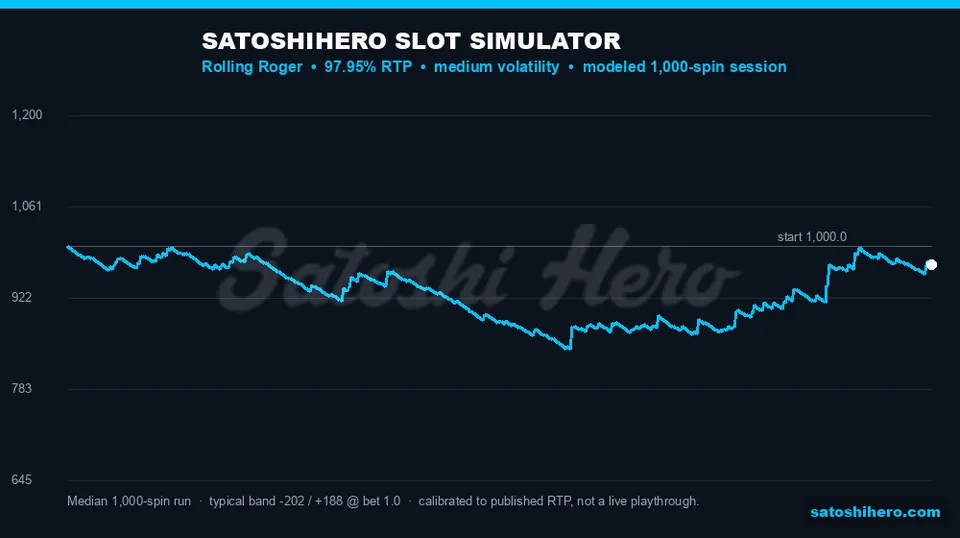
Our simulator modeled 1,000 spins at the same $12.50 stake I used in live play. The median run ended 27x the bet down. Across the middle 90%, results ranged from 202x down to 188x up, showing a wide spread around that central result.
Roughly 25% of modeled spins returned something, and a feature round appeared about once per 48 spins. A top-end hit appeared about once per 12,658 spins. These frequencies are projections, not countdowns, promises, or observations from the live game.
The simulator projection places the modeled range beside those event frequencies. You can use that spread to understand uncertainty, but your own result can fall outside the central band. The surprise here is how broad the modeled outcomes remain despite the medium rating.
Our 100-Spin Session
My observed run finished 3.8x the bet down, with 24 paying spins. The largest base-game hit returned 10.4x, while Free Games delivered 60.2x after triggering on spin 44. That bonus lifted the balance sharply without turning the test profitable.
The live run ended closer to break-even than the modeled 1,000-spin median. Yet the samples cover different lengths and answer different questions, so neither predicts your next session. My balance curve mainly shows how one feature can dominate a short test.
The theoretical RTP is Habanero’s published return figure, and one 100-spin session doesn’t alter it. Simulator results describe modeled distributions rather than guaranteed live behavior, while separate modes can differ slightly by design. Use the test and model as risk context, never as forecasts.
Frequently Asked Questions About Rolling Roger
What is Rolling Pays in Rolling Roger?
Roger moves through 3 to 15 unique positions and collects every regular symbol he crosses. Each symbol pays after the route according to its collected count, provided at least three copies qualify. The mechanic uses the path rather than fixed paylines.
What do the top symbols pay in Rolling Roger?
Six collected symbols return 200x for the Wild, 100x for the snail, 60x for the bee, 40x for the caterpillar, and 24x for the frog. Card symbols at six copies range from 16x for A down to 2x for 10.
How do Free Games start in Rolling Roger?
Three or more Scatters trigger Free Games after the meter holds at least 40 acorns. Reaching 40 only unlocks Scatters, so it doesn’t activate the round alone. The feature can’t retrigger after the bonus round begins.
What do acorns do in Rolling Roger?
Its meter stores up to 120 acorns and unlocks Scatters at 40. During Free Games, each spin costs one acorn and every random Wild transformation costs five. More stored acorns provide more feature fuel, not a promised duration.
What are Rolling Roger’s RTP, volatility, and maximum win?
The official figures are 97.95% RTP, medium volatility, and 50,000x maximum win potential. RTP describes the theoretical return, while the maximum sets the upper payout boundary. Neither figure predicts the outcome of any single session.
What happened in the 100-spin Rolling Roger test?
My $12.50-per-spin test ended 3.8x the bet down. Free Games triggered on paid spin 44 and returned 60.2x, the run’s largest result. I finished with 156.2x from a starting balance worth 160x.
What does the 1,000-spin Rolling Roger simulator show?
The modeled median ended 27x the bet down, while the middle 90% ranged from 202x down to 188x up. Those results illustrate a distribution and can’t predict any individual session.
Can you buy the bonus in Rolling Roger?
No bonus buy appeared in my tested demo. Free Games require three or more Scatters after the acorn meter unlocks them. You must therefore build the meter and seek the trigger through ordinary base play.
Final Take
Rolling Roger stands out because its moving collector makes every route readable. Delayed Scatter access adds purpose but can make bonus entry feel slow.

My Read
Patient collection fans should try the demo across a full meter build. Expect modest base hits, uneven swings, and a feature with variable length.
I like how the live counter explains wins and one Wild supports every symbol count. What I don’t like is waiting for Scatter eligibility before the trigger chase starts. My 60.2x feature softened a rough run without making 100 paid spins profitable.
Rolling Roger connects its route, meter, and bonus budget clearly. Game details are checked regularly when verified changes appear.

Pros:
 Clear routes: The moving collector shows exactly which symbols enter each payout.
- Strong published return: The headline rate looks appealing beside the accessible risk profile.
- Useful Wild: One crossed Wild increases every regular symbol count at once.
- Resource-driven bonus: Stored acorns give feature preparation a visible purpose.

Cons:
 Delayed Scatter access: You must collect 40 acorns before bonus symbols can appear.
- No tested bonus buy: Base play provides the only observed path into Free Games.
- Uncertain feature length: Five-acorn Wild changes can shorten the round quickly.

Best For: Patient collection fans get visible progress and a bonus funded by base play. You should prefer readable payouts over fixed line patterns or immediate feature access.

































































Bets
All Bets
Game
Player
Date
Wager
Mult.Multiplier
Prize
 Halloween Harvest: Rapid Link
 Hidden
- 00:19:55
- 0.19×
- Halloween Harvest: Rapid Link
- Hidden
- 00:19:54
- 0×
- Halloween Harvest: Rapid Link
- Hidden
- 00:19:53
- 0.89×
- Halloween Harvest: Rapid Link
- Hidden
- 00:19:50
- 0×
- Aztec Magic Deluxe
 RicoSoul
- 00:19:48
- 0×
- Luck of Panda: Bonus Combo
 Hidden
- 00:19:47
- 0×
- Aztec Magic Deluxe
- RicoSoul
- 00:19:46
- 0×
- 4 Lucky Nuggets
 whodey39311
- 00:19:45
- 0×
- Galaxy Glitter
- Hidden
- 00:19:45
- 0×
- Big Banker Bonanza
- josh1998
- 00:19:45
- 0×