

The Night Racing
By pressing play, you agree that you are above legal age in your jurisdiction and that your jurisdiction allows online gambling.


Chasing Neon Speed Through the City
The Night Racing slot puts Belatra’s neon street race across a 5×3 grid with 10 fixed paylines.
According to Belatra, The Night Racing slot has a 94.41% RTP, high volatility and 20,000x maximum-win potential. Wins run left to right, while expanding Wilds start Free Games and Scatters open a cash-collection Bonus Game. It targets risk-tolerant bonus buyers, yet my 100-spin demo produced 17 paying spins, a 9.6× best hit and no main feature.
Key takeaways
- Best bonus: I tested only regular base play, so I can’t honestly rank any Craft Bonus purchase.
- RTP / volatility: The theoretical return is 94.41%, paired with a high volatility level.
- Max win: The official ceiling reaches 20,000x the selected bet.
- Risk note: My session opened with 12 losses, then later ran 16 spins without another win.
- Bankroll note: Craft Bonus prices span 65× to 600×, so a lower stake reduces the amount committed.
These points tell you why the upside looks tempting and why your careful stake sizing matters. For me, the ceiling appeals, but the return creates a tough trade-off beside this risk level.

Table of Contents
- How The Night Racing slot Works
- Symbols and line wins
- Extending Wild
- Craft Bonus
- Four purchase levels
- Limits of my test
- Theme & first impressions
- Neon city setting
- Presentation and personality
- RTP, volatility & our test
- Simulator projection
- My 100-spin session
- Bonus Game
- Three-spin reset cycle
- Cash and modifiers
- Grand Prix Jackpot
- Seventy-point trigger
- Prize versus max win
- Free Games
- Shifting Wild sequence
- Twenty-spin ceiling
- Risk Game
- Card and colour modes
- Why I skipped it
- Frequently Asked Questions About The Night Racing
- Summing It Up
How The Night Racing slot Works
The Night Racing slot uses 10 traditional paylines across five reels and three rows. Wins start on reel one, run left to right, and only the highest combination counts per line. Matching symbols outside those paths don’t necessarily pay. I like this clarity because the line map settles each award.
Symbols and line wins
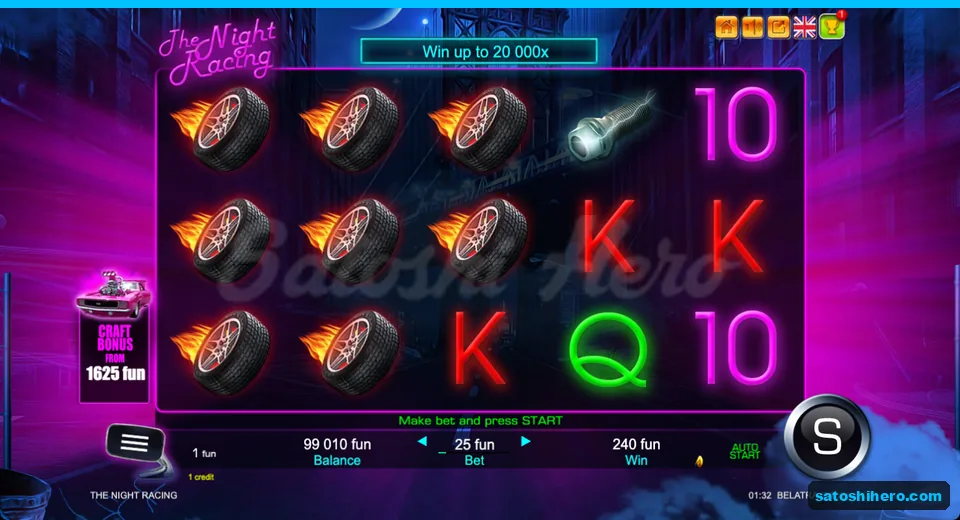
The paytable showed amounts for my $25 test stake, so I converted those figures into total-bet multiples. Driver and Policewoman symbols pay 20× for five, 10× for four and 3× for three. The Engine returns 10×, 5× and 1×, while the Sports car returns 8×, 4× and 0.8×. You should read those values as line awards, not payments for every matching symbol on the board.
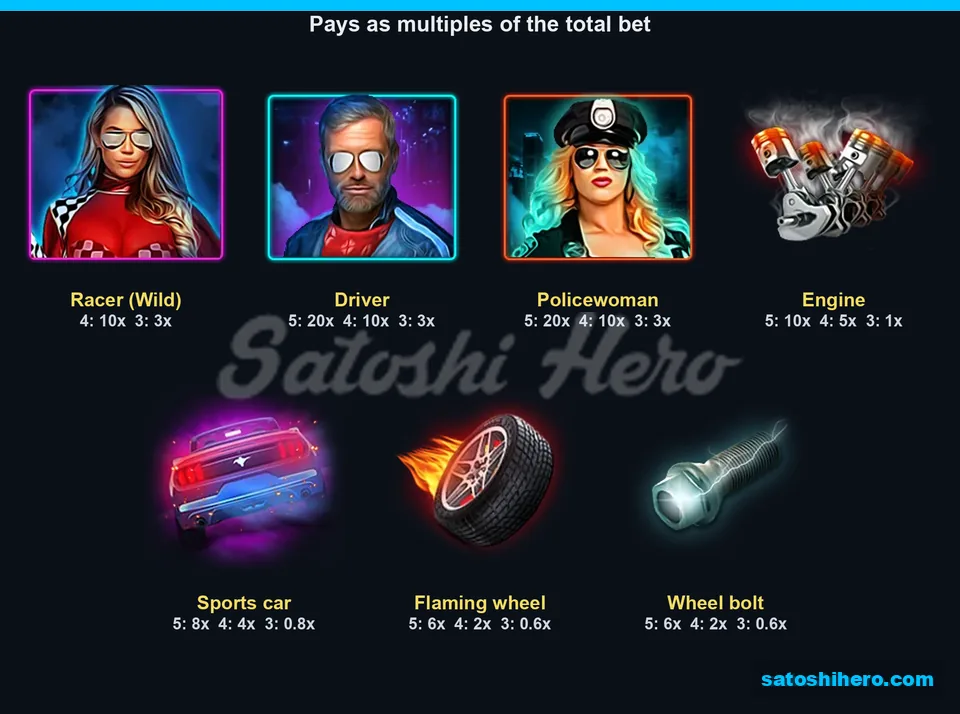
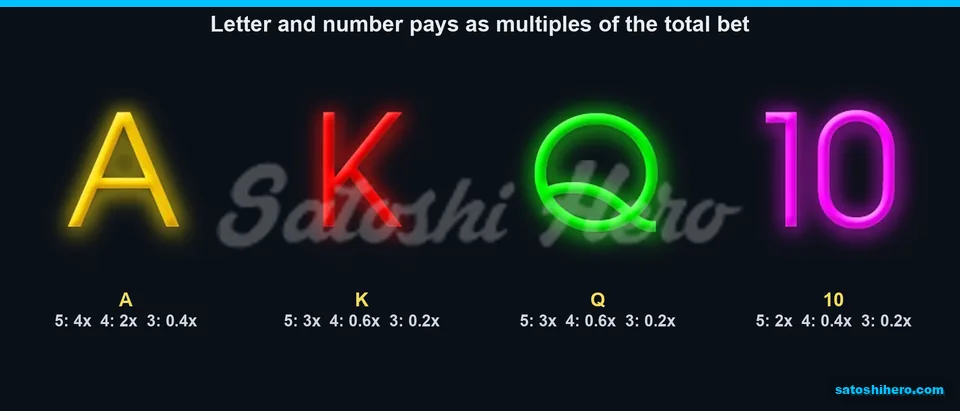
Flaming wheel and Wheel bolt symbols pay 6×, 2× and 0.6×. The A returns 4×, 2× and 0.4×, while K and Q return 3×, 0.6× and 0.2×. The 10 pays 2×, 0.4× and 0.2×. My best result showed eight flaming wheels, but several valid lines combined for $240, or 9.6×, rather than all eight paying together.
Extending Wild
The Racer Wild lands only on reels two, three and four. One main-game Wild expands over its reel and starts Free Games, which gives ordinary spins their main feature potential. It replaces the characters, engine, sports car, flaming wheel, letters and numbers, but it doesn’t replace the Scatter. Its own line pays reach 10× for four and 3× for three.
The interface remained clear on desktop and mobile, so you can follow expanded reels on either screen. That matters when the board grows busier.

Highlight: The game uses 10 conventional left-to-right paylines, not clusters, pay-anywhere wins or variable ways.
Fixed lines make the base rules easy to audit, while the expanding Wild gives each central reel real importance.
Craft Bonus
Craft Bonus offers four paid routes into the Scatter-triggered Bonus Game. I didn’t purchase any tier, so I won’t rank their returns or pretend one represents the best buy. You get a shortcut to the feature, not control over its outcome. In my view, the upper prices demand more caution than the colourful menu suggests.
Four purchase levels
At my $25 stake, Basic cost $1,625, equal to 65× the bet. Lucky Racer cost $3,750, or 150×, while Jackpot Hunter required $5,775, or 231×. Super Champion reached $15,000, which equals 600×. Every amount scales with your selected stake, and higher prices only carry a higher probability of a big win.
Confirming a purchase creates a reel result with enough Scatters to open the Bonus Game. That triggering result doesn’t pay as a normal line win. The menu can also appear after three or more natural Scatters, before the feature begins. You shouldn’t treat the costly tiers as guaranteed larger awards because the documented rule promises no such result.
Limits of my test
My 100-spin session used regular base play and bought no Craft Bonus option. The evidence lets me explain each price and trigger, but it can’t support a return comparison between tiers. Treat the complete 65× to 600× charge as money committed to one uncertain result. Reducing your base stake lowers the dollar exposure, though it doesn’t alter the mathematical return.
Regular spins remain the only route backed by my observed test, while Craft Bonus stays an expensive optional shortcut for you.
Theme & first impressions
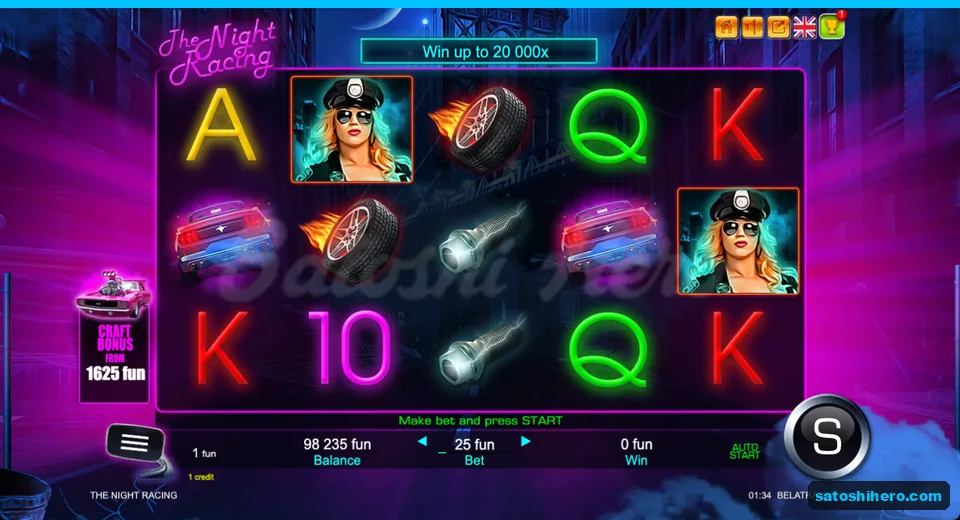
A neon city street, bridge backdrop and pink muscle car establish the night-racing setting immediately. The 5×3 board sits beneath a Grand Prix banner, with the Craft Bonus plaque beside it. You see mechanics and artwork pulling in one direction rather than sharing an unrelated skin. I find the design familiar, yet it carries enough linked detail to feel purposeful.
Neon city setting
The cast includes a racer in a chequered red suit, a sunglasses-wearing driver and a policewoman. Engines, sports cars, flaming wheels and wheel bolts fill the premium group, while neon card ranks keep lower symbols distinct. The pink muscle car adds a bold arcade flourish to the purchase menu. Together, they create the mood of racing into the night without making the reels hard to scan.
Goddess of the Night offers fantasy atmosphere instead of glowing street-race imagery. That visual contrast helps you judge which mood has more appeal. I prefer the vehicle parts because they connect directly to the features. The Champions and Journey to the West provide other strongly themed alternatives, while The Wild Machine and The Wild Gang offer clearer comparisons for Wild-led play.
Presentation and personality
The speedometer tracks jackpot progress, and the moving Wild resembles a racer advancing across lanes. Vehicle imagery also follows into the cash feature, giving the bonuses a consistent visual language. The theme won’t win prizes for originality, but its speedometer and shifting Wild create more identity than a cosmetic racing reskin. You can read character, vehicle and card symbols quickly even when the board looks bright.

Notable Detail: The chequered racer, speedometer and Grand Prix banner carry the racing idea through the reels, bonus system and jackpot presentation.
Bright arcade styling gives the game energy, though you may find its pink and neon palette loud. Coherent feature details keep the familiar city scene from feeling disposable.
RTP, volatility & our test
The Night Racing slot combines a 94.41% theoretical RTP, high volatility and a 20,000x maximum win. That profile creates broad bankroll swings, and you shouldn’t read the top prize as a likely session target. I find the return demanding beside such uneven results. Both modeled and played evidence show why short sessions can finish far from the headline percentage.
Simulator projection
The SatoshiHero Slot Simulator modeled 1,000 spins at a bet of $1, using the stated math profile. Its median session ended 86.5× down, while the fifth-to-ninety-fifth percentile band stretched from 332.3× down to 311.2× up. About 18% of modeled spins returned something. You can see a wide range of plausible outcomes rather than one expected balance path.
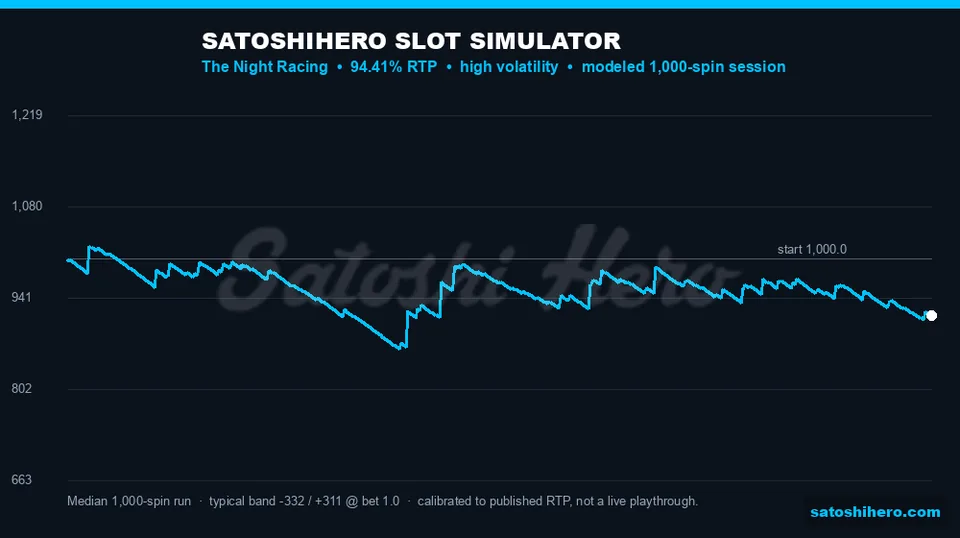
A feature-tier result appeared roughly once per 47 modeled spins. Results of 100× or more appeared about once per 1,629 spins, which extends beyond a single modeled session. Every simulation runs independently, so neither frequency creates a countdown. In my view, the broad percentile band explains the risk better than the median alone.
My 100-spin session
I staked $25 for 100 spins, starting with $100,000 in demo funds. The session ended at $98,260, a $1,740 loss equal to 69.6× my bet. I staked $2,500 and received $760 back, or 30.4×. My balance never passed its starting point, and its counted low reached $98,250 after spin 97.
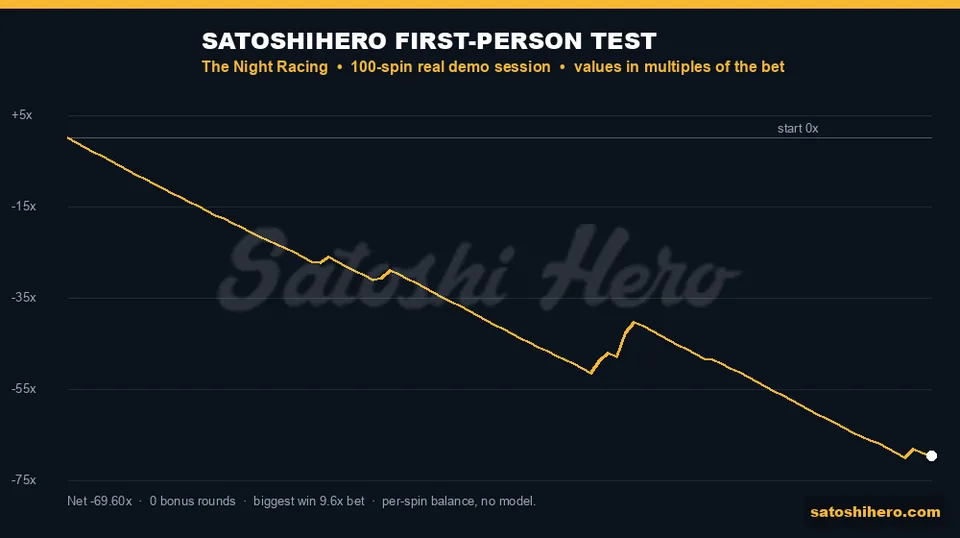
Only 17 spins paid, and 11 returns fell below the stake. Spins one through 12 lost, with my first $5 win arriving on spin 13. The main recoveries were 3× on spin 30, 4× on spin 37, 6× on spin 62 and 9.6× on spin 65. Another 3× result came on spin 98, but it barely changed the overall decline.
My longest drought ran 16 spins, from spin 76 through spin 91. Neither Free Games nor the Bonus Game appeared, and I didn’t buy Craft Bonus. I excluded one extra losing spin used only to capture a settled board. The 20,000x upside looks attractive, but this session showed you how quickly smaller outcomes can dominate short play.

Risk Note: My opening 12-spin drought and later 16-spin losing run show the practical strain of high volatility. A larger balance can extend play, but it can’t force a feature or stop a poor sequence.
The stated percentage is the operator-published theoretical return, and one session can’t change or validate it. The simulator describes a modeled distribution, while my test records observed play; individual bonus modes can use slightly different returns by design.
These evidence sets both show substantial short-session uncertainty, though neither predicts what your next session produces.
Bonus Game
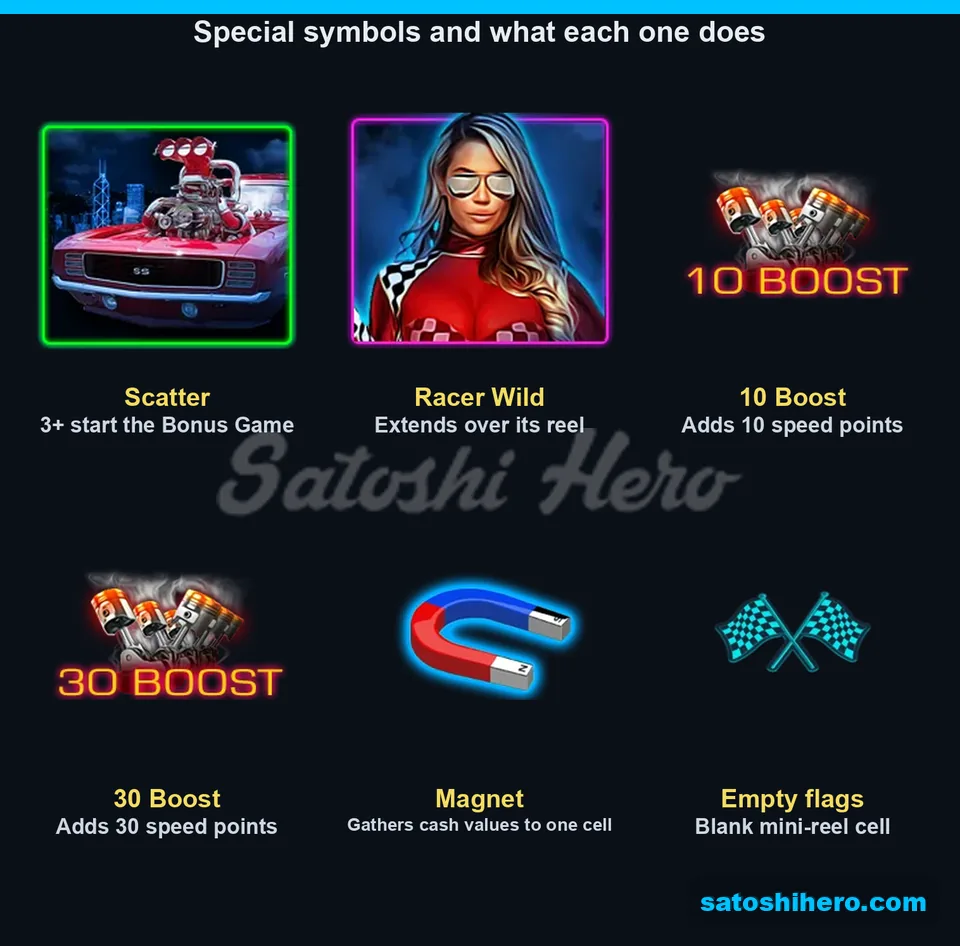
Three or more Scatters anywhere on the main reels open a cash-collection game on mini-reels. The feature didn’t trigger during my test, so I can explain verified rules but not claim an observed result. You should track its unusual three-spin series rather than assume a standard counter reset. I like the added structure, although its rule wording needs careful reading.
Three-spin reset cycle
The mini-reels begin with a series of three spins. If at least one new symbol appears, the active series ends and a fresh three-spin series starts. The round stops when a complete series adds nothing or every mini-reel cell becomes occupied. Its base award equals the sum of all cash symbols left on the mini-reels.
This distinction matters because a new symbol doesn’t merely replace one spent spin. Instead, it starts the complete series again, giving you a clearer way to follow the remaining opportunity. No choice changes the landing pattern. The feature stays outcome-driven from its first symbol through its final cash total.
Cash and modifiers
Cash symbols show fixed amounts and remain in place unless the Magnet affects them. The 10 Boost and 30 Boost symbols add their displayed speed points, while the plus modifier adds 2, 3, 5 or 10 total bets to every cash symbol. A multiplier applies 2×, 3×, 4×, 5× or 10× across those cash values. The Magnet gathers all current cash amounts onto one symbol.
Empty flags occupy cells without adding money, so a fuller board isn’t always a richer one. You can’t select, time or influence any modifier, which keeps the round purely random. I’d watch the cash total and speed meter separately because they feed different prizes.
The feature mixes cash growth with speed progress, but its final value depends entirely on landed symbols.
Grand Prix Jackpot
The Grand Prix pays after the Bonus Game only when the speedometer reaches at least 70. Merely entering the feature doesn’t secure it, and you need enough Boost progress before the round ends. I like the visible target because it makes the jackpot condition easy to follow. Still, the threshold offers suspense rather than control.
Seventy-point trigger
The 10 Boost and 30 Boost symbols advance the meter by their displayed values. Once speed reaches 70 or more, the qualifying award arrives at the feature’s end rather than instantly. You should separate that progress from the cash-symbol sum because each supports a different prize component. No Craft Bonus tier guarantees enough Boost symbols to cross the line.
The meter gives you a clear state to monitor, but it can’t tell you which symbol comes next. That difference prevents the racing presentation from becoming a skill mechanic. In my opinion, the visual chase works well precisely because the trigger remains simple.
Prize versus max win
At my $25 test stake, a qualifying Grand Prix award starts no lower than $50,000. That floor equals 2,000× the bet, but it isn’t a fixed jackpot value, average payout or overall game cap. The larger 20,000x maximum applies to the game’s complete possible result. You shouldn’t assume every jackpot round approaches that broader ceiling.
Speed points unlock the jackpot condition, while the broader maximum covers the full possible result across the game.
Free Games
An expanding Racer Wild on reel two, three or four triggers Free Games. That full-reel Wild then moves one position left per free spin, so its starting place helps you read the sequence. My test never reached the feature, which prevents any honest payout judgment. I still find its visible movement more engaging than a fixed spin counter alone.
Shifting Wild sequence
The feature keeps the triggering bet per line and the same active paylines. During each free spin, the expanded Wild reel shifts one place toward reel one. The round finishes once the last extended Wild reaches the leftmost reel. You can follow each moving reel to understand how much of its individual path remains.
New Wilds may land on reels two, three and four during the round. Each one can create another moving sequence and extend play, but a later starting reel doesn’t guarantee a larger award. The movement explains duration, not future payout quality. I’d focus on the visible positions instead of treating added spins as promised profit.
Twenty-spin ceiling
The feature can run for no more than 20 Free Games. That number marks a cap, not the standard opening allocation, because new Wild arrivals and their leftward paths govern the length. You shouldn’t infer an average duration from my session because it triggered zero rounds. The absence itself shows how a short test can miss a headline mechanic entirely.

Expert Advice: Watch where every new Wild begins because its starting reel shows how many leftward moves remain. This helps you read the feature, but it can’t predict or change any result.
The moving Wild provides clear progression, although my base-game test offered no live feature return to assess.
Risk Game
The Risk Game lets you gamble an eligible win through card or colour mode. I deliberately skipped it, keeping my results focused on ordinary slot outcomes. You can preserve the original award by declining rather than adding another all-or-nothing decision. I think that restraint made particular sense during an already negative session.
Card and colour modes
You choose the preferred Risk Game format in settings, and its offer remains visible for 10 seconds. Selecting START declines the gamble. In card mode, you choose one of four cards against the dealer for up to five rounds. A higher card doubles the amount, a lower card loses it, and an equal card continues play.
Red-or-black mode doubles the win for a correct colour and returns 4× for a correct suit. Turbo mode disables the feature, and the gamble ends once the possible win would exceed $100,000. Neither format creates a skill-based route toward the maximum. Your selection changes the chosen wager format, not the randomness behind the card.
Why I skipped it
I didn’t use either gamble during the 100-spin test. Doubling a small award wouldn’t change the slot’s underlying risk profile, while losing one would deepen my session deficit. Declining preserved each original payment but couldn’t improve the base hit rate. You should judge that extra exposure separately from the normal reels.
My test offers no basis for calling either mode superior, and both can erase the eligible amount. For me, preserving scarce wins mattered more than chasing a short multiplier.
The optional gamble adds immediate exposure, yet skipping it kept the test centered on standard outcomes.
Frequently Asked Questions About The Night Racing
What are the RTP, volatility, maximum win and paylines in The Night Racing slot?
The Night Racing slot has a 94.41% RTP, high volatility and a 20,000x maximum win. It uses 10 fixed paylines across a 5×3 grid, with qualifying wins running left to right.
How do Free Games start in The Night Racing slot?
A Racer Wild landing on reel two, three or four expands across that reel and starts Free Games. Each expanded Wild shifts left on every free spin, while new Wilds can add moving sequences. The feature stops at a maximum of 20 spins.
How does the Bonus Game work in The Night Racing slot?
Three or more Scatters open mini-reels with a three-spin series. Any new symbol starts a fresh three-spin series, and play ends after a blank series or a full board. The award sums the remaining cash symbols.
When does The Night Racing slot pay the Grand Prix jackpot?
The speedometer must reach 70 before the Bonus Game ends. At the tested $25 stake, the Grand Prix starts at $50,000, equal to 2,000×, and it pays after the feature concludes.
What can you buy in The Night Racing slot’s Craft Bonus menu?
Basic costs 65×, Lucky Racer 150×, Jackpot Hunter 231× and Super Champion 600×. Each purchase forces the Scatters needed for the Bonus Game, but I bought none and can’t name a best tier.
What did the 1,000-spin simulator show for The Night Racing slot?
The median modeled result lost 86.5×, with a percentile band from 332.3× down to 311.2× up. Feature-tier results appeared roughly once per 47 spins, while 100× results appeared once per 1,629 spins. These frequencies aren’t trigger schedules.
What happened in my 100-spin The Night Racing slot test?
I lost 69.6× after 100 spins, with 17 paying results and a 9.6× largest win. Neither Free Games nor the Bonus Game triggered, and I purchased no Craft Bonus tier.
Summing It Up
The Night Racing links its expanding Wild, speedometer and cash feature to one street-racing theme. Its 20,000x ceiling attracts, while the 94.41% return and sharp swings demand patience.

My Call
You can appreciate the shifting Wild and layered Bonus Game if featureless sessions don’t deter you. Start your play with regular spins before committing hundreds of bets to Craft Bonus.
I like how Wild movement and the Grand Prix meter make the theme functional. My 100 spins returned only 30.4× from 100× staked, with no major feature. The 9.6× best hit felt modest beside the advertised upside.
The Night Racing slot offers demo and real play on SatoshiHero. Game information and test details are checked regularly without blurring changes with my recorded session.

Pros:
 Clear pay structure: Ten fixed lines make every base-game award easy to trace.
- Connected theme: Wild movement and speed progress reinforce the street-racing concept.
- Layered bonus: Cash, modifiers and Boost symbols create several result paths.
- Large ceiling: The 20,000x cap leaves meaningful top-end potential.

Cons:
 Lower return: The 94.41% RTP makes the risk profile harder to accept.
- Expensive purchases: Craft Bonus tiers consume 65× to 600× in one attempt.
- Feature droughts: My entire 100-spin test missed both major features.

Best For: Patient high-volatility fans drawn to visible progression and neon racing themes get the clearest appeal. Conservative bankrolls may find the droughts and purchase costs uncomfortable.












Other Belatra Games






















































Bets
All Bets
Game
Player
Date
Wager
Mult.Multiplier
Prize
 Royal Fruits 9: Hold 'n' Link
 Hidden
- 00:22:18
- 9.99×
- Mr. Crystalman: Hold 'N' Link
 Hidden
- 00:22:17
- 0×
- San Chong Baozha Blue: Bonus Combo
- mdp0fxo
- 00:22:12
- 0×
- Wild Buffalo: Megaways
 mike_721
- 00:22:09
- 0×
- Elephant's Gold: Bonus Combo
- Hidden
- 00:22:05
- 0×
- Mr. Crystalman: Hold 'N' Link
- Hidden
- 00:22:04
- 0.3×
- Royal Fruits 9: Hold 'n' Link
- Hidden
- 00:22:04
- 4.99×
- Galaxy Glitter
- nina87
- 00:22:02
- 0×
- San Chong Baozha Blue: Bonus Combo
- mdp0fxo
- 00:22:01
- 3.35×
- Royal Fruits 9: Hold 'n' Link
- Hidden
- 00:22:01
- 0×