

Fortune of Olympus
By pressing play, you agree that you are above legal age in your jurisdiction and that your jurisdiction allows online gambling.
Pragmatic Play

Fortune of Olympus
Title:
Fortune of Olympus
Payout:
96.55
Volatility:
very-high
Max multiplier:
10000x
Release:
December 15, 2025
Game Provider:
Pragmatic Play
Bitcoin Slots
Live game stats
🔥 This game is hot!Real RTP · 30d236.09%vs 96.55
Spins · 30d205
Biggest win · 30d$158
- Provably Fair
- Instant Crypto Payouts
- Thousands of Games

Written byMarcusUpdated
Thunder on the Olympus Grid
Fortune of Olympus drops Zeus beside a seven-by-seven cluster grid and asks you to chase tumbling wins, fiery multipliers, and a stubborn bonus round.
Fortune of Olympus is a very-high volatility slot from Pragmatic Play with 96.55% RTP and 10,000x max win potential. The game features a seven-by-seven layout with cluster pays and persistent free-spins multipliers. Aimed at high-variance hunters who like bonus chasing more than steady grinding.
Key takeaways
The Fortune of Olympus casino game is playable on SatoshiHero in demo mode and real play, with a tested default $2 stake, Special Bets, and direct feature buys. There are no fixed paylines here, so you’re watching connected symbols and multiplier timing from the first spin.
- Best bonus: Free spins matter most because multiplier symbols collect into a running total for the whole round.
- RTP / volatility: Fortune of Olympus has 96.55% RTP and very-high volatility, so short sessions can feel rough.
- Max win: The game caps wins at 10,000x the bet, and the round ends if that cap hits.
- Risk note: My 500-spin test at $2 per spin finished down $311.60 with no natural free-spins trigger.
- Bankroll note: The $200 standard buy returned $75.00, so smaller bankrolls should treat feature chasing carefully.

Table of Contents
- How Fortune of Olympus Works
- Cluster pays
- Symbol values
- Theme & First Impressions
- Olympus setting
- Sound and impact
- Tumbles and Multipliers
- Tumble chains
- Base multipliers
- Free Spins
- Trigger requirements
- Persistent multiplier
- Bonus Buy Tested
- Standard buy
- Super buy
- Special Bets and Stake Options
- Default stake
- Feature chase
- How the 500-Spin Session Played
- Cold base run
- Best base hits
- RTP, Volatility & Our Test
- Simulator projection
- Our 500-spin session
- Frequently Asked Questions About Fortune of Olympus
- Final Thoughts
How Fortune of Olympus Works
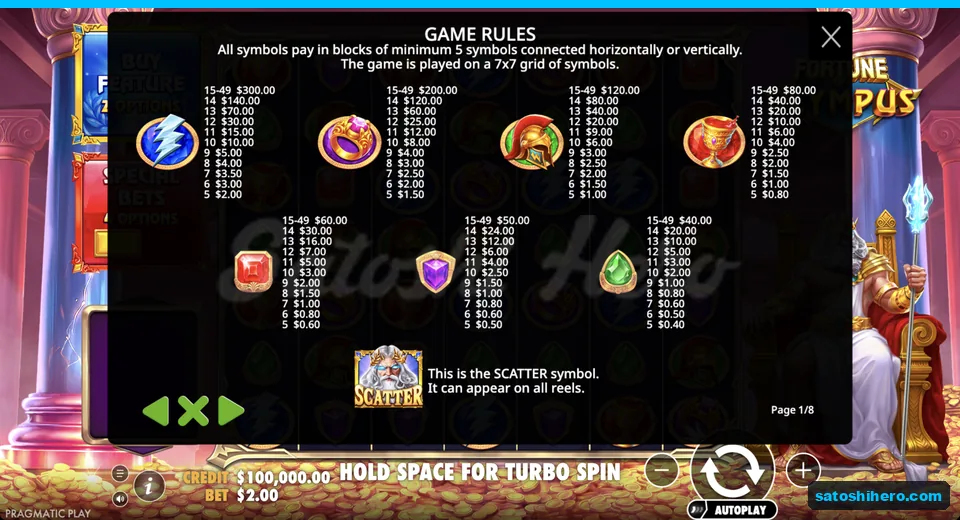
Fortune of Olympus is a cluster-pays slot on a seven-by-seven grid, so you win through connected groups rather than fixed lines. You need five or more matching symbols touching horizontally or vertically. There’s no left-to-right line requirement, which changes how you read every spin.
You’re watching the whole grid, not just reel positions. Winning clusters vanish, new symbols drop into the gaps, and another cluster can form from the same paid spin. I like that pace because you get a short sweat after each hit, even when the first cluster looks small.
You can play the game through SatoshiHero on mobile and desktop, and the grid stays readable on both. Still, I’d learn the symbol values in the Fortune of Olympus demo before you start pushing Special Bets.
Cluster pays
Cluster pays make the base game feel wider than a line slot. A five-symbol group gets the sequence moving, while bigger groups raise the payout before any multiplier joins in. You should scan corners and center spaces together because a connected shape can snake across the board.
The Zeus head is the scatter and can land across the grid. Four or more scatters open the free-spins feature, so you’ll notice them fast. I found myself checking the grid for Zeus heads first, then looking for multiplier orbs.

Quick Fact: Fortune of Olympus has no fixed paylines. You’re looking for connected clusters of five or more matching symbols instead.
Symbol values
The blue lightning bolt is the top regular symbol. At my $2 stake, a cluster of 15 or more paid $300. The purple ring paid $200 for the same size, while the gold helmet paid $120 and the gold chalice paid $80.
Red, purple, and green gems fill the lower tier. Their biggest clusters paid from $60 down to $40 at the same stake. Those lower symbols won’t carry the game alone, but they can matter if a fiery orb lands late.
The fiery orb is the multiplier symbol, with random values from 2x to 500x. I think that range gives the base game its bite. You don’t need a huge cluster to feel interested when a strong multiplier stays possible.
Theme & First Impressions
The theme is polished Zeus-and-Olympus fantasy, but the real personality comes from thunderous cluster hits. Fortune of Olympus sends you to a storm-wracked Mount Olympus, with Zeus sitting beside the grid like he owns every tumble. You get marble columns, bright symbols, and a clean mythological look.
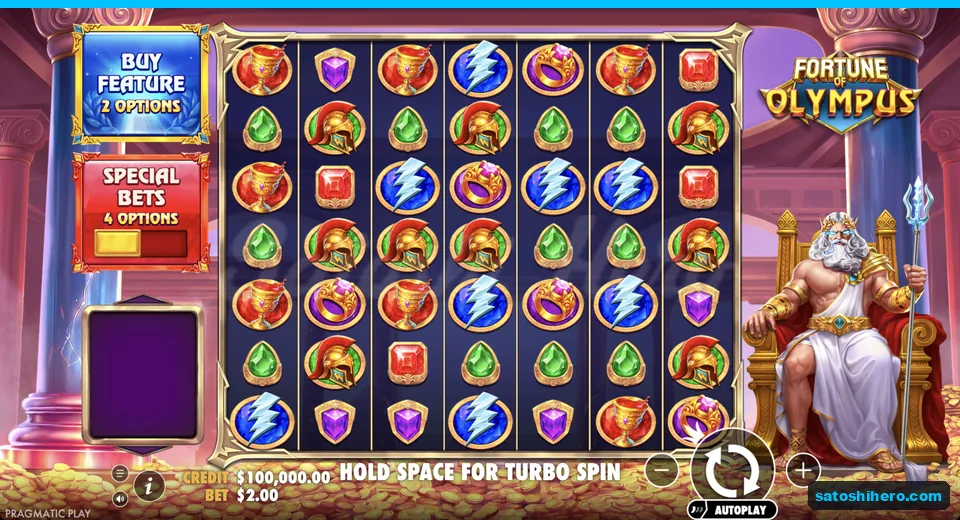
Lightning bolts, golden chalices, war helmets, and coloured gems fill the board. The Fortune of Olympus logo fits the same gold-and-storm style without doing anything too wild. You’ve seen this godly mood before, but the cluster grid gives it a different pulse.
Olympus setting
The backdrop keeps everything clear. I like that Pragmatic Play doesn’t drown the grid in decoration, because you need to read connected shapes quickly. You can spot premium symbols, scatters, and multiplier orbs without squinting.
Gates of Olympus regulars may recognize the Zeus mood and multiplier tension. Fortune of Olympus changes the feel with a seven-by-seven cluster grid instead of the older tumble format. That shift makes the action feel more board-like and less reel-led.

Did You Know? The theme leans on storm imagery, marble, and Zeus iconography to make every bigger cluster feel like a thunder hit rather than a quiet grid clear.
Sound and impact
The thunderclaps land hard when a bigger cluster forms. I don’t think the Zeus theme wins originality awards, especially from Pragmatic Play, but the sound sells the hits. You feel the board clear with more force than the artwork alone suggests.
Small wins stay tidy and quick. Bigger clusters get louder, which helps you feel the rhythm without checking the win meter every second. If you like loud myth slots, this one gives you enough punch without making every spin noisy.
Tumbles and Multipliers
Tumbles and multipliers drive the pace because each winning cluster can create another drop, then visible multipliers boost the whole sequence win. Every spin uses the tumble mechanic. Winning symbols pay, vanish, and let new symbols fall into place.
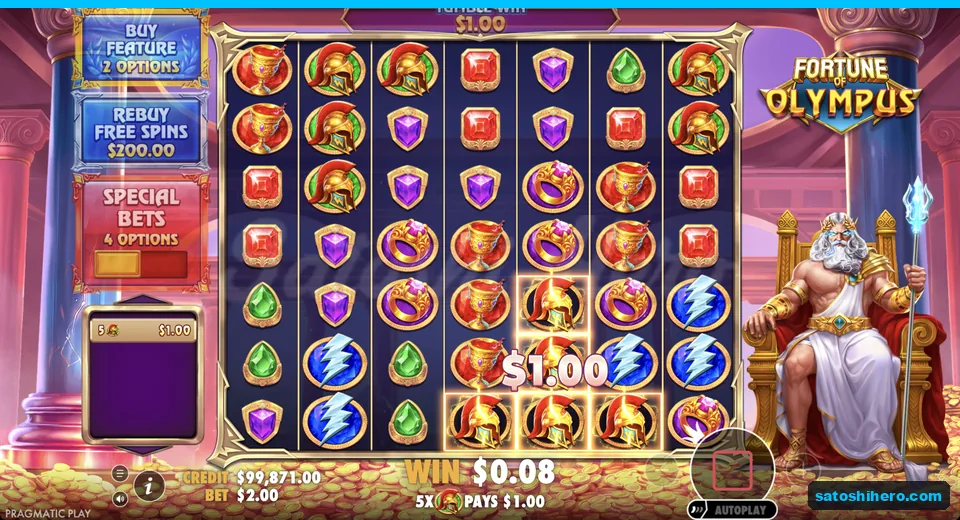
You shouldn’t judge a spin too early. A weak first cluster can still turn into something better if another cluster forms and a multiplier appears before the sequence ends. I think that delayed reveal is the best part of the base game.
Tumble chains
The game repeats tumbles until no new winning cluster forms. That gives each paid spin a short chain of chances, but it doesn’t mean the screen keeps paying. Many wins end after one clear, especially during cold base-game patches.
You’ll feel that swing quickly. A tumble can tease a good setup, then miss the next connection by one symbol. I found that frustrating at times, but it also kept me watching the full grid instead of tapping through spins.

Pro Tip: Don’t judge a spin too early. A small cluster can become interesting if a late tumble drops a strong multiplier before the sequence ends.
Base multipliers
Multiplier symbols land as fiery orbs with values from 2x to 500x. When a tumble sequence ends, the game adds every multiplier value on screen and applies that total to the whole sequence win. In the base game, that total resets after the paid spin ends.
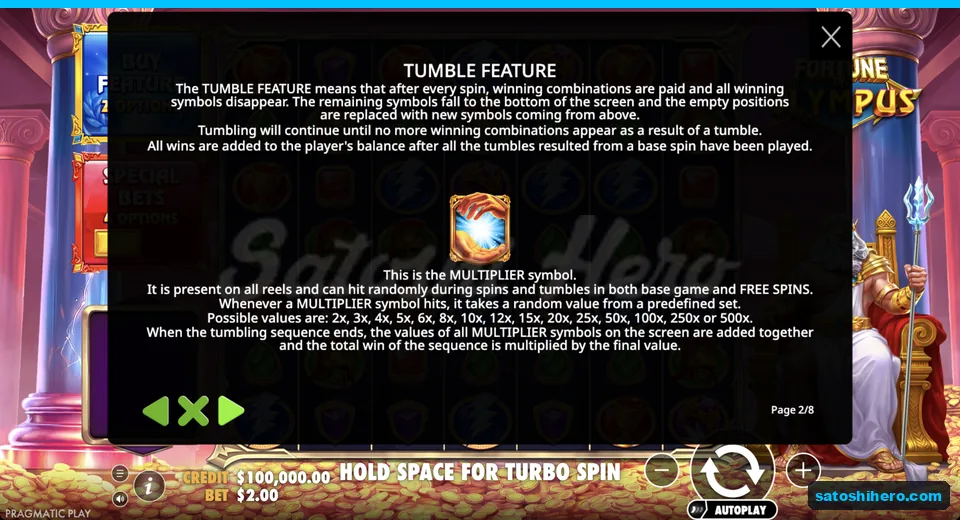
That reset matters. You can land a good orb during one tumble, cash it, then start the next spin from zero again. Gates of Olympus 1000 also speaks to wild Pragmatic multiplier chasers, but this grid changes the rhythm by making connected clusters the trigger point. Pot of Fortune gives another Pragmatic Play comparison point if you want a different feature style before returning to this cluster grid.
I like the multiplier system because it gives dull clusters a chance to wake up. But you shouldn’t assume an orb appears just because a tumble starts. The base game can go quiet for long stretches.
Free Spins
Free spins are the main target because multiplier values collect into a persistent total for the whole round instead of resetting after each spin. Four scatters award 15 free spins, five award 20, six award 25, and seven award 30. More scatters can retrigger the feature with extra spins.
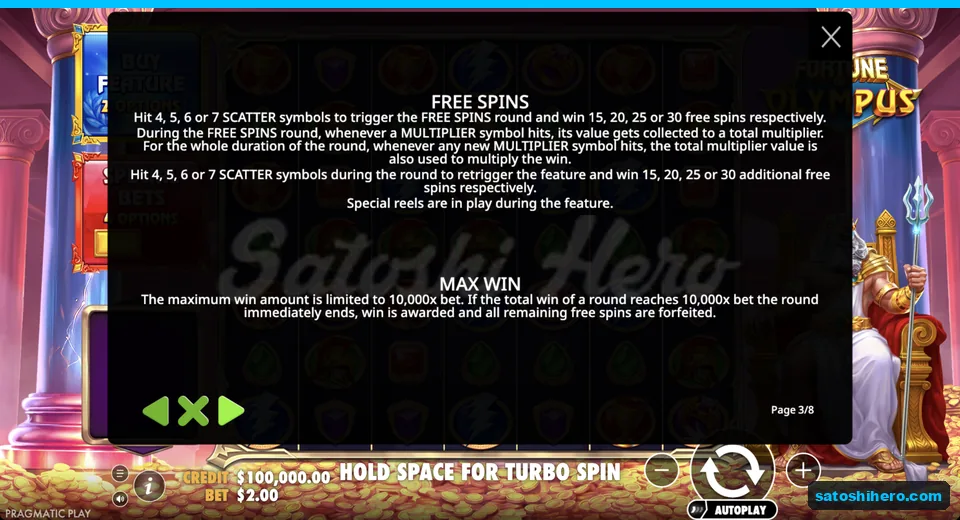
You want the multiplier total to grow early. Every multiplier value that lands joins the running total, then that total applies to later wins. If the grid doesn’t create enough paying clusters after the total grows, the feature can still feel flat.
Trigger requirements
The Zeus head scatter opens the bonus when four or more land. I didn’t hit a natural trigger during my 500-spin session, which says plenty about the game’s patience test. You can feel close when two or three scatters appear, but close doesn’t pay.
The trigger ladder gives the feature a clear structure. More scatters mean more free spins at entry. Still, the game’s very-high volatility comes from what happens after entry, not just the scatter count.
Did You Know? The free-spins multiplier doesn’t reset after each tumble. Once it grows, every later win in the round benefits from it.
Persistent multiplier
During free spins, every fiery multiplier value joins a persistent total. My bought round climbed to 6x, which sounds useful, but the win flow never became strong enough. The round needed more paying clusters after that growth.
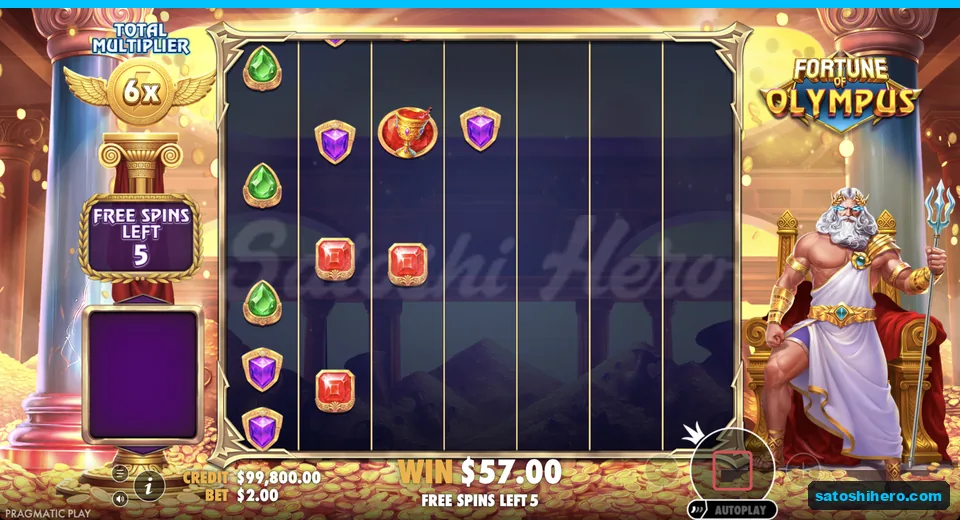
I like this design more than one-spin multipliers because it gives the bonus a rising tension. You can see the total grow and hope the grid finally connects. That same setup can sting when the game gives you multiplier progress without enough wins to use it.
Bonus Buy Tested
The standard bonus buy shortcut the base-game chase in my test, but it still lost money because the multiplier never built enough momentum. I bought Free Spins once for $200 at the $2 stake. That equals 100x the total bet and starts 15 free spins.
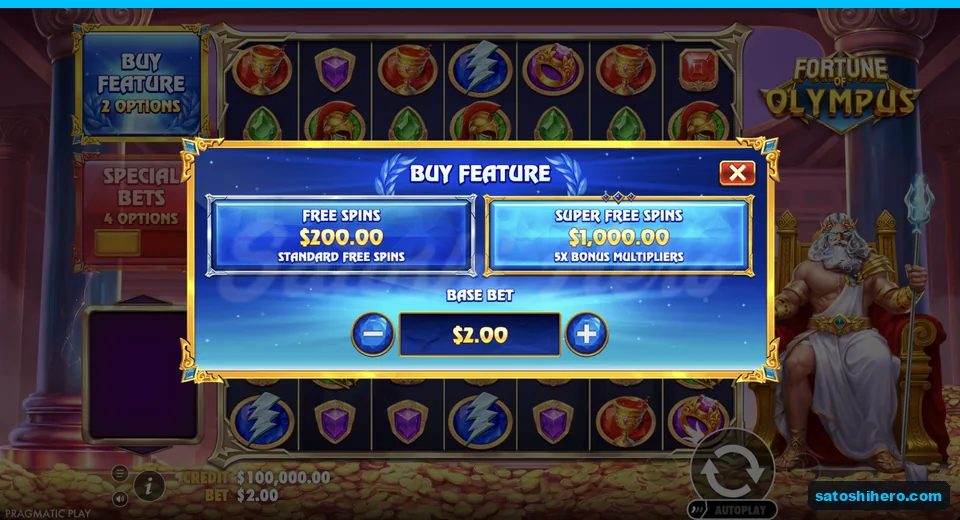
The round guaranteed entry, not profit. Mine built the total multiplier to 6x and produced a few decent clusters near the end. The final payout reached $75.00, or 37.5x my $2 stake, which fell short of the $200 buy cost.

Standard buy
The standard buy gives you the scatter entry without waiting through the base game. That can feel tempting after a cold run, and I get the appeal. You skip the hunt, but you don’t skip the variance.
I don’t like calling this kind of buy safe. It can land flat, and my result proved that quickly. The buy needed stronger multiplier momentum or better clusters after the 6x total appeared.

Caution: The $200 buy returned $75.00 in testing. That’s not a flaw; it’s a reminder that very-high volatility still applies even when you pay straight into the feature.
Super buy
Super Free Spins cost $1,000 at the $2 stake, which equals 500x the bet. This version starts every multiplier at a minimum of 5x. That setup raises the swing, and you need a bankroll that can take the hit.
I didn’t test the Super buy because the price jump felt too sharp after the standard buy missed. You should treat it as an aggressive feature shortcut, not a clever way around the math. Gates of Olympus Dice offers a different Pragmatic multiplier pace, while this buy keeps the focus on cluster wins and persistent totals.
Special Bets and Stake Options
Special Bets and bonus buys make the game more aggressive, so you should understand the base-game rhythm before paying extra for feature chances. The tested default stake was $2. That stake made the symbol values easy to read during my session.
You can switch on Special Bets for a higher per-spin cost and an improved feature chance. You can also buy the feature directly. I think both tools push you toward bonus chasing, which can punish a small bankroll fast.
Default stake
The $2 default stake gave me a clear read on the game’s cold side. I played 500 spins from a fresh $100,000 balance, and the balance still slid down without a scatter break. You don’t need a tiny balance to feel the pressure.
The symbol table also feels more concrete at this stake. A $300 top-symbol cluster sounds strong, but you still need the right cluster size and multiplier timing. Lower-tier gem clusters help, yet they rarely change the whole session alone.
Feature chase
Special Bets and buys make sense only if you accept bigger swings. You pay more to chase the feature, and that can shorten your session if the bonus doesn’t connect. I’d use the Fortune of Olympus free mode first if you want to feel the pace without risking a real balance straight away.
SatoshiHero hosts the Fortune of Olympus demo and real-play version in the same game flow. That makes it easy to test cluster pays, tumbles, and the buy panel before you commit. If you’re unsure, start with the base game and watch how often near-misses tempt you.
How the 500-Spin Session Played
The 500-spin test showed the cold side of the game, with no natural free spins and a $311.60 loss at the $2 stake. I started from a fresh $100,000 balance and finished at $99,688.40. That made the run blunt: plenty of spins, no scatter break, and steady damage.
This is the kind of session where the slot keeps teasing you with multiplier pops, but never gives you the bonus round you’re waiting for. I don’t mind tough variance, but this run felt grindy. You need patience here, and you need limits before the tease starts working on you.
Cold base run
No free spins triggered across the full 500 spins. That stood out more than any single hit because the feature is the main target. The base game carried the whole test, and it didn’t carry it well enough.
I saw occasional multiplier-boosted clusters keep the balance from falling in a straight line. Those moments gave the grid some life, especially when a small tumble caught a late orb. Still, the game never shifted into a proper comeback.
Best base hits
My best base-game hits sat around $40 from multiplier-boosted clusters. That isn’t terrible for one spin at a $2 stake, but it doesn’t rescue a long cold stretch. You need bigger cluster chains or free spins to change the session shape.
I liked the way small hits could pop higher after a multiplier landed. Yet the balance drifted down because those pops didn’t arrive often enough. Without the scatter break, the test felt like waiting for thunder that never quite cracked.
RTP, Volatility & Our Test
Fortune of Olympus has 96.55% theoretical RTP, very-high volatility, and a 10,000x max win, but my test showed how rough the short term can feel. The RTP looks competitive for this style. The volatility shapes the lived experience much more than the headline percentage.
The 10,000x cap gives the slot meaningful upside. The round ends immediately if that cap hits, so the game doesn’t keep stacking beyond it. I think the cap feels fair for this volatility level, though the cold stretches can feel long before the bonus arrives.
Simulator projection
I modelled 1,000 spins at the $2 stake using the 96.55% RTP and very-high volatility profile. The median session finished around $203 down. The fifth-to-ninety-fifth percentile band ranged from about $869 down to $1,360 up.
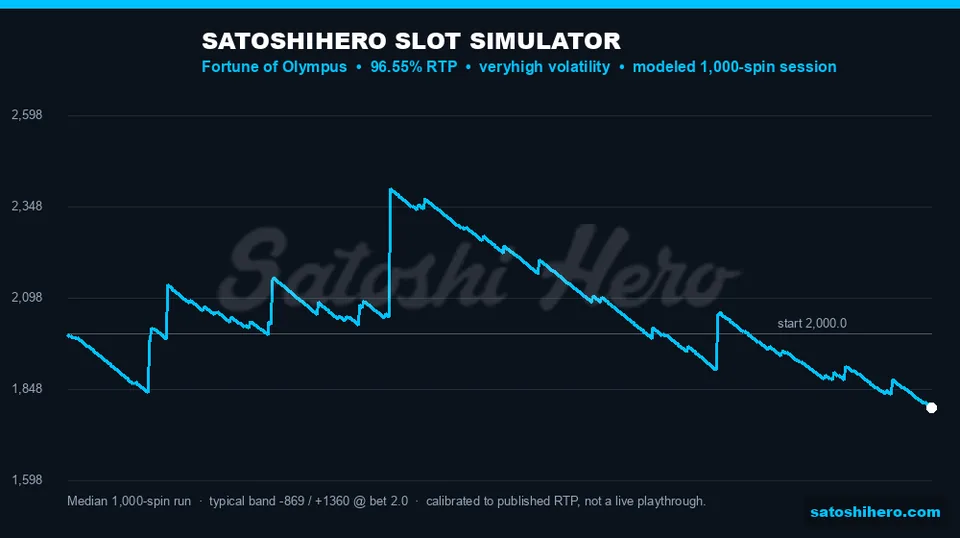
The model triggered a feature about once every 54 spins. A win of 100x or more appeared about once in 807 spins. You should treat those figures as a range check, not a promise about your next session.
Quick Fact: Our simulator showed a wide outcome band at the $2 stake, which matches the game’s very-high volatility feel.
Our 500-spin session
I played 500 spins at $2 per spin and finished down $311.60. No free spins triggered, and my best hits landed around $40. The balance drifted down because the base-game multipliers never built a real swing.
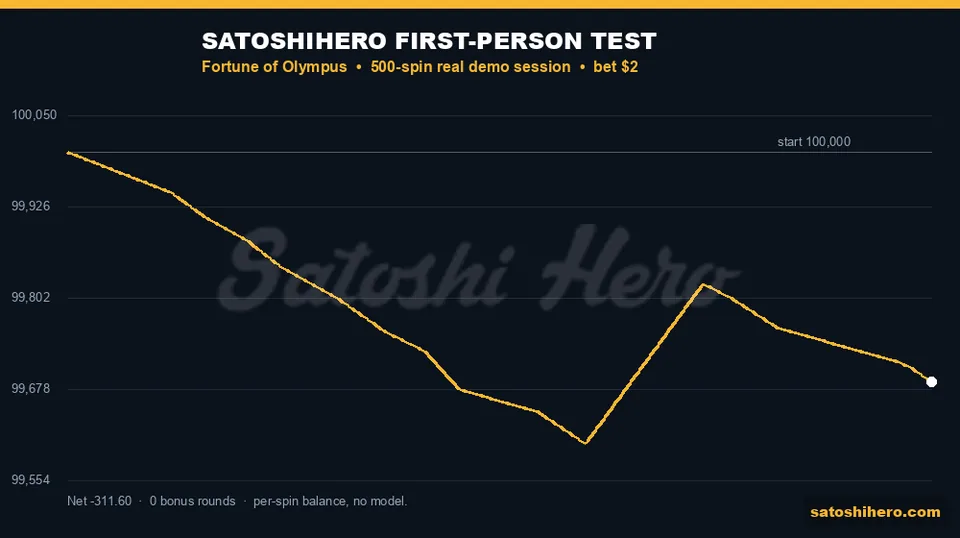
That result doesn’t change the official RTP. It does show how the game can feel when scatters stay away. You can get enough small wins to keep watching, but not enough to stop the slide.
Caution: Very-high volatility means the 96.55% RTP won’t feel smooth. You can play hundreds of spins without seeing the free spins, as happened in the test.
The 96.55% RTP is the operator-published theoretical return. A single 500-spin session doesn’t prove or disprove that figure, and bonus-buy returns can sit slightly differently from base-game returns by design. The SatoshiHero Slot Simulator is a model, not a prediction of what happens to you.
Frequently Asked Questions About Fortune of Olympus
How does Fortune of Olympus pay?
Fortune of Olympus is a cluster-pays slot on a seven-by-seven grid. Five or more matching symbols connected horizontally or vertically pay. There are no fixed paylines. Winning clusters tumble away and new symbols drop in, so one spin can chain several wins.
How do the multipliers work in Fortune of Olympus?
Fiery multiplier symbols land randomly with values from 2x to 500x. When a tumble sequence ends, all visible multiplier values get added together. That total multiplies the sequence win. In free spins, the values collect into a persistent total multiplier that grows through the round.
How do you trigger the free spins in Fortune of Olympus?
Four, five, six, or seven scatters award 15, 20, 25, or 30 free spins. More scatters can retrigger the feature. You can also buy Free Spins for 100x the bet or Super Free Spins for 500x the bet.
What is the RTP and max win of Fortune of Olympus?
The RTP is 96.55% and the volatility is very-high. The maximum win is capped at 10,000x the bet. The round ends immediately if that max-win cap gets reached.
Is Fortune of Olympus better in demo mode first?
Demo mode helps you learn the cluster pays, tumbles, and multiplier rhythm before using Special Bets or bonus buys. I think that matters here because the feature chase can get expensive quickly. You can test the pace first, then decide how much risk you want.
Final Thoughts
Fortune of Olympus stands out through its seven-by-seven cluster grid, persistent free-spins multiplier, and sharp Zeus presentation. The main drawback is the cold base-game risk, because you can spin for a long time without the scatter break you came for.

My Verdict
High-volatility hunters and bonus-buy fans get the clearest appeal here, but you need firm limits. Expect teasing multiplier pops, long quiet patches, and a bonus round that needs early momentum. I’d test the demo first, then treat Special Bets with care.
I like the way the cluster system keeps every paid spin alive for another drop. I don’t like how my 500-spin session finished down $311.60 with no natural free spins, and the $200 buy returning $75.00 made the risk feel very real. The game has bite, but it doesn’t hand out comfort.
Fortune of Olympus is a strong pick if you want a volatile Pragmatic Play grid slot with real multiplier tension. SatoshiHero’s game details and guide checks are updated periodically, so the specs and test notes stay aligned with the version you play.

Pros:
 Clear cluster system: Connected wins make the whole grid matter on every paid spin.
- Persistent bonus multiplier: Free spins can build tension as the total multiplier grows.
- Strong top-end cap: The 10,000x ceiling gives serious upside for patient play.
- Readable presentation: Zeus, scatters, and multiplier orbs stay easy to track.

Cons:
 Harsh cold spells: My test missed natural free spins across 500 spins.
- Risky bonus buys: The $200 buy returned only $75.00 in testing.
- Swingy base game: Small multiplier hits may tease without stopping a balance slide.

Best For: Bonus chasers, cluster-pays fans, and players comfortable with very-high volatility get the most from this slot. You’ll need patience, a set budget, and a willingness to walk away when scatters don’t show. If you prefer steady low-risk spins, this one may feel too sharp.





























































Bets
All Bets
Game
Player
Date
Wager
Mult.Multiplier
Prize
 San Chong Baozha Blue: Bonus Combo
 josh1998
- 18:15:18
- 0.39×
- San Chong Baozha Blue: Bonus Combo
- josh1998
- 18:15:15
- 0.04×
- 888 Dragons
 Hidden
- 18:15:12
- 0×
- San Chong Baozha Blue: Bonus Combo
- josh1998
- 18:15:12
- 0.14×
- San Chong Baozha Blue: Bonus Combo
- josh1998
- 18:15:09
- 0.74×
- 888 Dragons
- Hidden
- 18:15:08
- 0×
- Aztec Magic Deluxe
 Hidden
- 18:15:07
- 0×
- 888 Dragons
- Hidden
- 18:15:06
- 5×
- San Chong Baozha Blue: Bonus Combo
- josh1998
- 18:15:06
- 0×
- 888 Dragons
 tonex25
- 18:15:05
- 99.99×