

Anubis' Moon
By pressing play, you agree that you are above legal age in your jurisdiction and that your jurisdiction allows online gambling.


Chasing Golden Scarabs Beneath Anubis’ Moon
Spin through a moonlit Egyptian board where sticky scarabs provide the only route beyond standard line wins.
According to Evoplay, Anubis’ Moon slot is a medium-high volatility game with a 96% RTP and 5,008x maximum win. It uses a 5-reel, 4-row grid with 20 fixed paylines, while the Scatter Respin supplies its only feature. You can play in demo or real-money mode on SatoshiHero, and my 100-spin test ended 17x down despite a 37.5x base win.
Key takeaways
- Best bonus: The Scatter Respin only starts when three or more scarabs land during normal spins.
- RTP / volatility: The game combines a 96% theoretical return with medium-high volatility.
- Max win: The official top prize reaches 5,008x the total bet.
- Risk note: Only nine counted spins returned money, so quiet stretches can dominate short sessions.
- Bankroll note: Pick a steady stake first, and don’t raise it while chasing an absent Respin.

Table of Contents
- How the Anubis’ Moon slot Works
- Line-win rules
- Board and stake setup
- Anubis’ Moon slot Symbols and Payouts
- Portrait symbol values
- Glyphs and Scatter pays
- Theme and First Impressions
- Night-time Egyptian setting
- Visual clarity in play
- Scatter Respin
- Sticky Scatter sequence
- Results from testing
- Win Potential and Payout Shape
- Published cap context
- Observed payout shape
- Betting and Bankroll Fit
- Normal-spin access only
- Practical bankroll approach
- RTP, Volatility and Test Results
- Simulator projection
- Our 100-spin session
- Test Conditions and Evidence Limits
- Counted session method
- Extra-spin evidence limits
- Frequently Asked Questions About Anubis’ Moon
- Closing Thoughts
How the Anubis’ Moon slot Works
Anubis’ Moon slot uses five reels, four rows and 20 fixed paylines. Regular symbols must match on adjacent reels, beginning with the leftmost reel. You won’t find cluster wins or pay-anywhere rules for those symbols. I think that familiar structure makes the base game easy to grasp.
Line-win rules
Each line pays only its highest qualifying combination. A matching run can’t begin in the middle, so you should follow each marked path from reel one. The scarab works differently because its total count across the board controls the return. You need to separate those two win checks when reading a settled result.
Three Scatters returned $20 from my $10 stake, which equals 2x. Those scarabs also started the Respin, but they didn’t pay on the initiating spin. You see their final value only after the sticky sequence ends. That delayed settlement can look odd until you understand the separate Scatter rules.
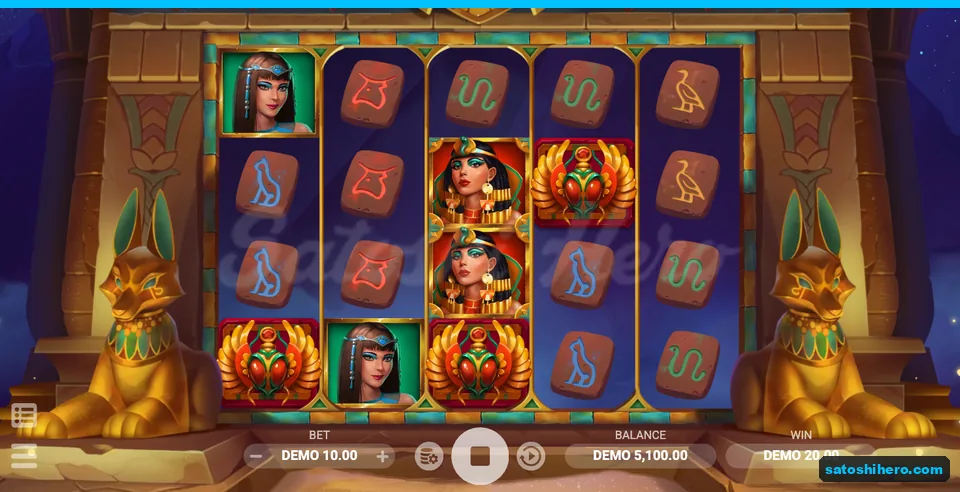

Fast Fact: The 20 figure is a true fixed-payline count. Regular wins connect from the leftmost reel, while the Scatter follows separate anywhere-on-the-board rules.
Board and stake setup
My demo opened with a $10 stake and a $5,000 balance. That balance covered 500 default bets, though it was test context rather than a recommended bankroll. Both demo and real-money modes are available. You can use the free mode to learn the delayed Scatter settlement before risking money.
Keep one eye on connected line wins and another on the total Scatter count. That habit prevents you from mixing two distinct payout routes.
Anubis’ Moon slot Symbols and Payouts
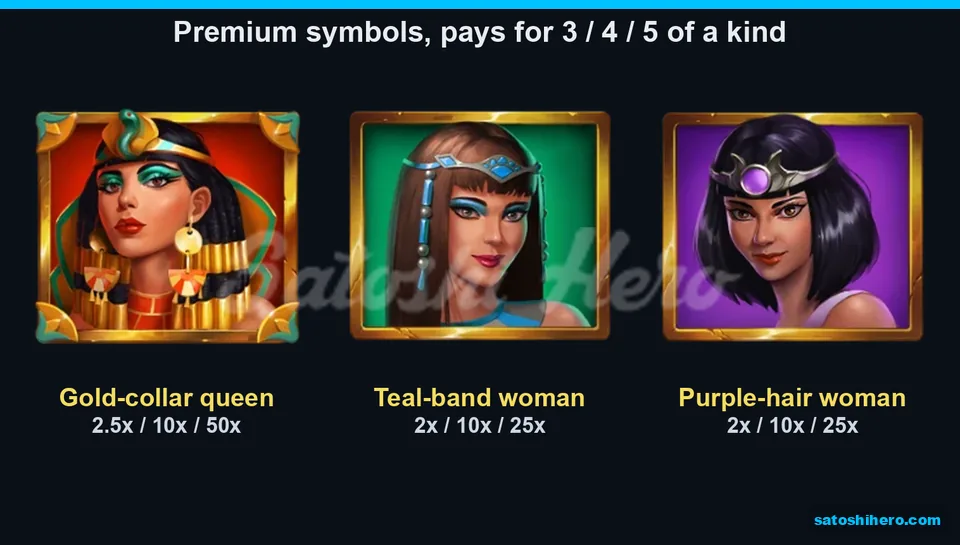
Seven regular symbols create line wins, while the scarab Scatter pays by total count anywhere. Every figure below uses the total stake as its base. You should read each ladder as 3, 4 and 5 matching symbols. I find the compact paytable easier to learn than feature-heavy alternatives.
Portrait symbol values
The gold-collar queen leads the regular symbols at 2.5x, 10x and 50x. Both the teal-band woman and purple-hair woman return 2x, 10x and 25x. You gain the most from five queens, but that top line combination didn’t appear in my test. The premium ladder looks clear without suggesting frequent big matches.
Glyphs and Scatter pays
Four carved glyphs share the same lower ladder. The red bull, green snake, yellow ibis and blue jackal return 1x, 2.5x and 10x. These symbols filled much of my board and produced mostly small returns. Their repeated colours make line tracing straightforward, though their ceiling feels modest.
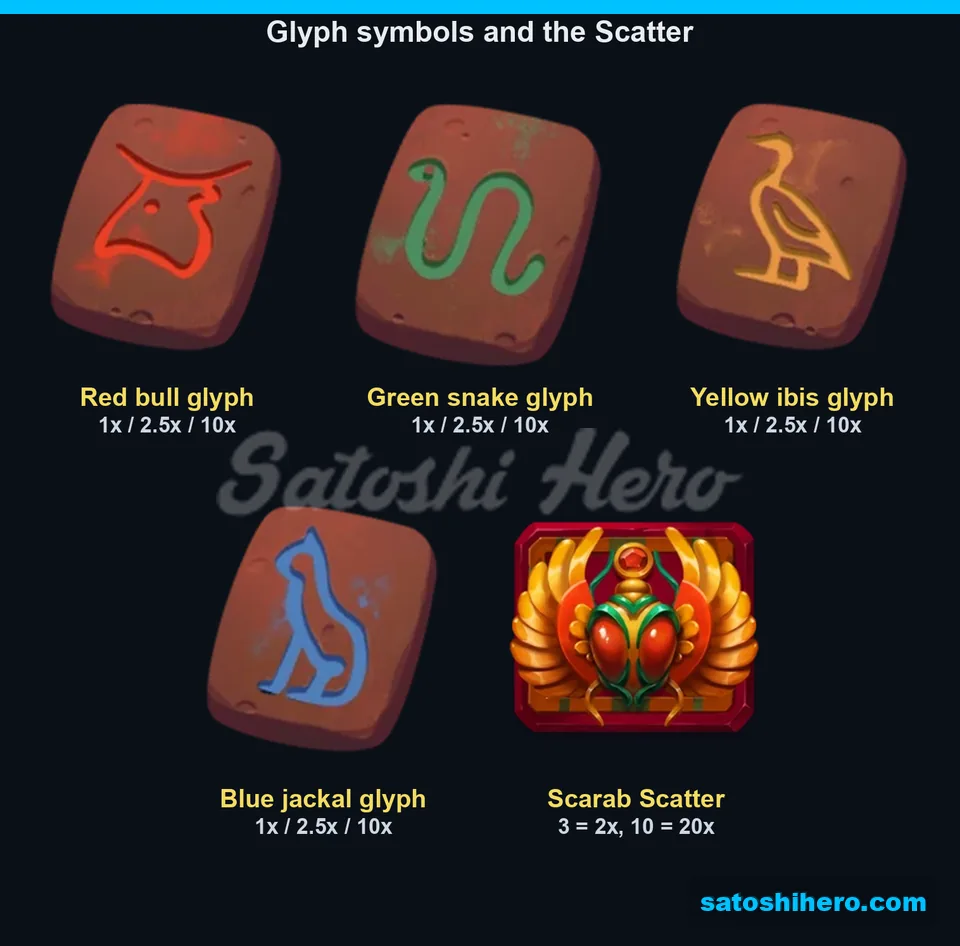
The scarab ladder depends on its final board count. Three Scatters pay 2x, eight pay 12x, ten pay 20x and twelve pay 40x. My three-scarab result returned $20 from a $10 stake, confirming the 2x entry. You need more sticky scarabs, not just more motion, to climb that ladder.
Portraits drive line potential, while collected scarabs set Respin value. I like the clean split, but you shouldn’t assume every trigger carries a large prize.
Theme and First Impressions
The game sets its 5-by-4 board beneath a crescent moon, with a pyramid and two golden Anubis statues framing the reels. This Anubis moon Egypt scene uses a dark sky and warm gold trim. You get a cohesive night setting, even though the theme won’t win originality awards. I prefer its restrained treatment to a crowded temple backdrop. Evoplay’s contrasting themes also appear in Young Wolf Song, X-Demon and Wonder Farm, which offer useful visual comparisons without changing this game’s rules.
Night-time Egyptian setting
A moonlit pyramid rises behind the gold reel frame. Matching statues stand on both sides, giving the board a balanced, almost ceremonial shape. The Anubis moon symbol idea appears through the crescent, scarabs and jackal-headed figures. You can understand the visual identity before the first spin ends.
My opening screen showed the $10 default stake and $5,000 demo balance beneath that scene. I liked how bright scarabs contrasted with the deep blue background. You should have little trouble spotting a new sticky symbol.
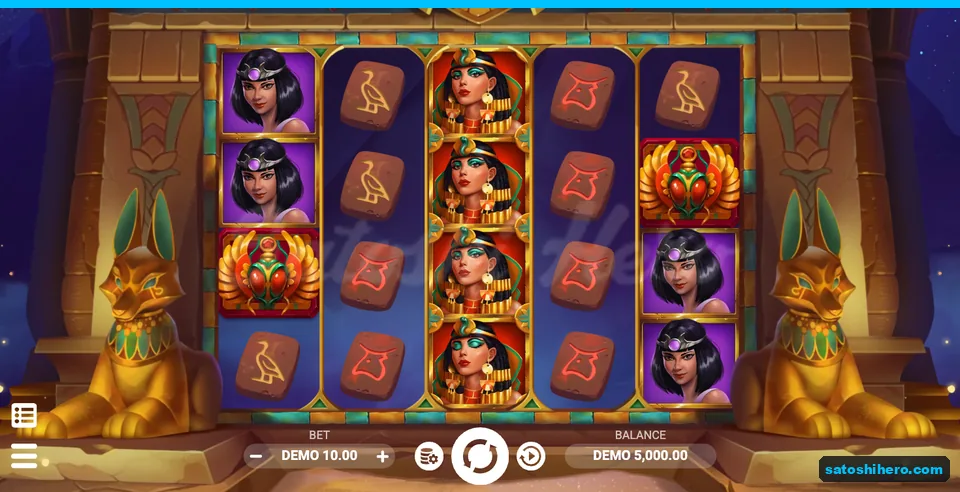

Trivia: Despite the elaborate Egyptian presentation, the game uses a deliberately lean feature set: one Scatter Respin, no Wild and no Bonus Buy.
Visual clarity in play
Three portraits, four coloured glyphs and golden scarabs stay distinct while the reels move. During a Respin, sticky scarabs remain bright as the empty positions spin around them. You can scan the settled board without mistaking a glyph for a Scatter. That clarity matters because every added scarab changes the final count.
The familiar artwork feels safe, but it keeps the action readable. I found the statues attractive without letting them distract you from live positions.
Scatter Respin
Three or more Scatters trigger the only feature, and every new scarab can extend it. The final number of sticky symbols sets the payout. You don’t choose positions, timing or paths during the sequence. I like the simple cause and effect, though weak endings can feel abrupt.
Sticky Scatter sequence
Three scarabs must first land during a normal spin. They stick while every open position spins again. Each fresh Scatter locks in place and resets the respin count, so another attempt follows. You keep watching open spaces until no new scarab appears or the board fills.
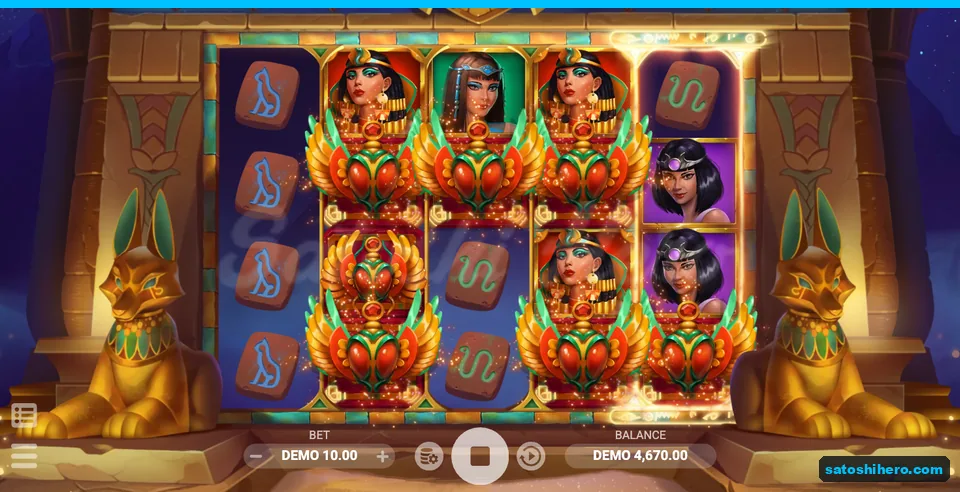
All collected Scatters pay together once the round stops. The triggering symbols don’t settle a prize on their initiating spin. A longer sequence only helps when it adds more scarabs, so repeated animation alone carries no value. You should focus on the board count instead of the number of respins.
No choice or timing method changes this random process. I found that honesty useful because the feature never pretends to offer skill. You can simply track locked positions.

Tip: Watch the Scatter count, not just the number of respins. The payout depends on how many scarabs remain when the chain ends.
Results from testing
My first counted Respin arrived on spin 64 and paid 15x. The second landed on spin 91 but stopped at three scarabs for only 2x. You can see how two valid triggers created sharply different returns. I thought the weaker round felt especially harsh after waiting 27 spins between features.
After the counted test, I played extra spins solely for clean feature images. One of those uncounted rounds filled most of the board and returned $400 from a $10 stake, equal to 40x. That result never entered my ending balance or reported loss. You should keep it separate from the measured 100-spin record.
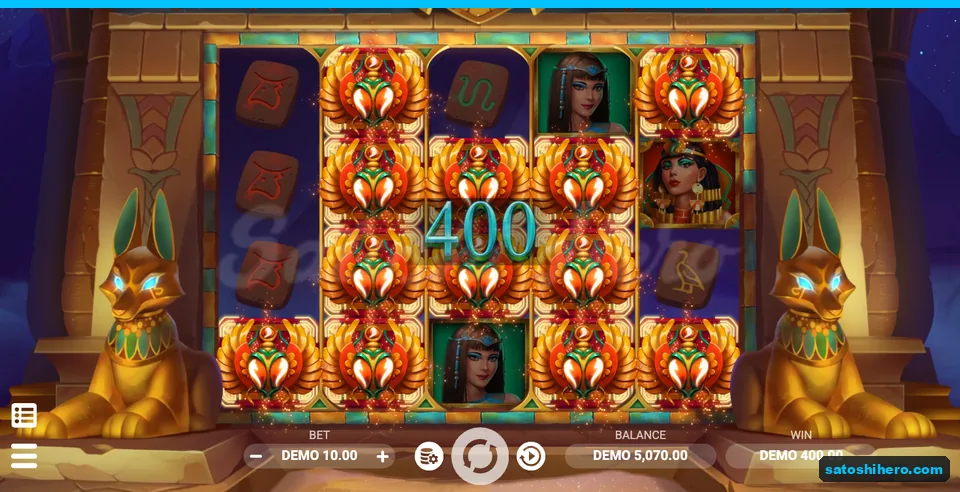
The gap between 2x and 40x shows why final count matters more than triggering alone. Even a long-looking sequence can disappoint if few new scarabs stick. In my experience, the mechanism creates clear tension without adding needless rules. The Respin can build steadily, or it can stop immediately at three symbols.
Win Potential and Payout Shape
The published 5,008x ceiling sits far above my counted session’s 37.5x largest win. That best tested result came from an ordinary line spin, not the Scatter Respin. You should view the top figure as a boundary rather than a target. I find the upside meaningful, but short play can still revolve around small returns.
Published cap context
A maximum win defines the game’s allowed peak, not a likely session finish. Simulator frequency also can’t tell you when any large result might appear. Treating a rare ceiling like an expected goal encourages poor stake decisions. You gain better context by comparing the cap with results actually observed.
Observed payout shape
Spin 34 delivered the 37.5x base-game high, while counted Respins paid 15x and 2x. The extra image-only Respin reached 40x but remained outside the test totals. These outcomes show two genuine payout routes: connected paylines and final Scatter counts. You shouldn’t assume the feature always beats the base game.
Only nine of my 100 counted spins returned anything. The low hit count made the balance trace uneven, even with one sizeable regular win. I found the long quiet portions more noticeable than the brief jumps. Your own session can follow another pattern because each result remains random.
Scarabs create the spectacle, but paylines can shape your balance more heavily. My test showed that a Respin isn’t automatically the strongest return.
Betting and Bankroll Fit
Choose a fixed stake and session limit before playing because normal spins provide the only feature access. Raising your bet doesn’t make a Respin more likely. You must land at least three scarabs naturally, with no purchase shortcut. I think that setup rewards patience more than aggressive stake changes.
Normal-spin access only
The game offers no Bonus Buy or manual feature selection. I also found no Wild to help complete ordinary symbol matches. Those omissions leave every Respin dependent on a random base spin. You should expect unpredictable gaps between triggers, including stretches with no meaningful action.
My $10 test stake simply matched the demo’s opening setting, so it isn’t a recommendation. I prefer stable staking because the feature gives no signal before it arrives. You can’t improve its chance by reacting to earlier misses.
Practical bankroll approach
The $5,000 opening balance represented 500 bets at my chosen stake. By spin 33, my trace stood 19.5x down. A 37.5x hit on spin 34 then pushed it to 17x up. You can see how one regular win reshaped the short sample within seconds.
Only nine spins returned money across the full test. That sparse feedback made the stable stake valuable because losses didn’t provoke larger wagers. I don’t like chasing in any slot, and this feature structure gives you no sound reason to do it. One strong hit can change a short trace without changing the game’s mathematics.

Alert: Medium-high volatility and only nine paying spins in my test created long quiet stretches. Set your stake first, and don’t raise it because the Respin hasn’t appeared.
The balance declined after spin 34 and finished below its starting point. You need to accept that reversal, keep your stake steady and stop at your chosen limit.
RTP, Volatility and Test Results
Anubis’ Moon slot carries a 96% theoretical RTP and medium-high volatility, while my counted session ended 17x down. The simulator and live trace describe short-session risk, not promised outcomes. You should read one as a model and the other as recorded experience. I find their contrast more useful than either figure alone.
Simulator projection
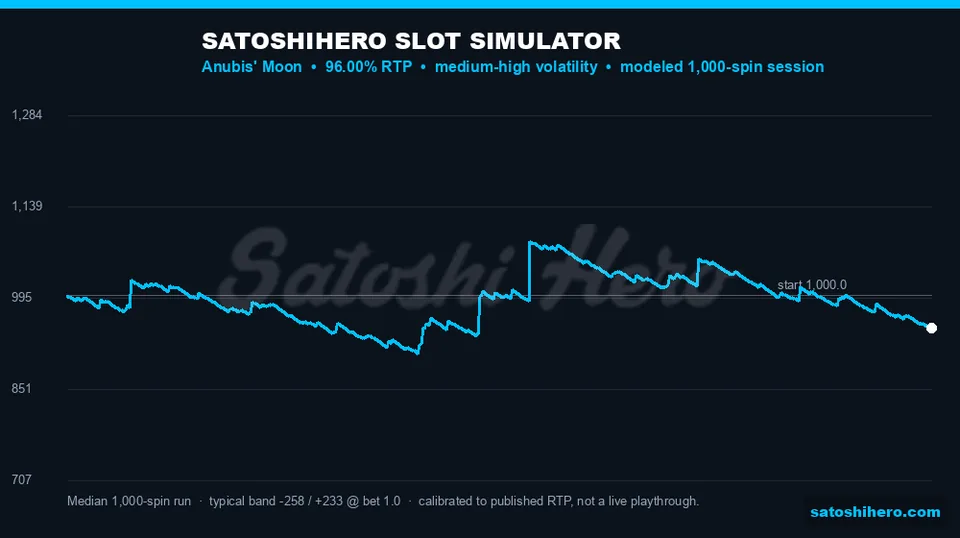
The SatoshiHero Slot Simulator modelled 1,000 spins at one bet unit. Its median session finished 52x down, while the central 90% range ran from 258.1x down to 233.2x up. A feature-sized result appeared about once per 45 modelled spins. You can’t treat those outputs as a schedule for future play.
A near-cap result appeared about once per 4,032 modelled spins. That frequency describes the model’s distribution rather than a countdown inside the game. I think the broad central range gives the clearest warning. You can finish far from the median even within the same 1,000-spin frame.
The blue graph maps possible paths rather than one live balance record. You should use it to understand spread, not predict your next trigger.
Our 100-spin session
I started with $5,000, wagered $10 per spin and finished with $4,830. That left me $170 down, equal to 17x my stake. Nine spins paid anything, and the largest reached 37.5x on spin 34. You can read those facts as one observed path, not a normal result.
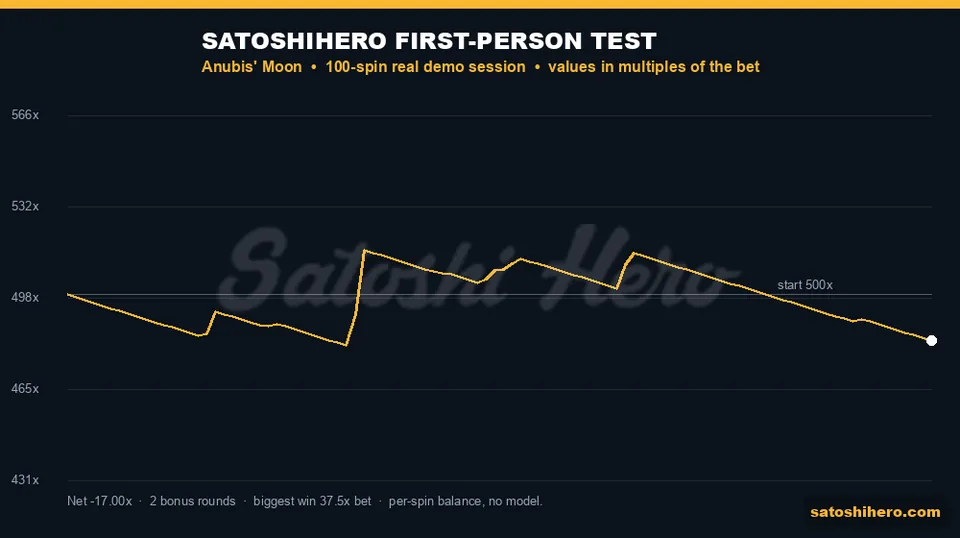
My balance had fallen 19.5x by spin 33. One spin later, the 37.5x win moved the running trace to 17x ahead. The balance then drifted lower through the rest of the test. I found that reversal a sharp example of how one hit can briefly hide a weak hit rate.
Counted Respins returned 15x on spin 64 and 2x on spin 91. Neither beat the largest line win, and the late feature couldn’t recover the session. You should notice how the gold live-session graph differs from the blue projection. One records my exact path, while the other maps many possible paths.
Evoplay’s published RTP is the theoretical return. One 100-spin session neither confirms nor changes that percentage, and simulator frequencies remain modelling outputs rather than guaranteed intervals. Feature payouts can also produce a different short-term pattern from base-game wins.
Use the model for risk context and my live test for observed evidence. You can learn from both while accepting that your result can differ.
Test Conditions and Evidence Limits
Exactly 100 spins counted, although two internal errors split my play across three demo sessions. I tracked the running balance manually to preserve one continuous record. You should separate that counted evidence from later image-only spins. I think this boundary makes the reported loss easier to trust.
Counted session method
The message “Internal error. Please reopen the game.” appeared twice. It ended the active load without proving that you would face the same issue. My sample therefore covered spins 1 to 22, spins 23 to 49 and spins 50 to 100. Each reopened session displayed a fresh $5,000 demo balance.
I carried the prior result into a manual running total after every restart. That process created one 100-spin trace instead of three misleading account snapshots. You can still compare every stated win with its position in the sequence. In my view, transparent stitching beats hiding the interruptions.
The errors only affected how I captured the balance history. All totals still come from exactly 100 spins, so you should read the 17x loss as one combined record.
Extra-spin evidence limits
I ran extra spins only to capture clean images of the feature. The $400, 40x Respin belongs to that separate group and never affected the counted return. No Bonus Buy test occurred because no such option exists. You can use the image as a mechanic example, but not as part of the balance trace.
This separation prevents a strong image result from flattering the measured test. I don’t want an uncounted 40x win mixed into a session that finished down. The boundary is simple: 17x down belongs to the test, while 40x does not.
Frequently Asked Questions About Anubis’ Moon
What kind of game is the Anubis’ Moon slot?
Anubis’ Moon slot is a five-reel, four-row Egyptian game from Evoplay with 20 fixed paylines. You get three portraits, four glyphs, a scarab Scatter and one sticky Respin feature. I find its rules leaner than its ornate setting suggests.
How do paylines work in the Anubis’ Moon slot?
Regular symbols must connect across adjacent reels from the leftmost reel. Only the highest win per line counts, with returns from 1x to 50x. You should track anywhere-paying Scatters separately.
Can the Scatter Respin extend itself?
Yes. Three or more Scatters stick while open positions respin. Each new scarab restarts the count, and the round ends after a blank respin or full board. You then receive one count-based payout.
How much does the Anubis’ Moon slot Scatter pay?
Three Scatters pay 2x, eight pay 12x, ten pay 20x and twelve pay 40x. My observed three-Scatter trigger returned $20 from a $10 stake. You receive that payout after the Respin finishes. I think the low entry return makes added scarabs crucial.
Does the Anubis’ Moon slot have a Wild or Bonus Buy?
No Wild or Bonus Buy appeared in my game or its rules. The Scatter Respin is the only feature, and normal spins provide the sole trigger route. You can’t purchase or select it. That limited setup makes stake discipline especially important.
What are the Anubis’ Moon slot RTP, volatility and maximum win?
The game has a 96% theoretical RTP, medium-high volatility and a 5,008x maximum win. Those figures don’t predict your next session, so you should expect uneven short-term results. My test finished below its starting balance.
What did the 1,000-spin simulator show?
The median modelled result finished 52x down. Its central 90% range stretched from 258.1x down to 233.2x up, while feature-sized wins appeared about once per 45 spins. You shouldn’t read those frequencies as guaranteed intervals. They map possible outcomes rather than future timing.
What happened in the 100-spin Anubis’ Moon slot test?
My balance finished 17x down after only nine paying spins. The largest win reached 37.5x on a normal spin, while two counted Respins returned 15x and 2x. You can see why one strong hit didn’t secure a positive finish. The later 40x image round stayed outside this test.
Closing Thoughts
Anubis’ Moon offers a clear fixed-line game with one tense sticky-Scatter feature. Its readable board and dual payout routes stand out, but sparse hits can make short sessions feel cold. You need patience more than complicated feature knowledge.

My Verdict
Try the free mode if you enjoy simple rules, count-based Respins and sharp balance swings. Expect ordinary paylines to matter as much as the headline feature, and keep a firm session limit.
I like how easily the board shows each new scarab, and my 37.5x base win proved normal spins can carry real weight. I don’t like that my second counted Respin stopped at 2x after a long quiet period. The feature creates tension, but it doesn’t always reward the wait.
This Anubis’ Moon slot guide and its playable details are updated periodically. You should use the observed test as practical context, not a prediction for your own session.

Pros:
 Clear win rules: Fixed paylines and count-based Scatters keep every result easy to read.
- Strong visual contrast: Bright scarabs remain visible throughout each sticky Respin sequence.
- Two payout routes: Regular lines can outperform weak feature rounds during short sessions.
- Useful free mode: Demo play lets you learn delayed Scatter settlement without risking money.

Cons:
 Sparse feedback: Only nine counted spins returned money during my test.
- No Wild support: Regular line wins rely entirely on natural symbol matches.
- Weak minimum feature: A three-Scatter Respin returns just 2x the total stake.

Best For: Patient players get simple mechanics, readable symbols and one suspenseful collection feature. You should feel comfortable with quiet stretches and keep a fixed stake throughout the session.




























































Bets
All Bets
Game
Player
Date
Wager
Mult.Multiplier
Prize
 3 Witches: Bonus Combo
 bjgrandy149
- 00:16:32
- 0×
- Book Of Nile: Magic Choice
 Hidden
- 00:16:32
- 11×
- 3 Witches: Bonus Combo
- bjgrandy149
- 00:16:30
- 0×
- Galaxy Glitter
 Hidden
- 00:16:30
- 0×
- Royal Fruits 9: Hold 'n' Link
- nina87
- 00:16:28
- 0×
- 3 Witches: Bonus Combo
- bjgrandy149
- 00:16:28
- 0×
- Book Of Nile: Magic Choice
- Hidden
- 00:16:28
- 1×
- 3 Witches: Bonus Combo
- bjgrandy149
- 00:16:26
- 0×
- Book Of Nile: Magic Choice
- Hidden
- 00:16:25
- 0×
- 4 Lucky Nuggets
 whodey39311
- 00:16:24
- 1.33×