

Trinity Reels
By pressing play, you agree that you are above legal age in your jurisdiction and that your jurisdiction allows online gambling.

Trinity Reels
RTP95.96%
VolatilityHigh
Max winx15,127.3
Hit rate20.03%
ThemeHalloween
ReleasedOct 2022

Split Symbols and Stone-Temple Swings in Trinity Reels
Trinity Reels slot drops you into a high-volatility Betsoft ways game where split symbols, reel-six boosts and cascades drive the action.
According to Betsoft, Trinity Reels slot is a high volatility slot with 95.96% RTP and 15,127x max win potential. It uses 6 reels, 3 rows and up to 177,147 ways to win through split tiles, with each tile holding up to three symbol copies. It aims at patient bonus hunters who like moving ways counters more than steady small hits.
Key takeaways
- RTP / volatility: Trinity Reels slot has 95.96% RTP, high volatility and tough dry spells.
- Max win: The ceiling sits at 15,127x the bet, which is big but not inflated.
- Best play: Split symbols create up to 177,147 ways, not fixed paylines.
- Best bonus: Reel-six boosts drive the action through Wild Boost, Split Boost and Multi Boost.
- Bankroll note: My 100-spin test finished $40.02 down at $0.60 stakes, with no free spins.

Table of Contents
- How Trinity Reels slot Works
- Ways, not lines
- Symbol pay tiers
- Theme & First Impressions
- Temple puzzle look
- First spin feel
- Split Symbols and Moving Ways
- Tile splitting
- Changing ways
- Cascades and Mystery Reveals
- Cascade sequence
- Mystery reveals
- Reel Six Boosts
- Three boost types
- Board impact
- Free Spins and Buy Feature
- Trigger rules
- Boosted round type
- Three buy options
- RTP, Volatility & My Test
- Simulator projection
- Our 100-spin session
- Base-Game Pace and Session Feel
- Base-game pace
- Session takeaway
- Frequently Asked Questions About Trinity Reels
- Closing Thoughts
How Trinity Reels slot Works
Trinity Reels slot uses a 6-reel, 3-row ways grid where matching symbols pay on three or more adjacent reels from the left. You don’t get fixed paylines here. You get a shifting ways count, split tiles and reel-six boosts that change the board before payouts land.
The demo opened with a $1,000.00 balance and a $0.60 bet. The bet range runs from $0.20 to $25.00, with autoplay and fast spin beside the bet controls. You can play Trinity Reels online on desktop or mobile, and the same grid controls stay clean on both.
Ways, not lines
Wins form left to right across adjacent reels, in any symbol position. A way win counts every matching tile on the reels involved, so the same symbol can grow fast when split tiles appear. Reel 6 always holds 3 symbols, while reels 1 to 5 can reach 9 symbols each.
In my test, the ways counter showed 5,760 on the first settled board. After one base-game win, it dropped to 1,620 ways. I also captured a $0.54 base-game win on a $0.60 spin, which felt more like a small mechanic check than a strong hit.
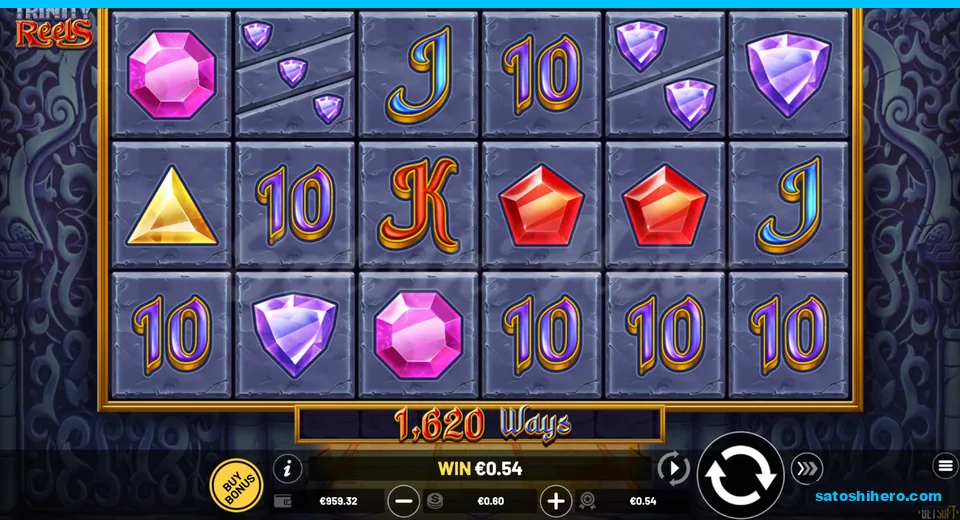

Tip: Watch the ways counter before you raise your stake. A board with more split symbols can look similar but carry much more win-route volume.
Symbol pay tiers
The paytable has eleven regular symbols: six gems and five card ranks. At my $0.60 stake, the Diamond paid $1.50, $0.90, $0.60 and $0.30 for six, five, four and three of a kind. The Shield paid $0.90, $0.60, $0.36 and $0.21.
The Octagon paid $0.60, $0.45, $0.21 and $0.15. The Pentagon paid $0.45, $0.36, $0.21 and $0.15, while Square and Triangle paid $0.36, $0.21, $0.15 and $0.09. Ace and King paid $0.21, $0.15, $0.09 and $0.06, while Queen, Jack and Ten paid $0.15, $0.12, $0.09 and $0.06.
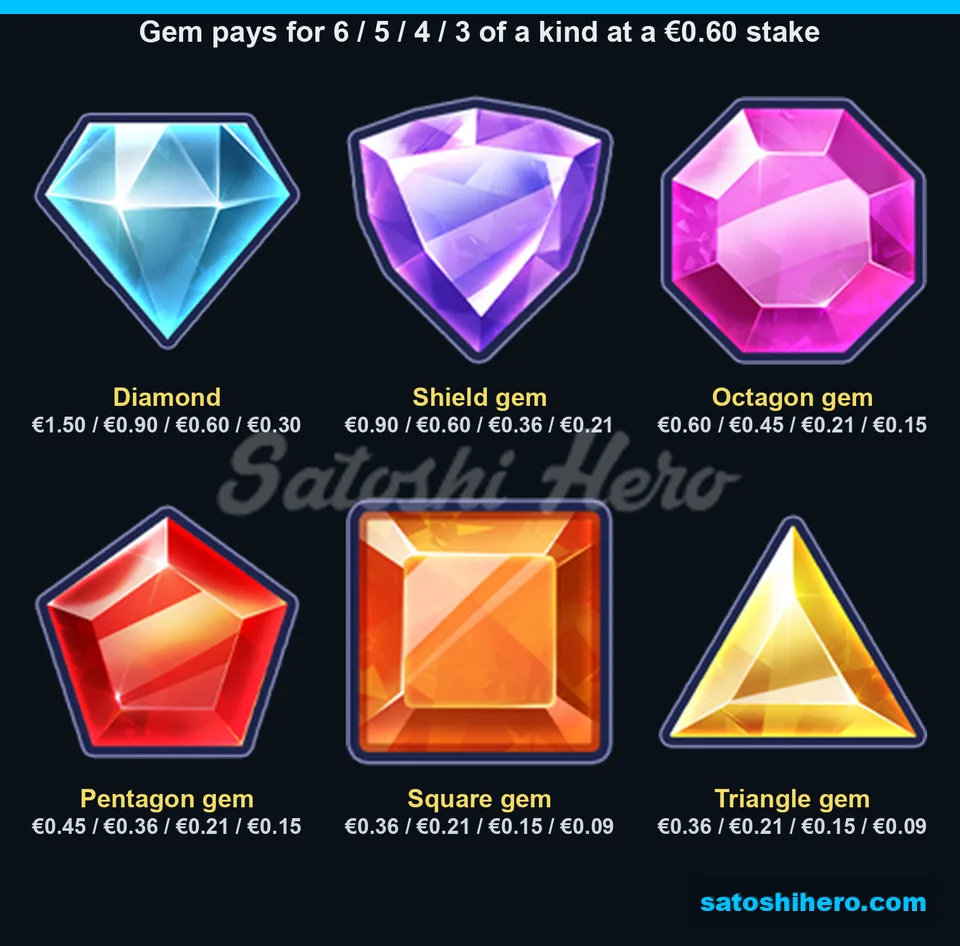
Wild substitutes for regular symbols, but not for Scatter, boosts or multipliers. It never lands on reel 1, which keeps the first reel more restrictive than you might expect. Scatter starts the free spins with three or more anywhere and never appears as a split symbol.
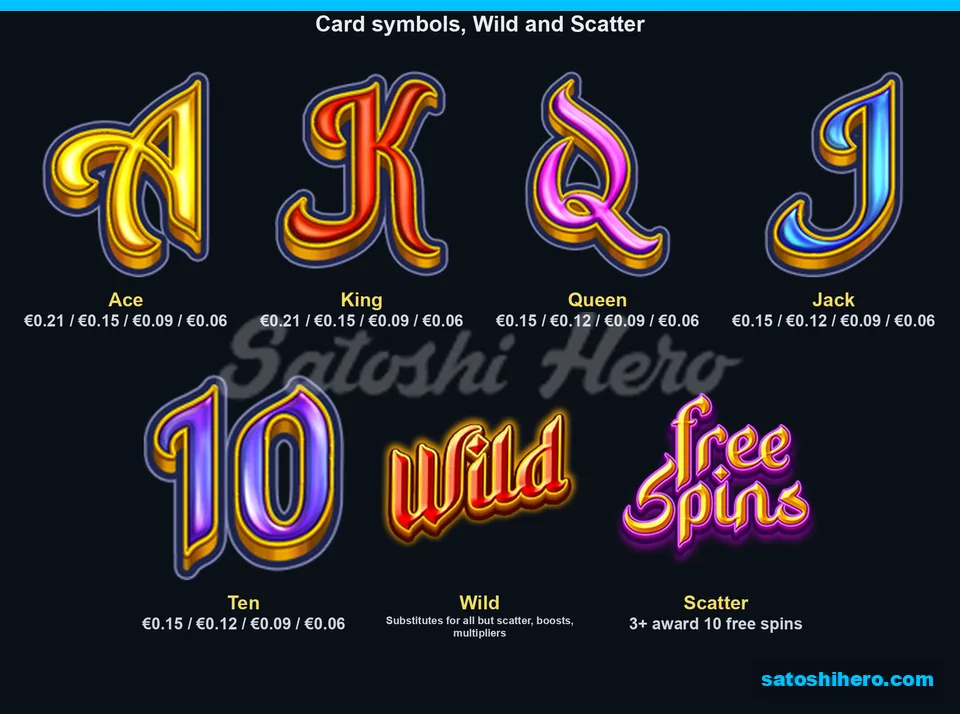
My lowest logged win was $0.06 on spin 52. That matched the smallest three-of-a-kind pay, and it set the tone for a base game full of tiny returns. The setup gives the game its puzzle feel before the boosts start changing the board.
Theme & First Impressions
Trinity Reels slot looks like a dark stone-tablet puzzle game, and the design helps the split-symbol mechanic read clearly. You get a carved temple setting, cracked grey tiles, glowing gems and a gold frame around the grid. The theme won’t win originality awards, but the UI fits the mechanic well.
The intro screen explains the hook quickly. Symbols can split inside a tile, and boosts fire from reel 6. You’ll notice the game wants you watching the counter as much as the symbols.
Temple puzzle look
The dark temple backdrop gives the game a heavier feel than a plain gem slot. Gold framing keeps the reels readable, while the cracked tiles make every split position stand out. Woodlanders has a softer nature-led mood, but this game leans into a sharper stone-puzzle style.
The card letters use swirly gold edging, which sounds busy on paper. On the reels, they sit apart from the glowing gem symbols well enough. I like that clarity because split tiles can become messy fast.

Trivia: The stone-tablet look helps split tiles read clearly, which matters when one tile can hold multiple symbol copies.
First spin feel
The first settled board showed split positions, a Wild on reel 5 and a Multi Boost on reel 6. The ways counter sat at 5,760, with my balance already at $959.98 after the counted test run. That frame summed up the game neatly: plenty happening, but not much comfort.
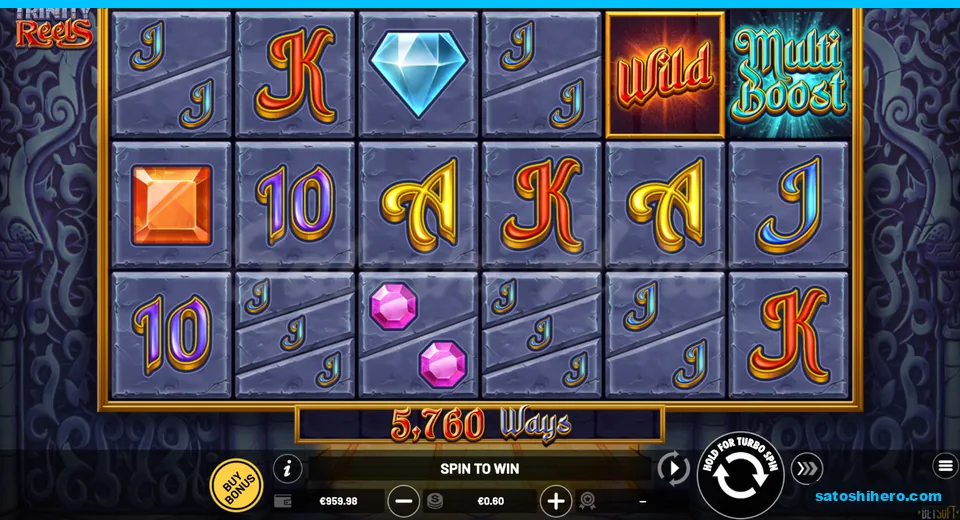
You might find the screen more technical than a standard gem slot. The moving counter gives every cascade a little extra interest, even when the result stays small. The theme works because it makes the changing grid easy to read.
Split Symbols and Moving Ways
Split symbols are the main hook because one tile can hold one, two or three copies of the same symbol. Every copy counts separately when the game measures ways. That one rule changes how you read the board.
A normal-looking tile can carry more weight than it first appears to carry. Reels 1 to 5 can grow to 9 symbols each, while reel 6 stays at 3 symbols. That setup creates the top figure of 177,147 ways.
Tile splitting
You’ll see single, double and triple versions of the same symbol inside one tile. This isn’t just a visual trick. Each small copy joins the ways calculation, so extra copies can multiply matching routes across adjacent reels.
In my 100 spins, the counter sat at 5,760 on a fresh board. After one win, it dropped to 1,620. That change made the game feel less static than many ways slots.

Fast Fact: 177,147 ways comes from split symbols, not fixed paylines.
Changing ways
The ways count can change every spin and every cascade. New symbols fall, split positions shift, and the board can become stronger or thinner after a small hit. You should check the counter after each cascade, not just before the first evaluation.
This is where play Trinity Reels online searches make sense. The game gives you more to watch than a basic spin-and-stop grid. Still, the counter doesn’t promise a good result, and my test proved that clearly.
More split symbols can help, but they need matching symbols in the right adjacent reels. Two boards may look close at a glance and play very differently. The moving counter tells you how strong or thin the board has become.
Cascades and Mystery Reveals
Cascades and mystery symbols give the base game its second-chance feel. Winning symbols disappear, new symbols drop into the gaps, and the game checks the board again. This repeats until no win remains.
Boosts and multipliers on reel 6 get removed with the winning symbols. That detail matters because a useful boost can vanish before the next cascade. You get motion and tension, but not a locked-in upgrade.
Cascade sequence
My longest chain came from a first win followed by two cascade rounds. That same spin gave me the biggest test win, $4.65 on spin 31. It was only 7.75x the bet, but it showed how the feature can stack small steps into a better pay.
You might enjoy this rhythm if you like base-game momentum. Reels of Wealth also leans into repeated reel events, while this one adds split-symbol math on top. I prefer this game’s tension, but the payouts in my sample stayed modest.
Mystery reveals
Mystery symbols can appear with every cascade, but they never land on reel 6. All mystery positions reveal into the same symbol at once. They can become any regular symbol, but not Scatter, boosts or multipliers.
That shared reveal can rescue a weak-looking board. It can also do very little, which happened often enough in my test to keep expectations grounded. Cascades add tension, even when the final pay stays modest.
Reel Six Boosts
Reel-six boosts are the game’s feature engine, and they attack different board problems before wins get paid. Up to three boosts can land on reel 6, and more than one can appear on the same spin. That gives the base game its most active moments.
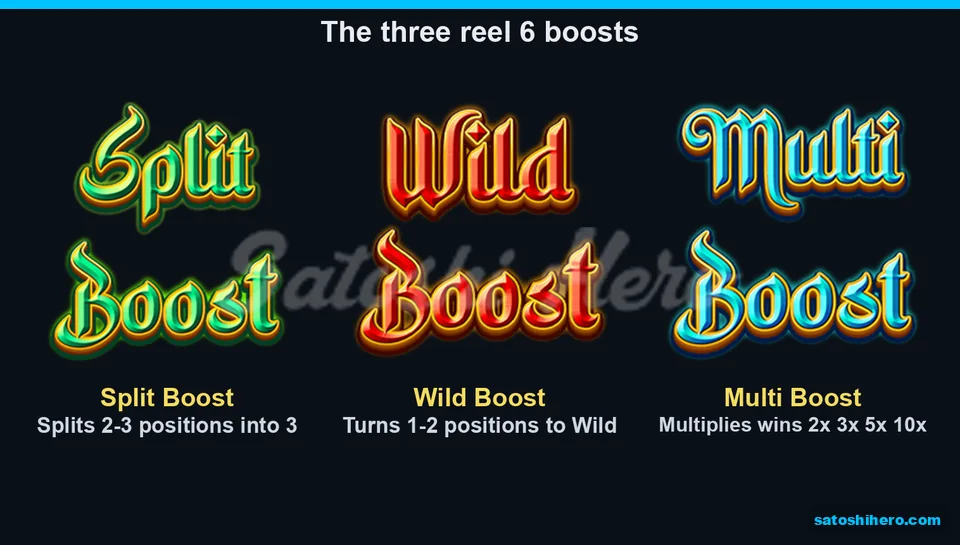
The three boosts are Wild Boost, Split Boost and Multi Boost. Wilds improve connection, splits increase symbol volume, and multipliers improve payout size. I like the design because each boost has a clear job.
Three boost types
Wild Boost changes one or two random positions on reels 2 to 5 into Wilds. Those spots can’t already hold a Wild or Scatter. Wilds can also arrive as double or triple split Wilds inside a tile, which looks strong when the board lines up.
Split Boost picks two or three random positions on reels 1 to 5. It splits those symbols into three, unless a position already holds a triple split or Scatter. This boost felt the most visible because the ways count can jump fast.
Multi Boost applies 2x, 3x, 5x or 10x to wins on the screen. It needs a paying screen to matter, which makes it feel cruel when the board misses. Stacked may appeal to you if symbol-structure changes are your thing, but this game ties those changes directly to reel-six events.
Trivia: Reel 6 boosts change the reels to the left before wins get paid.
Board impact
Split Boost helps when you need more symbol volume. Wild Boost helps when the board has near-connections across the middle reels. Multi Boost helps only after the screen already finds a win.
You’ll notice the best spins need more than one thing to go right. A visible boost can still land on a thin board and pay almost nothing. The boosts make the game more active, but they still need a usable board to pay well.
Free Spins and Buy Feature
Free spins trigger with three or more Scatters anywhere and award 10 spins. At the start of the round, one of the three boosts gets chosen at random. That chosen boost then appears more often on reel 6 for the round.
I didn’t trigger free spins in my 100 counted spins. So I’m describing the round from the rules, not from an observed feature. That matters because high-volatility games can look very different once the bonus lands.
Trigger rules
Three Scatters can land anywhere on the reels. Scatters don’t appear as double or triple split symbols, so you can’t lean on splits to multiply the trigger. You need the symbols themselves to show.
The round gives 10 free spins. The target is clear, but my test showed that a short run can miss it completely. If you play Trinity Reels mainly for features, that wait may test your patience.
Boosted round type
The bonus can focus on more Wild Boost, more Split Boost or more Multi Boost. The game picks one boost type at random when the round starts. You shouldn’t read any version as automatic value, because the feature still needs strong boards.
I’d expect Split Boost to feel the most visible, based on how it moves the ways counter. Multi Boost could feel best on a paying screen. Wild Boost sounds powerful, but connection still depends on the surrounding symbols.

Alert: This is a high-volatility slot; my 100-spin test missed the free spins and ended $40.02 down.
Three buy options
The Buy Bonus button sits next to the bet controls. It lets you choose which boost the 10 free spins focus on, if you want direct access. At my $0.60 stake, Split Boost cost $30.30, Multi Boost cost $39.90 and Wild Boost cost $63.00.
Those prices equal 50.5x, 66.5x and 105x the bet. I didn’t buy any of them, so I won’t claim one option gives better value. Direct feature access needs a stronger bankroll, especially with the Wild Boost version.
You can play Trinity Reels online in demo mode on SatoshiHero before trying a buy. That’s the sensible route here. Free spins are the chase feature, while the buy option gives choice at a much higher risk per round.
RTP, Volatility & My Test
Trinity Reels slot has 95.96% theoretical RTP, high volatility and a 15,127x maximum win from Betsoft. My 100-spin session showed the risk side clearly. The slot can feel dry when the boosts don’t connect.
Data from the SatoshiHero Slot Simulator framed the test against a larger sample. You should treat the model as a projection, not a promise. Slotfather2 may fit you better if you prefer a more familiar slot feel without these moving ways layers.
Simulator projection
Our simulator used the same headline figures over 1,000 spins at a $0.60 stake. The median session finished $41.50 down. The 5th to 95th percentile range ran from $192.70 down to $216.80 up, which shows how wide the results can spread.
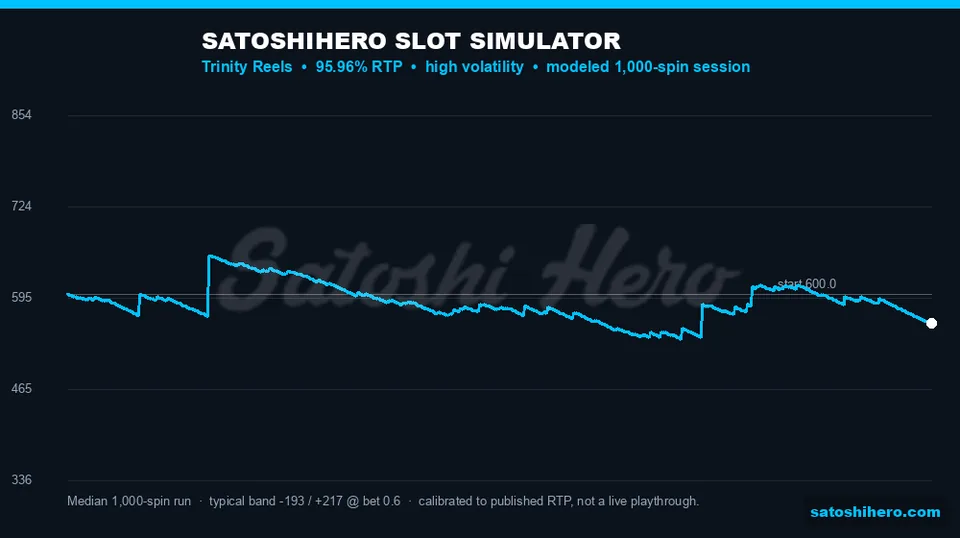
About 18% of spins paid something. A 10x or higher hit appeared roughly once every 45 spins, while a 100x or higher win appeared roughly once in 1,761 spins. That gap explains why a session can feel busy in places but still end cold.
Fast Fact: The simulator showed about 18% paying spins, close to my 21 paid spins from 100.
Our 100-spin session
I played 100 base-game spins at $0.60. I started from $1,000.00 and finished at $959.98, which put me $40.02 down. The balance never climbed above the start, and that made the run feel colder than the visuals suggested.
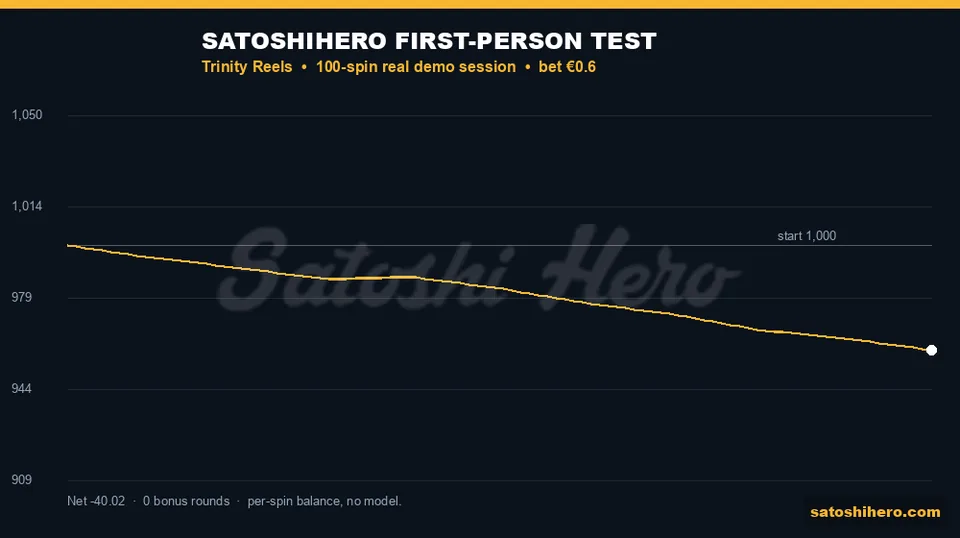
By spin 30, my balance sat at $987.07. It fell to $978.01 by spin 60 and $964.36 by spin 90. Most wins landed between $0.06 and $1.62, so the paid spins often felt like small brakes rather than real recoveries.
The biggest hit was $4.65 on spin 31. It came from a first win plus two cascade rounds and reached 7.75x the bet. No free spins triggered, and I used two extra manual spins only to capture a settled base-game win frame.
Alert: High volatility plus a 15,127x ceiling means the game can run cold before a meaningful hit appears.
The theoretical RTP is the operator-published return figure, while a single live session doesn’t change that number. Per-bonus returns may sit slightly different from the base game by design. The simulator shows a spread of possible outcomes, not a promise about your next spin.
Base-Game Pace and Session Feel
The base game felt swingy but not explosive in my sample. I counted 21 paying spins from 100, which landed close to the simulator’s expected hit rate. Still, the actual pays rarely gave my balance much relief.
The mechanics carried more interest than the result. You’ll see counters move, boosts fire and symbols split, even when the bankroll drifts down. That mix can be fun, but it won’t please anyone chasing frequent feature triggers.
Base-game pace
Most wins stayed below 3x the bet. That created a stop-start rhythm where the game paid often enough to avoid silence, but not enough to reverse the slide. You may find that frustrating if you want steady visible progress.
The biggest win reached only $4.65, despite cascades. That doesn’t make the feature weak, but it shows how one short test can undersell the game’s ceiling. I’d call the pace active in presentation and cold in outcome.
Session takeaway
I like the moving mechanics more than I liked my final balance. The split tiles, boosts and cascades gave me something to follow on almost every few spins. The missing free spins left the session feeling unfinished.
You can try the demo on SatoshiHero before deciding whether the volatility matches your bankroll style. That matters because the base game alone can feel dry. The base game rewards patient mechanics watchers between bigger chances.
Frequently Asked Questions About Trinity Reels
How do the split symbols work in Trinity Reels slot?
A tile can hold one, two or three small copies of the same symbol, and every copy counts when ways are measured. Reel 6 always has 3 symbols, while reels 1 to 5 can have up to 9 each. That setup creates up to 177,147 ways, and my counter showed 5,760 at rest and 1,620 after one win.
What do the three boosts on reel 6 do in Trinity Reels slot?
Wild Boost turns one or two random positions on reels 2 to 5 into Wilds. Split Boost splits two or three random positions on reels 1 to 5 into three symbols each. Multi Boost applies 2x, 3x, 5x or 10x to wins on the screen, and more than one boost can land on the same spin.
How do I trigger the free spins in Trinity Reels slot?
Land three or more Scatters anywhere on the reels to get 10 free spins. At the start, one boost type gets picked at random and appears more often on reel 6 during the round. I didn’t see the round trigger in 100 spins, so this answer comes from the rules.
Can I buy the free spins in Trinity Reels slot?
Yes, the Buy Bonus button offers three versions of the 10 free spins. At a $0.60 stake, the Split Boost version costs $30.30, the Multi Boost version costs $39.90 and the Wild Boost version costs $63.00. I didn’t buy any of them in my test.
What are the RTP, volatility and max win in Trinity Reels slot?
The slot has an RTP of 95.96%, high volatility and a maximum win of 15,127x the bet. It also uses up to 177,147 ways to win on a 6-reel grid. Those numbers explain why the game can feel risky across short sessions.
How did the 100 live spins go in Trinity Reels slot?
I started with $1,000.00 at a $0.60 bet and finished at $959.98, which was $40.02 down. 21 spins paid, the biggest win I logged was $4.65 on spin 31, and the free spins didn’t trigger. The result felt cold, even with several active-looking boards.
What does the 1000 spin simulator say about Trinity Reels slot?
At a $0.60 stake, the model’s median session finishes $41.50 down. The 5th to 95th percentile range runs from $192.70 down to $216.80 up. About 18% of spins pay, and a 100x win appears roughly once in 1,761 spins.
Closing Thoughts
Trinity Reels stands out because its split symbols, moving ways and reel-six boosts give each spin a puzzle feel. The main drawback is the cold base-game stretch, which my own test showed clearly. You get clever mechanics, but you don’t get comfort.

My Verdict
Bonus hunters and mechanics watchers get the most from this game. Expect sharp swings, small base-game pays and long waits between meaningful moments. I’d start in demo mode before using the buy feature.
I like how the ways counter tells a live story under the reels. I don’t like how little my biggest cascade paid in the 100-spin sample. The missing free spins made the session feel honest, but also harsh.
This Trinity Reels slot guide stays checked regularly against the playable SatoshiHero version and my own test notes. If the base game clicks with you, set a firm spend limit before chasing the bonus.

Pros:
 Smart mechanics: Split tiles make each board feel more technical and watchable.
- Clear boost roles: Wilds, splits and multipliers each solve a different board problem.
- Strong chase ceiling: The max win gives patient bonus hunters a real target.
- Readable design: Stone tiles help split symbols stay clear during busy spins.

Cons:
 Cold sample: My 100 spins ended down with no free spins.
- Small base pays: Many hits barely slowed the balance drop.
- Costly buys: Wild Boost free spins cost 105x the bet in my test.

Best For: This game fits patient high-volatility hunters, especially if you enjoy counters, split symbols and boost timing. It’s less friendly for short-session bankrolls that need frequent features or steady balance movement. Start small, watch the grid, and don’t chase the buy feature after a cold run.






























































Bets
All Bets
Game
Player
Date
Wager
Mult.Multiplier
Prize
 Royal Fruits 9: Hold 'n' Link
 mdp0fxo
- 18:20:01
- 0×
- Galaxy Glitter
 nina87
- 18:19:58
- 0×
- Galaxy Glitter
- josh1998
- 18:19:45
- 1.49×
- Craps
- chubbalicious
- 18:19:42
- 0×
- Craps
- chubbalicious
- 18:19:42
- 0×
- Craps
- chubbalicious
- 18:19:42
- 0×
- Craps
- chubbalicious
- 18:19:42
- 0×
- Luck of Panda: Bonus Combo
- mike_721
- 18:19:38
- 0×
- Royal Fruits 9: Hold 'n' Link
- mdp0fxo
- 18:19:37
- 0×
- Hot As Devil: Hold 'N' Link
- Hidden
- 18:19:34
- 0×